A matter of taste: Hydrangea ‘Schloss Wackerbarth’
As my time in Ireland goes on I am starting to reassess my opinion of mophead hydrangeas (H. macrophylla or ‘hortensias’). I have always valued them as long-flowering shrubs but I can never quite forget the sight of them in my parents’ garden on thick grey clay over chalk where they struggled to survive; their leaves chlorotic and stunted in the summer drought. And in the East Midlands in the UK, where summers can be hot and dry, they also struggle because of summer drought and they never look happy. Mophead hydrangeas need sun to bloom well but they also need summer moisture.*
Here they thrive. They look marvellous whether by the sea, by the edge of woodland or by the side of the road. They are brilliant and, in areas with acid soil, they are exciting blue. I have been playing about with the colour of the flowers and will post on that soon – if it works.
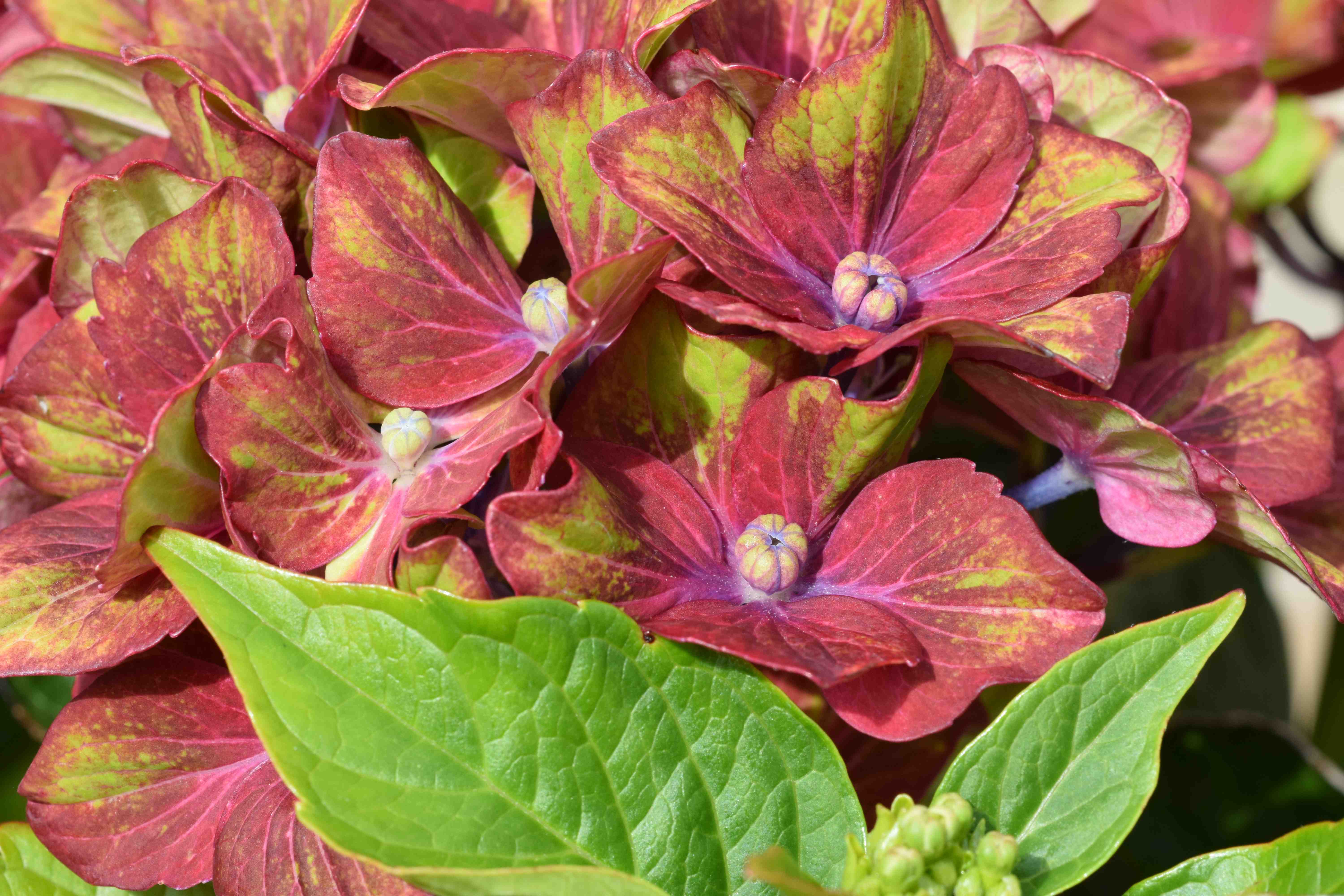
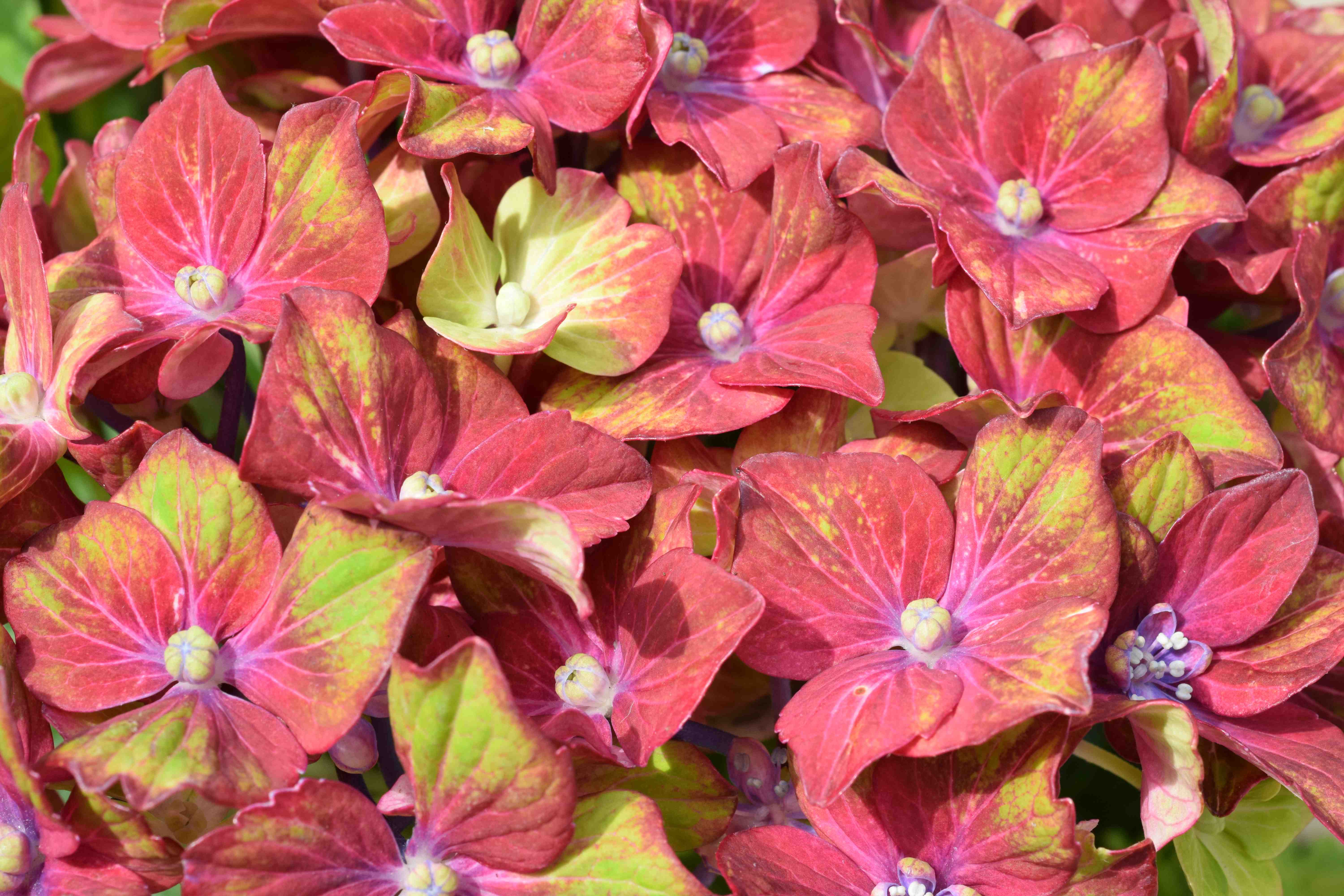
But this post is about a relatively new hydrangea that is either beautiful or awful – I can’t decide which. I think it was introduced to UK consumers by Thompson & Morgan who named it ‘Glam Rock’. It looks like no other and is a German-raised seedling that is part of the ‘Saxon’ range. It is compact but what makes it special is the colour of the flowers. They are deep pink/red with green streaks and tips to the sepals and in the centre of each individual ‘floret’ is the true flower which is blue. The flower stems are also purplish blue. The blooms start green but gradually develop their colour as they age.
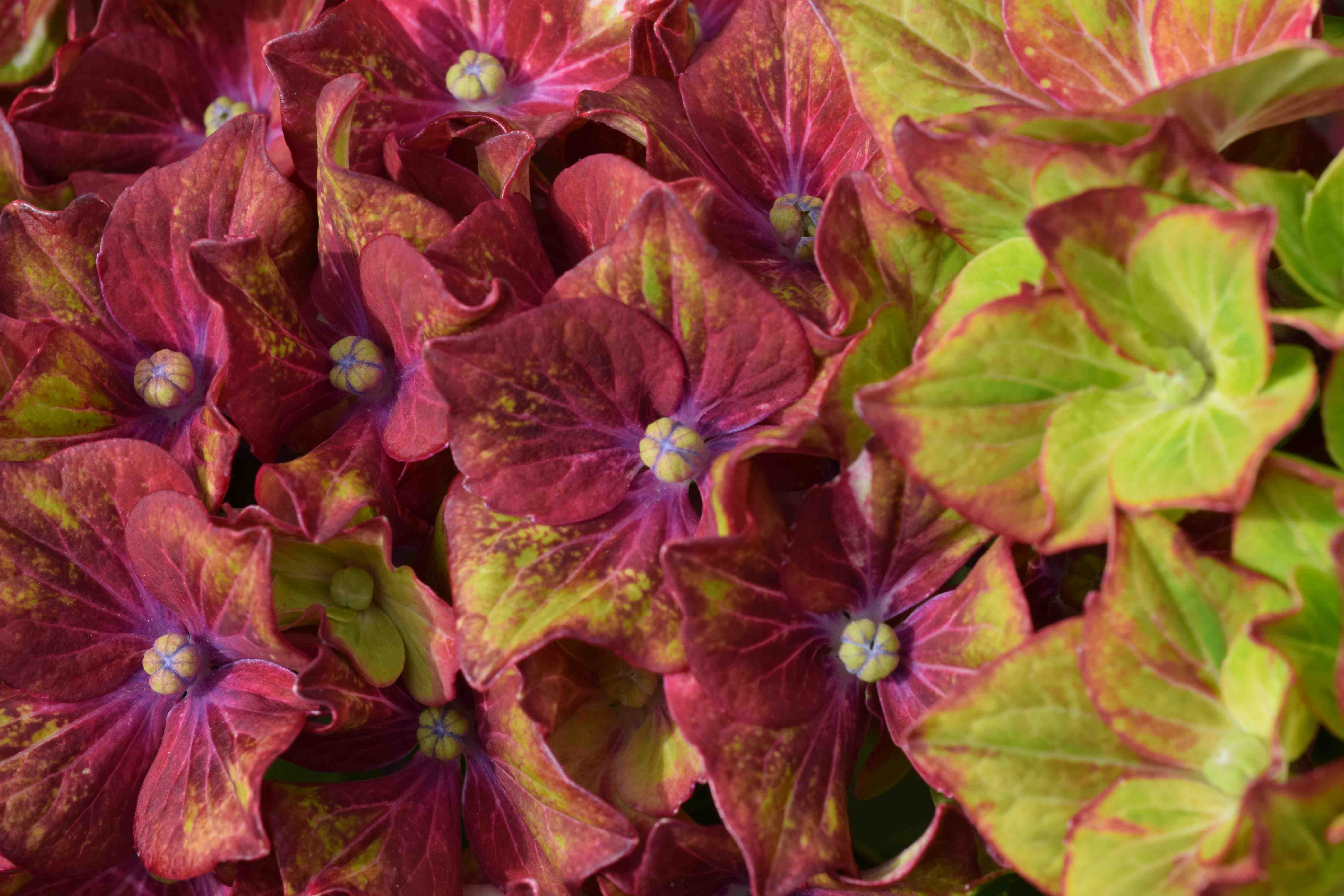
The true name for the plant is ‘Schloss Wackerbarth’ which I am sure means something helpful in German but it is a name that would never sell in the UK (or Ireland) so I can see why T&M made up a selling name for it.

* Hydrangeas DO get their name from ‘Hydra’ for water but not because they like water. It is because their seed pods resemble the shape of a Greek water vessel.

Geoff’s rating 6/10
Garden rating 8/10
 The Biking Gardener
The jury’s still out on that one! It could be hard to combine. If the “flowers” are long lived, it might work with autumn colouring shrubs? Nice to see the close up shots, though.
I agree. I sometimes think that plant that would have been composted in days when there was not so much money to be made with new plants. It is like those trailing antirrhinums. I can’t help thinking that in days gone buy they would have been discarded when they first flowered because they didnt have strong stems but now their floppiness is a virtue for hanging baskets!