Looking good: A 140 year-old bride
It is not often that I am put off growing plants because of cultural instructions in catalogues, especially if they are inexpensive. But for some reason, although I have grown many odd gladiolus species in the greenhouse, I have never grown Gladiolus x colvillei ‘The Bride’. I think this was because we are always warned that, although it should be planted in autumn, it is not completely hardy and the foliage, which appears early in spring, is vulnerable to frost damage. It all seemed a bit like hard work and a risk. Other recommendations, such as lifting the corms in winter, don’t work with this one.
But I am not alone. I don’t think I have ever seen this in gardens. I have grown (and battled to control) G. byzantinus before and it is an easy, pretty, magenta-flowered beauty. But ‘The Bride’ is a hybrid not a wild species. It is a selection from the cross of the pale yellow, night-fragrant Gladiolus tristis (which I have grown before) and the red G. cardinalis. The hybrid was first created by James Colville of Chelsea, London. I am not sure but maybe this is the same Colville that shares the name with the remarkably large-flowered Buddleia colvillei from the Himalaya. Anyway, James created G. x colvillei, a pink-flowered plant with white stripes on the lower three petals. It was first made available in 1823 and three years later a white form had been produced. In 1871, a better, pure white form was introduced as ‘The Bride’.
So for 140 years this plant has been valiantly flowering each June and I have been ignoring it.
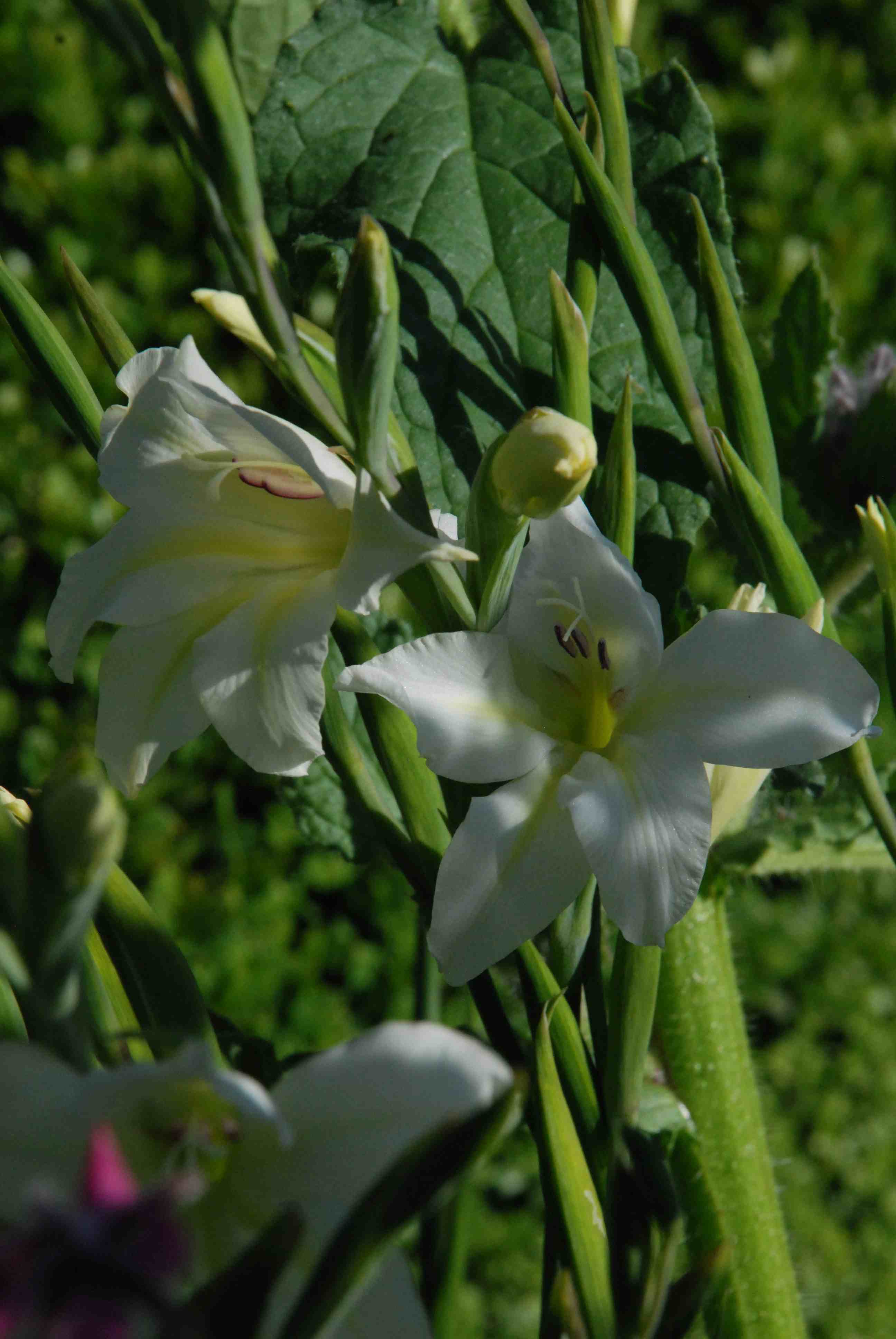
Because I made the ‘cutting garden’ this spring, but had it planned last autumn, I planted the corms last October. I was getting a bit fed up with bulb planting by the time I got to the gladioli and it was so difficult to know which side of the disc-like corms was ‘up’ so I ended up just ‘sowing’ them in a trench about 10cm deep rather like sowing broad beans. They didn’t punish me for my lack of attention. Others were planted in the ‘blue border’ – the idea being that I would plant some borage on top and the two would look well together.
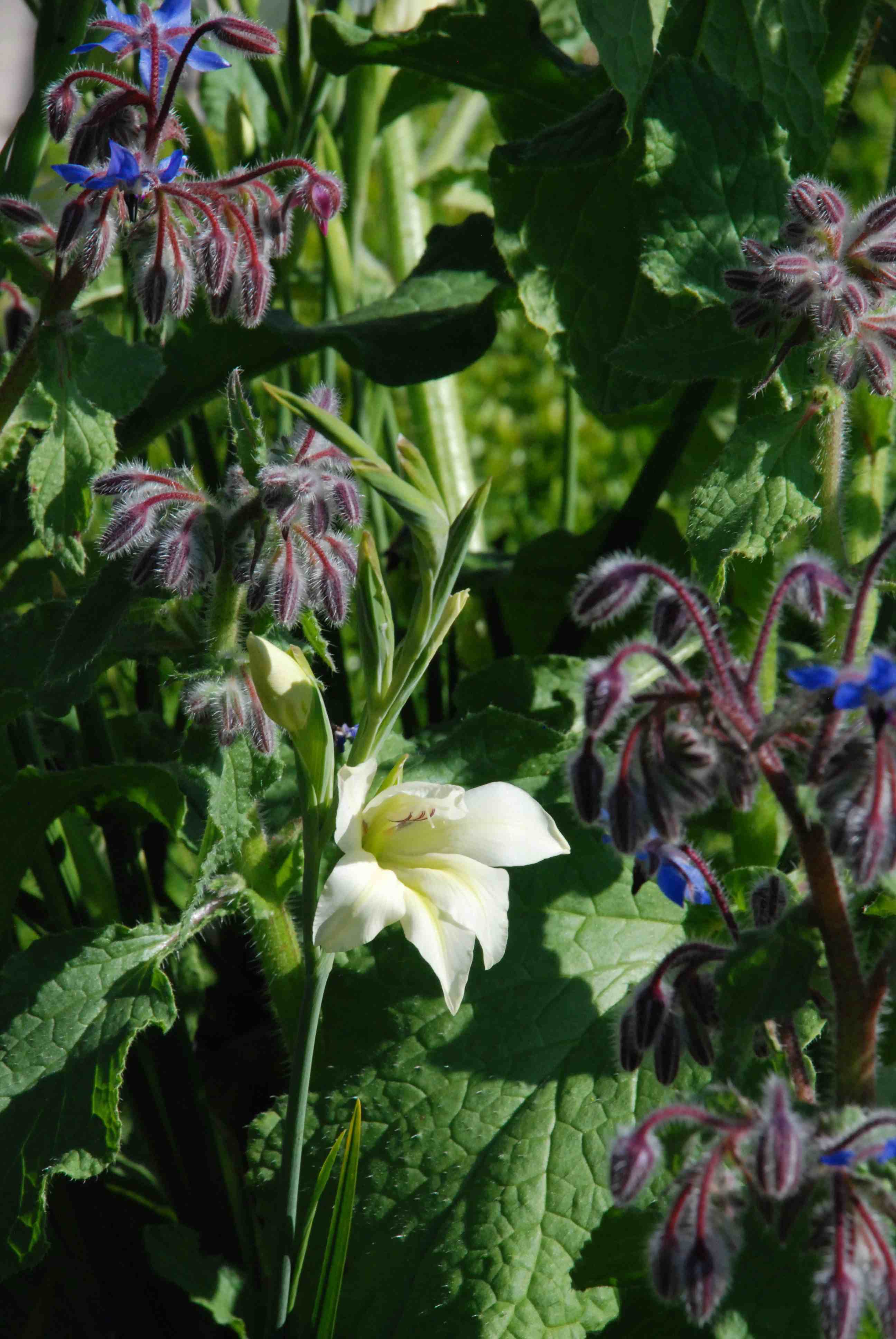
Well the borage is a bit boisterous and the idea was not a great success – though it is OK. I think I need a more delicate blue annual next year although as I will have a million borage seedlings soon the choice may not be mine!
‘The Bride’ is a charmer. She has delicate, narrow foliage and every corm must have produced a flower stem. The blooms are elegant and pretty and perfect for cutting with their 75cm tall stems. They have provided a sophisticated addition to bouquets from the garden and they look nice with the sweet peas too.
The past winter was mild and not a testing one for any plants but I would definitely recommend this for a sunny, sheltered area for garden display and for cutting. I am definitely going to add more to the garden next year. It will be nice to add to the bearded iris beds and among the purple alliums. I want to combine it with Allium cristophii somewhere – in a big drift. I am sure I will find a spot somewhere!
UPDATE
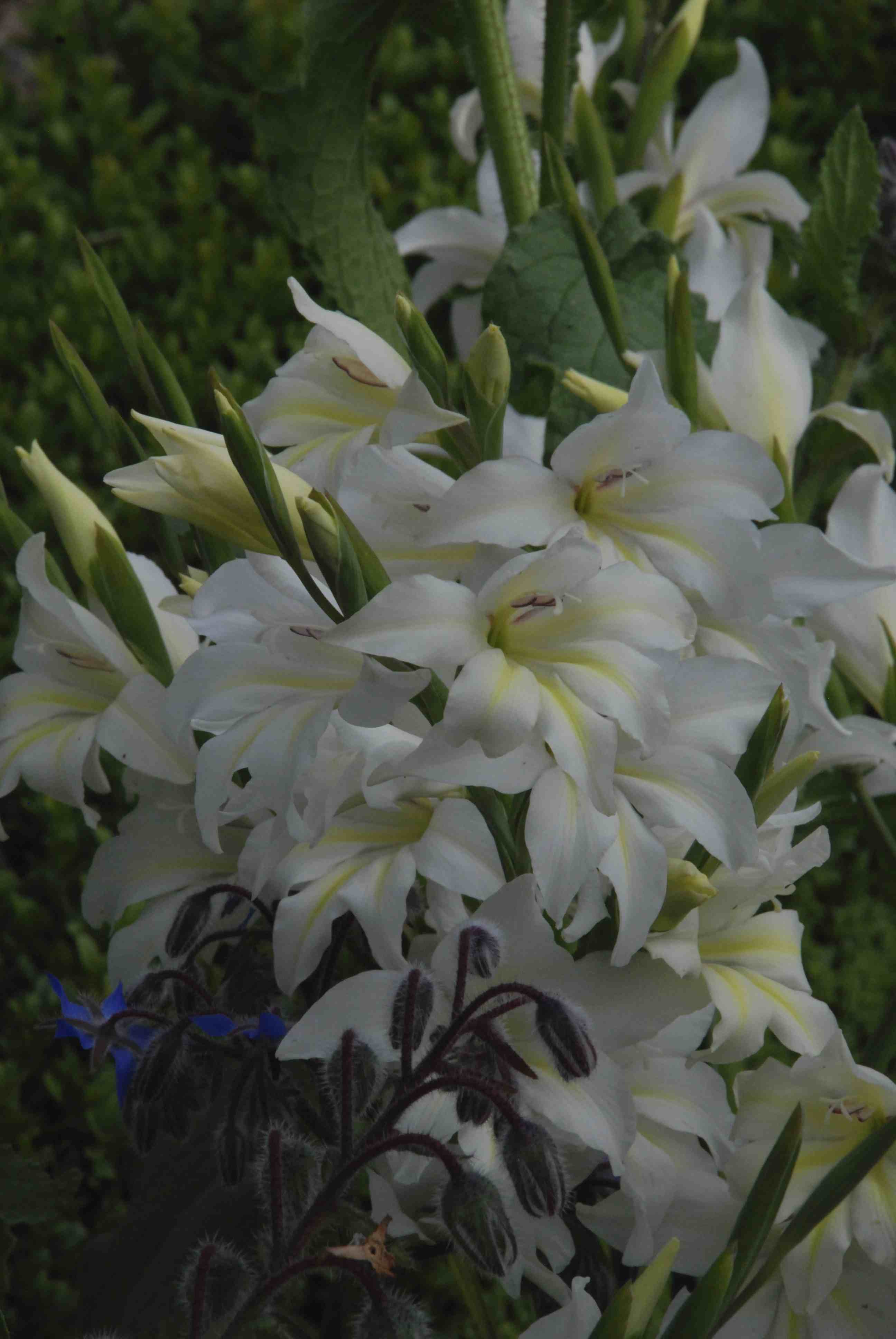
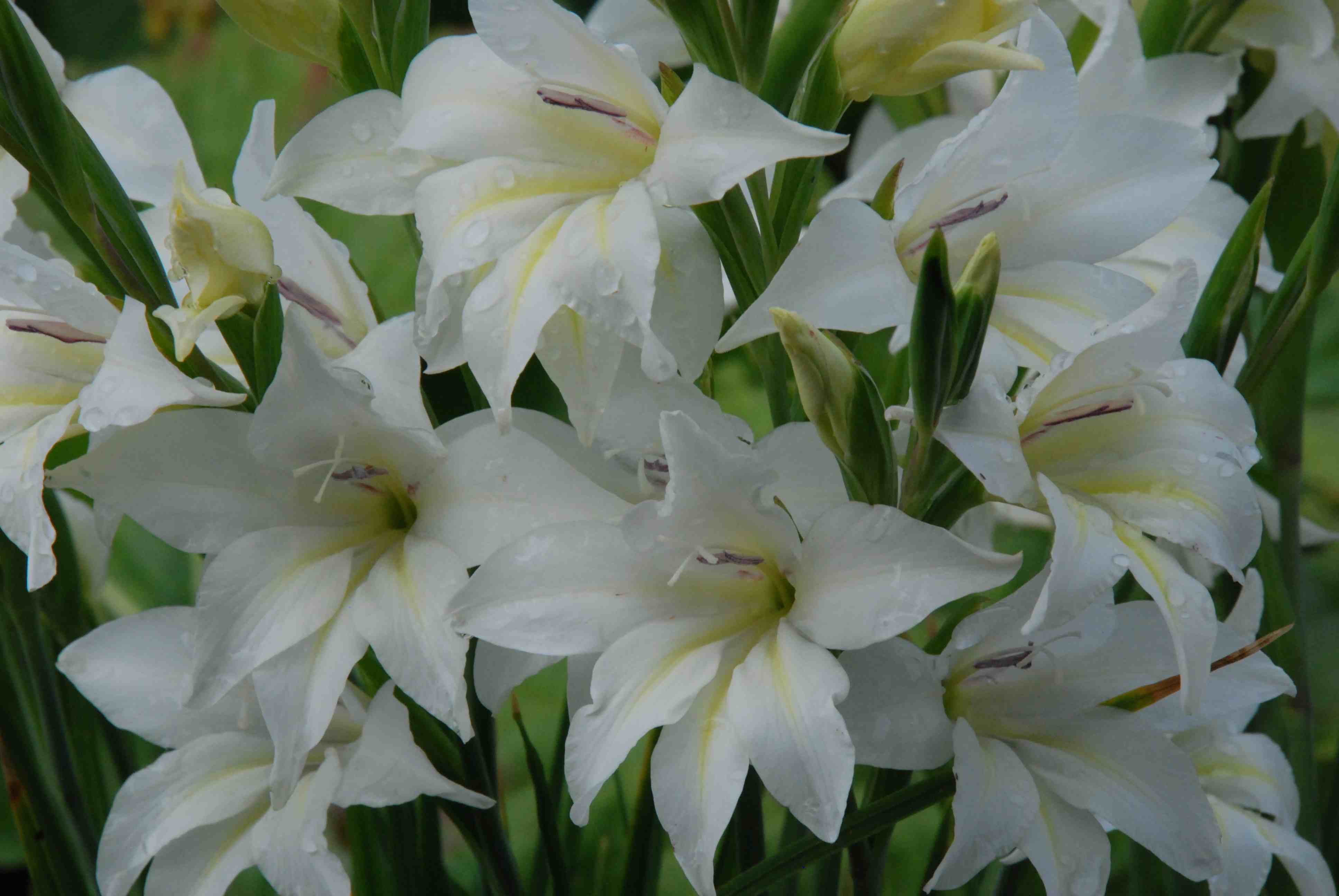
I took these photos just a few days later. They are of the plants in the garden, not arranged for a photo like most bulb packs. This is how they look naturally – how good is that! I an definitely planting more G. x colvilleii this autumn.

 The Biking Gardener
stunning a bride would love them in her bouquet
It’s like buses! You hear about a beauty of a plant for the first time, then it turns up everywhere!