Towering inflowerno
When I moved here last January I brought a few plants with me that I thought would do well in this allegedly milder climate. Among these were some echiums that I had sowed in 2013. Echium pininiana survives and will flower in the East Midlands in the UK if the winter is mild and the plants are protected from the worst of the frost. I usually cover them with fleece tents and the main problem, apart from the bizarre winter scenery and looking at the disheveled plants in March and April is that caterpillars love the mini microclimate too and munch their way through the young foliage all winter. Left to their own devices the plants usually die over winter but they have self-seeded everywhere and the bristly seedlings spring up years after the last plant had flowered. Anyway I brought half a dozen seedlings with me and planted them last spring. These were not the ordinary E. pininiana but ‘Pink Fountain’ a hybrid of the moderately sized but beautiful E. wildpretii from Tenerife and the ginormous E. pininiana from Las Palma, both islands in the Canary Island archipelago. As might be expected, these hybrids combine some attributes of both and should have tall spires of flowers 3m or more tall in shades of pink. The hybrid was created by the adventurous Ray Brown at Plant World Seeds in Devon, UK.
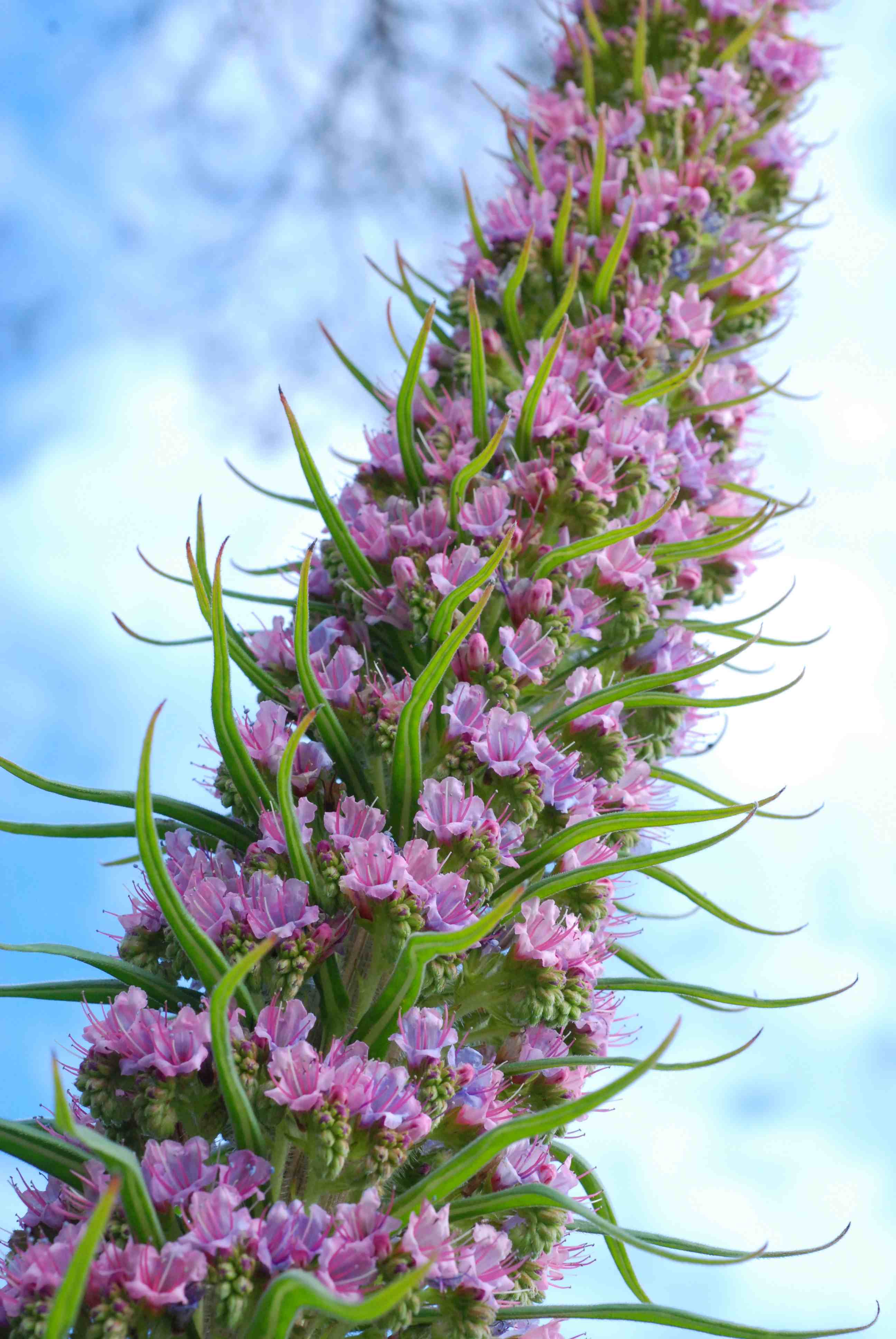
The six plants were put at the edge of a raised stone wall along with some more plants raised last year and they struggled a bit in the dry summer last year and then the wet winter. Most looked very like E. pininiana in habit though two are very compact and silvered and look like they may be pure E. wildpretii – which would be a bonus as this is a beautiful plant.

These older plants have all flowered and they are in various shades of pink and all 2-3m high which is not too bad considering their less than ideal youth. Recent winds have battered them a bit and some are at intriguing angles but that doesn’t bother me too much or the bees which adore them. On Tenerife, where E. wildpretii grows at high altitude in the caldera of Mt Teide the arid landscape is studded with the 1.2m high stems of this plant in summer but I have only visited in late winter and so have only seen the skeletons of the old plants and the silvery rosettes of young plants. You can buy honey from tajinaste rojo (the Canarian name for the plant) as well as packs of seed there.

Once the thousands of flowers have all finally opened and died I will leave the plants to throw a few seeds around but then they die and they have to be cleared away. I am lucky not to suffer from many plant allergies but the bristly stems and leaves of this plant – and most Boraginaceae – really bring me out in red weals on my skin so I only handle them with gloves and long sleeves. The new seedlings to replace these should be a mix of blue, white and pink so it will be slightly patriotic and fitting for the year I leave and move back to the UK. Always start these plants off in pots because they will not take well to being transplanted and they hate root damage. But they are very tolerant if in pots. They usually need at least one full year of growing and unless sown early they will not flower the following year like biennials. The seeds sown last spring have made huge rosettes about 1m high and across so far, at about 15 months old but they will not bloom this year. That should happen next spring.

Seeds are available from Plant world Seeds http://www.plant-world-seeds.com/store/view_seed_item/443?gclid=CKv85NnN574CFSF22wodhikA-w
 The Biking Gardener
stunning photos… I always admired these in your front garden