Davidia involucrata: the handkerchief tree
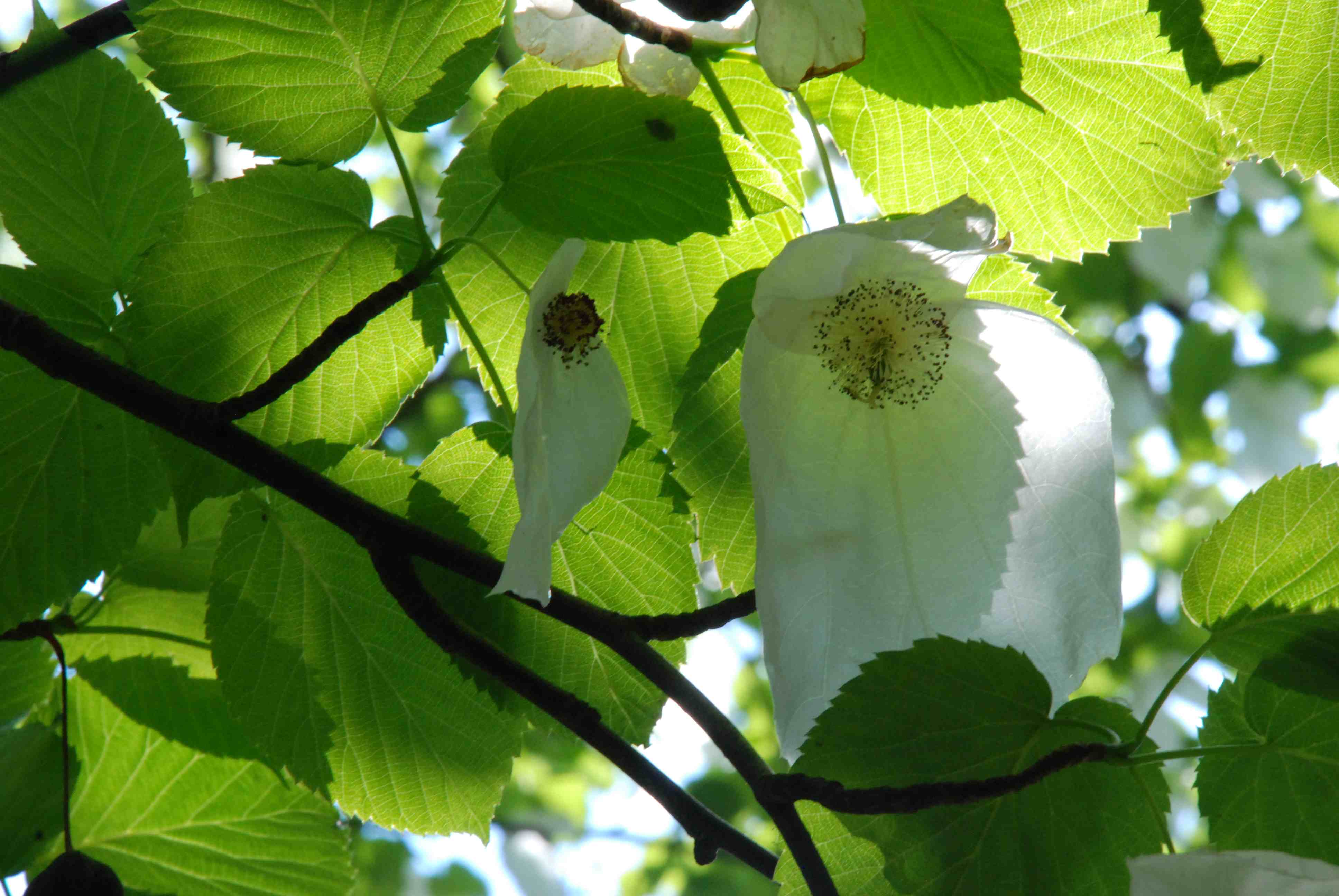
The extraordinary flowers of davidia
I am not quite certain when and where I saw my first handkerchief tree but I was probably in my early teens and it was probably at the gardens at Wakehurst Place in SE England. The fact that I have any memory of it 40 years later and that few other trees inspire such awe and wonder in me, and most people, only reinforces the amazement that must have overcome French Missionary Pere David* when he was the first recorded westerner to see the tree. He made his discovery in 1869 and apparently sent seeds back to Paris, along with herbarium specimens, but they were preserved rather than sown so the tree did not enter cultivation. He found a single specimen, at high elevation (2000m) in south west China. The tree was described as a new species in 1871.
It is said that Scottish plant hunter Augustine Henry later found another single specimen and seeds were sent to Kew but later Ernest Wilson was sent by Veitch’s nursery to make a commercial collection of seeds and went looking for this tree only to discover that Henry’s tree had been chopped down for building. So things were looking bad for introduction into the west. But in 1904 he discovered a small stand of trees overhanging a precipitous cliff and managed to collect the seeds that established it in cultivation.
It is the only tree in its own genus and it is related to cornus. It is unlike any other hardy tree and the ‘flowers’ are remarkable. The blooms themselves are rather insignificant and are composed or a sphere of black stamens about 3cm in diameter. But what makes the tree so spectacular is that each flower is surrounded by two large, pure white bracts of unequal size. The larger can be as much as 25cm long and the smaller is usually about 15cm. These hang from the horizontal branches like white bunting or, as more commonly described, handkerchiefs, ghosts or doves. I have heard it unkindly described as though someone had tipped a wastepaper basket over the tree!
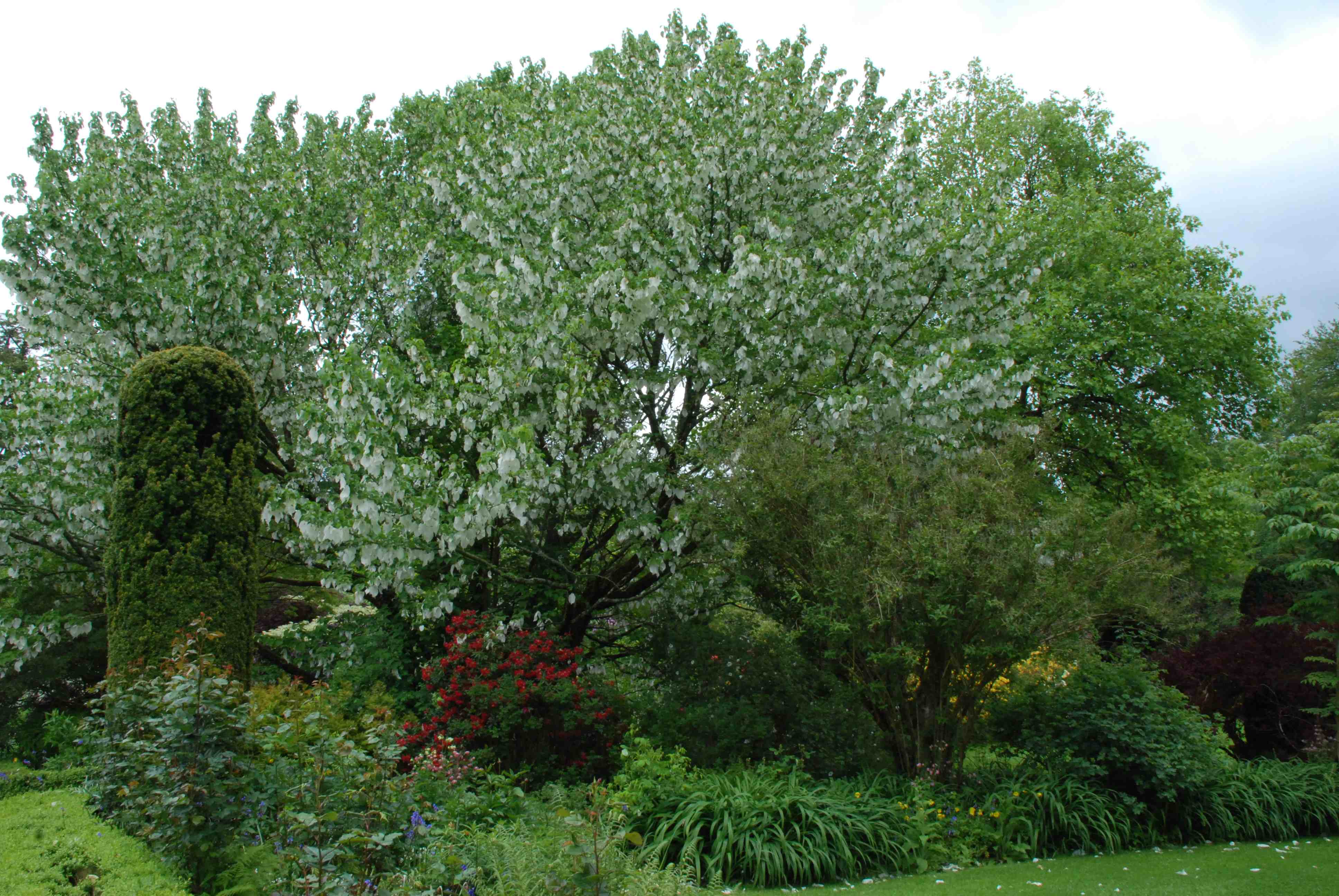
This magnificant tree at Altamont garden, Co. Carlow, is wider than it is tall and truly wondrous
It is a large, spreading tree that is not for the impatient because it usually takes ten years to start to bloom. ** It needs a sheltered spot, not just to help its early growth but to allow the bracts to display well – in a windy spot they will get torn and tatty. It prefers a moist acid-neutral soil and needs plenty of room to grow. The leaves are attractive and large and heart-shaped. Although only a single species there are two subspecies and the most common is subsp. vilmoriniana which has hairless leaves whereas subsp. involucrata has a felty covering to the undersides of the leaf.
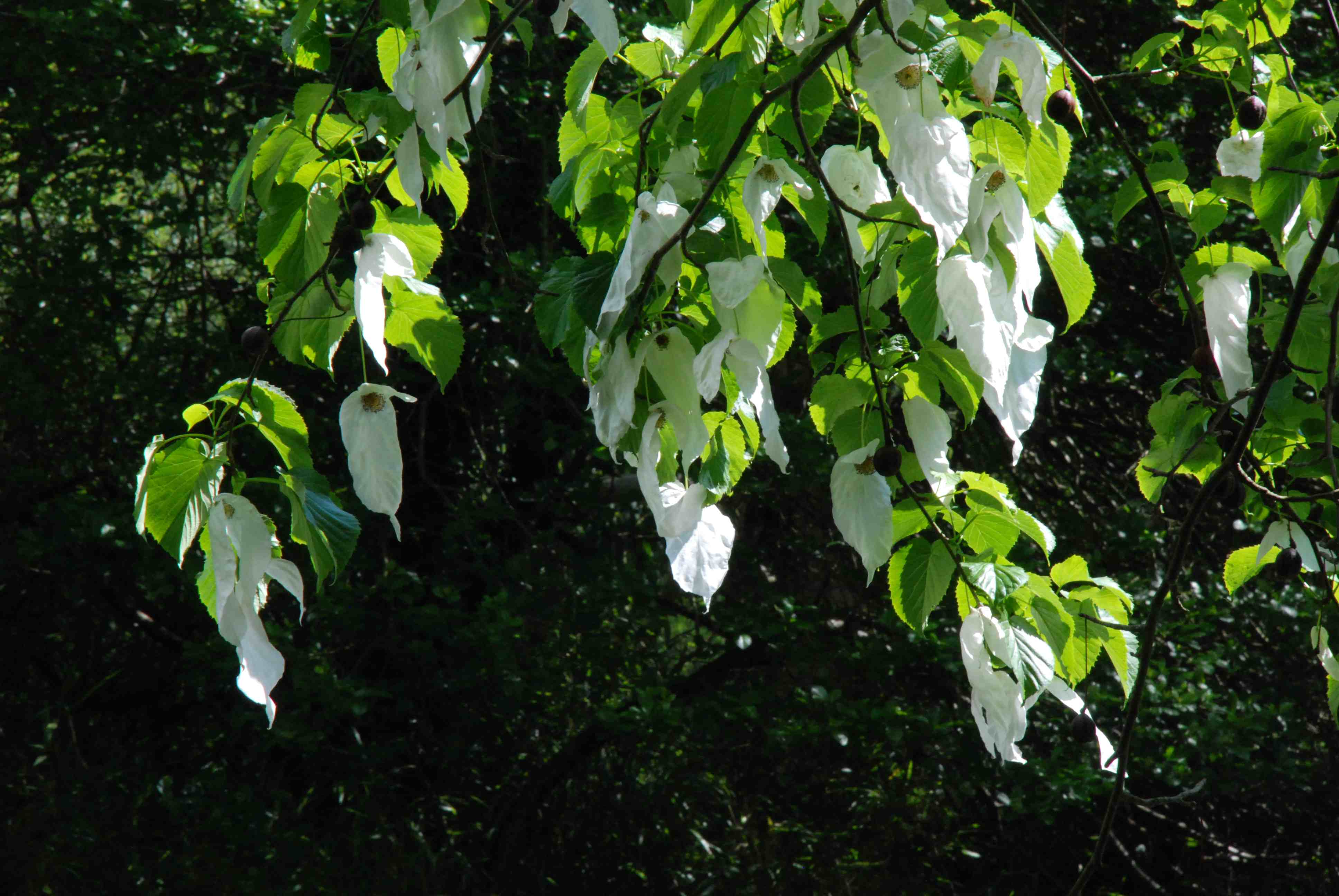
At Mount Usher a tree overhangs the River Vartry
Although I have seen the tree many times now it still makes me stand in awe when I see one in full flower. Last weekend, in late May, it was at its peak of perfection at both Mount Usher and Altamont gardens here in Ireland. If you have the sort of garden that suits rhododendrons and Japanese azaleas and you have room for a tree that will grow 20m high and across you should plant one without delay.
* He was also the first westerner to see and describe a giant panda.
** There is now a ‘fantastic’ new cultivar called ‘Sonoma’ that originated in California that is very precocious to flower and will bloom at two or three years old. I am not quite sure what a plant 1m high would look like with these huge bracts on it and I am not sure it is a good thing. But if you don’t like to wait then I guess its a way to cheat. The last ones i saw for sale were about 70cm high and £100 so you have to pay for your instant garden.
 The Biking Gardener
love that tree but need a big one or I would be nearly 70 before it flowered lol
All you need is the spare £100 to buy ‘Sonoma’ – you had better get lucky at the bingo 🙂
yes I need a lucky shamrock see what you can do
I was wondering what temps the tree can handle since in some places in Canada the temp might drop to -20 over the course of two weeks where the tree might be planted. Will it be able to handle though dormant these sorts of temps? The elevation would be approx 2000 feet above sea level?