Johnstown Castle
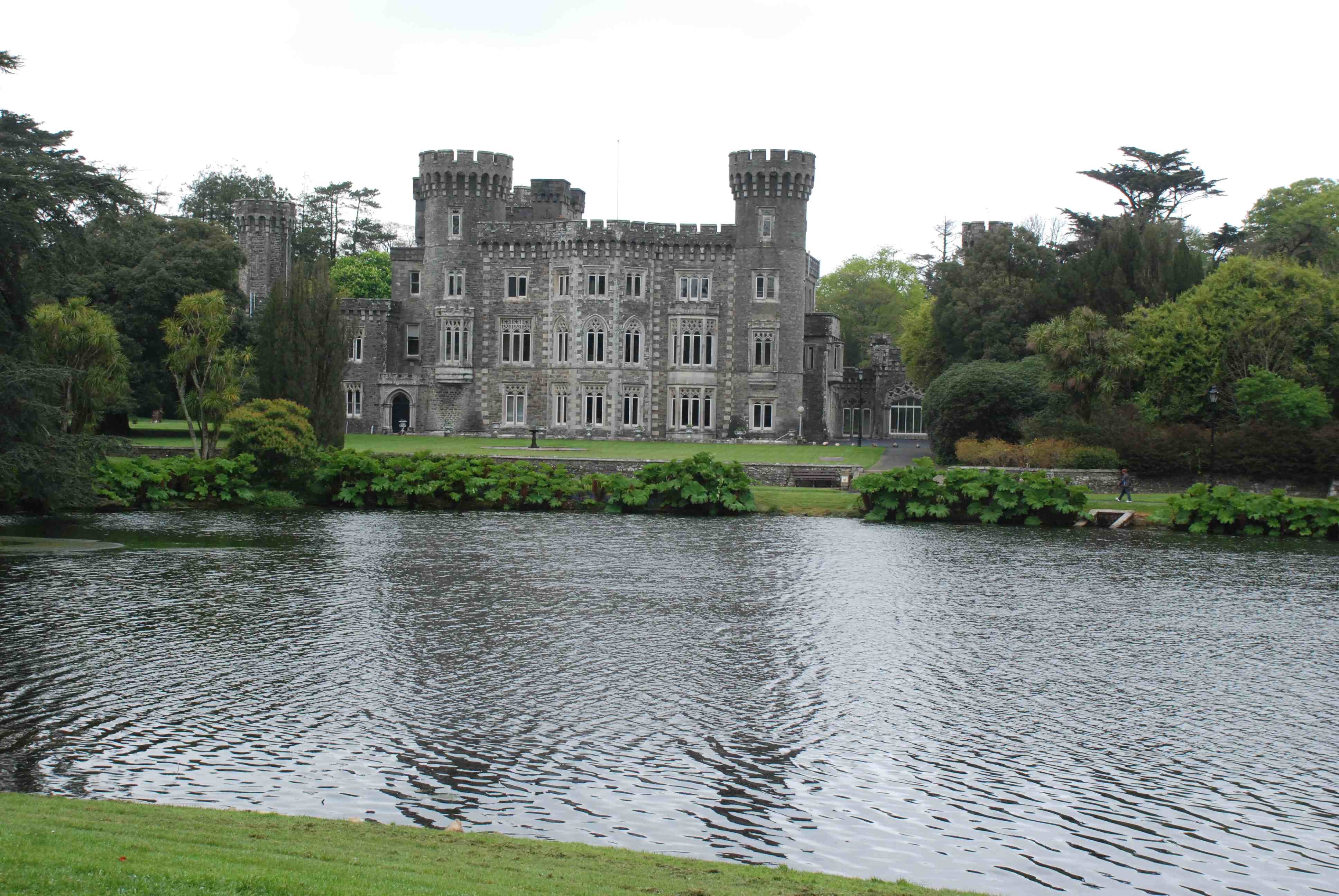
On a ‘soft’ day (for those who are not familiar with Irish terminology that means windless and drizzly) I headed south of Wexford to visit Johnstown Castle. Although the main attraction is probably the Irish Agricultural Museum and the Irish Famine Museum I have saved those for another day and just walked around the garden.
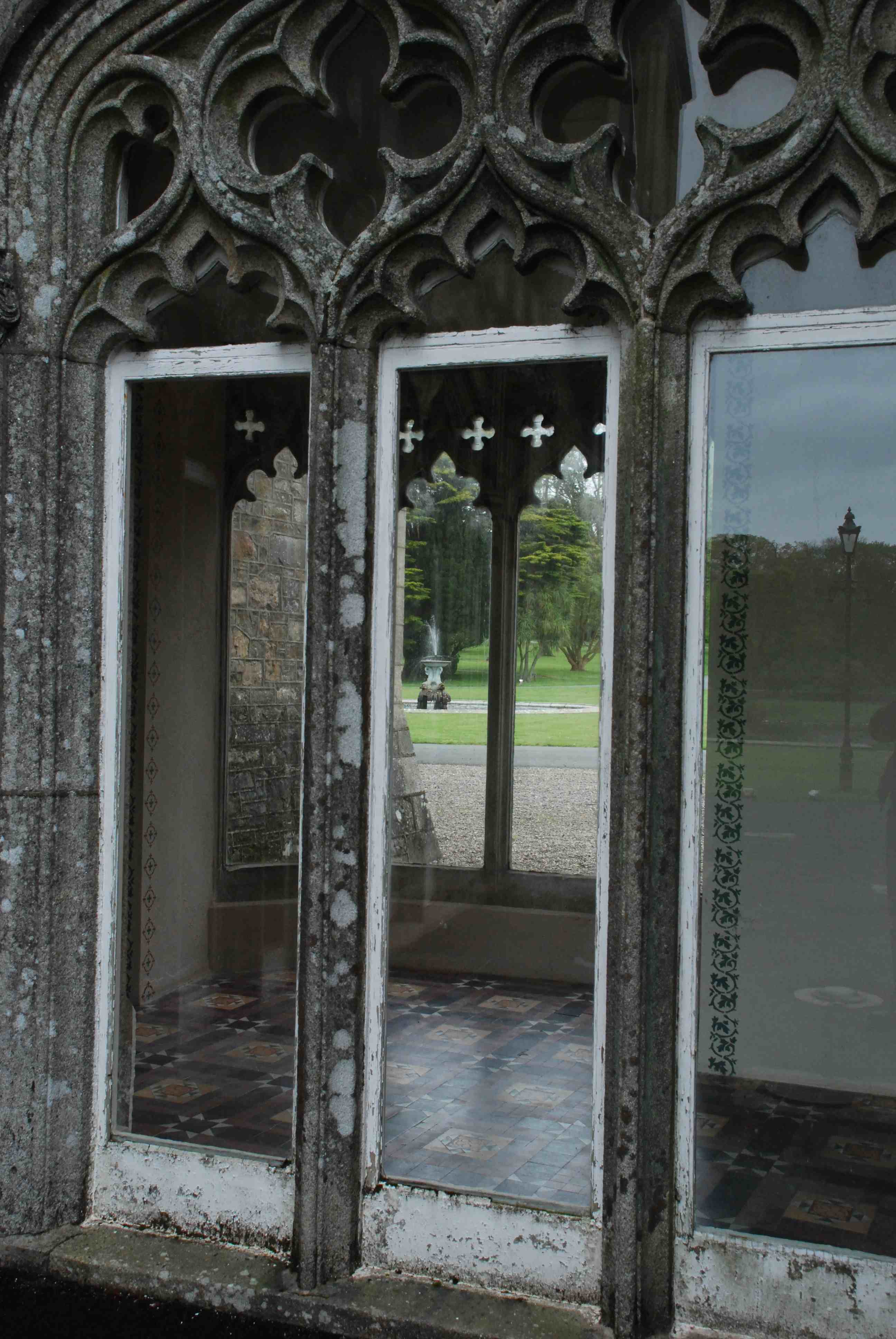
Detail of the castle, looking through a corridor
You can find out lots more on the website below* but basically the grounds cover 4oo hectares (1000 acres) of which a tenth are open to the public. The gardens were designed by Daniel Robertson who was responsible for the more famous gardens at Powerscourt near Dublin, in the Wicklow Mountains. The majority of the estate is used for agricultural research and the whole is now owned by Teagasc (the Agriculture and Farm Development Authority).

detail of the building
The castle, which is delightfully ornate and gothic in style (Victorian revival – its my style of architecture), dates from the 19th century although there has been a castle here since the late 12th century. It was built for the Grogan-Morgan family between 1810 and 1855 and the gardens laid out from about 1830 when the 2 hectare (5acre) lake was dug out. The huge (4acre) walled garden was started in 1844, a fair distance from the house so the owners would not have to see anything so unpleasant as a sweating gardener! Similarly the meat store and kitchens were located in a separate building with underground tunnel so the ‘domestics’ were never seen.

Another detail
The castle was in private ownership until 1942 when Lady Fitzgerald died and it passed to her grandson who gifted it to the Nation in 1945. The castle was used as offices until recently.
The grounds also feature two other lakes in addition to the main ‘castle’ lake, Rathlannon castle dating from the 15th century and the Statue walk opposite the castle.
The ground are home to many fine trees and large rhododendrons. Though this is in no way a plantsman’s garden and there are few herbaceous delights it is a very beautiful place and abounds with wild flowers and wildlife including red squirrels (though I did not see them).
The walled garden (though apparently restored between 1946 and 1959) is laid to lawn and could, with much effort, be restored to some degree to make it a notable feature. In particular some huge eucalyptus could and should be removed. The same applies to the sunken garden. These features must have been incredible when at their peak and are now a mere shadow of their former selves, though they are at least retained.
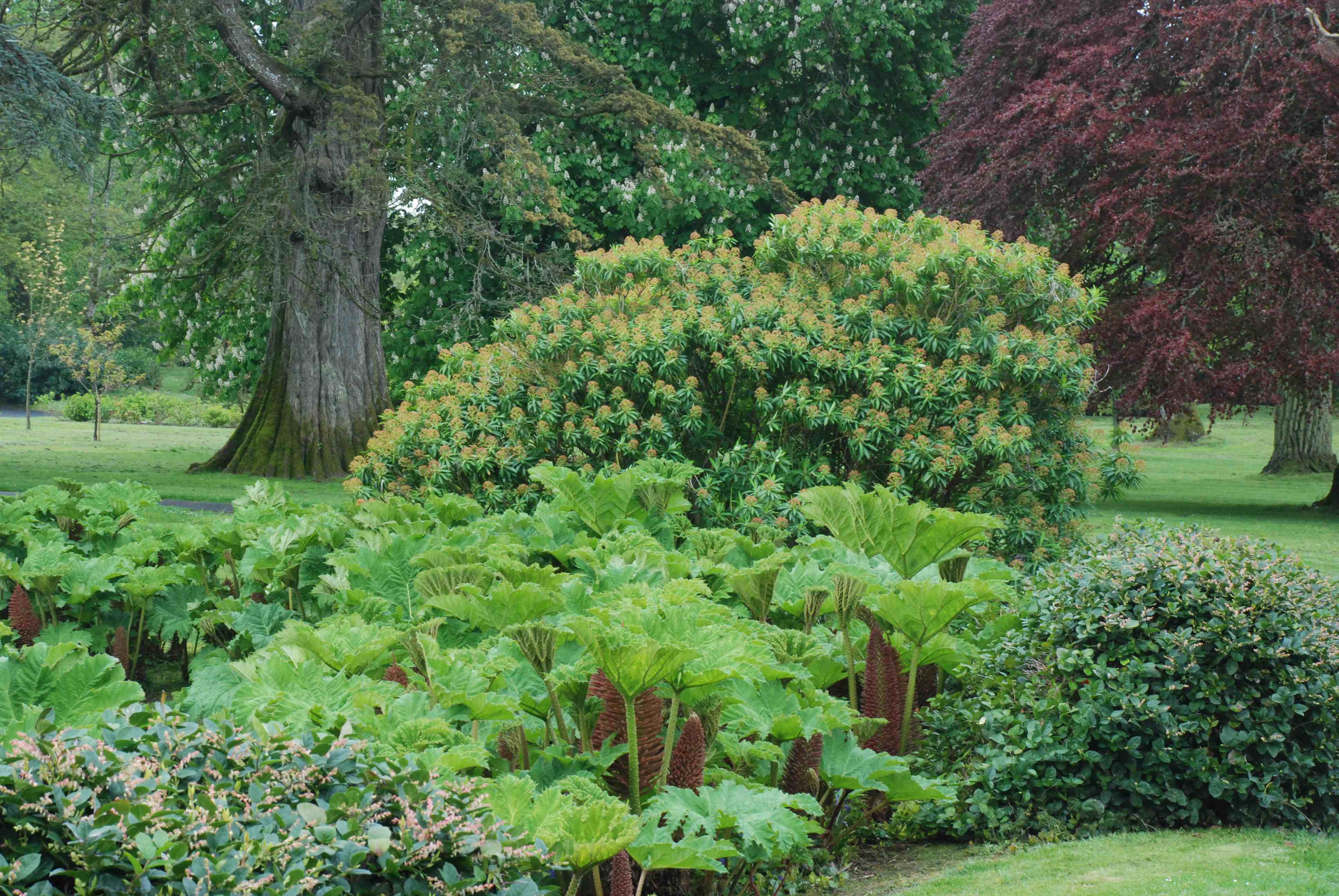
The biggest Euphorbia mellifera I have yet seen, dwarfing the gunnera! The honey scent was astonishing

A large, beautiful beech, covered in moss

Moss is a bit of a theme – here it is studded with primroses
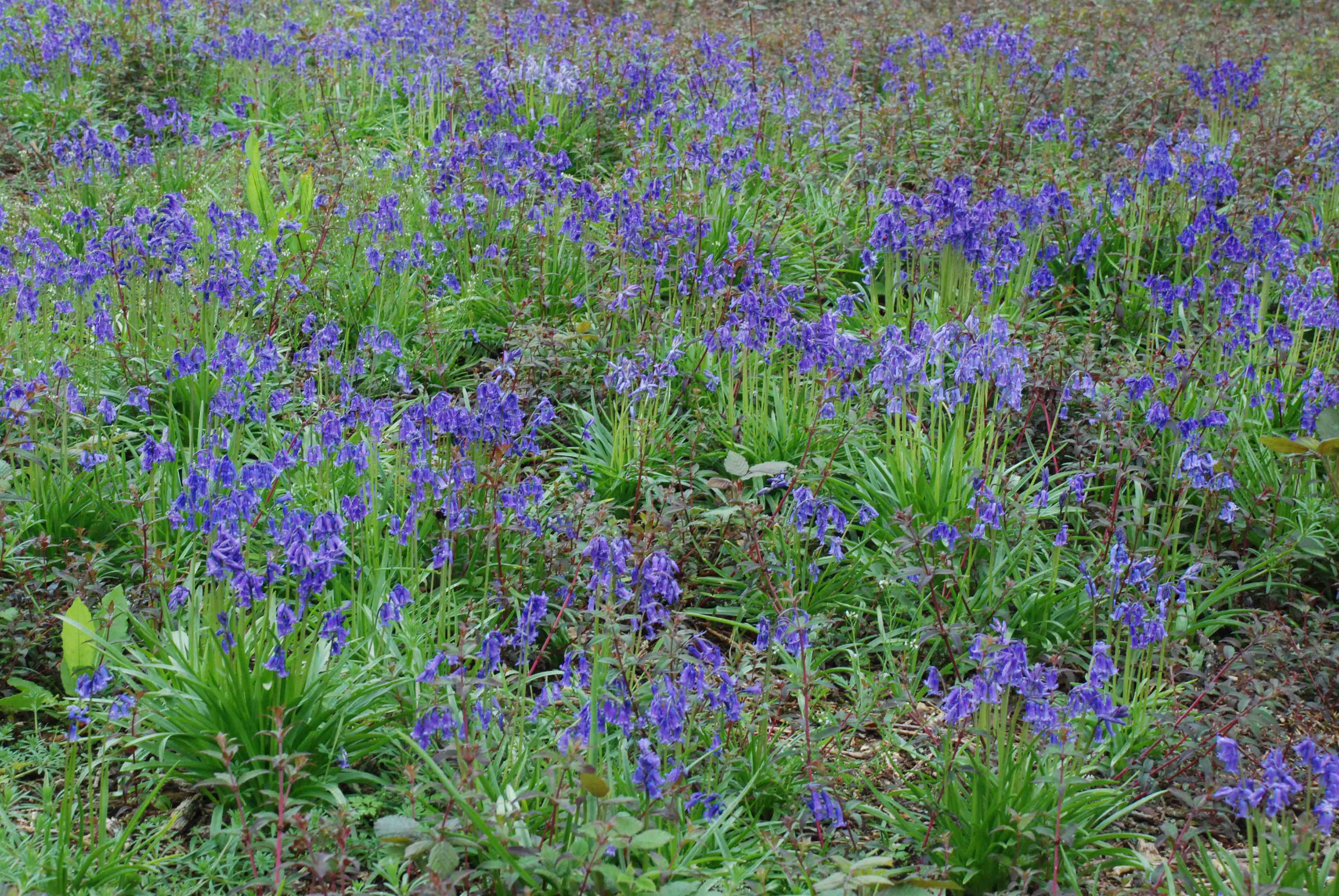
I couldn’t work out what the purple haze was among the bluebells …
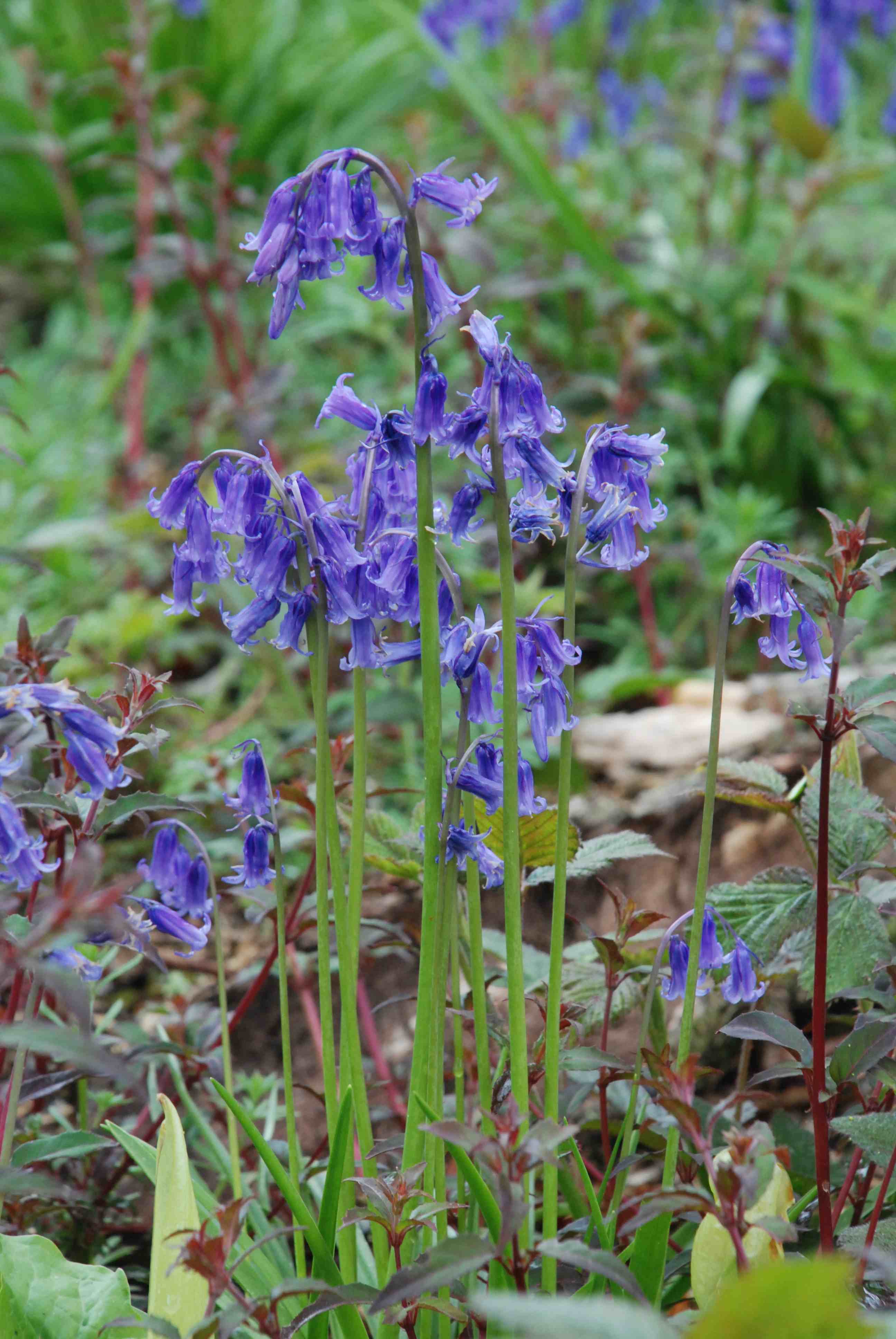
… until i got closer and saw it was fuchsia shoots. They must have cut down or even grubbed out great thickets of fuchsia and now it is regenerating through the mass of bluebells that had thrived in their shade
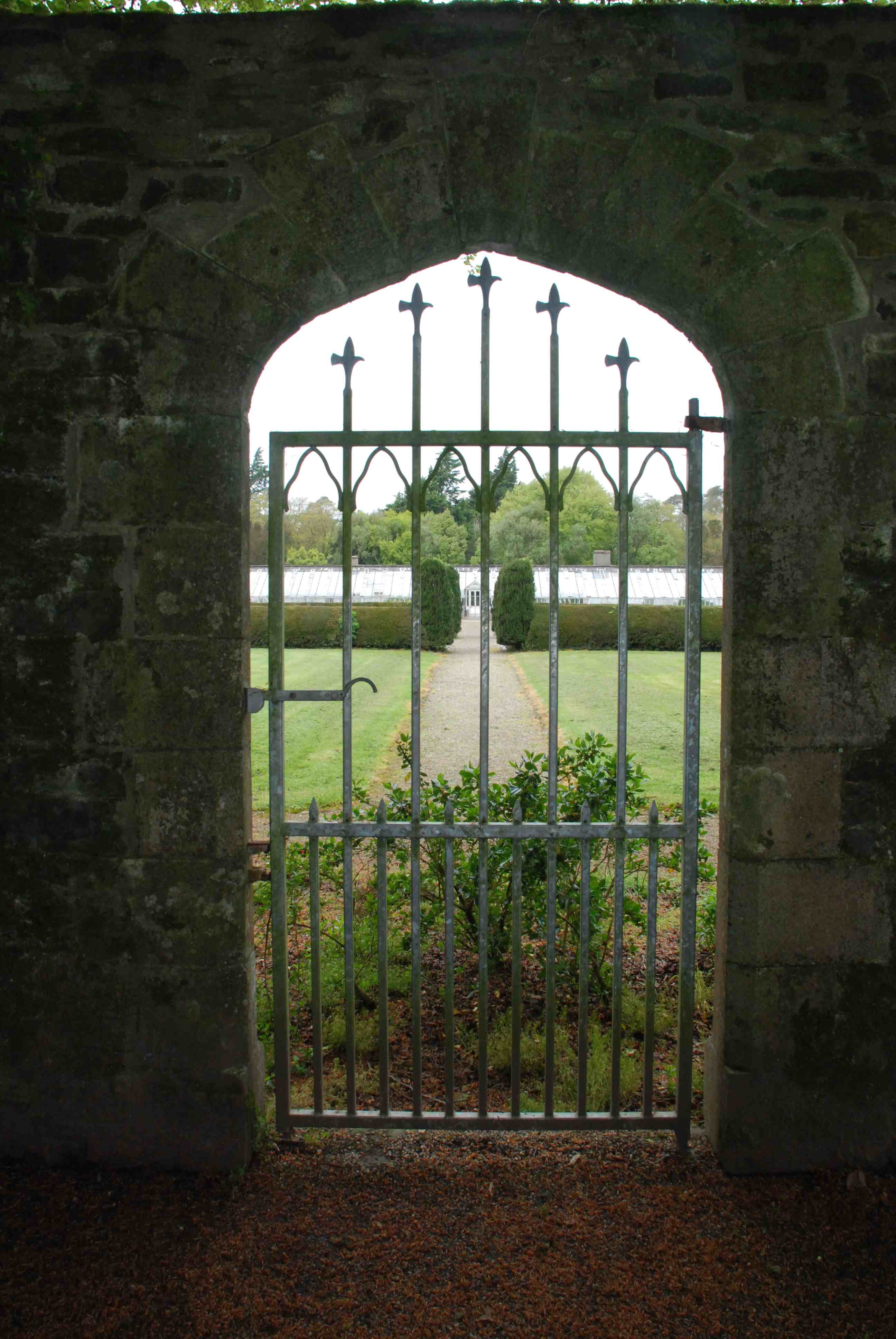
The extensive walled garden had many entrances, some of which are bricked up.

The walled garden is now a mere shadow of its former self
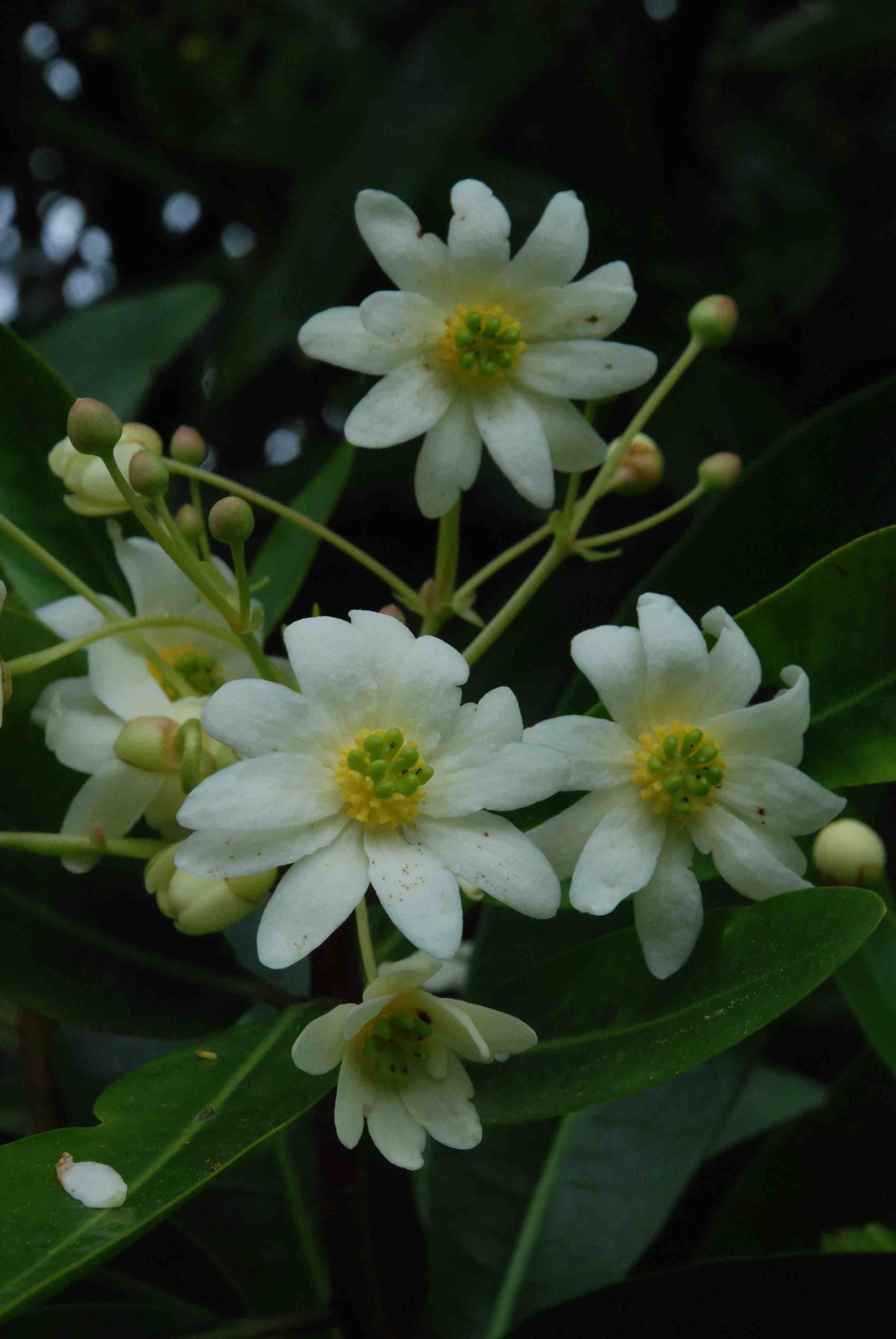
Drimys winteri is showy in bloom and has become huge in the garden
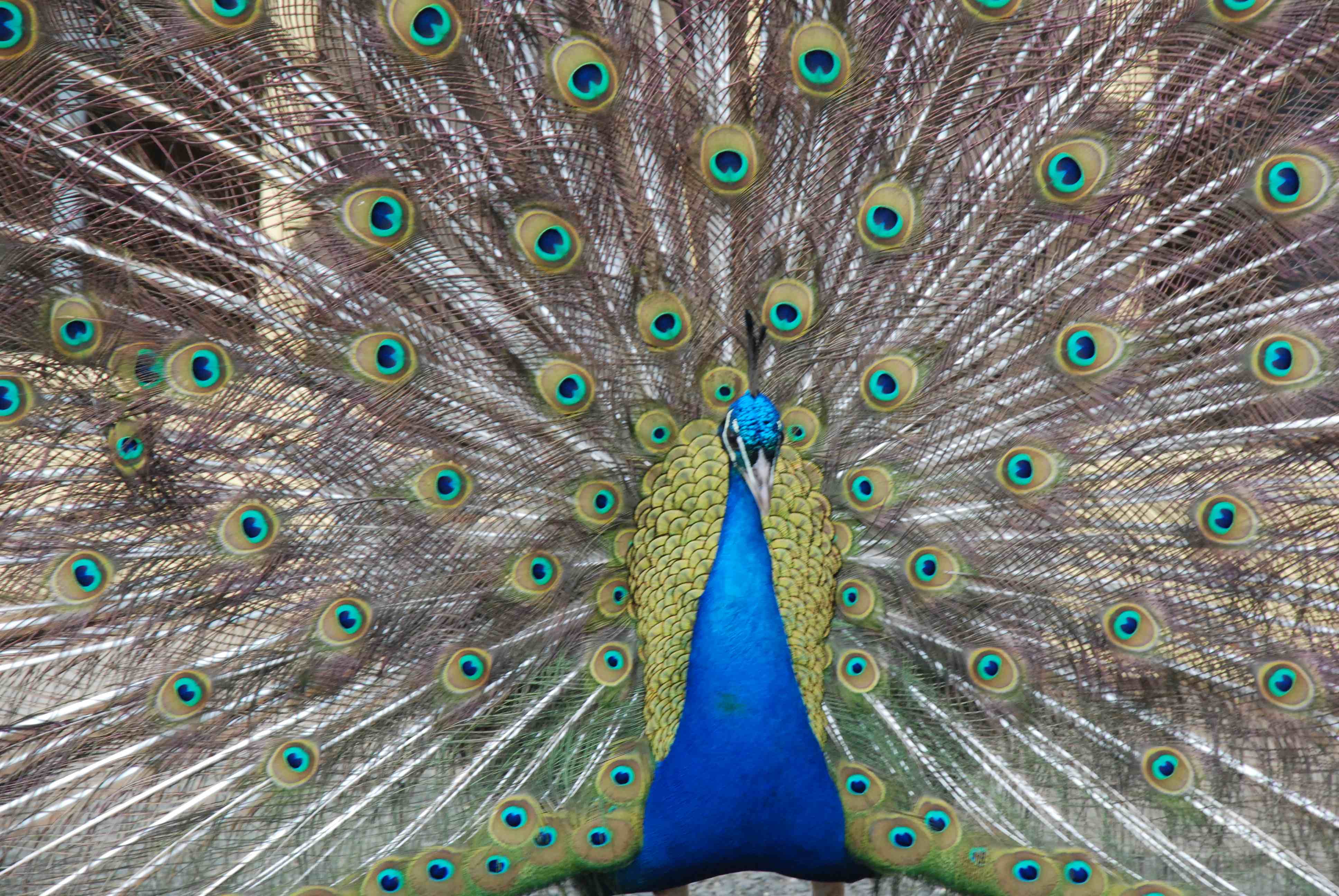
A couple of very precocious peacocks entertained everyone around the entrance to the cafe and museum
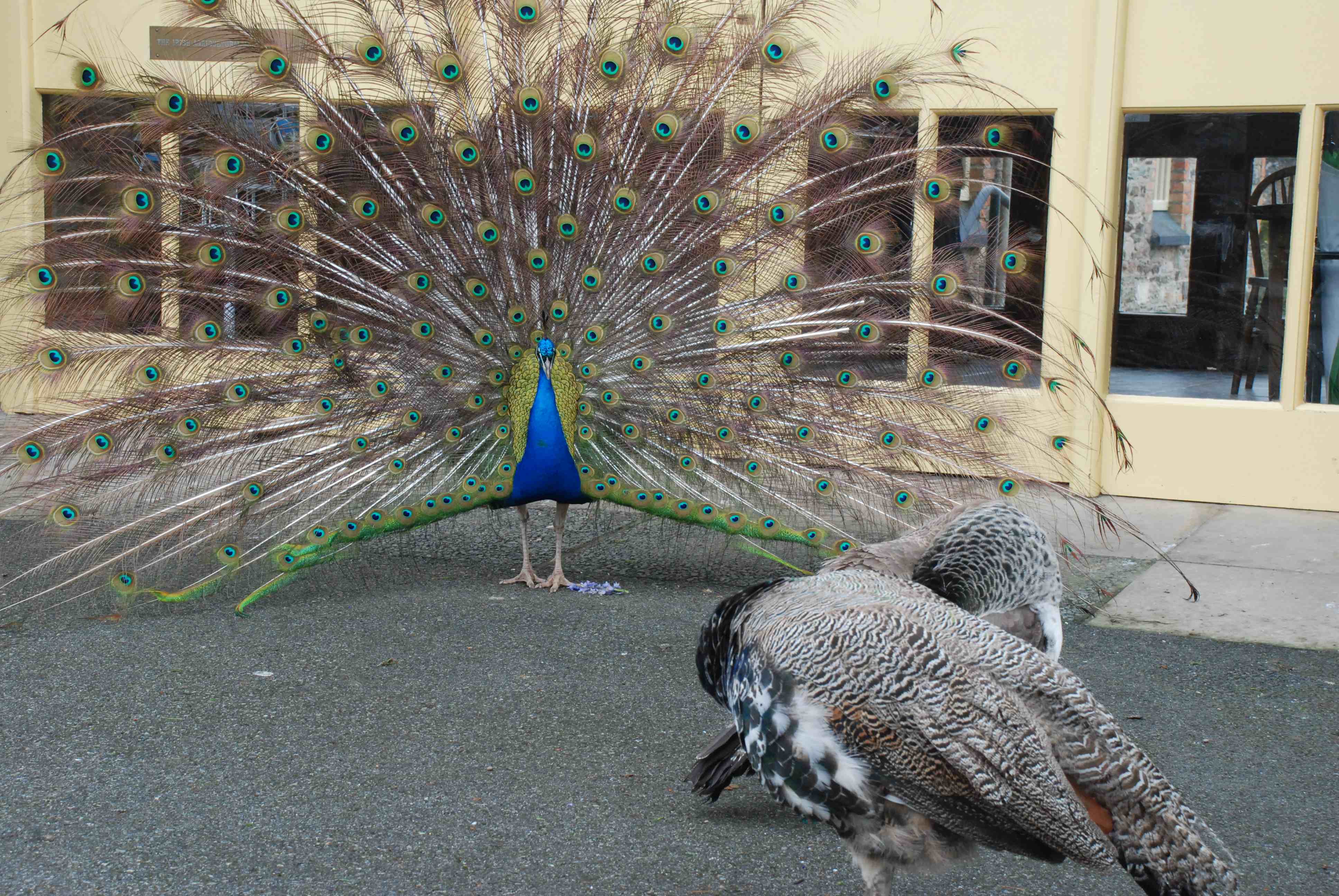
Unfortunately for him, the pea-hens were far less impressed with his display than me and just carried on preening themselves!
 The Biking Gardener
another lovely outing thank you for sharing
Thank you. Back from the show so will report on that tomorrow after some sleep!