Knowing your onions
This year I am growing onions four different ways – well four different types of onions: from autumn-planted sets, from spring-planted sets and from seed sown in January and in March. This is just an update on how they are doing and I will do another update as and when they get bigger to see how they are doing.
Autumn-planted sets

Japanese onions, planted in September with October-planted garlic in the background
These are supposed to mature earlier than spring-planted sets and there is a limited range of varieties available. The main disadvantage of these is that they can succumb to downy mildew but so far mine seem free of this and healthy. They looked pretty miserable in winter and the ground was saturated. I was not sure if they would spring back into life but they have really responded well to the last week of bright weather and, I guess because of their good root system, have made good growth. They were planted 15cm apart except for one row planted closer to pull as immature ‘spring’ onions or scallions.
Spring-planted sets
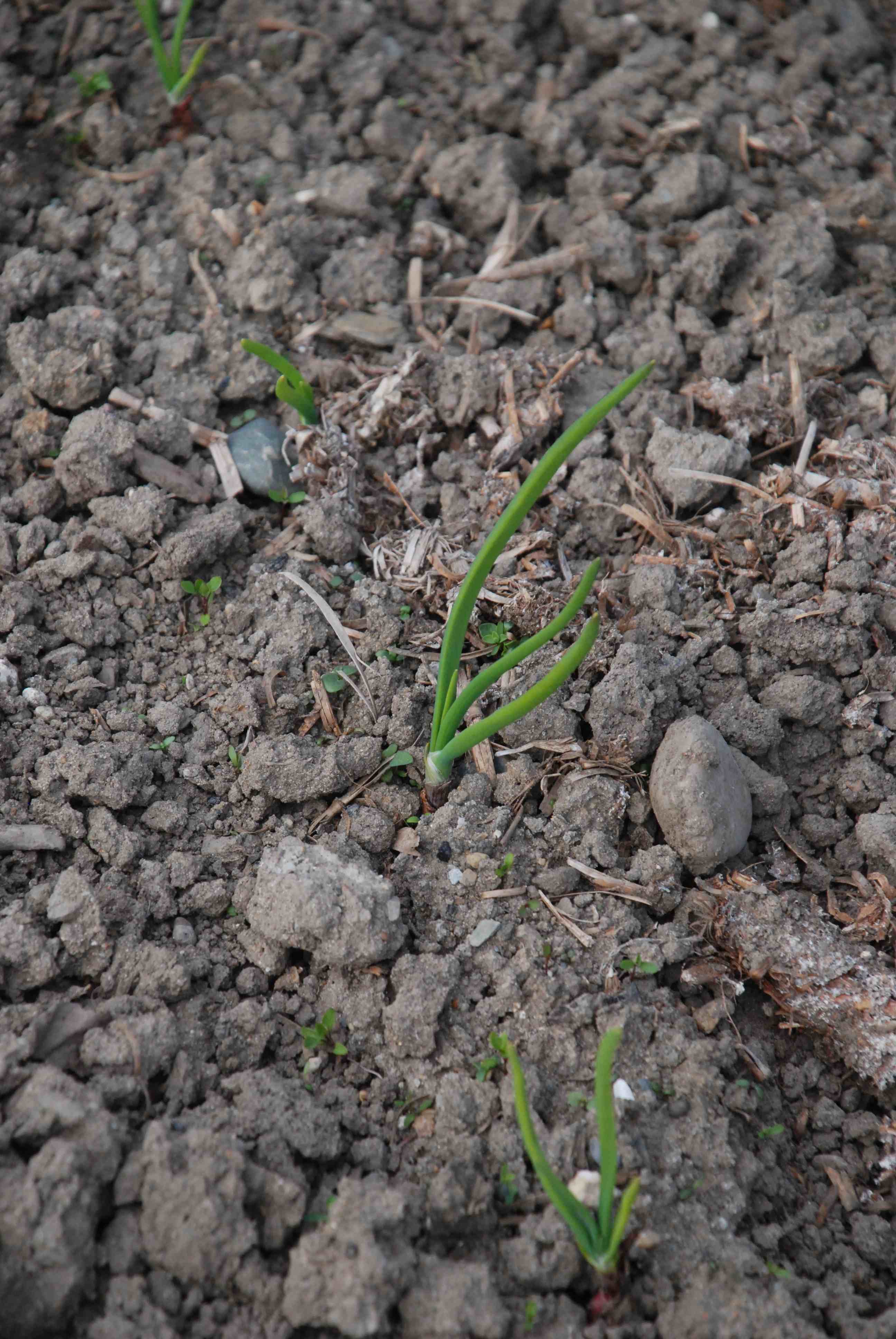 These red onions were planted about a month ago and have already made good growth. Red onions are more likely to ‘bolt’ or make flowers stems, whether grown form seed or sets, but I like them for cooking and they are supposed to be better for you than white onions.
January-sown seed

Robinsons ‘Mammoth’ onions
These are Robinsons, ‘Mammoth’ onions and I would expect them to be bigger than these, but spring has been pretty sunless until recently and I am sure that has affected them. They were sown on New Year’s Day and transplanted into small cell trays and then planted out last week. I have varied the spacing with some 45cm apart and others 20cm apart to see what difference that makes to their ultimate size. I will also grow on a few in the greenhouse.
March-sown seeds

Red onions sown in cells
I also grew some Italian red onions in cell trays. I sowed two or three seeds per cell and planted them out in clusters. As they grow they will be thinned and pulled as scallions to leave just one to mature at each station to get a bigger crop in the space. This is a good method for small gardens or in raised beds. At the moment they are not much smaller than the January-sown giants which a) confirms what I always say about late sowings catching up and b) worries me about the ultimate size of my giants!
 The Biking Gardener
No comments yet.