How to prune roses
How to prune roses
Pruning shrubs of any kind seems to confuse people but it is usually quite simple to understand if you think about why you are doing it and this applies to roses as much as any plant. Because roses are so universally grown perhaps the way to prune roses causes more confusion than most shrubs. Add to this the different types of rose and the foibles of fashion and you have a lot of conflicting information.
I will show how to prune a cluster-flowered rose (floribunda) in a moment but I need to mention how to prune other types first and cover a few principles.
When pruning roses, as any other plant, you should start with removing dead, diseased, damaged and badly placed stems. It is then good to remove really old stems to make room for younger, more vigorous shoots. Most roses bloom on new shoots, produced in the same year but ramblers and old-fashioned shrub roses are exceptions.
Some people like to prune in late autumn but because pruning actually stimulates growth I do not hold with this practice because new shoots, produced early, can be damaged by frosts. It can be, and probably is, a good idea to shorten growths in late autumn to prevent wind rock and also remove foliage that can carry disease form one year to the next. I prefer to prune in spring, usually in March, but depending on the season, starting the job just as the roses come into growth.
Climbers – these are just like tall cluster-flowered roses so although you will maintain some older stems to get the flowers high up, the younger shoots are pruned back just like lower types. As with ramblers it is important to train the main stems as close to horizontal as possible so you get flowers low down and not all at the top.
Ramblers – these only flower once, usually in June and July. They have growth rather like raspberries, making long canes one year and these flower the following year after which they are cut away and the next lot of canes tied in to flower. You can cut out the flowered stems as soon as they have bloomed or leave it till autumn but the new canes are more pliant when young so it is better not to wait till winter.
Old-fashioned shrub roses – These are a mixed bunch but they also flower on short stems growing from shoots made the previous year. So cut out older stems and shorten long stems but do not prune them hard all over as shown below or you will not get many flowers.
Modern roses (by which I mean most cluster-flowered and large-flowered roses that bloom all summer or in many flushes) are the simplest to prune. Never be afraid to prune roses, it is hardly possible to kill a rose through pruning as long as you keep your cuts above soil level. As a general rule cut weak shoots very hard, I would say to one bud, and cut stronger stems less hard, leaving four or five buds. This will encourage the weak stem to produce one strong stem that will bloom rather than several weak shoots that don’t do much. Try to cut back to an outward-facing bud – that points away from the centre of the bush so you keep the centre of the bush open. It is not essential but it is good practice. Make the cuts just above a bud, ideally sloping away from the bud and about 5mm above the bud. If you leave a long ‘snag’ above the bud that part will die back and may spread below the bud. If you cut too close to the bud it may die. It may sound a bit worrying that I am using mm to describe this but it is not too onerous to do really and it is just a guide.
So we will start with this bush of ‘Rhapsody in Blue’. It was planted a year ago.
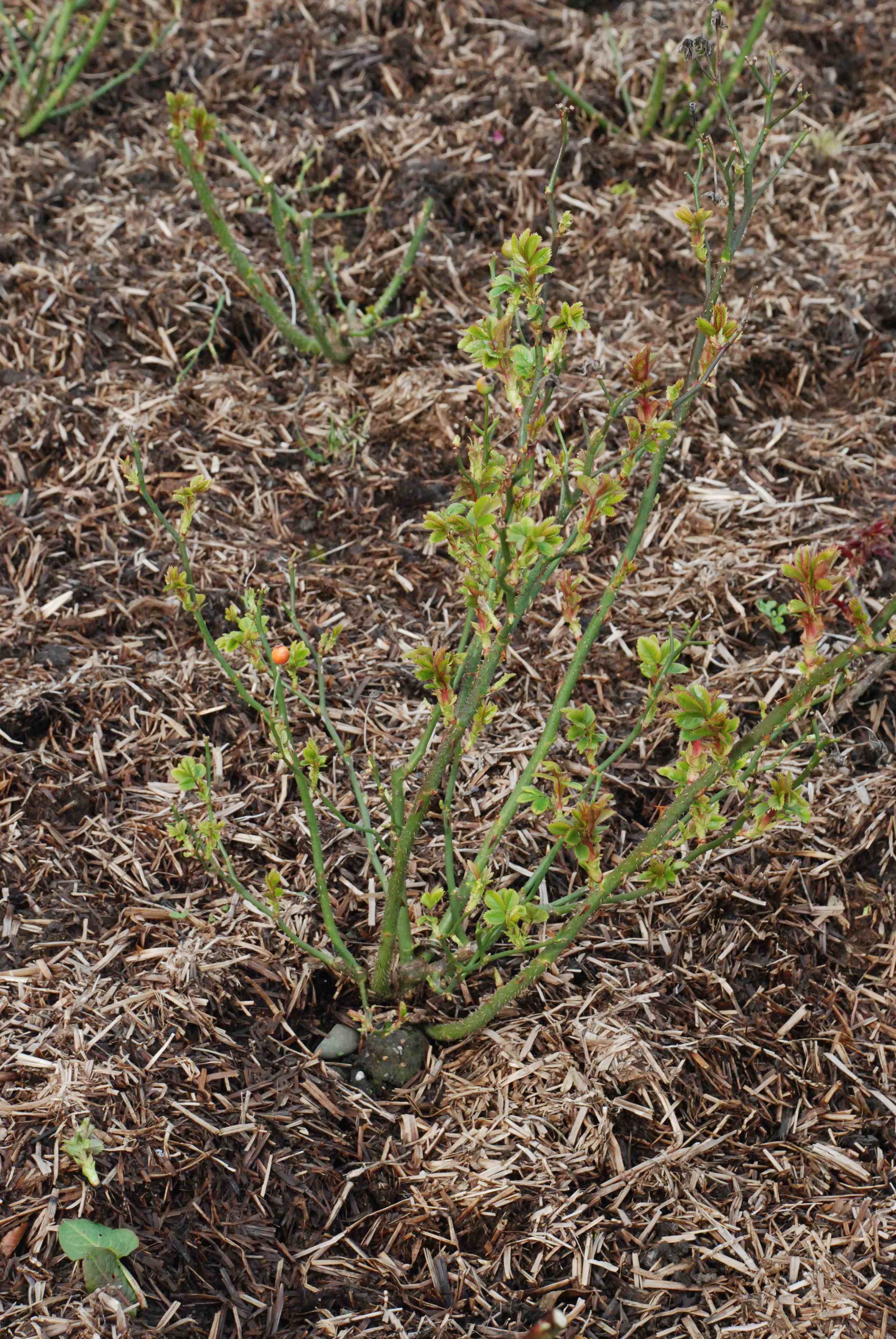
New growth has begun so it is time to prune. Pruned roses are in the background
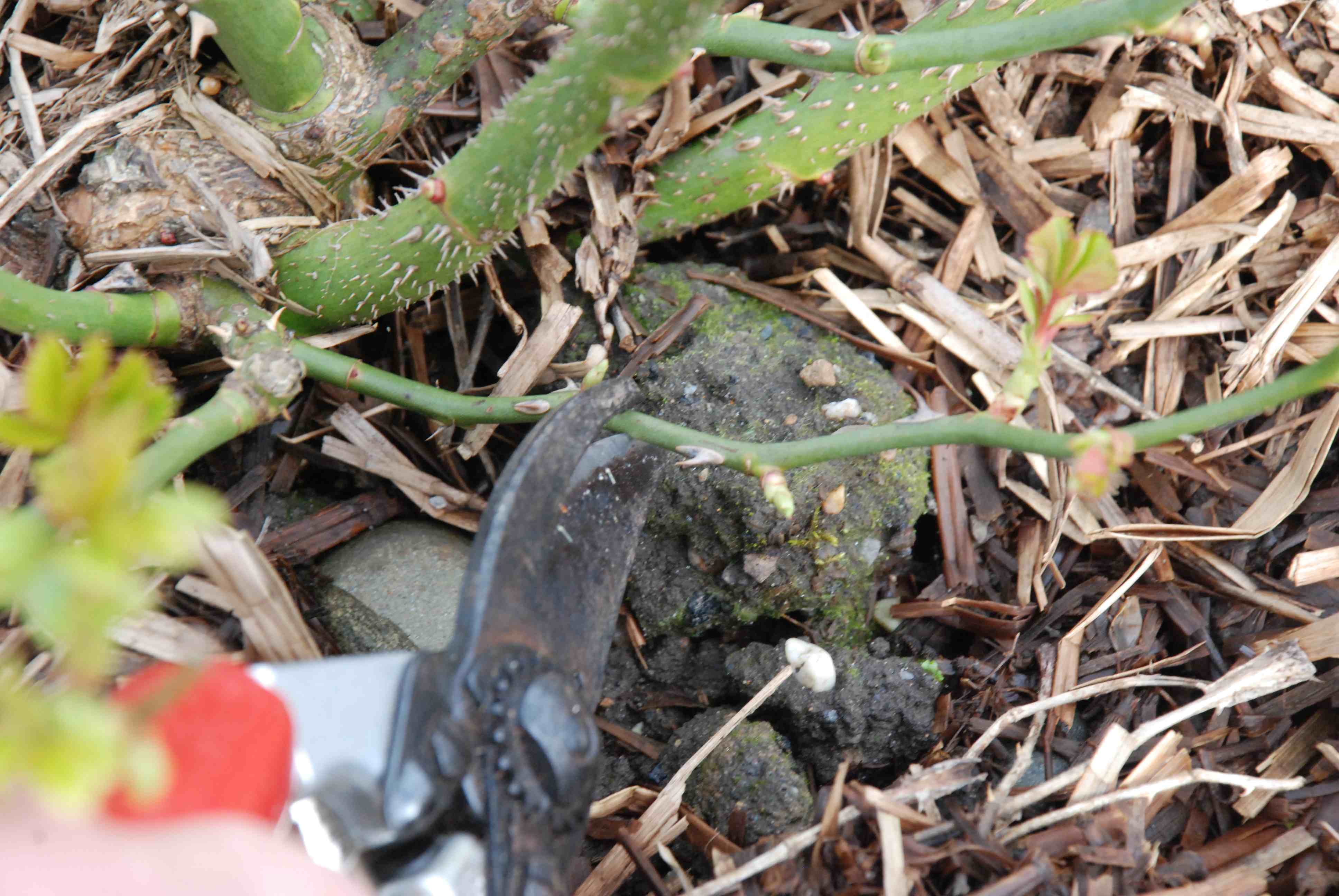
Weak shoots should be pruned hard, back to one or two buds or cut out completely
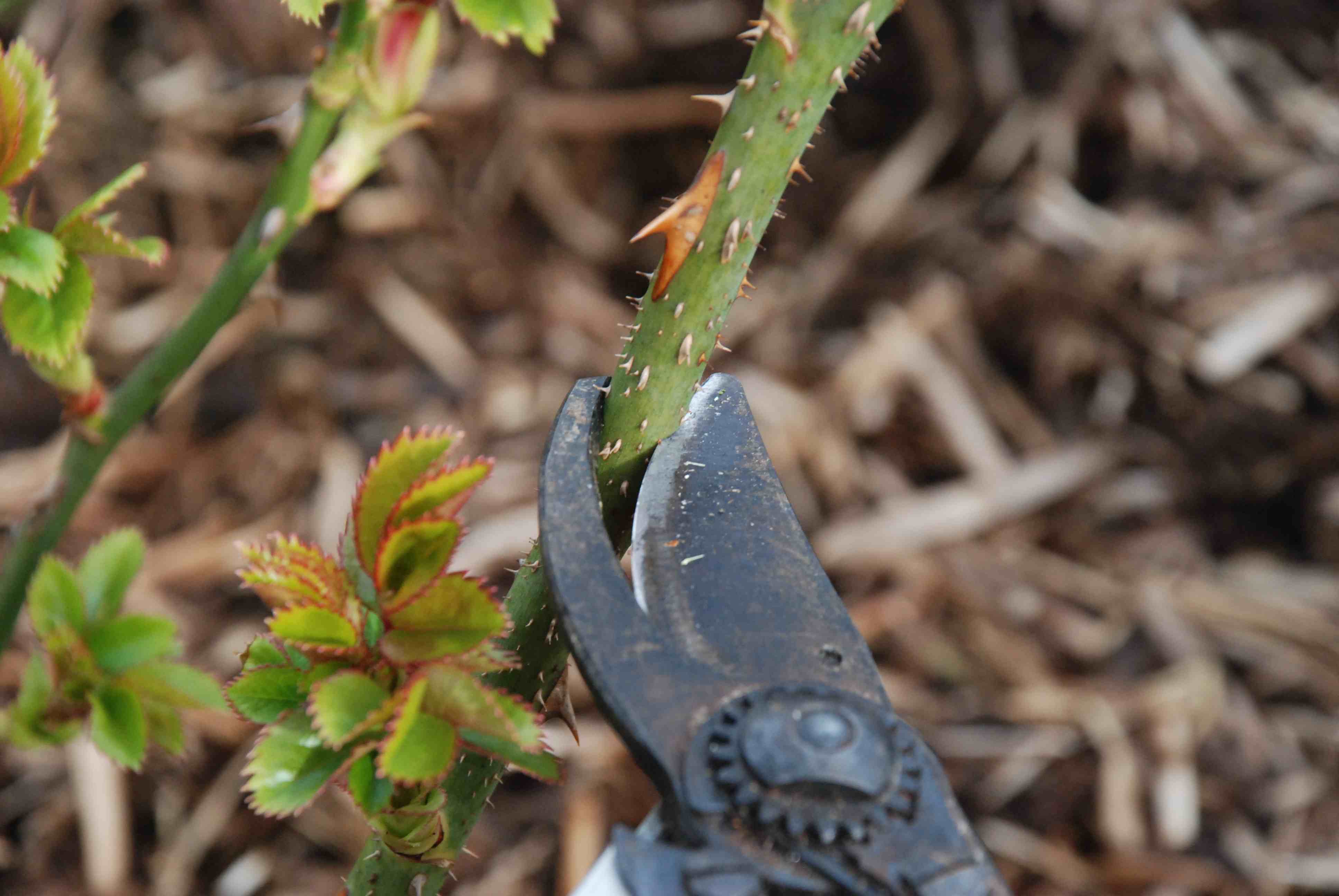
Strong shoots are cut back less hard as long as they are healthy and well placed
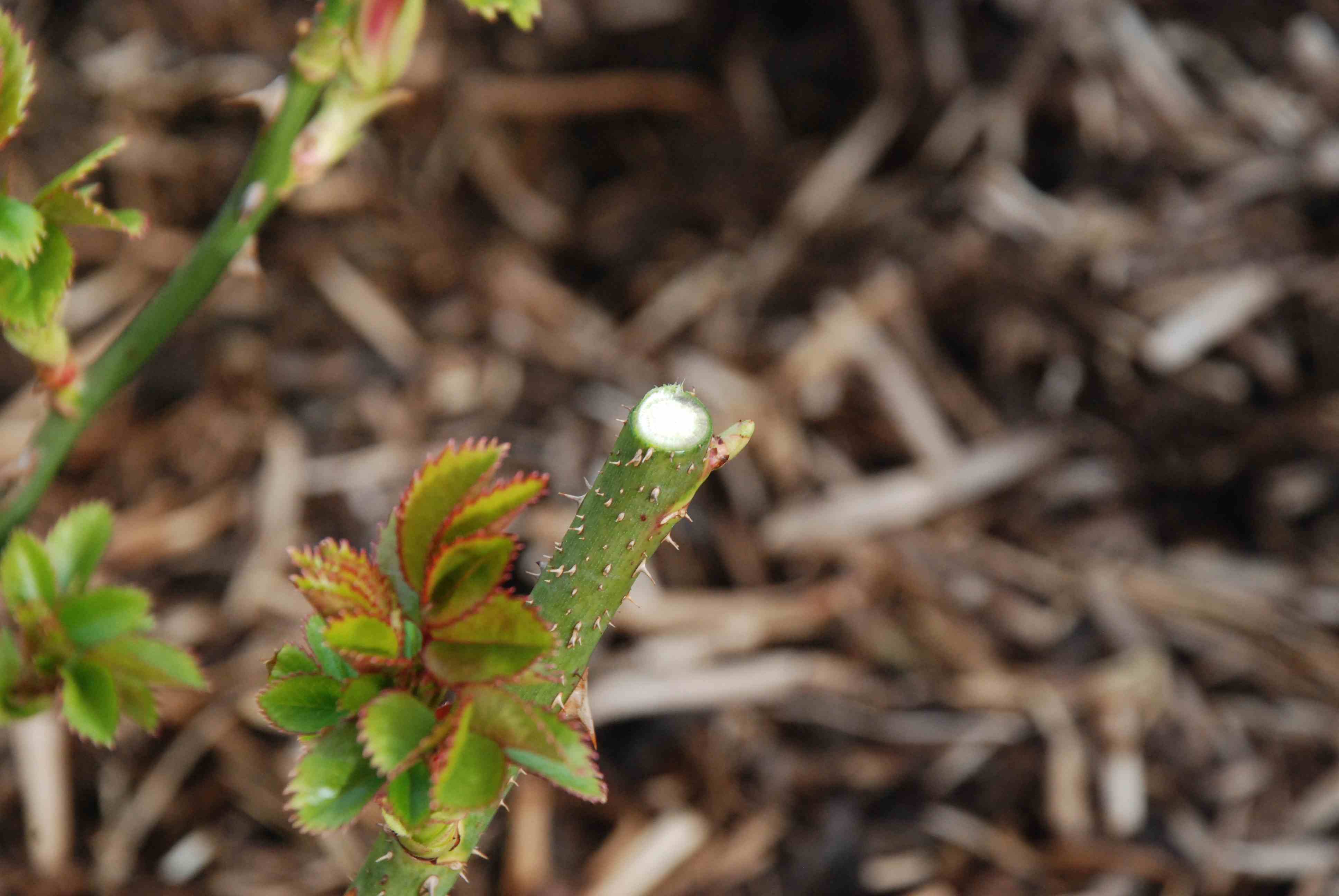
The pruned stem showing the outward-facing bud

Always try to keep the plant young by removing older stems. This bush is only a year old but there is lots of new shoots from the base so the end of this older stem is removed to make room for younger stems
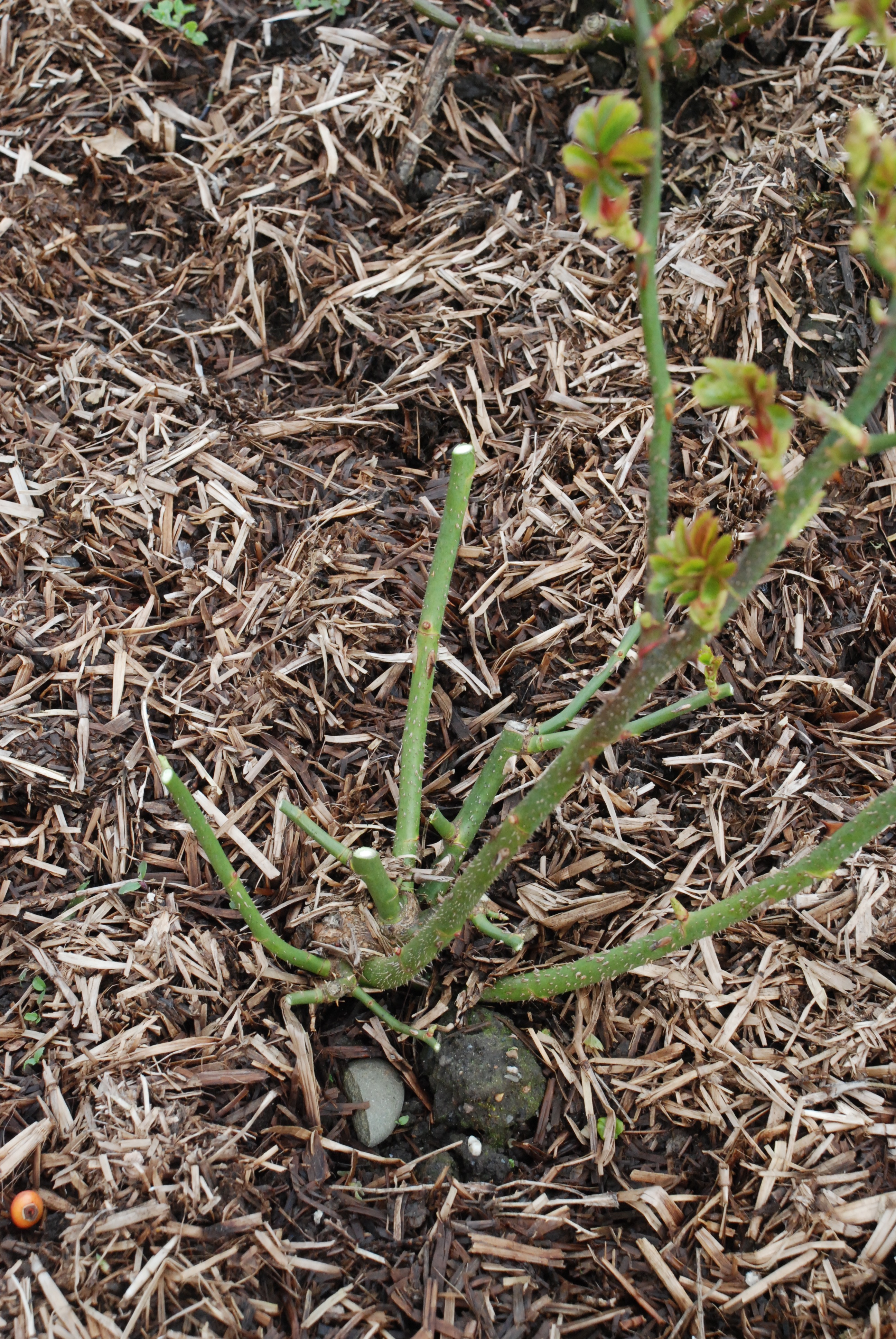
Almost done. Cluster-flowered roses are usually pruned less hard than large-flowered roses because you are aiming for lots of flowers rather than just a few, giant, flowers. Hard pruning also delays flowering slightly but can be necessary if the bush is overgrown or has not been pruned for a long time
After pruning give your plants a rose fertiliser and mulch them to keep down weeds and maintain soil moisture.
 The Biking Gardener
No comments yet.