Floral fireworks for a wet day
I will cheat a bit today, after the practicalities of sowing salads and think back a few days and highlight (please note I do not showcase – it is a noun not a verb – even the BBC use it as a verb now and I cringe). I am falling out of love with the beeb and last night did the unthinkable and switched one of my radios from Radio 4. I listen to Newstalk in the car but I need Radio 4. But last night I put the radio on when I went to bed and it was the programme that I hate most. I love most of the output and tolerate 99.9% but there is one programme that I cannot stand. Poetry Please with Roger McGough is the biggest load of rubbish ever to be broadcast. I know I am something of a philistine when it comes to the arts and my sort of poetry was written by Edward Lear and Dr Suess. You can’t argue with ‘You have brains in your head. You have feet in your shoes. You can steer yourself any direction you choose.’ Anyway if he stuck to nonsense verse instead of trying to pretend the drivel he spouts is something of value I would listen. Rant over.
Back to something much nicer – flowers in fiery shades.
Red is a flower colour that brightens up the garden but can be rather dull in shady conditions unless it is the vermillion side of red with a good dollop of orange in it. Move past the midway point and venture into crimsons, wines and magentas and they can be recessive. Orange/reds are opposite green in the colour wheel so green foliage is the perfect foil to really show them off. Put them with yellows and gold to make a complementary fiery border or just mix them in to lift a border.
The following are all flowers from the trip to Tenerife and, I am sad to say, the gardeners there do not seem to worry so much about mixing colours and plants in sympathetic designs. They tend to be thrown in and allowed to grow. It is a great shame – if anyone over there wants me to come and sort it out for you I am not far away :). It is a case of a lot of good ingredients but not a very satisfying meal.

Back to the flowers. One of the most striking, used everywhere in hedges, gardens, parks and as a screen is Russelia equisetiformis. Russelias are in the Plantaginaceae (well they are now – until recently they were, logically in the Scrophulariaceae).
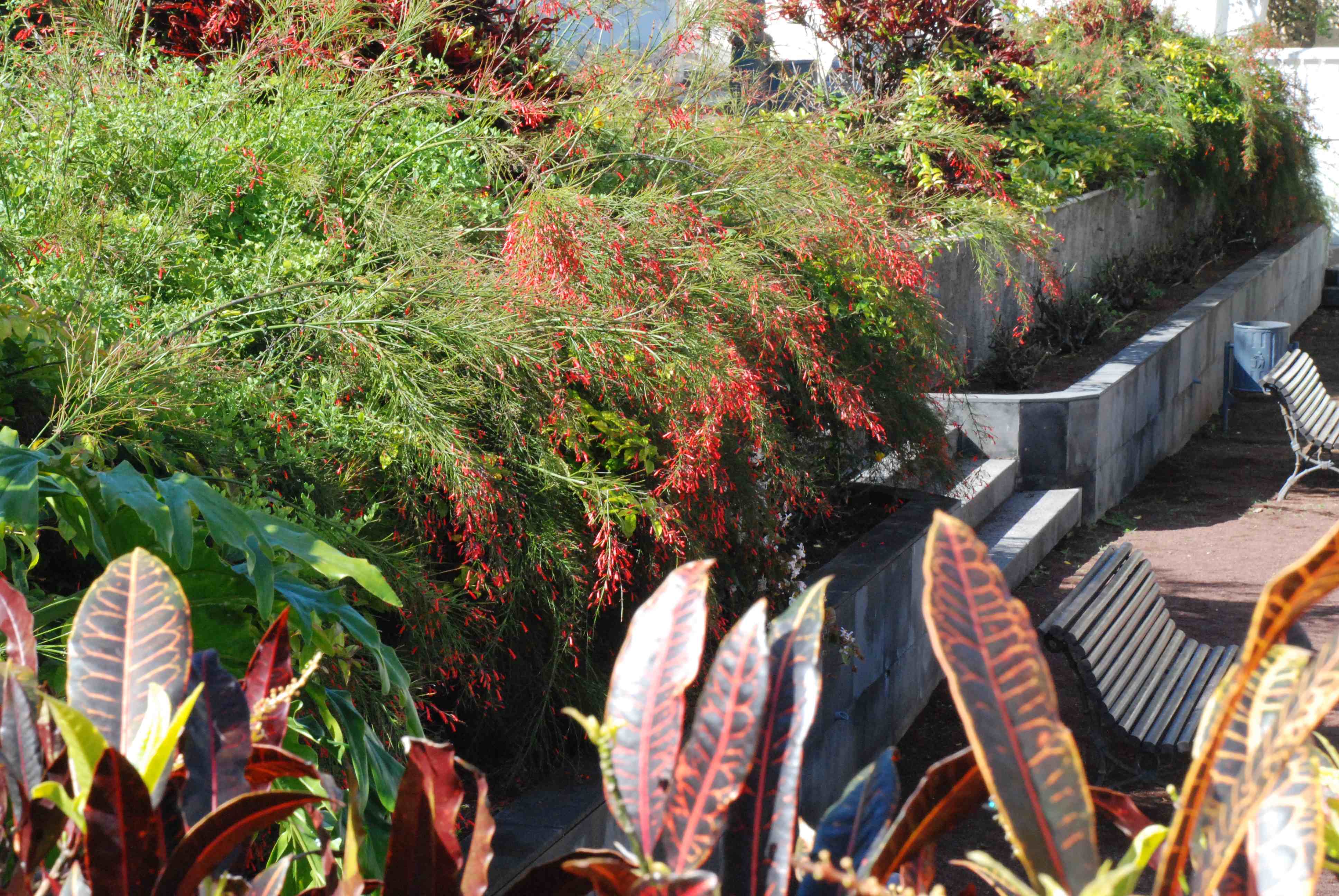
This species has stems like an equisetum (Mare’s tail) and tubular, red flowers (cream in one variant). This is a vigorous plant that, in warm climates, is ever-blooming. The flowers have no fragrance but are a good source of nectar though the flowers are adapted to pollination by humming birds rather than bees.
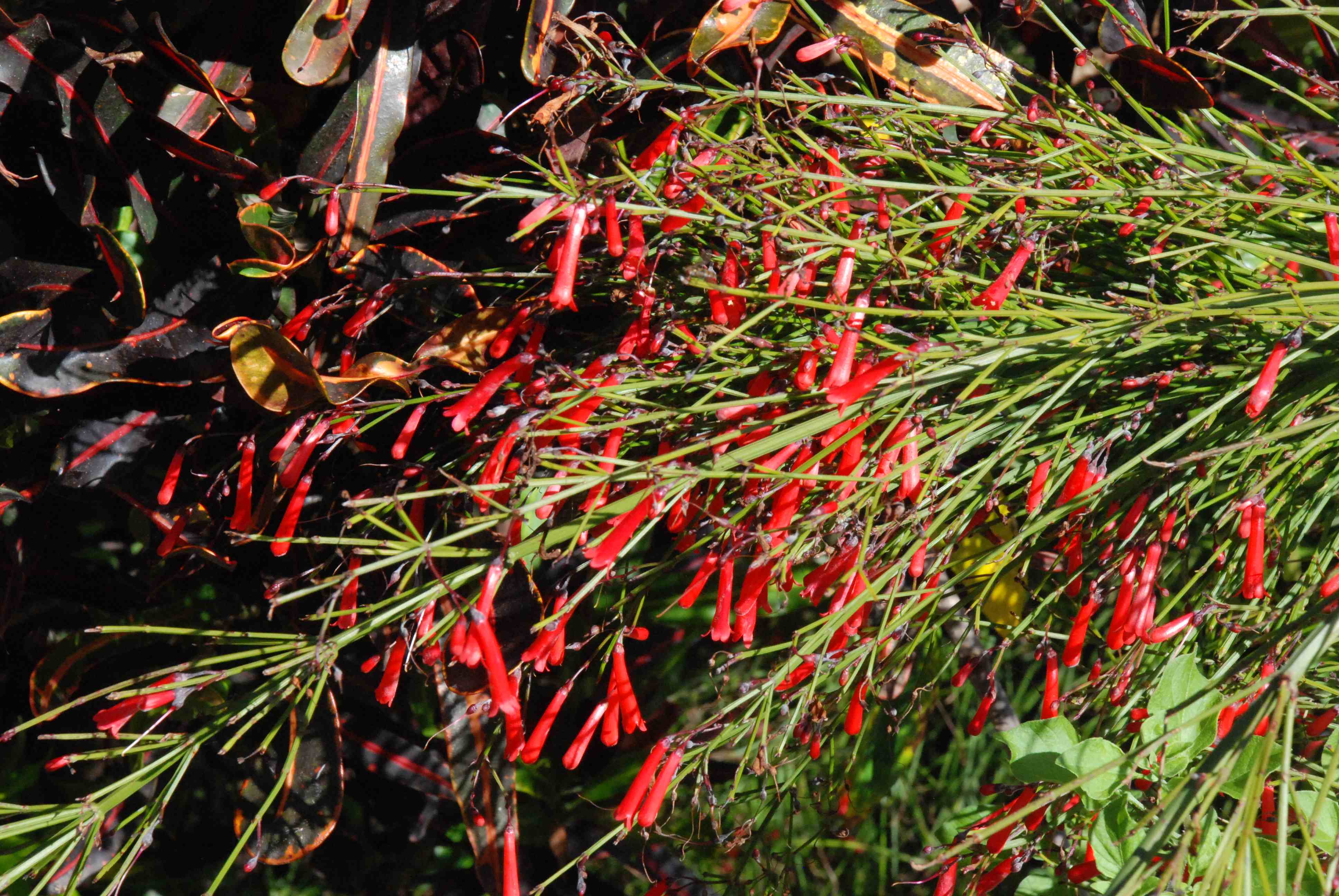
I like all of these plants but if I had to choose just the one that I would like to be able to grow outside it would be hibiscus (H. rosa-sinensis). The flowers are gorgeous in form, there are incredible colour combinations (step aside iris, the hibiscus is the real rainbow flower) and the evergreen foliage is attractive.

Although the flowers only last one day, in cool conditions they can last a second.
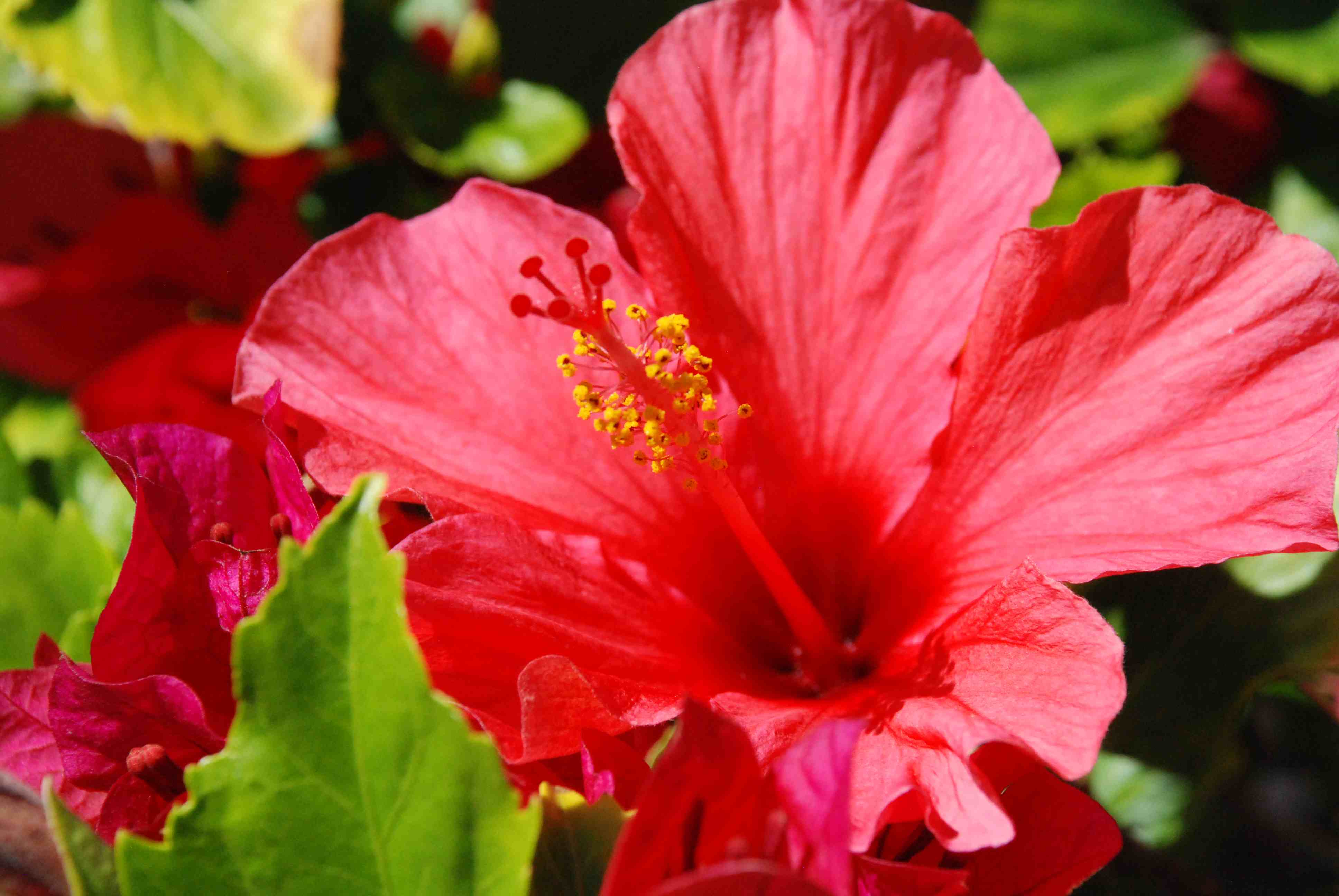
Cannas are spectacular plants but the wild species are much more demure. Even so the small flowers have their charm and this cluster of flowers of Canna indica against a palm trunk struck me as worth a closer look.
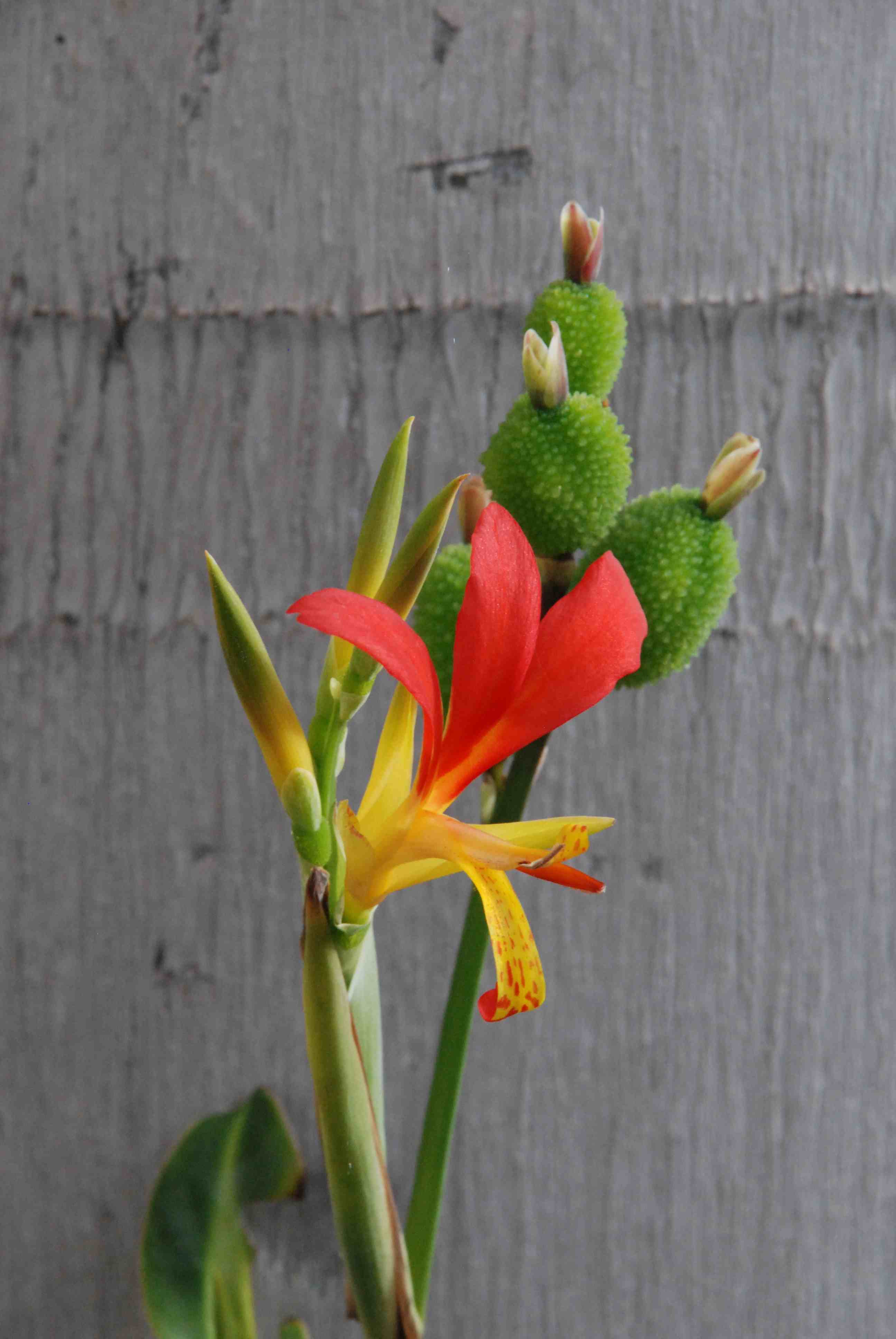
Although canna is a rhizome and not a bulb, this seems the right place to mention the bulbous Scadoxus puniceus. This east African bulb tolerates some shade and has lush foliage, the scapes of small flowers, surrounded by colourful bract, push through the soil along with the leaves.

Erythrinas are a varied bunch, mostly from the Americas and in the pea family. They vary from large trees to herbaceous plants and none are really suitable for temperate climates. The hardiest is E. crista-galli and this acts as a herbaceous plant in the UK and Ireland with tall stems 2m high topped with bright scarlet, pea-shaped flowers. Other species are bushes or trees, often with spiny stems. The flowers are typically red but there are white and pink forms. This is E. speciosa from Brazil which has unusual, tubular flowers that make a beautiful head of blooms.

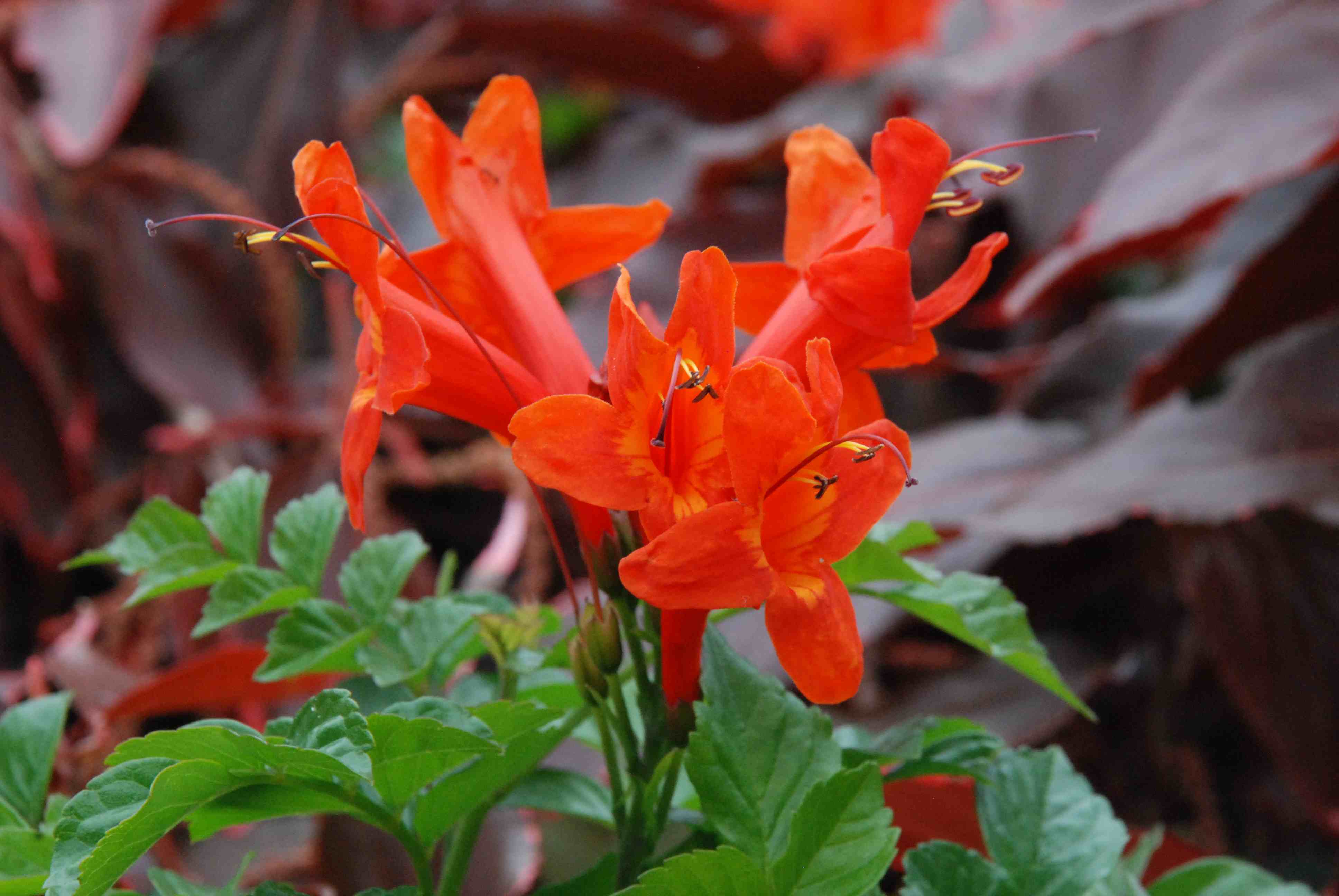
Tecoma capensis is sometimes available in colder parts of Europe as a patio plant and although it can be trained and trimmed as a bush it is a scrambling climber. In the right conditions it produces its showy, trumpet-like flowers almost throughout the year. Here it was growing in a hedge with acalypha.
 The Biking Gardener
Trackbacks/Pingbacks
[…] Floral fireworks for a wet day (thebikinggardener.com) […]