South Tenerife
It seems ages since I last posted and spring really seems to be on its way now. Plants are growing and seeds have been sown, of which more in the next few days. But by means of explaining my excuse for not posting, today its a few photos of south Tenerife where I just spent a week.

One of the friendly residents that will greet you in Tenerife
Tenerife is an island of contrast and often called the Island of spring because of its equable climate, caused by its position in the Atlantic off the (west) coast of Africa. In any one day you can drive from the frost-free coast with its subtropical plantings, up through temperate areas, into the Canary pine forest and laurels up to the alpine zone where the vegetation, in common with many isolated mountain areas, is dominated by giant herbs, in this case giant echiums. For the gardener the north of the island is the most interesting because it is generally wetter and better for growing a wide variety of plants. It is no coincidence that the botanic garden is in the north. But this time the holiday was in the south. The biggest resort here is Playa de las Americas which is a big, concrete sprawl that has spread as relentlessly as the lava on which is it built, to the east so it now joins Los Cristianos and west to subsume Costa Adeje. It is full of bright lights, perfume shops and annoying traders, their arms bound with ‘designer’ watches, persistently cajoling you to buy their wares – annoying. But at least the pass of the construction boom has decreased the time-share touts.
My week was spent to the east of the Americas in San Blas, a small ‘village’ just at the western perimeter of the airport, between San Miguel and Los Abrigos, both a quick and easy walk from the hotel. I stayed at the Sandos resort hotel there. This is not Tripadvisor so I wont go on about it too much but it touts its ‘green’, environmental credentials and the grounds are planted with Canarian natives (with useful display boards) and to the north is a wildlife reserve that is open for guests to wander around or visit with a guided tour. The hotel is on a huge, sloping site, and if you have a room near reception you have a long walk to the dining area but they have planned it really well so you never have to take the same route – there is even a tunnel mimicking a lava flow. Rooms are great, food is good and I would recommend it.

San Blas Sandos – interesting layout
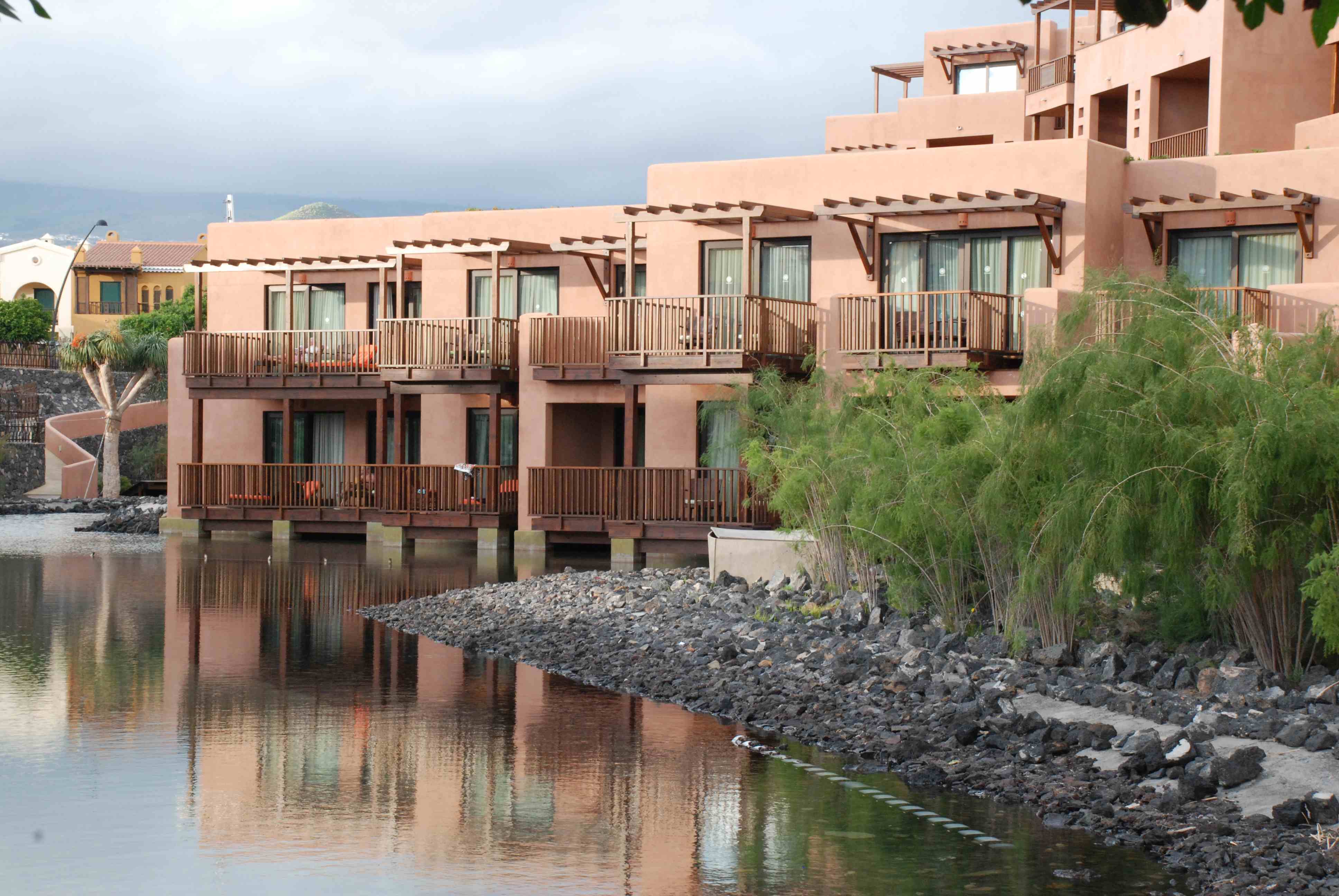
San Blas Sandos – lakeside

San Blas Sandos – pool area (there are 7 pools)

San Blas Sandos – Lower pool
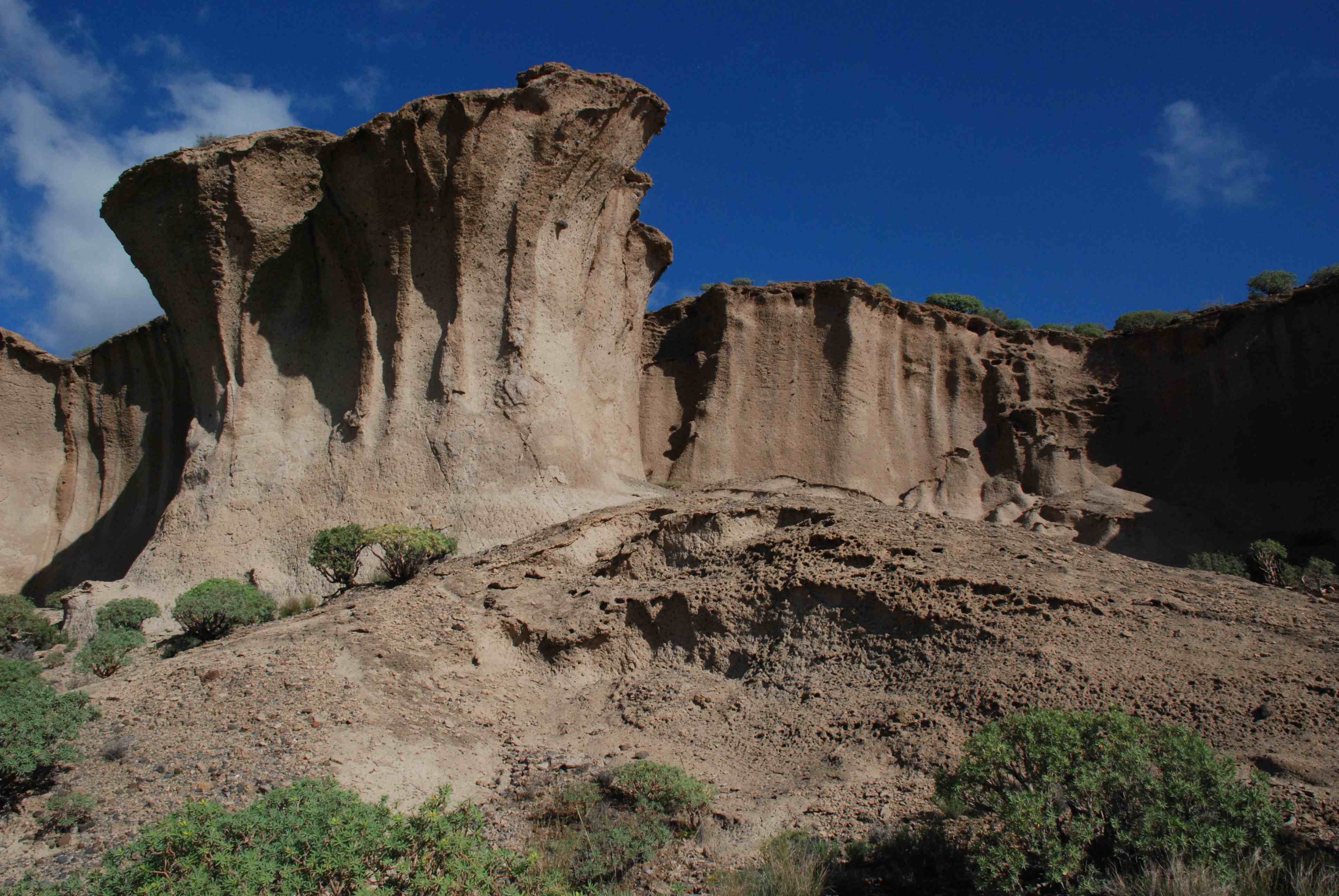
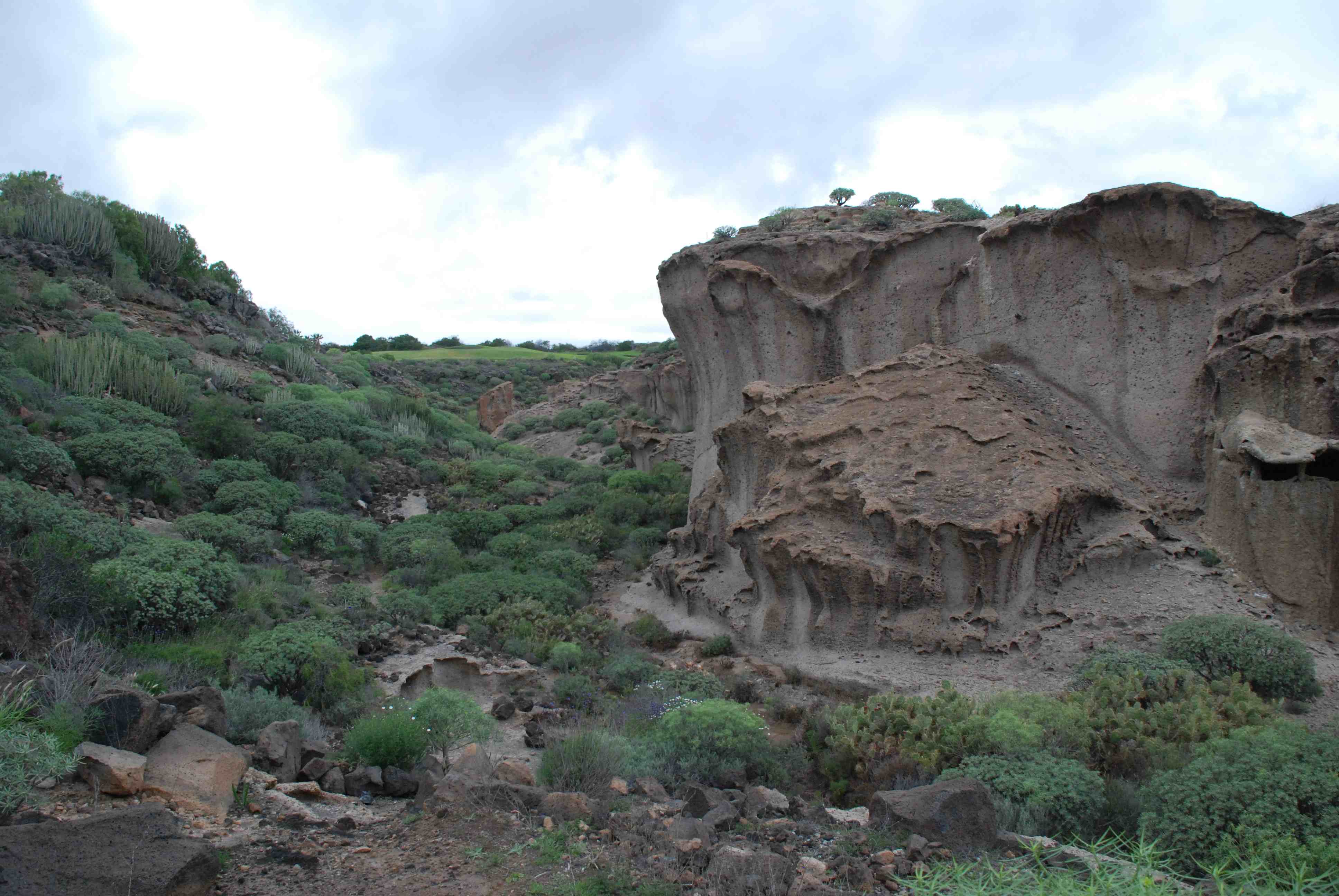
The reserve was a great area to explore but it was soon obvious, as we came across paths that were washed away, that this winter they have had exceptional rainfall. The general landscape, which is usually dust dry, was green with uncountable seedlings germinating everywhere. It did mean that some plants were thriving and I have never seen Argyranthemum gracile or the lovely Lavendula canariensis looking so lush. The reserve had some wonderful scenery that showed, in a small area, some of the dramatic landscape of the island.

Canarian lavender with opuntia in the foreground. Opuntias are not native (all cacti are from the New World) but were introduced to establish the coccineal industry on the island)
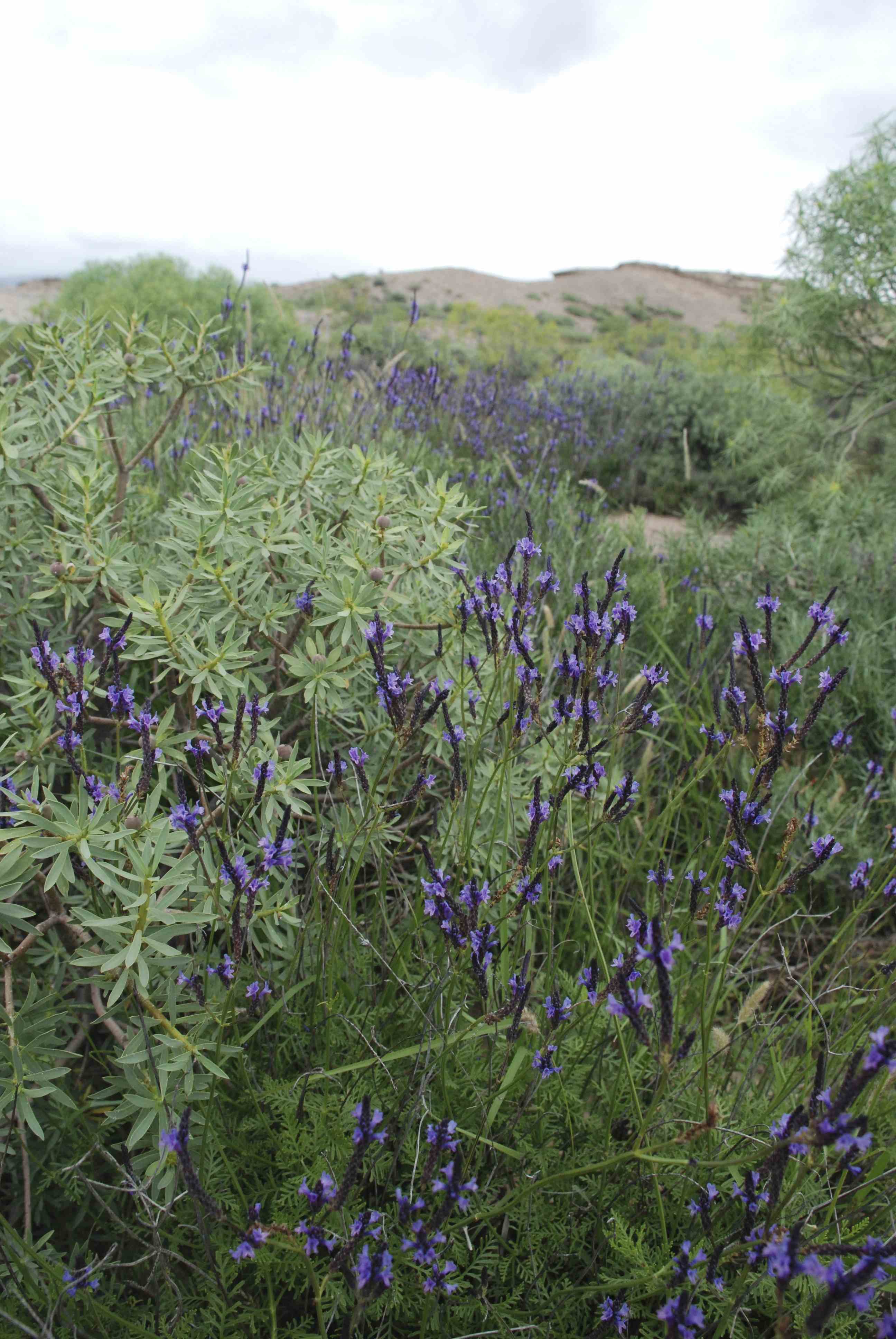
Canarian lavender with Euphorbia balsamifera
Walking past thousands of lavenders (which though showy do not have quite the same levels of fragrance as more familiar lavenders) I spotted a plant with pink flowers. Subsequently I found a couple more but this seemed the best. I am not aware of a pink variety in cultivation – would be pleased to find out if this is so.

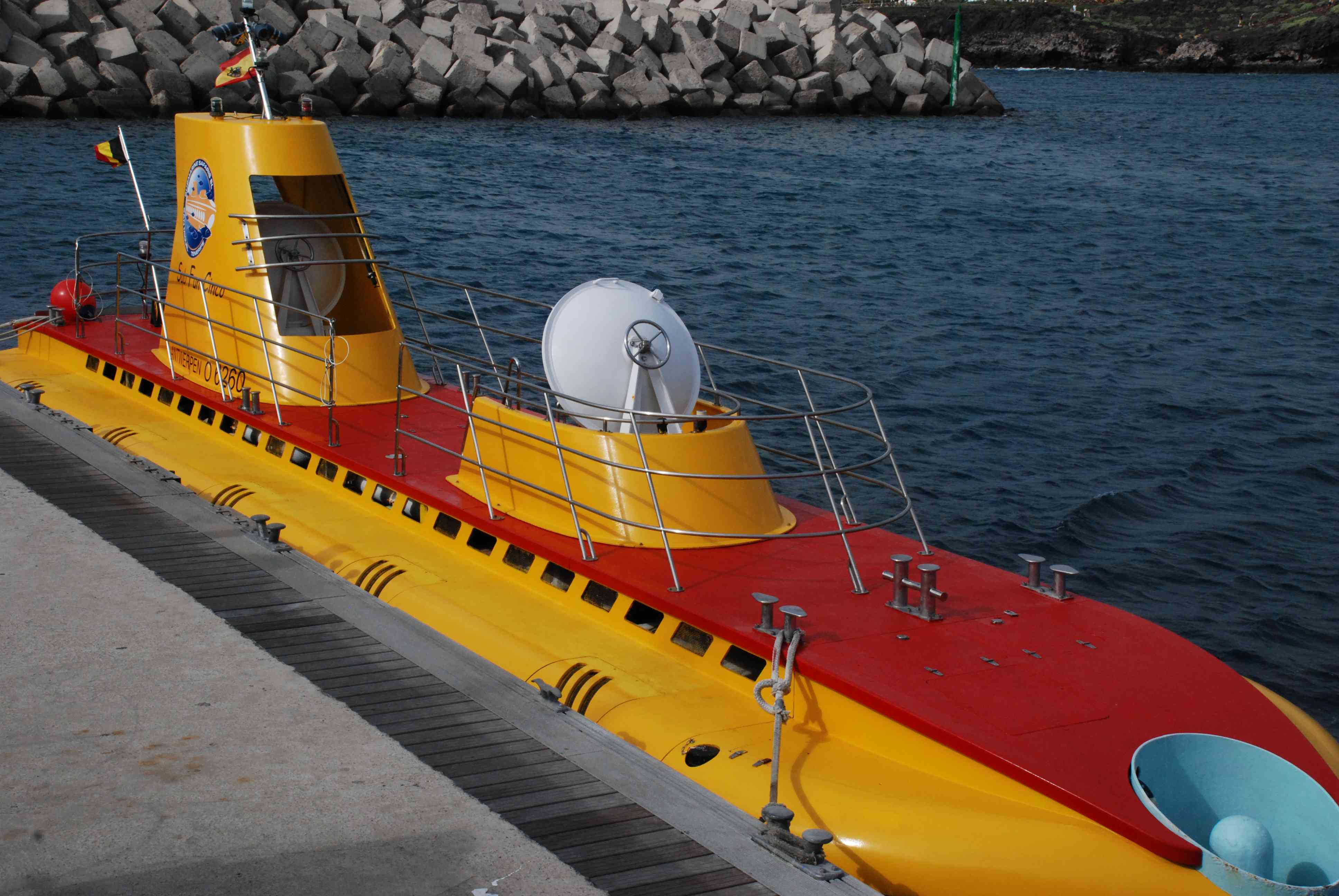
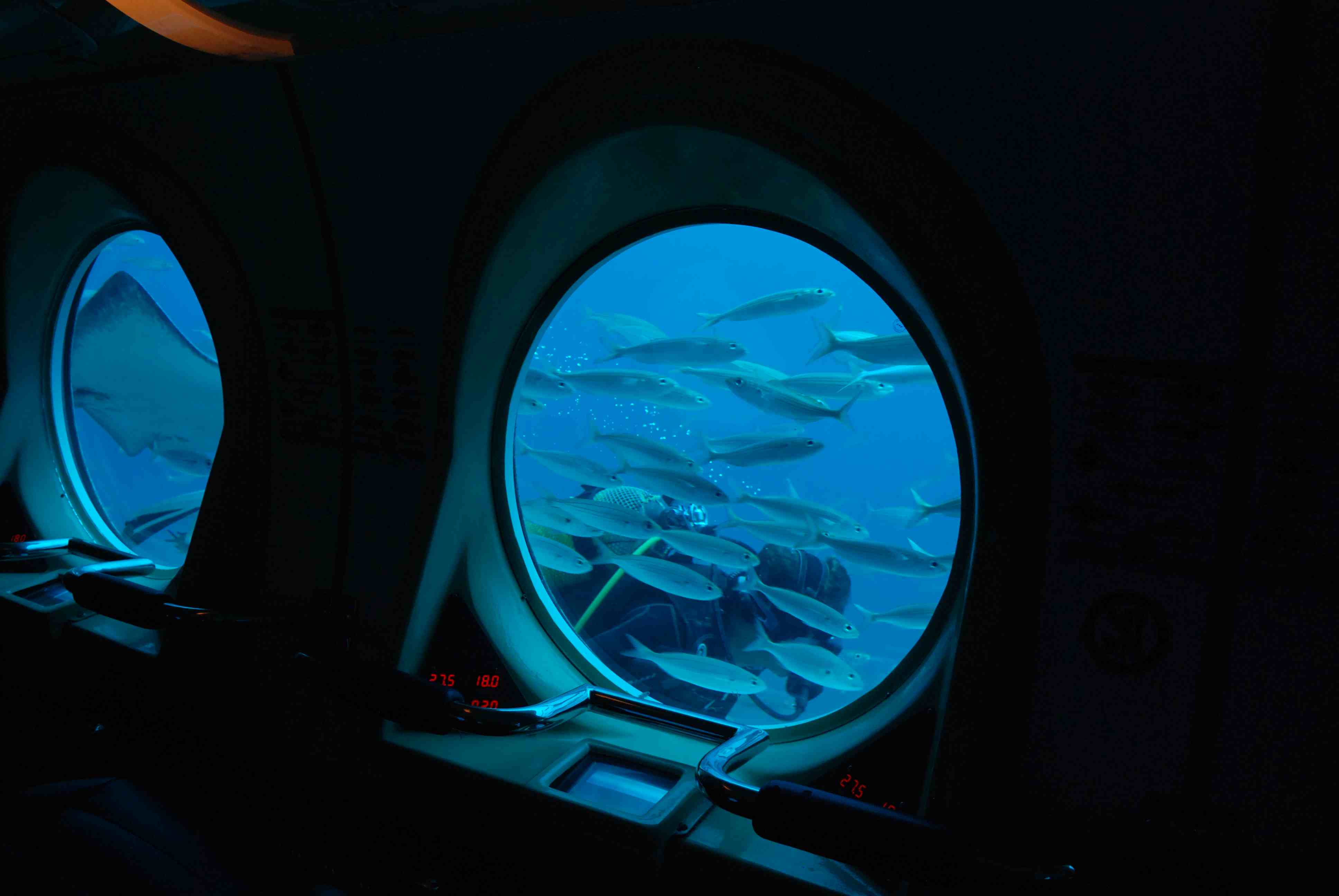
Just one more bit of nonsense before i get back to the garden tomorrow – a submarine safari. Setting off from the Marina in San Miguel it was a 40 minute trip costing 50 euro but worth it to see the fish and the diver feeding the rays.
 The Biking Gardener
welcome back Geoff glad you had a good time .. busy garden time coming up so look forward to your posts
Thank you 🙂 more in the pipeline
I’ve told you before about over doing the sunbathing Geoff you look like a lizard in that first pic…oops spec check!
I knew I should have used more moisturiser
HI Geoff I was very interested in your blog as I am moving to tenerife in June. I know it’s a little silly but I am hoping to have an English style garden. Would roses survive the heat and could you recommend some plants for me.
Best wishes
Lesley
Hello. What roses you grow and whether you can grow them at all will depend on what part of the island you are moving to and at what elevation. I am sure local nurseries will stock the most popular but, as long as you are not in the south, by the coast, i would think that the china and tea roses would be the best – they are popular on Bermuda! Then I would give the English roses a bash – they are popular in California. Also try Rosa banksiae and R. bracteata. As for other plants, again it will depend where you are but of the ‘English’ cottage plants I wpuld start with penstemons, agapanthus, Lilium candidum, lavender, zantedeschia and De Caen anemones.
We are hoping to move to Tenerife when our business has sold, what part of Tenerife would you move to, if gardening was your main hobby
hello. Good luck with the move – it should be wonderful to move there! It depends on what you are looking for really and how important the gardening is but I would suggest that the north and the northeast would be better for the widest range of plants but much also depends on the altitude too – nearer the coast and lower altitudes are warmer and frost free – the higher you go the more temperate and less tropical it gets! the south and west are very dry! Good luck with everything!