Making the rose garden
Having a whole walled garden to play with, already divided into four sections, I wanted to fill it with flowers and vegetables as quickly as possible. The garden slopes to the north and is rather windswept but, like all walled gardens, traps the heat in summer. The soil has been cultivated for decades, at least, but in recent years has not been improved and, being naturally heavy and poorly drained clay (known locally as macamore). Spring 2013 was exceptionally wet and cold and water lay on the soil surface for considerable periods after rain and on one wet day in March actually ran across the garden and out through the lower gate, flooding the paths. It was clear that the soil needed work. Adding organic matter to the soil goes a long way to improving its structure and fertility but as anyone with clay soil will know, it must be added regularly and frequently because it decomposes in the soil as it does its good work. More long-term benefit is achieved if sand or grit is added instead or, preferably, as well.

The rose garden site in January 2013
So the chosen area was spread with as much coarse sand as I could manage – about 2.5cm depth, and then a deeper layer of mushroom compost, about 8cm.
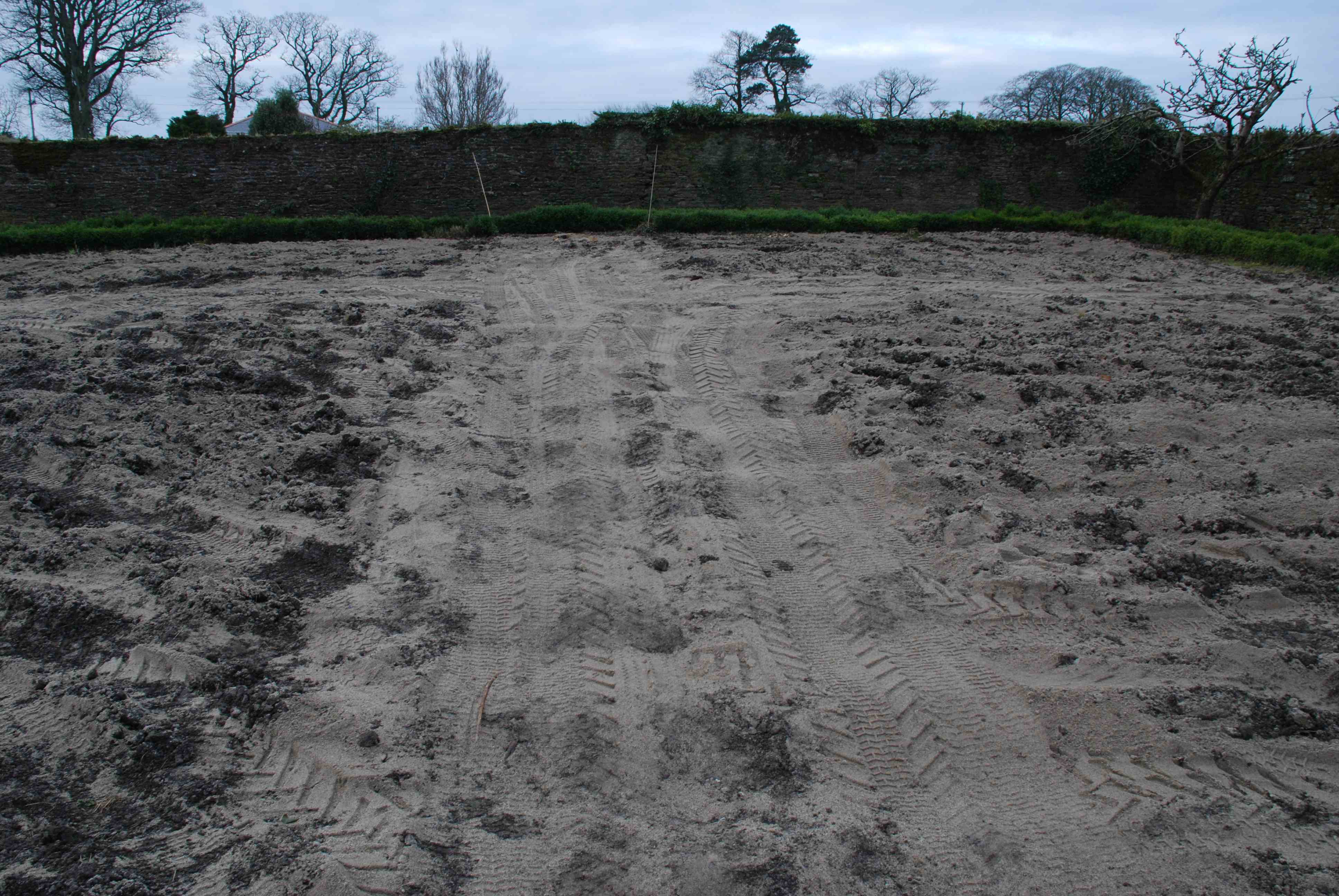
After rotavating the area was spread with coarse sand and then mushroom compost
Although I would have preferred to have dug the area, to get a good depth cultivated, time constraints meant that I had to rotavate it. It was done twice.

By March the area was almost ready for planting
The sensible thing to do next would have been to lay the turf (grass) and then plant the roses but because of the weather the turf could not be lifted so the roses went in first.
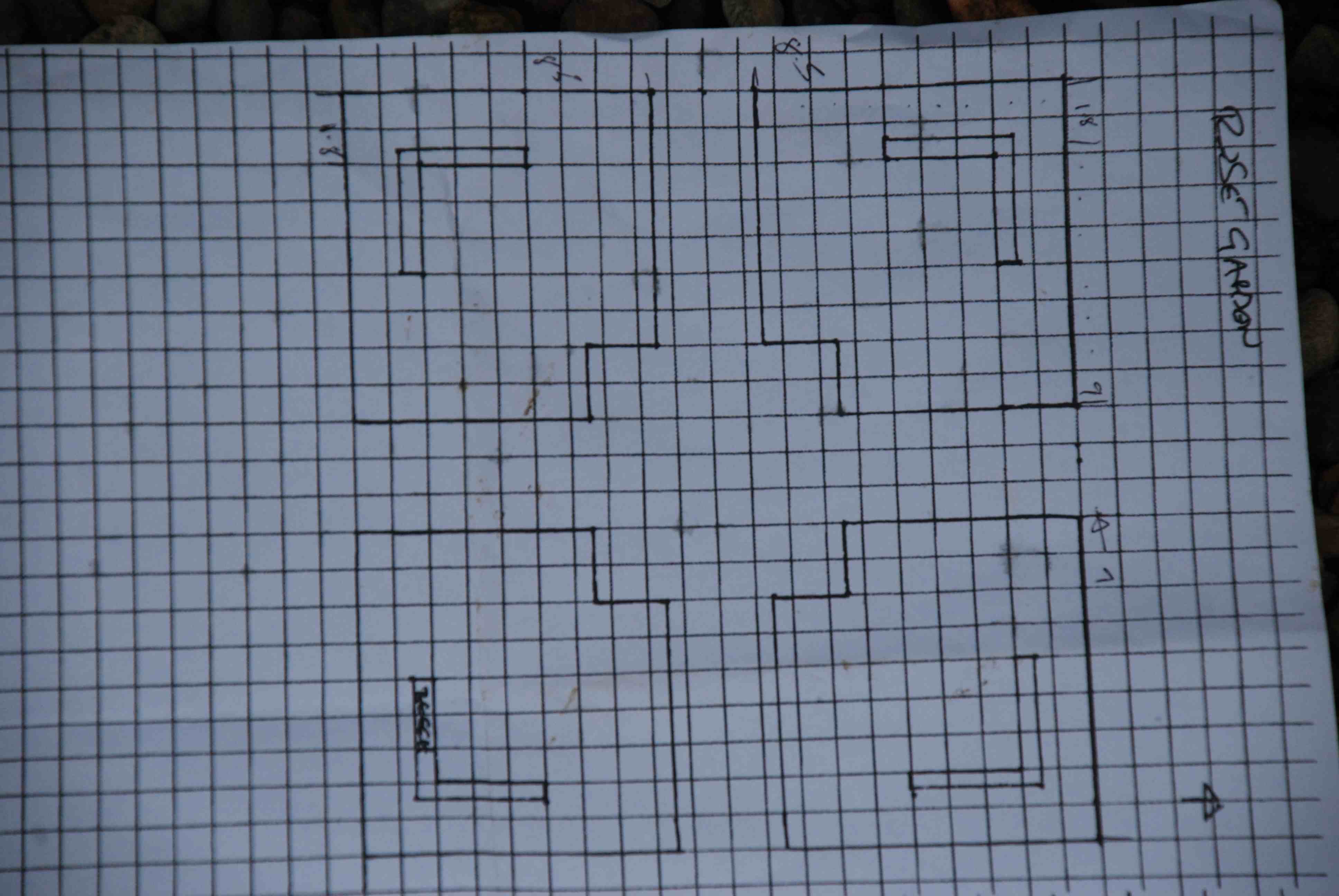
The design of the garden is simple and formal, the idea being that it links to other areas of the new garden and create vistas. The roses chosen are mostly in shades of pink, purple, mauve and white with some exceptions around the edge. Four purple beech hedges will give some structure to the garden but they did not establish well last year, suffering from drought and some will have to be replaced (have been replaced).
Although this area has been largely empty for several years, some roses were planted in a few rows the previous year so, to be sure the new roses grew well, all the bare root roses were treated with ‘Rootgrow’ mycorrhizal fungi. These are most beneficial in poor growing environments and are useful when planting roses in soil where roses have previously been grown.
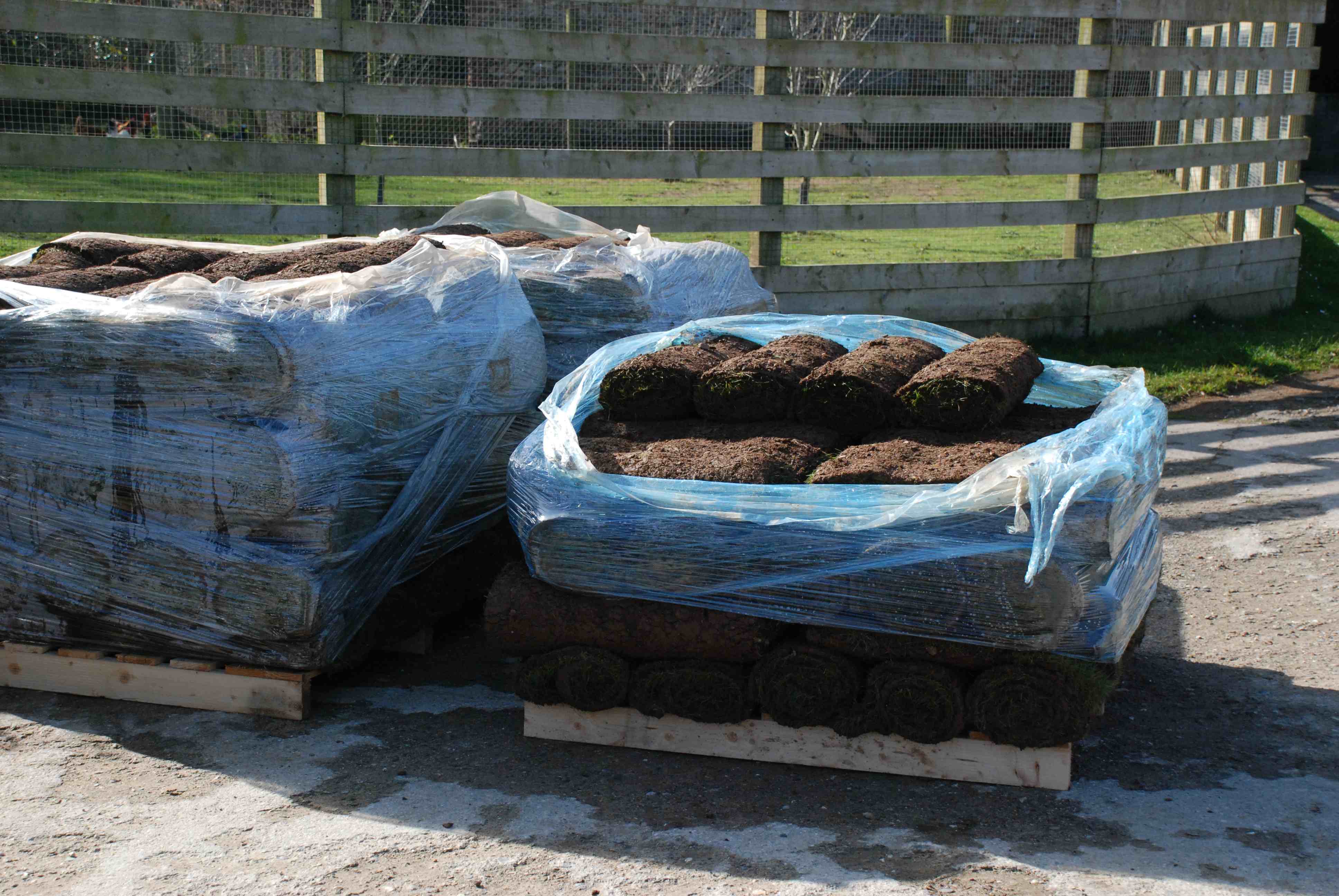
The turf ready for laying – it had to be done quickly
The turf arrived in some very wet weather but was laid in a day on the previously cultivated and raked and firmed soil.
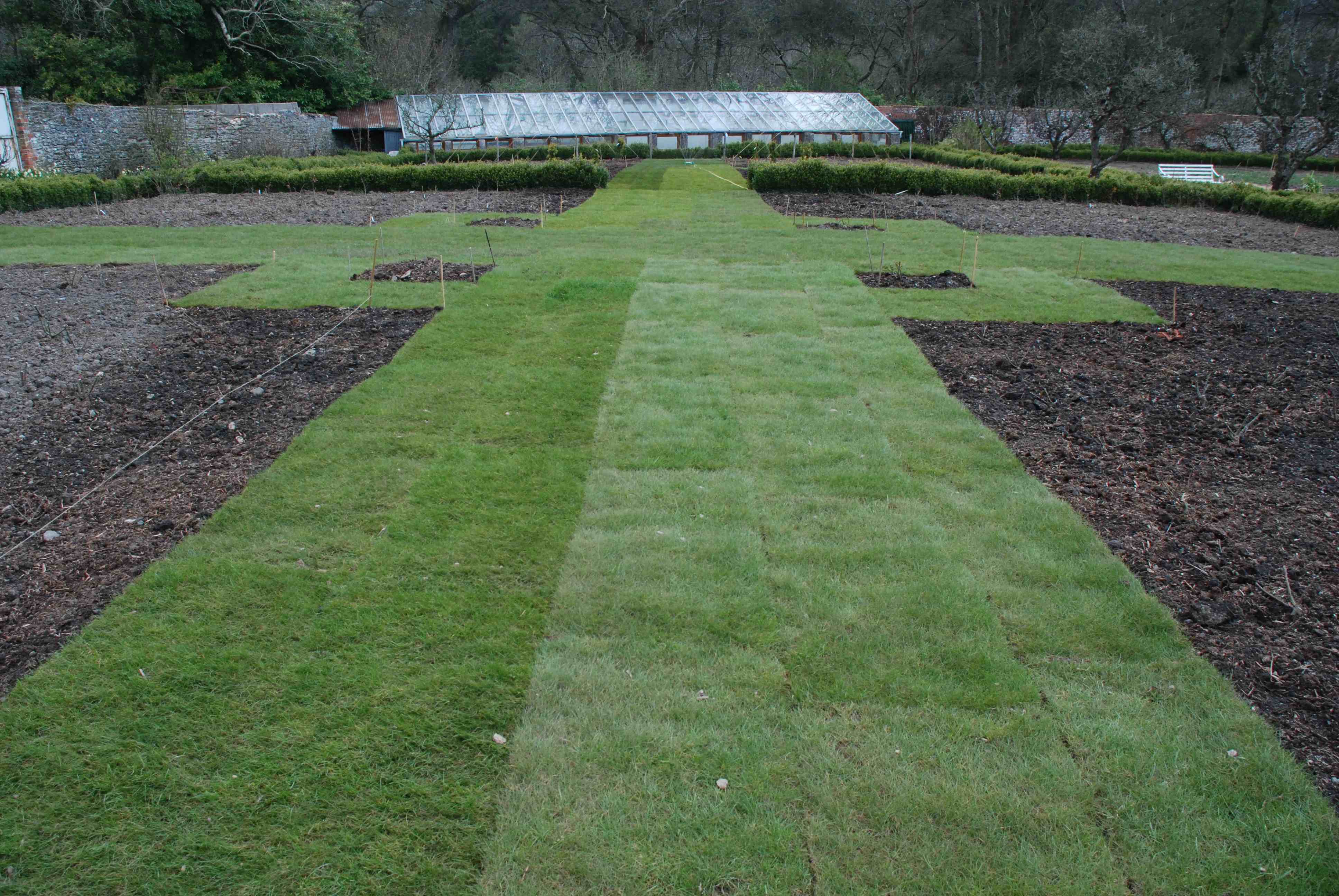
The turf was laid in April
The roses were very late coming into growth but eventually sprouted. We had a change in weather from wet and cold to sunny, warm and dry with a seven week period without any rain. The average rainfall for this area is about 900mm, among the lowest in Ireland.
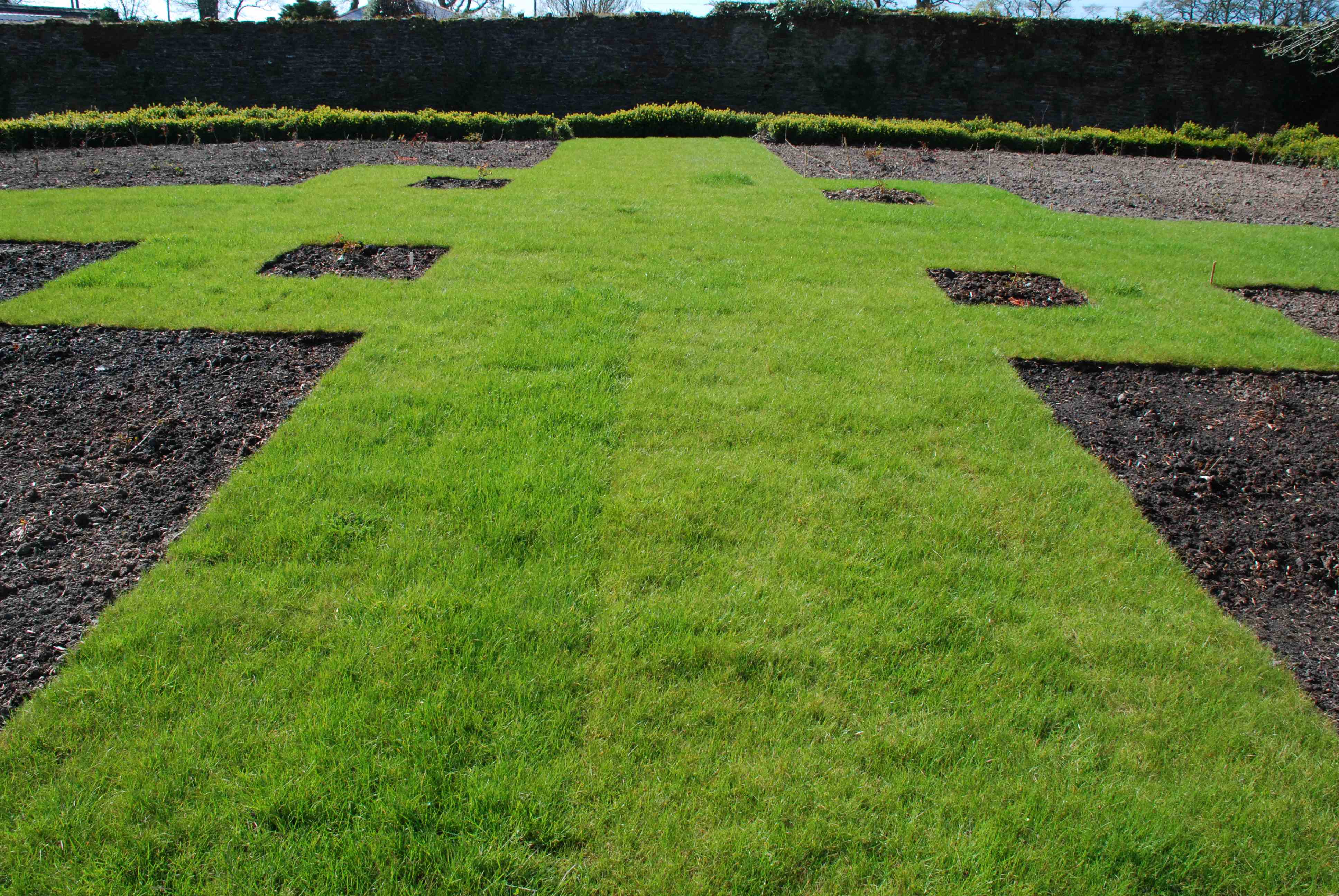
By May the turf was growing well but there was little growth on the roses
The gaps between the new roses were filled with annuals in 2013, including lavatera, cleomes, phlox as well as dahlias and seed-raised delphiniums. Fewer will be added this year as the roses fill out but more perennials will be added and already a lot of alliums and eremurus have been planted as well as hyacinths and tulips around the edges for spring colour.
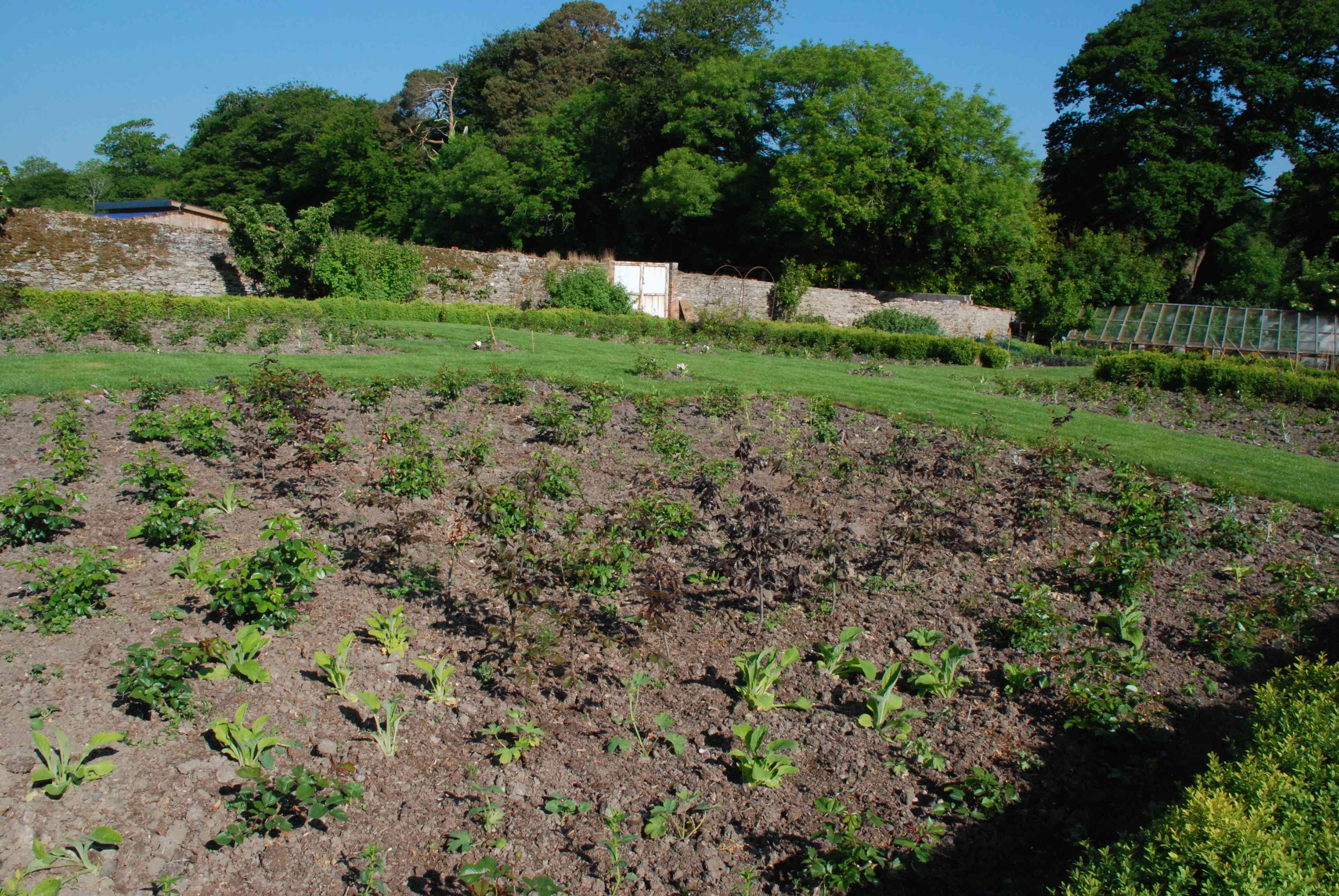
By June the annuals had been planted and there was, at last, some growth on the roses

The first flowers appeared on the roses in the last week of June – here on the beautiful ‘Eyes for You’ (foreground)
Next post – one of the roses in one corner
 The Biking Gardener
The luxury of a whole walled garden to play with. How lovely! I am looking forward to seeing the rose garden develop.
Thank you. Well the next stage will be revealed tomorrow so not too long to wait!