Brugmansia vulcanica ‘Pink Fire’
Brugmansia vulcanicola ‘Pink Fire’
Happy New Year
It’s a wet, windy, grey morning here but there are a few things to cheer us up. Notably, some of the new brugmansias I imported in September have not only settled down but are doing well. I did have a few losses, as would be expected when the plants have been in a dark box for more than a week, and, disappointingly, three of the six ‘vulcanicola’ plants died. I will put this down to inexperience too as these are, by all accounts, tricky to grow and I am delighted to say that one is now in bloom.
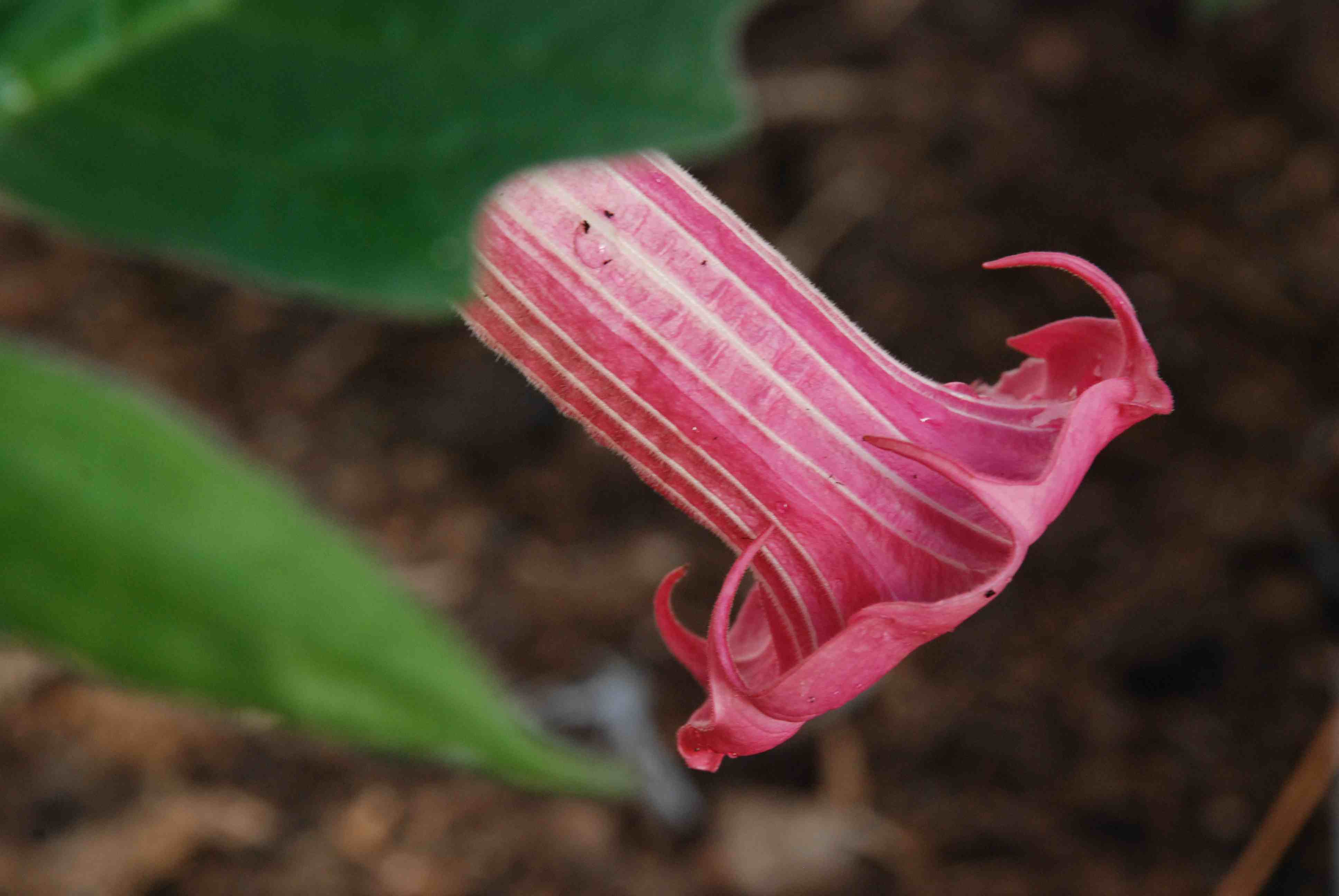
Brugmansia vulcanicola is a rather rare species from the mountains of Columbia where it is restricted to a few areas, threatened with habitat loss. It is related to the better-known B. sanguinea with orange red flowers but has distinctly hairy leaves that are shiny and dark green. These species and hybrids between them are much less commonly grown than the bigger, more spectacular hybrids of B. arborea, B. candida and B. aurea.
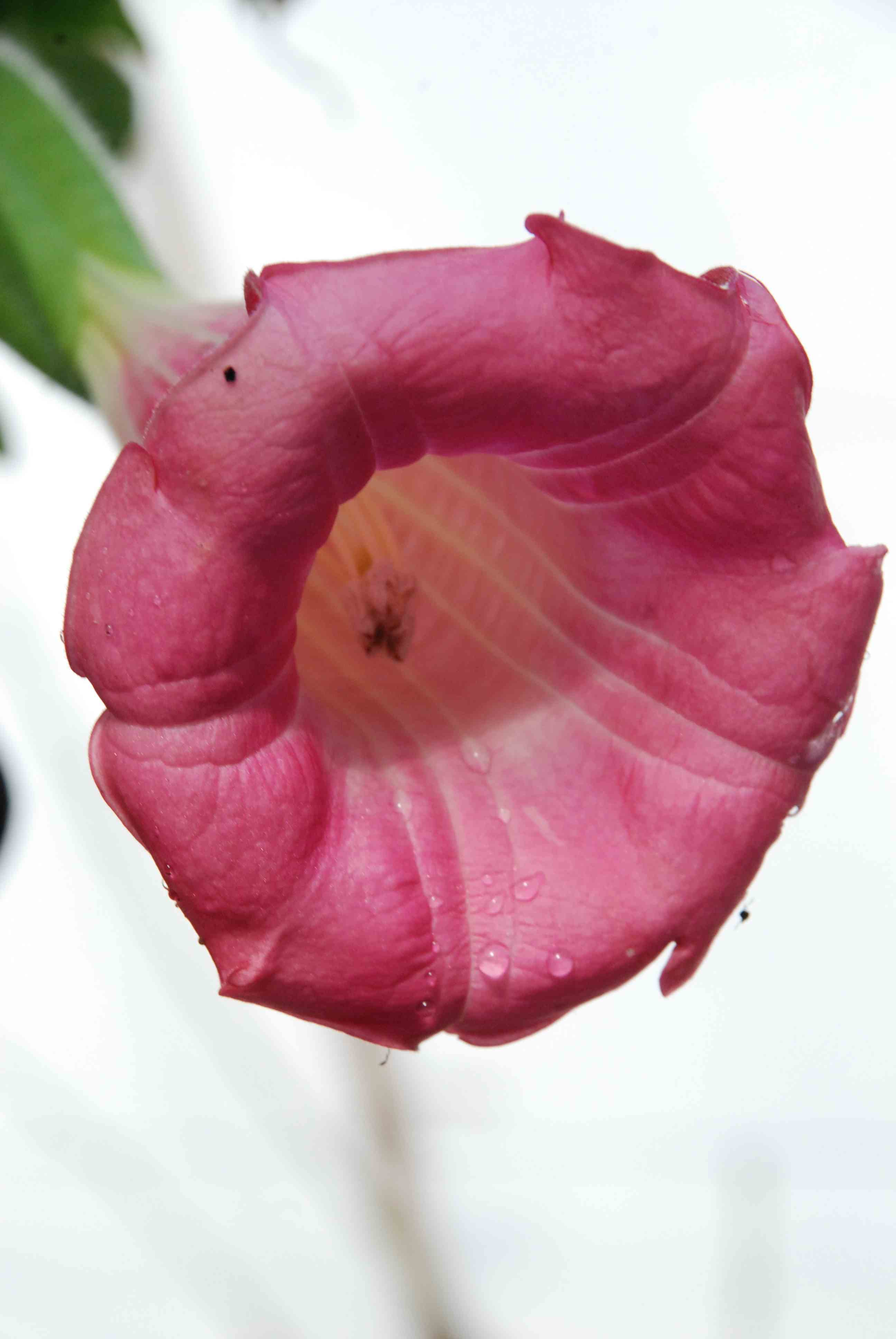
Unlike most other brugmansias, the flowers of B. vulanica are not fragrant and it hates hot summer weather, making it problematic in areas where other brugmansias are grown as garden shrubs, so it is well suited to greenhouse cultivation in temperate climates. It should grow to several metres high but so far mine seem to want to grow wide rather than tall. It is supposed to prefer some shade but so far mine are in the same area as the other tender plants with a minimum of 10c (50f) and in bright light, filtered by the bubble plastic.
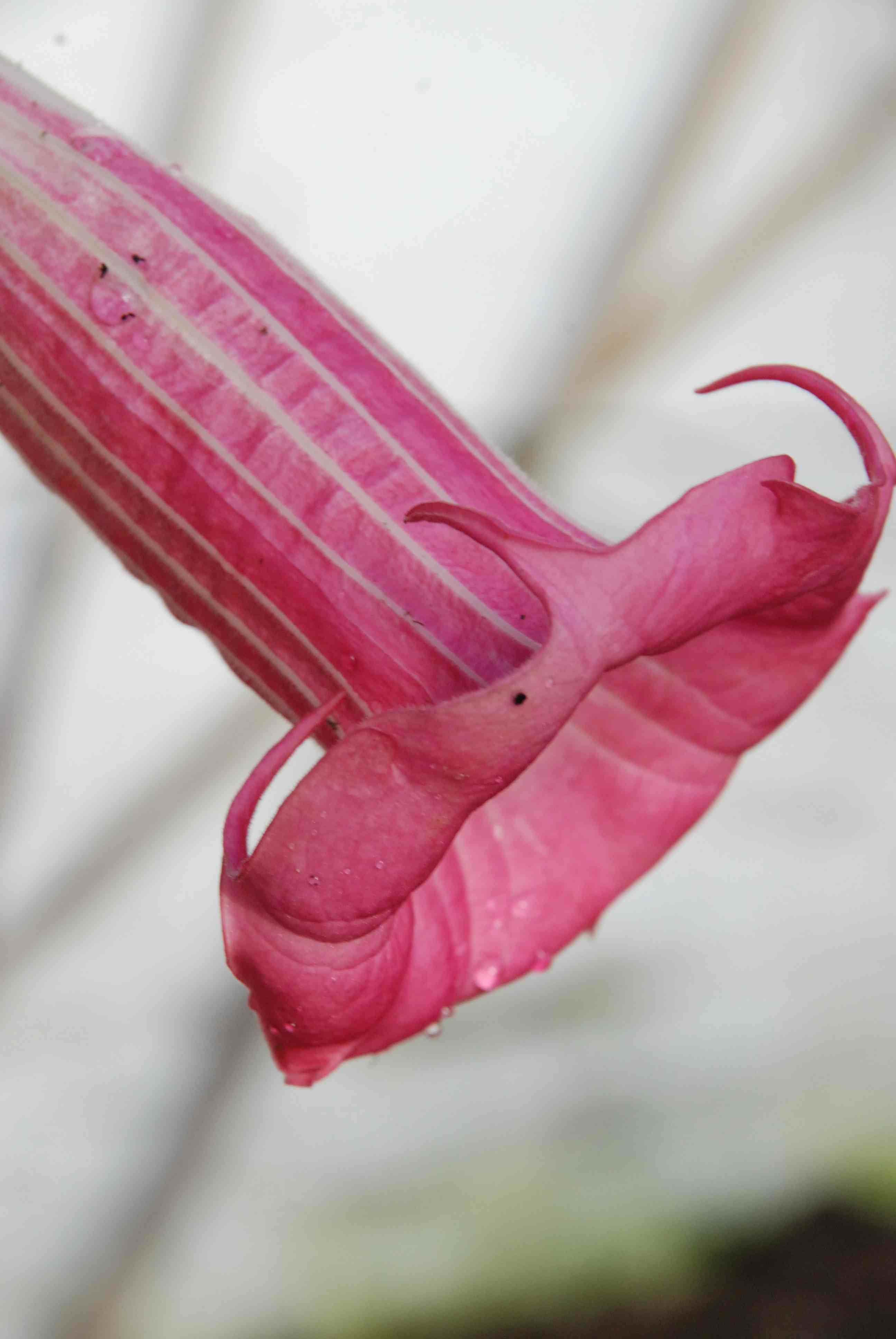
Anyway, ‘Pink Fire’ is not a true B. vulcanica, which has orange flowers, but is probably crossed with B. sanguinea and maybe B. arborea. Buds appeared a month ago and the first finally opened a few days ago. The buds push through the calyx and open when they are about 15cm long and the colour has intensified as the flowers have aged. Their charm lies in their shape and the way the petal tips curl back.
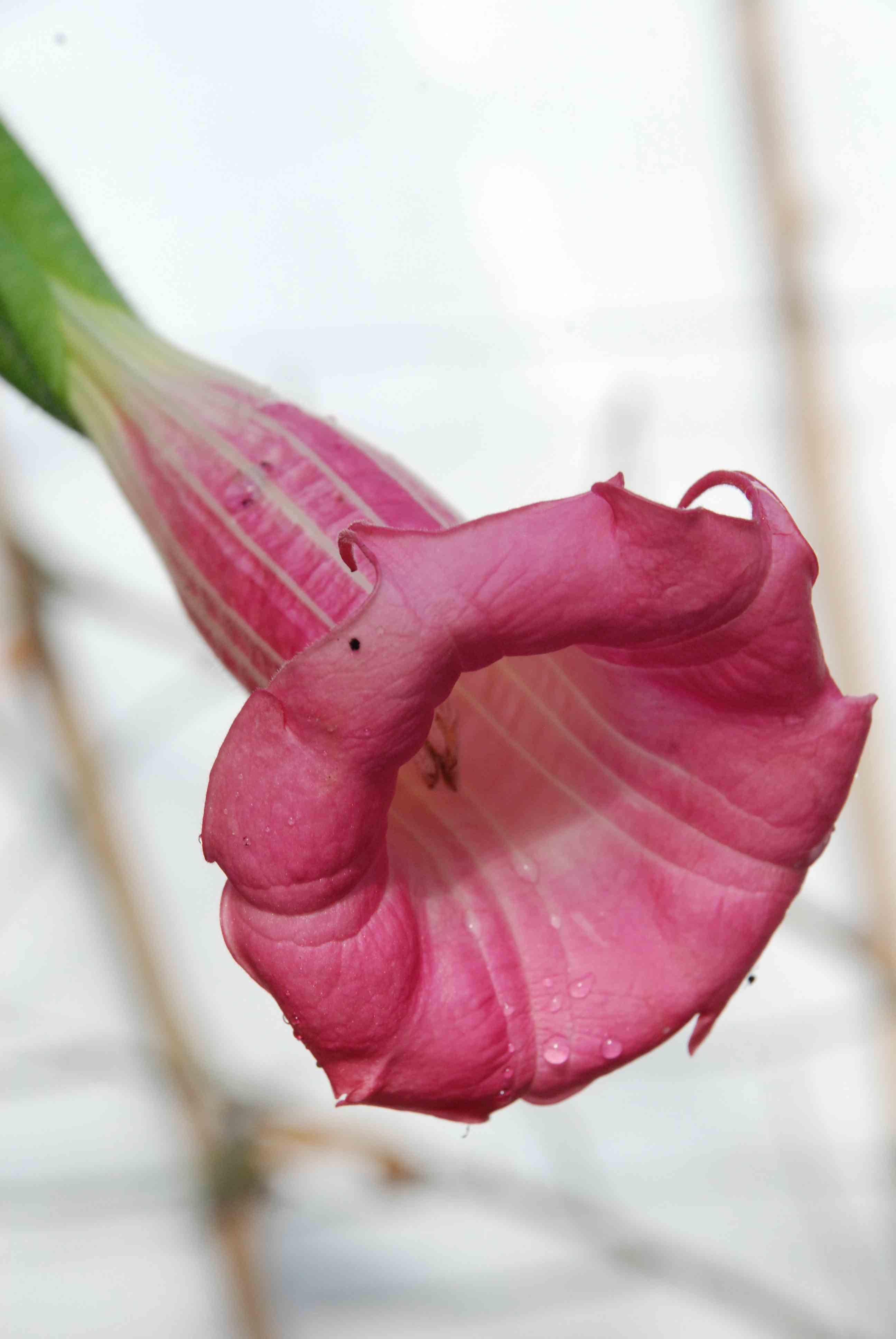
Incidentally, although brugmansias are often confused with daturas, i think largely because datura is an easier name to pronounce, they are different. Brugmansias usually have pendant or nodding flowers while daturas are usually upright, and brugmansias are always perennial shrubs while daturas are often, though not exclusively, annuals.


No comments yet.