Tulips: updated
Planting tulips
No matter how early I start to plant the spring bulbs, and this year I started in September as soon as they had arrived, I always have a few left as we get perilously close to Christmas. If you plan correctly, the only ones left will be tulips. I say this because tulips can be left to plant late while others can’t.
I have been known to plant daffodils on Christmas Eve. I’m not quite sure how that came about – how I hadn’t had time throughout autumn but found myself at a loose end then – maybe I had my festive planning perfected and a spare hour. But I cannot recommend it. Leave your small bulbs, such as crocus, that late and you will be planting shriveled, and possibly dead, nuggets (and yes I know I meant corms there). Daffodils should still be alive now, if stored somewhere cool, but planting this late has its pitfalls. Though the bulbs should grow, they do not have time to put down good roots before they have to appear through the ground and flower so you will find they bloom on short stems as well as flowering later than normal. The good thing is that, unlike some bulbs, daffodils are perennial and should thrive in our gardens, getting better each year so next year they should grow and bloom well. Of course this will not apply if you are putting them in display pots for one year only but you can still plant them in the garden afterwards.
But back to the tulips. Because these come from areas (mostly the Middle East) that have prolonged, hot, dry summers, they survive out of the ground, dry, longer than other bulbs, so you can plant later.
Because they are best in their first year after planting, in most areas, because they do not get the summer baking they require in cooler climates, they are an indulgence, an extravagant treat, so they need to be used as such and I use them in bedding with the traditional wallflowers and forget-me-nots (myositis) and in containers.
So here are some tulips going into a medium-sized urn, about 40cm across inside. These were planted in early November but you could get away with planting now – just!
1 Drainage

These new urns need some drainage in the base, the idea really being to stop the compost blocking the drainage holes. You could use any gravel in this case as there is no true drainage hole as such, just the gap between the base that fits into the large hole at the base of the urn. I used some crushed granite, because it was around, but gravel is fine.
2 Add compost

Then the compost. Although you can use just multipurpose compost for your pots, and it is fine for most plants that are not in the container for more than a season, I like to add some John Innes No 3 compost to give it more ‘guts’. About a third by volume is good. At this stage I also add some controlled-release fertiliser to the compost to feed all the plants right through to when they bloom in spring.
3 Planting

If planting tulips in the garden where they are going to be left for more than one spring I plant them deeply, at least 20cm deep. There are two reasons for this; to prevent me damaging them in summer when planting bedding above them and because it helps to prevent the tulip bulbs splitting into lots of tiny bulbs that will not flower. But in containers, that are going to be replanted at least twice a year, planting depth is not so important and 8cm above the bulbs is fine, though more is better. I have two tulips in this urn (there are 8 the same). In the centre are seven ‘Doll’s Minuet’ which is a red, viridiflora tulip with green streaks and taller than the surrounding Greigii tulip ‘Joanne Woodward’ which has bright scarlet flowers and purple-striped leaves.
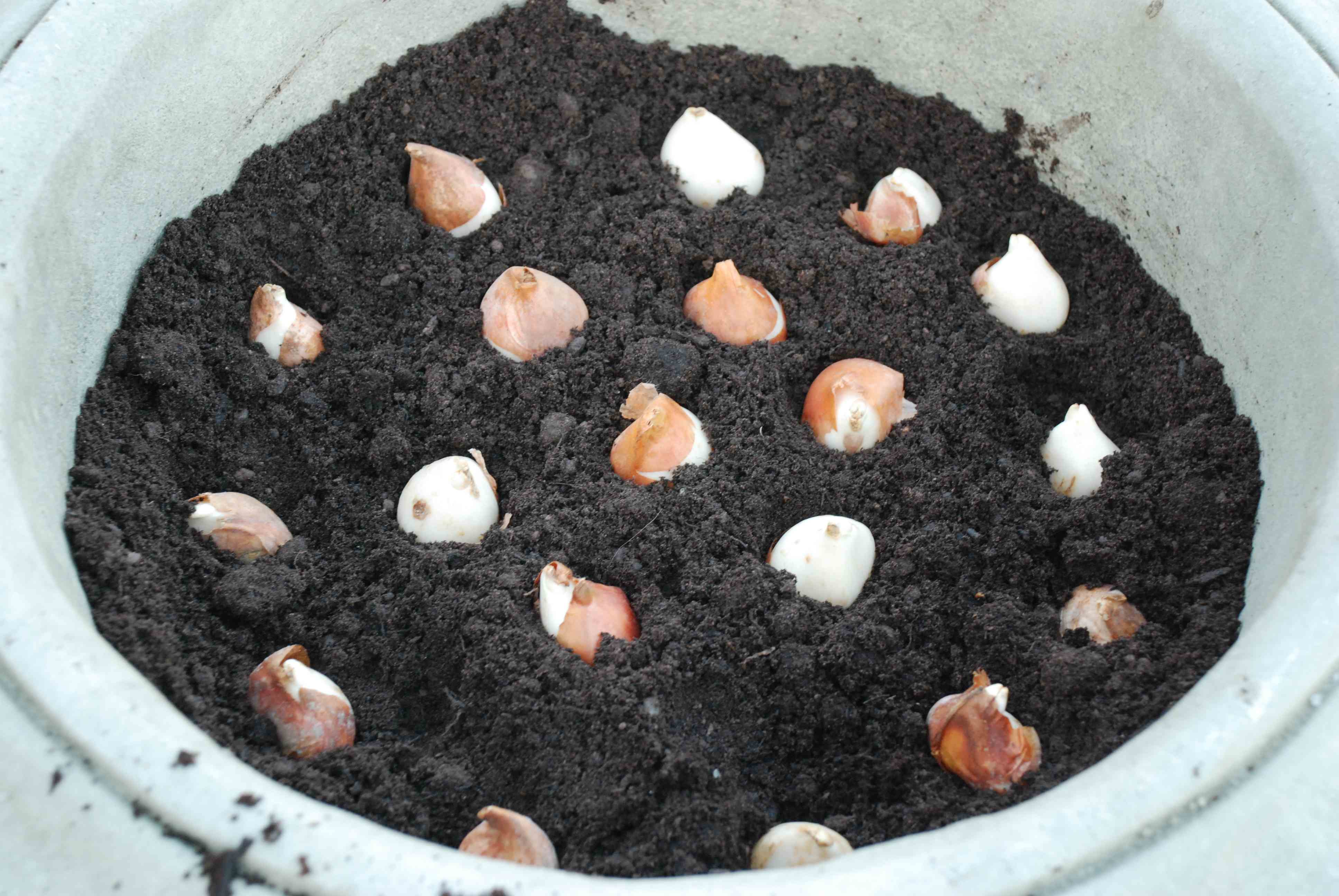
For me, containers need to be showy and I don’t plant random mixtures of bulbs that bloom at different times, and I like to pack the bulbs in. It is worth choosing short varieties
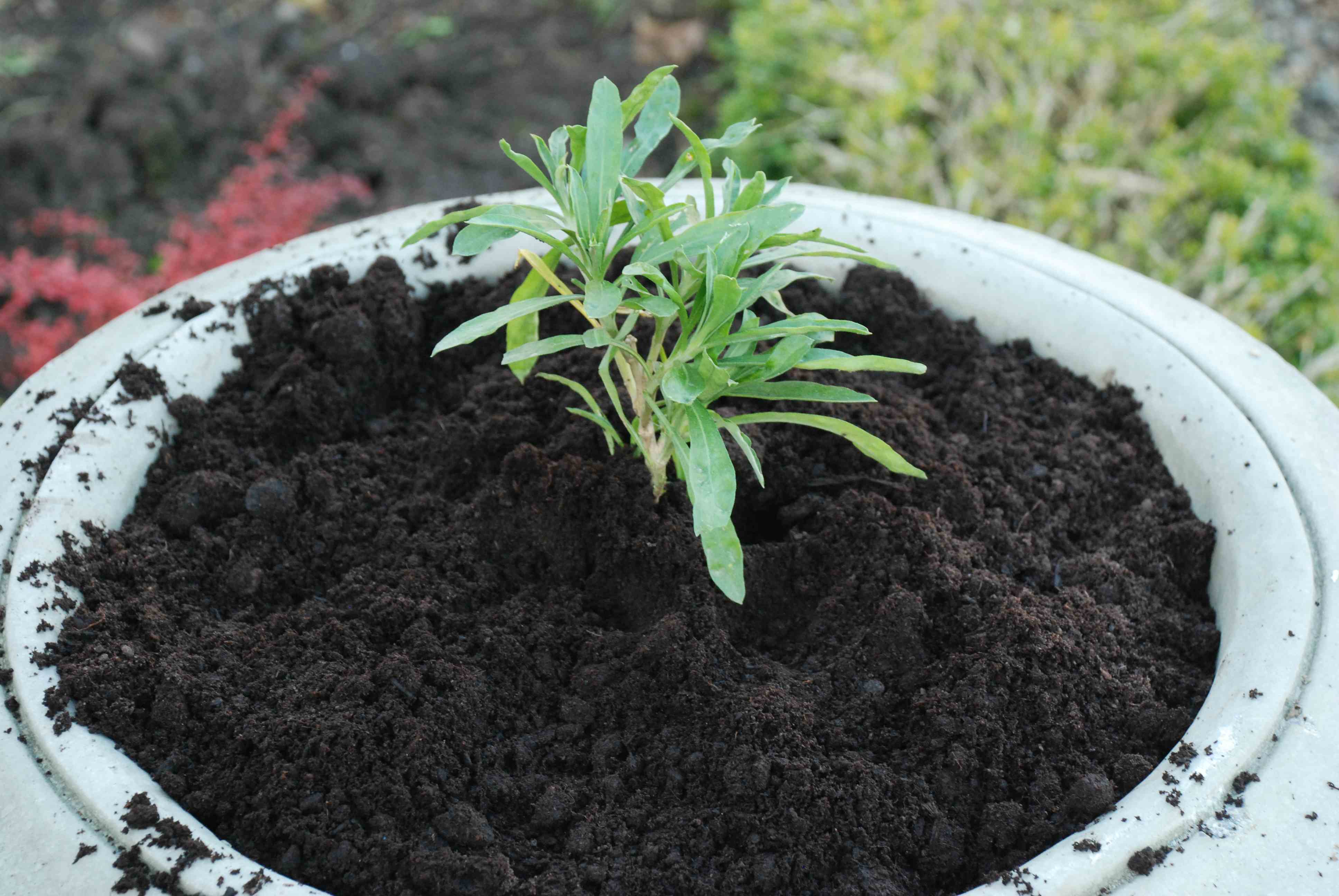
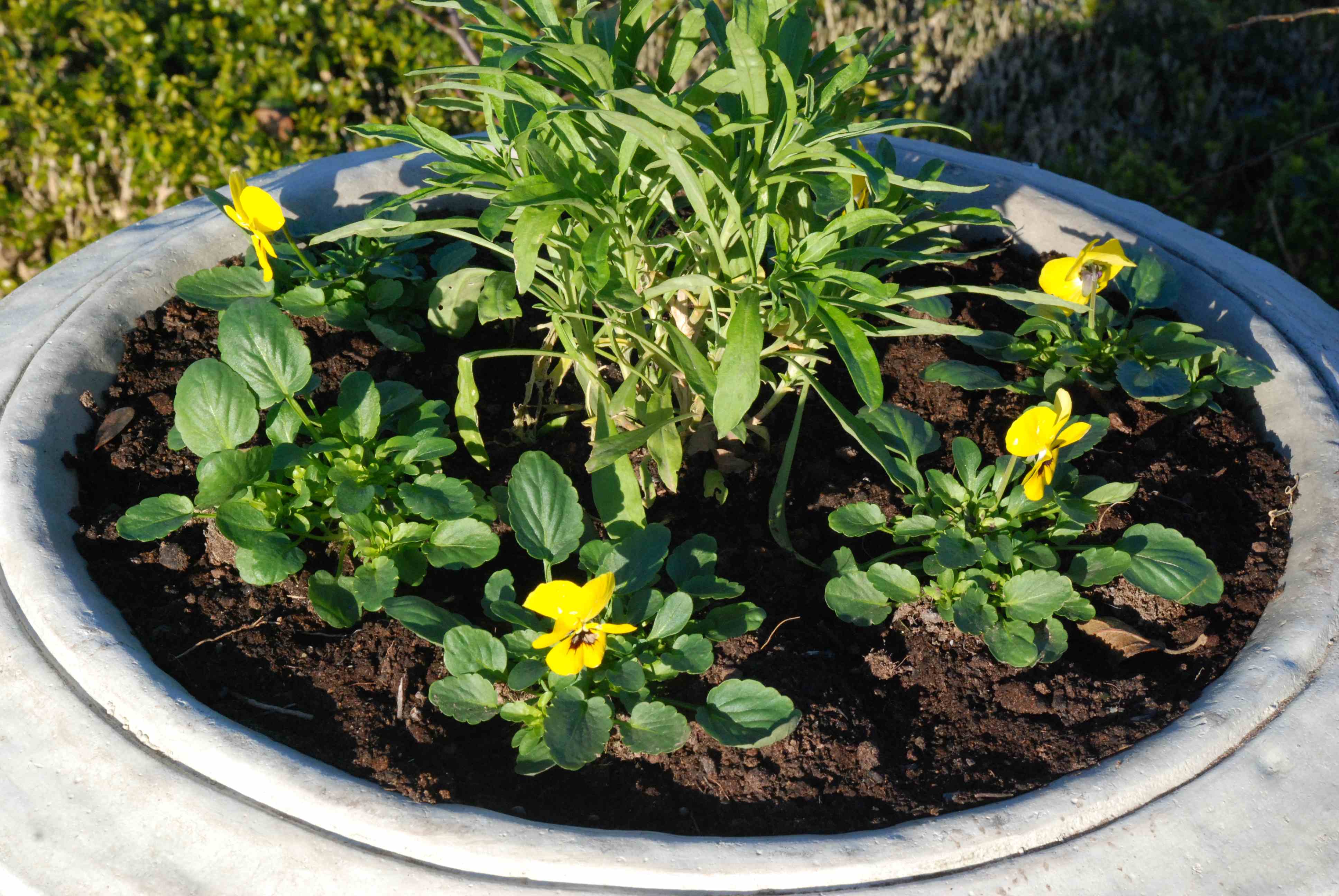
After filling in the urn with compost I put a wallflower in the centre, that will bloom with the taller tulip, and surrounded it with yellow violas for their scent and colour. Check the violas in spring as the tulips start to grow because if they have not rooted into the compost well the tulip shoots can push them out of the compost. And make sure you water them well in dry weather.
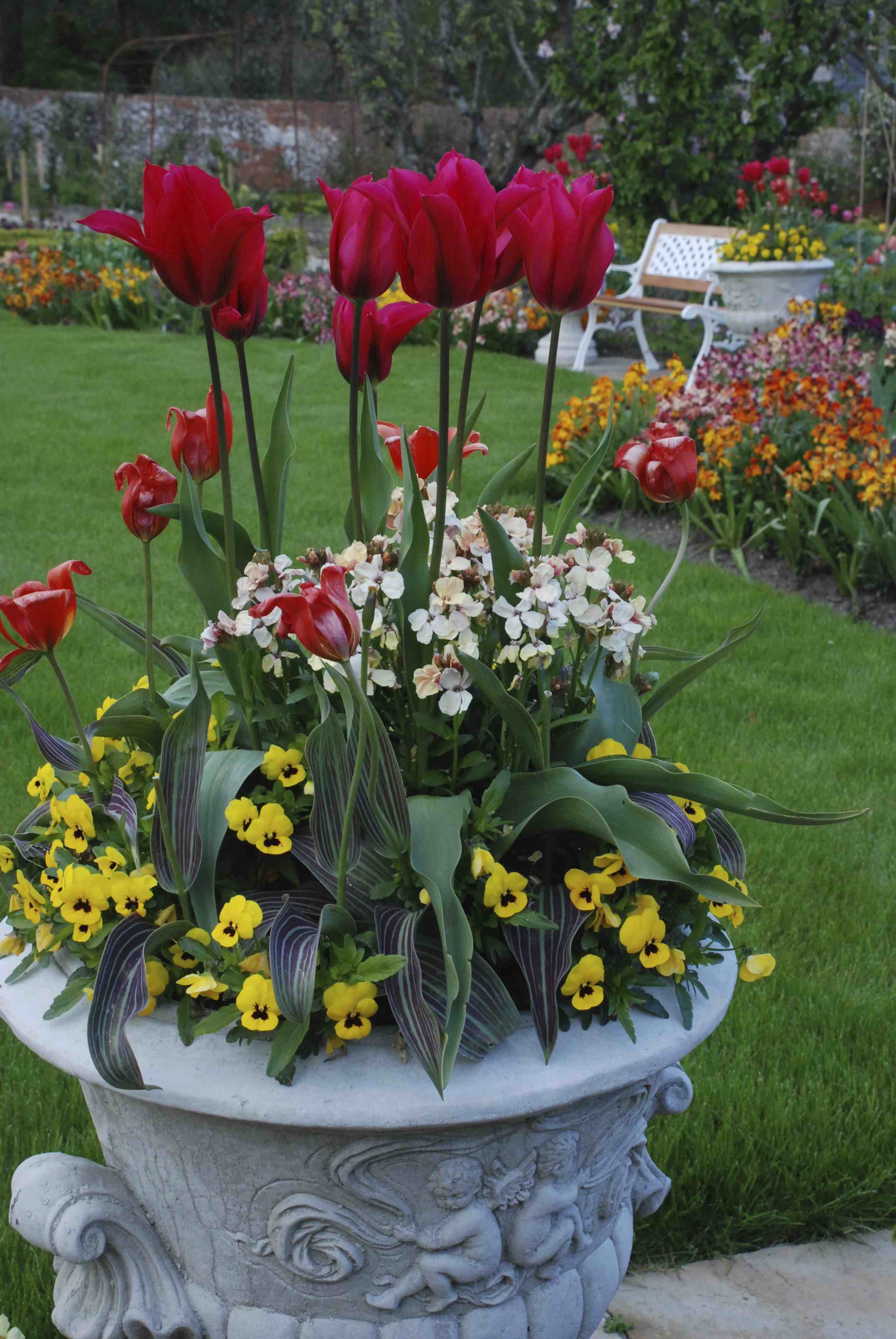
Update:
The container in late April 2014. The ‘Joanne Woodward’ tulips are more or less over now but the ‘Doll’s Minuet’ are just coming into their own.
 The Biking Gardener
No comments yet.