Job of the week – pruning grape vines
Pruning grapes
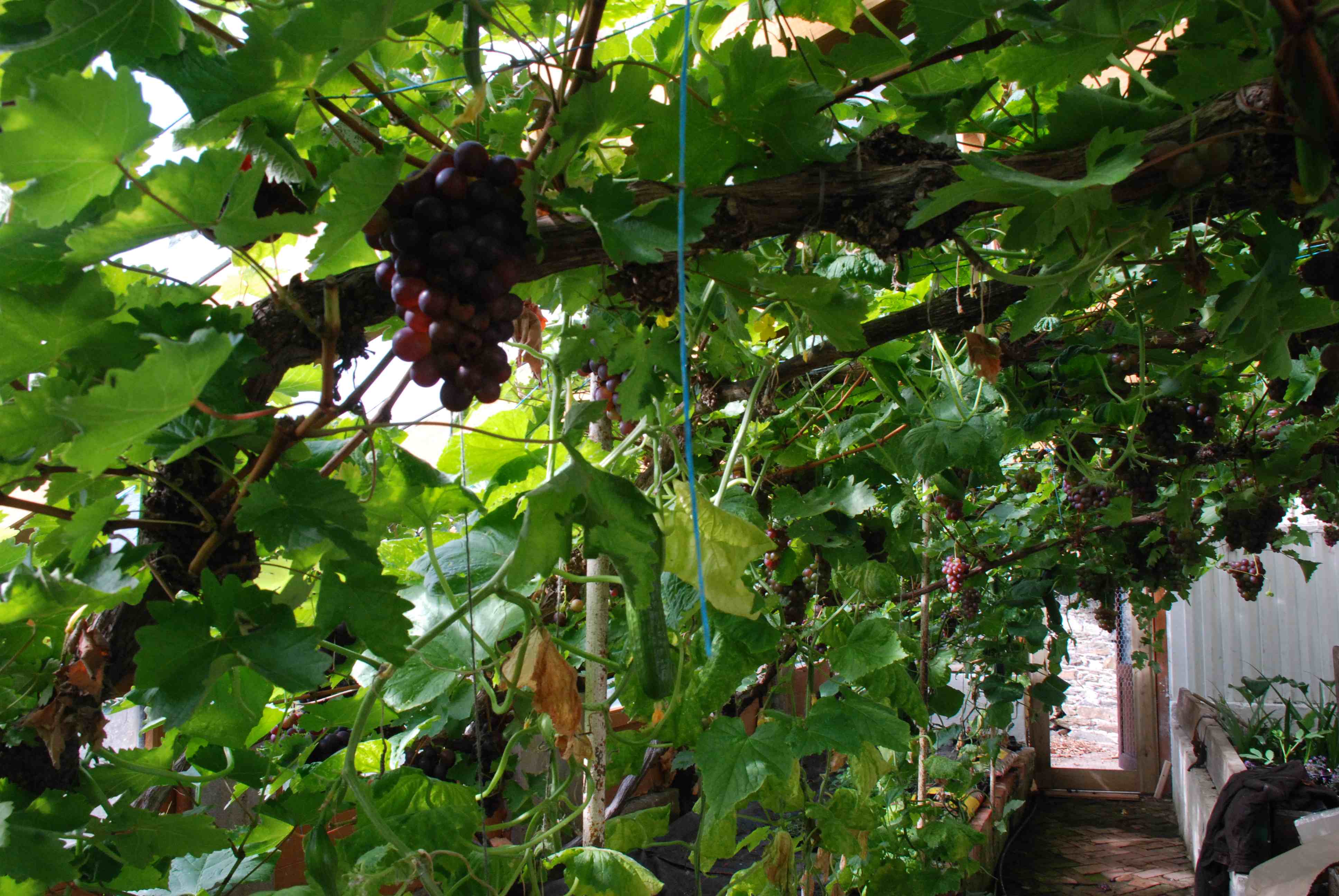
Grapes in August
If you want to terrify most gardeners, mention pruning. It is almost as though you’ve asked them to perform brain surgery. While it is true that you can do some damage by pruning incorrectly, most plants are very forgiving and the worst you can do (and I reiterate – in most cases) is delay flowering or fruiting. Not many plants will be killed by pruning.
This is about pruning grapes so I wont go into pruning in general too much but… before you do any pruning just think about why you are doing it. And if you cant think of a reason then put down the secateurs and walk away.
Some gardeners take a laissez faire attitude to pruning and leave everything to get on with it as nature intended. After all, they expound, no one prunes them in nature. That is very true but then nature doesn’t care if an apple tree crops every year, just so long as it perpetuates itself a bit; nature doesn’t care if a camellia lives or dies, as long as it produces some seedlings, and nature could’nt give a fig if you can pick those figs or if they are out of reach for all but blackbirds.
But we don’t want scruffy plants in our gardens, with dead branches, sprawling limbs and flowers and fruit out of reach. And I know that lots of fashionable gardeners think that nature should be allowed free reign in the garden because she is some kind of beneficent guardian, but they shouldn’t and she isn’t! Gardening has always been about harnessing or at least controlling nature. If you don’t want to make the effort then, by all means, let your plot go wild but don’t kid yourself that you are gardening. I don’t mean that you have to spray and prune everything within an inch of its life but you do have to steer things in the right direction.
So back to our grape vines. There are whole books written about grape pruning and most of the bulk regards the shaping of the whole plant, which I won’t go into here. The actual principle is very simple and is based around the fact that grape vines grow really easily. In fact if unpruned they grow so well that they will smother the support and not fruit that well. And any fruit that is produced will be in small bunches and, because it will be surrounded by a mass of foliage the sun will not reach it and it will not ripen that well. This is less of a problem in California than Croydon or Carnew.
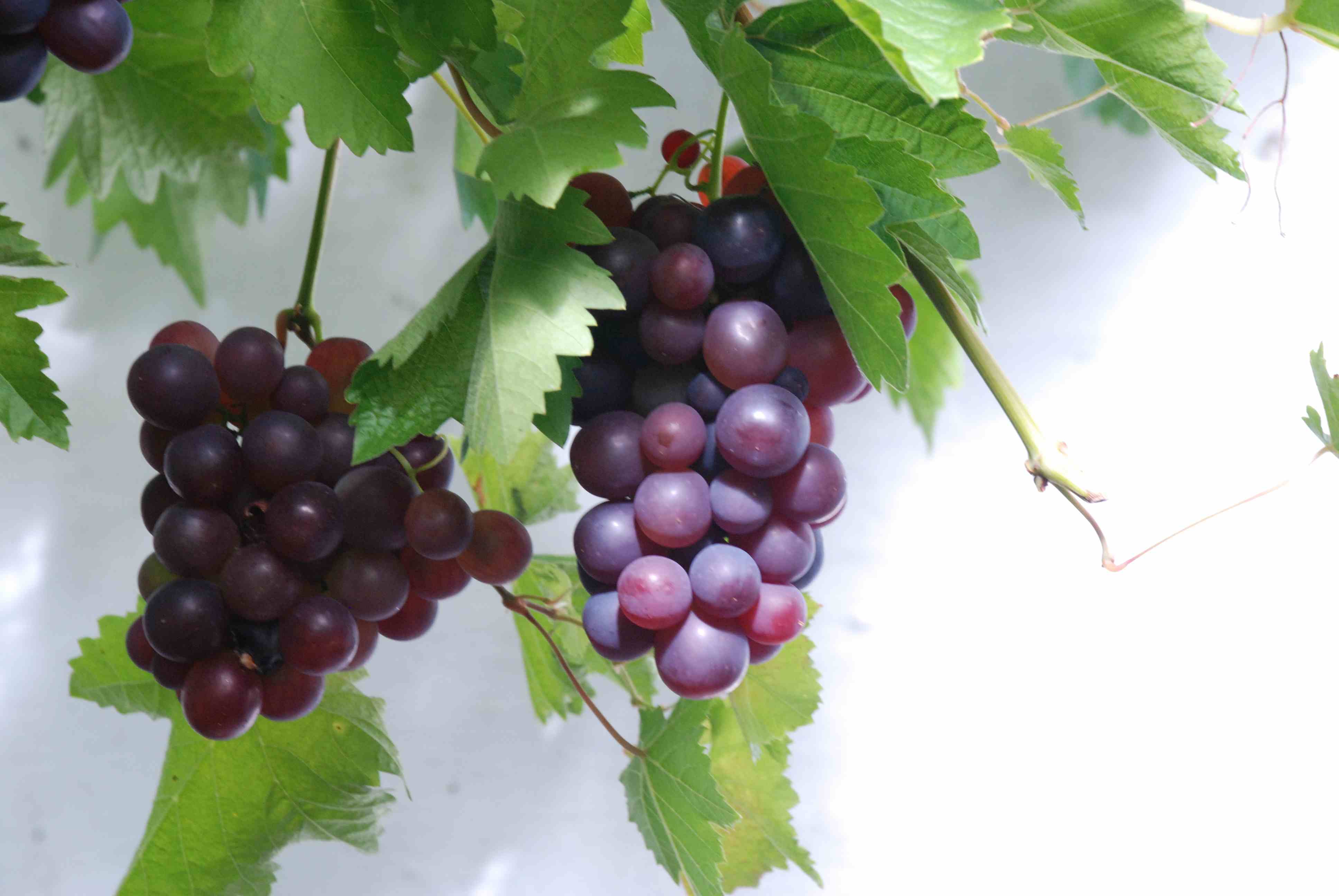
Sun needs to get to the fruit
So the first job to do with a young vine is to form a permanent framework of branches called rods. Once these are in place they stay there for the life of the plant. I suppose the first job is really to buy the vine – and you need to buy one – don’t grow one from a pip. You can do that but you don’t know how the seedling will turn out and as you are going to invest lots of time in growing, training and pruning you don’t want to do that for 5 years only to discover your grapes are small, pippy and sour.
Once you have established your rods, you have winter pruning and summer pinching to do.
Winter pruning
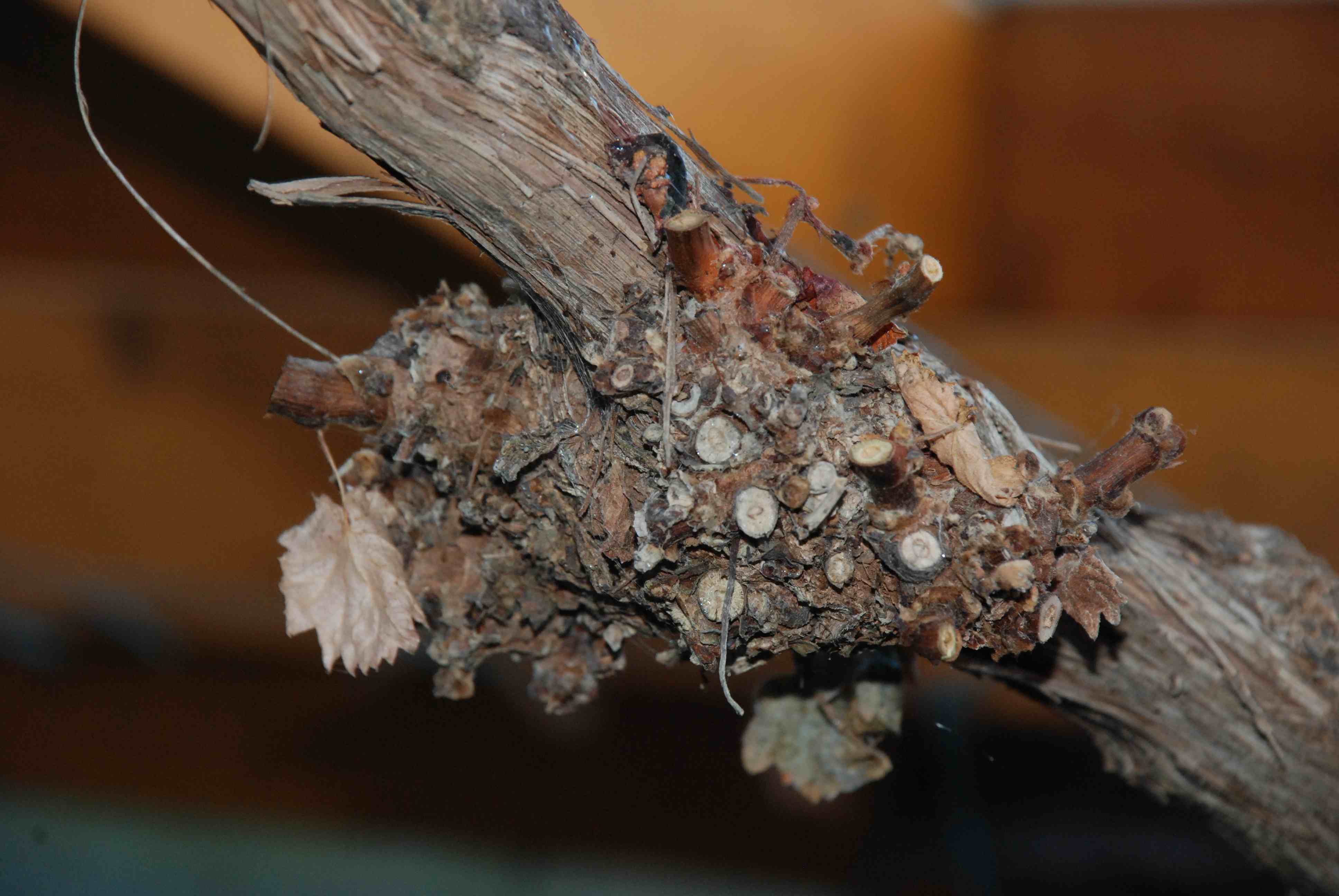
Pruning, with secateurs, must be done in the depths of winter and I did mine this week. If you don’t grow giant onions (which are traditionally sown on St Stephen’s Day – Boxing Day) you could escape to the garden or greenhouse and prune your vine instead to escape the washing up.
Pruning needs to be done when the vine is completely dormant because if left till spring the cut stems can ‘bleed’, not just oozing but gushing with sap. So do it now and cut all the stems back to the base or one bud. That’s all there is to it.
Moving on to spring and summer you do need to pinch out the ends of the shoots when they have produced a cluster of flowers. Count two leaves beyond the flower cluster and pinch out the end of the shoot. Any further growth is then pinched out again after two leaves. This ensures all the energy is put into making fruit, allows air to circulate, lets sun get to the fruit and makes it easy to look after the bunches.
 The Biking Gardener
Trackbacks/Pingbacks
[…] Job of the week – pruning grape vines (thebikinggardener.com) […]