Blooms with bite
Antirrhinums
Snapdragons (antirrhinum) are among the best-loved of all flowers. We all get to know them when we are children and as a child I loved playing with the flowers; pinching the sides so they opened their mouths. This opening action is the flower’s clever way of making sure they get pollinated properly and preventing nectar and precious pollen from being ‘stolen’ by insects that are unable to pollinate the flowers. The anthers (that produce pollen) and stigma (that accepts the pollen to ensure seed production) are situated at the top of the flower and small insects would be able to get to the nectar at the back of the flower without doing the plant any good. So only bumblebees are big and strong enough to get in when they land on the base of the flowers and push their way in, transferring pollen, on their backs, to the stigmas. Clever eh!
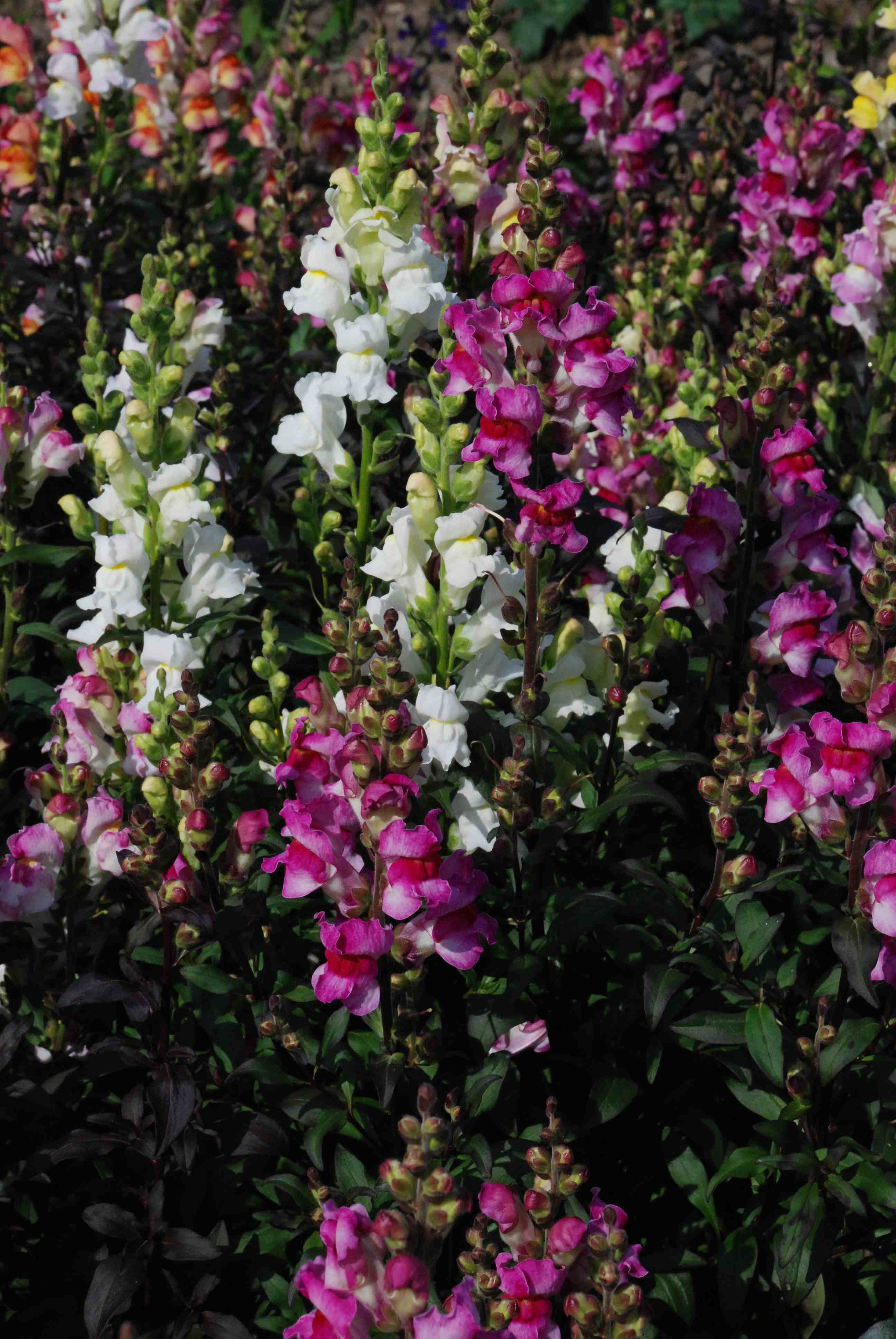
The best plants have dark foliage and pink or white flowers
This year I grew half a dozen varieties and the most interesting, and contentious, was a mix called ‘Constantine’. This is an open-pollinated bybrid (so cheap) that reaches about 45cm high. It’s a bushy plant with a pyramidal habit, producing a tall central stem and then many more, shorter stems. It is notable for its dark foliage that varies from deep, beetroot red to almost plain dark green. In my opinion the best plants are those with really red leaves. The flowers are even more variable in colour and ranged from almost pure yellow, through orange and red to pink, rose and almost white.
Like virtually all snapdragons, this one did suffer from the problem of running out of steam earlier than some other bedding plants. Even with deadheading the subsidiary flower spikes get smaller and less impressive so most of the plants had to go by September – giving an opportunity to get spring bedding in. But some plants did carry on flowering and some of these are still giving some colour as I write, on Dec 3 .

I was not as keen on the yellow and orange flowers
I did find the colour range a bit ‘disturbing’ because I’m not mad keen on pink and yellow or orange together.
Luckily it is easy to collect seed from antirrhinums so I collected loads of seeds in late September from what I considered the best plants – that is very dark leaves with pink flowers in various shades. We will see if I have eliminated the yellows next year.
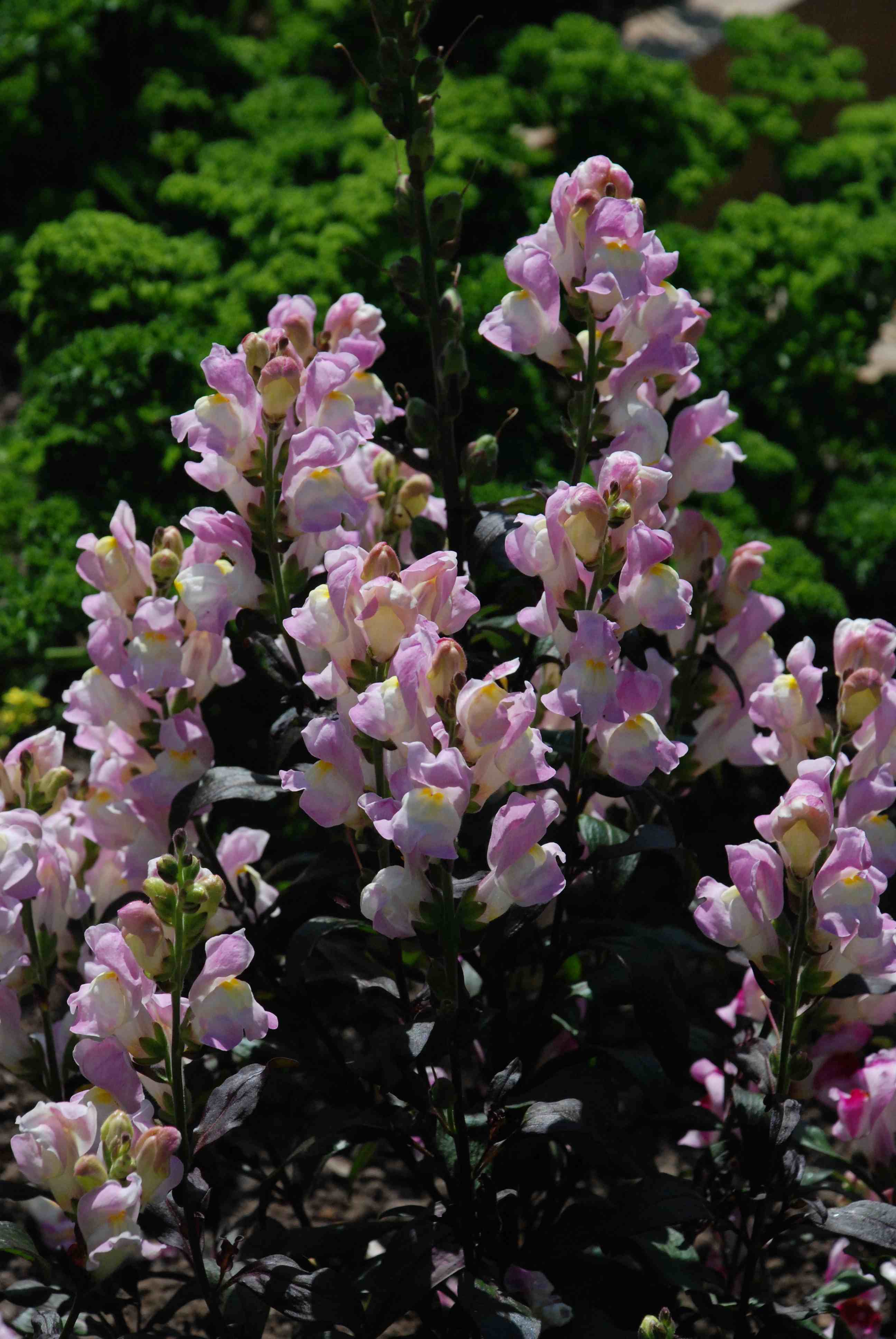
I collected seed from the plants I liked best
If you are less fussy or want a great start to selecting your own rather special snap dragons I would suggest you give this one a go.
‘Constantine’ Suttons and Dobies 60cm £2.45 for 950 seeds
The other snapdragon I would heartily recommend is ‘Madame Butterfly’. Now before I get arrested by the ‘be kind to wildlife’ police I want to say that I plant masses of flowers in the garden, many specifically for bees and butterflies so indulging in a few flowers that are useless for wildlife is acceptable in my book. So, this F1 hybrid has double flowers, the mouth stuffed with petals so bees, except the most persistent individuals, cannot get to any pollen or nectar.

I don’t always like double flowers, especially when the single is so beautiful, but ‘Madame Butterfly’ has such pretty blooms, packed densely, right around the stems, that it is well worth growing. It is a tall variety, bred for cutting, and the plants produce masses of strong stems so I had a supply of cut flowers from late June to September, and there are still a few showing now. This F1 hybrid was introduced in 1970 and it is amazing that it is still available – not many F1 hybrids last this long. The mix comes in half a dozen colours, from memory; white, yellow, pink, bronze and red – er, that’s five! Anyway, I would recommend it – but plant something else for the bees.
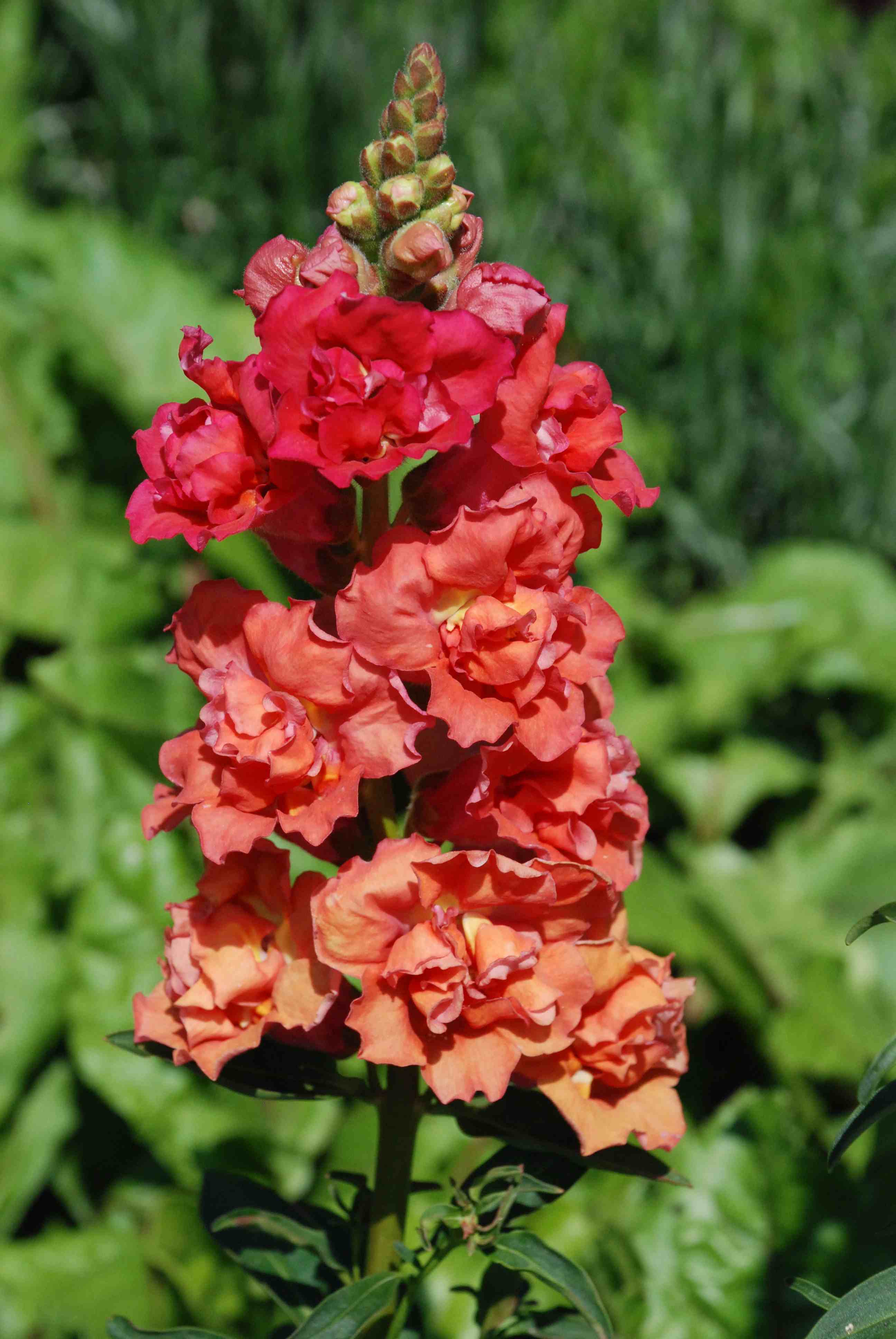
‘Madame Butterfly’ is widely available
 The Biking Gardener
what a loverly splash of colour