Plantaginaceae 3 : Foxgloves
There are about 20 species of digitalis (foxgloves), from Europe and Asia, all with tubular flowers in various colours above rosettes of foliage, on slender stems. Some are perennial but the best known and best loved is the native, biennial D. purpurea. Wild forms have slightly arching stems with flowers on one side but, through selection, many forms have cylindrical flower heads with blooms all around them. The dark pink flowers, lightly spotted, are also transformed in some varieties and much larger and in a wide range of pastel colours.
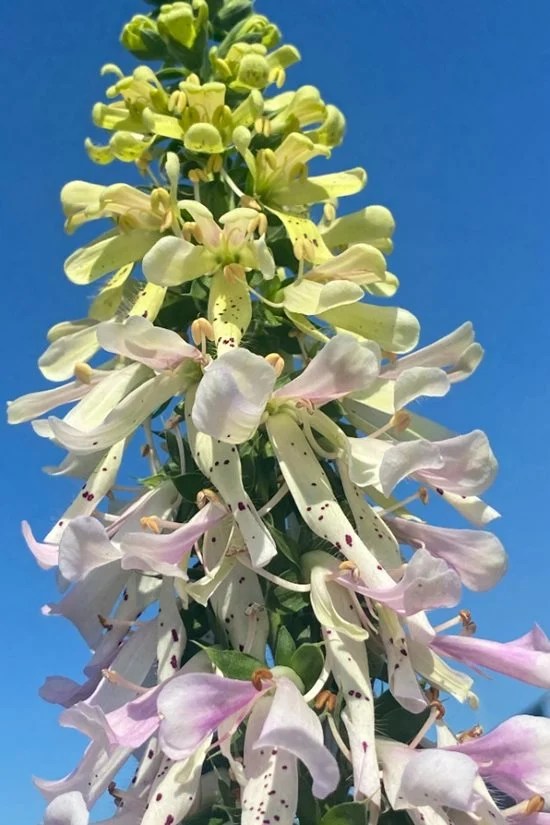
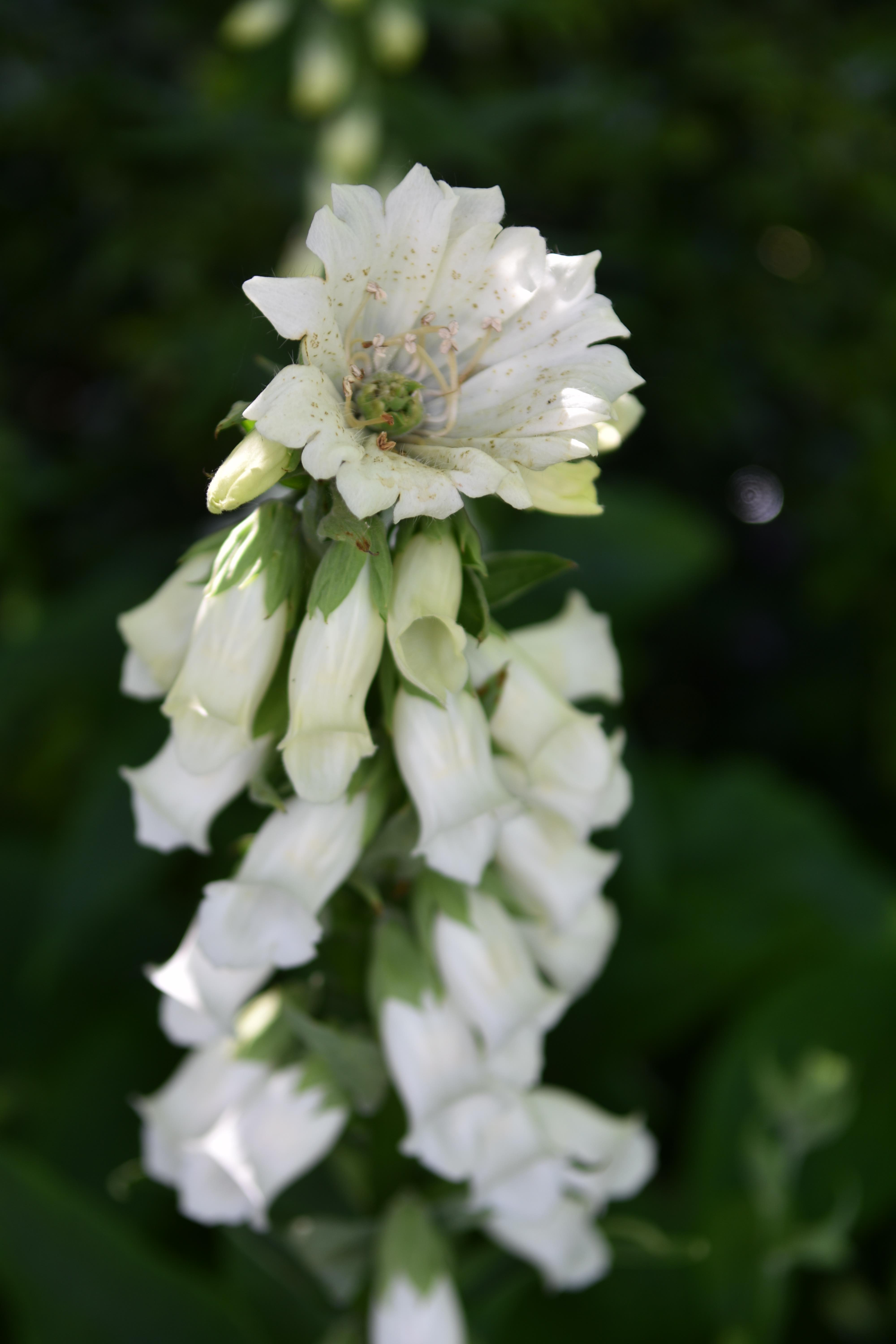
Some recent developments have produced ‘split’ flowers that, personally, I find very unpleasant. There are also ‘peloric’ forms that produce a large, saucer shaped bloom at the top of the stem. Strangely, although foxglove blooms always open from the base of the spike upwards (I wrote about this some time ago) the peloric blooms always open first.
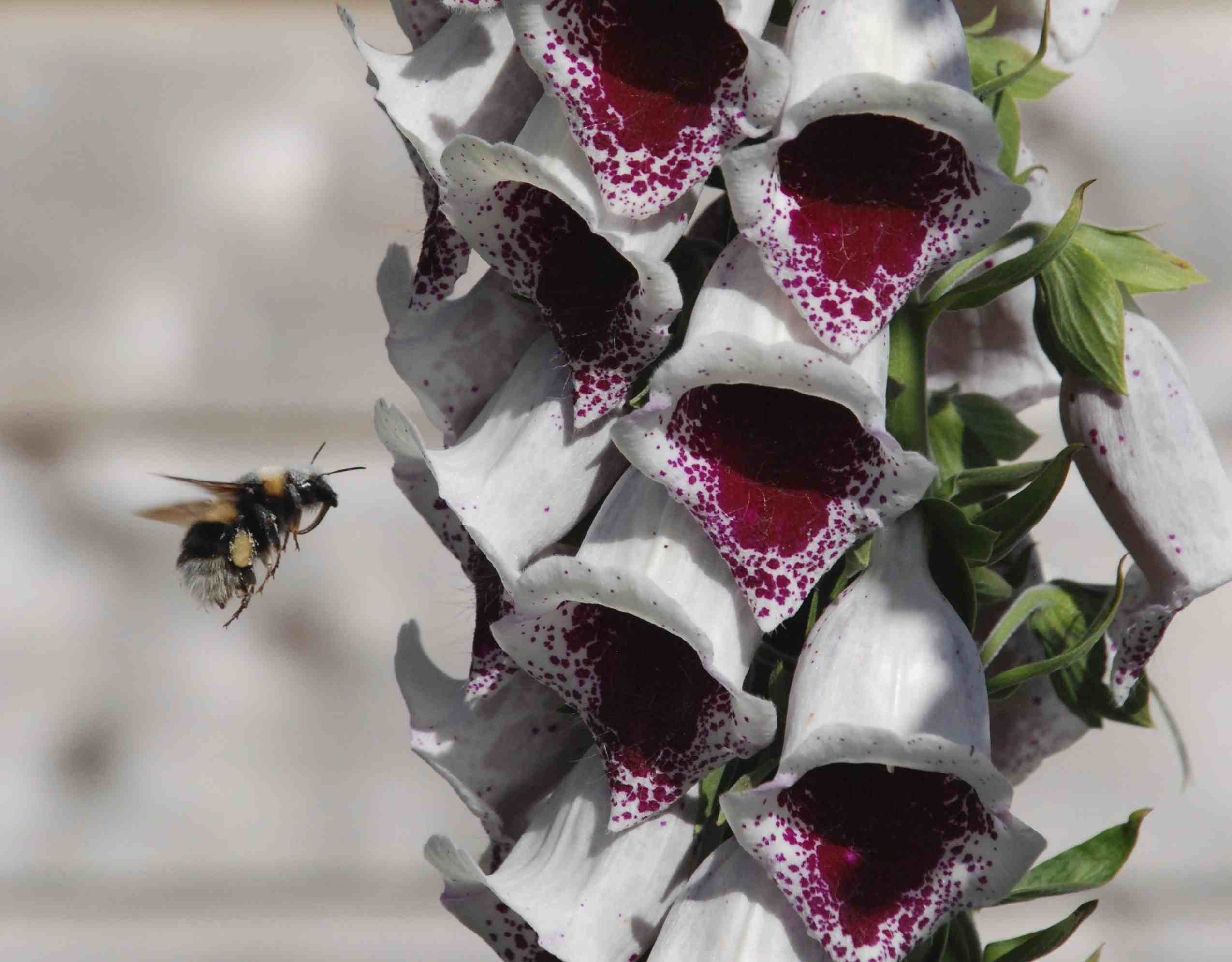
Although I enjoy the various modern kinds with extra spots and a broadening of the flower range, there is nothing nicer than the wild foxglove, except, possibly, the white form which is such a lovely thing.
These are biennials and usually die after flowering although there are sometimes basal shoots that will bloom the following year.
We often think of foxgloves as being woodland plants but they do not grow in deep shade. They grow in clearings where sunlight reaches the soil and this should be remembered when growing them. The seeds need light to germinate. So sow the seeds on the compost surface and do not cover them. You can sow in spring or summer but the plants need a cold period to stimulate blooms. If you sow in March you will be able to plant them out in May or June and get huge plants blooming the next year. Or sow in July and plant out in September and get nice plants blooming the next year.
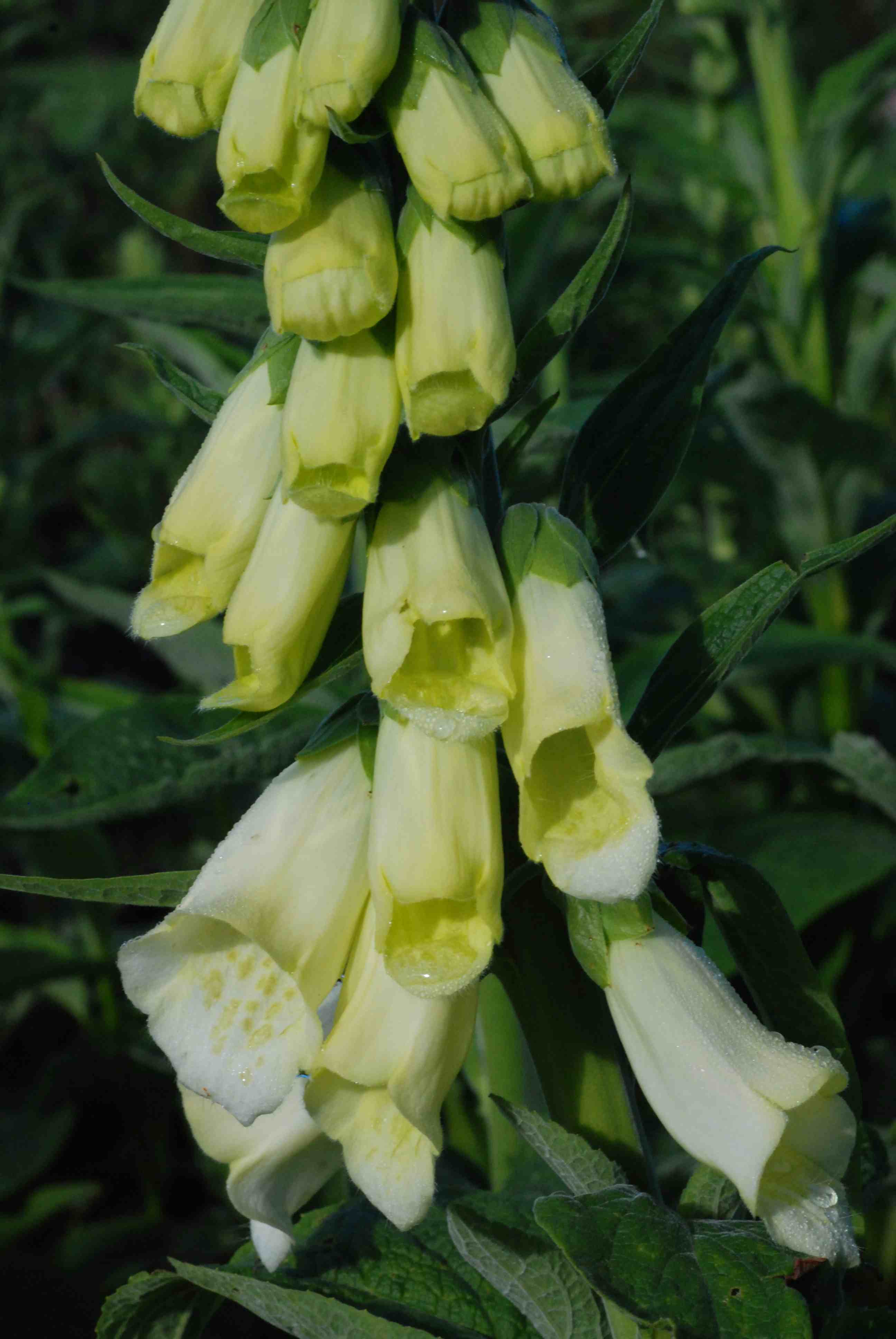
Buy a plant in bloom in June and you will get instant colour for a month. That is all. Well, potentially some seeds to sow if you collect them.
Foxgloves are poisonous but I don’t think they are really dangerous in the garden. They are not the sort of thing you or your child or cat is likely to eat. But they do contain digoxin which is best known as a heart medicine, slowing the heartbeat.
The name digitalis comes from the Latin digitus – finger. It seems that people have noticed that they could pop their fingers in the flowers for centuries. The German fingerhut – finger hat (or thimble) is easy to understand. But in Britain and Ireland the flowers have always been associated with the fairies too.
Among the many local names in the UK are; bee-catchers, duck’s mouth, fairy bells, fairy fingers, granny’s gloves, lady’s thimble, long purples and witches thimbles: in Ireland lus n amban sidhe (plant of the fairy women).
The connection with the mischievous little people meant foxgloves could be used to protect children from being taken by fairies and also to detect changelings left in place of children by the fairies. And the fairies made the flowers magic so that if foxes wore the flowers on their feet they could sneak silently to catch your hens.
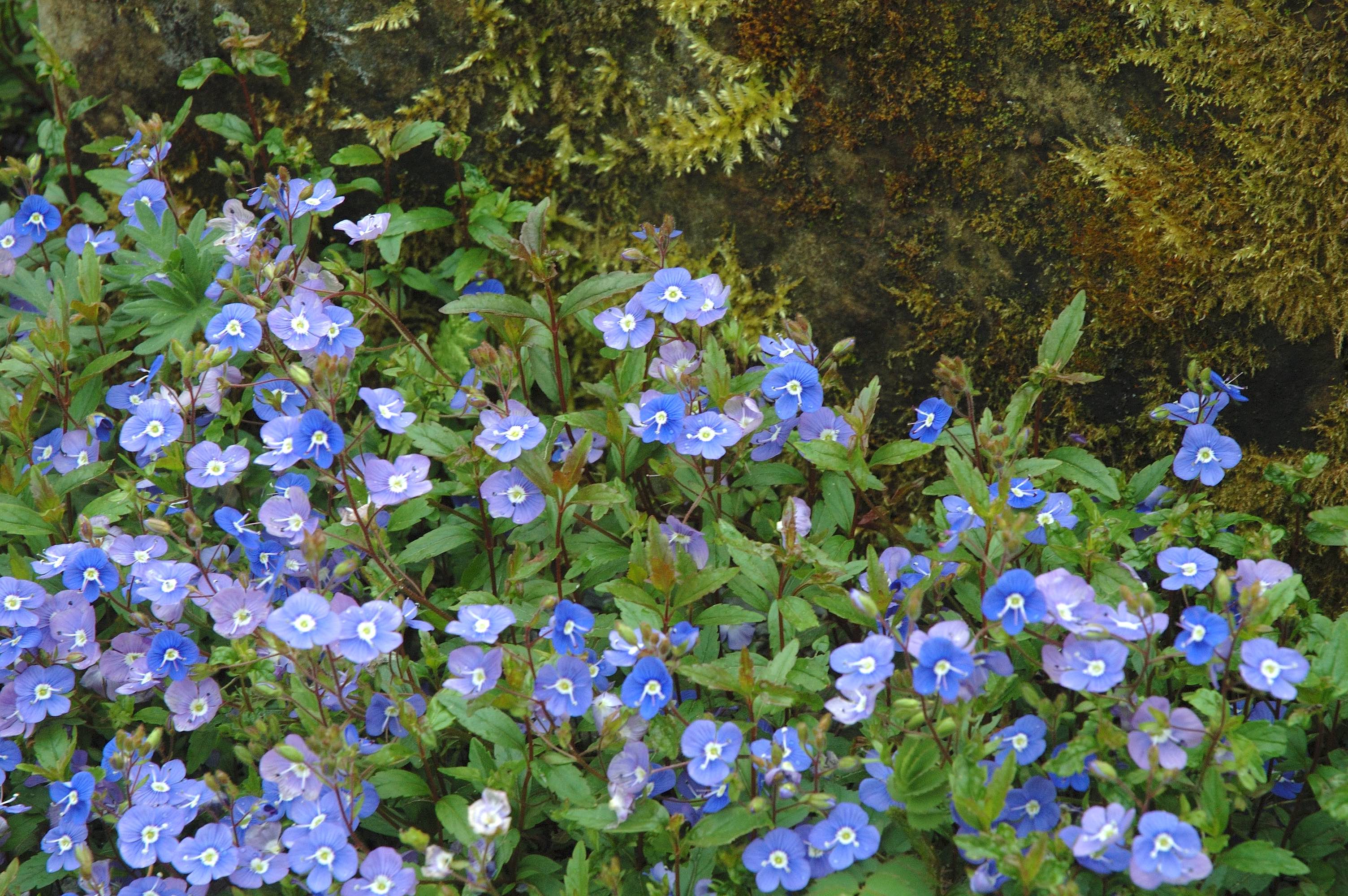
The genus veronica, at least the herbaceous kinds includes some annoying weeds such as the pretty V. persica and V. filiformis with really lovely blue and white flowers. In this garden the most common is V. hederifolia which has tiny flowers and seeds around a lot.
In the pond I have planted V. beccabunga, a native with small blue flowers that has the merit of being native and being fun to say but little else really. Veronica gentianoides is a pretty thing for the border and V. umbrosa ‘Georgia Blue’ is definitely worth a place. Most gardens would be enhanced by adding V. spicata and its hybrids in various shades of pinkish red, white or blue providing you eschew the dwarf kinds.
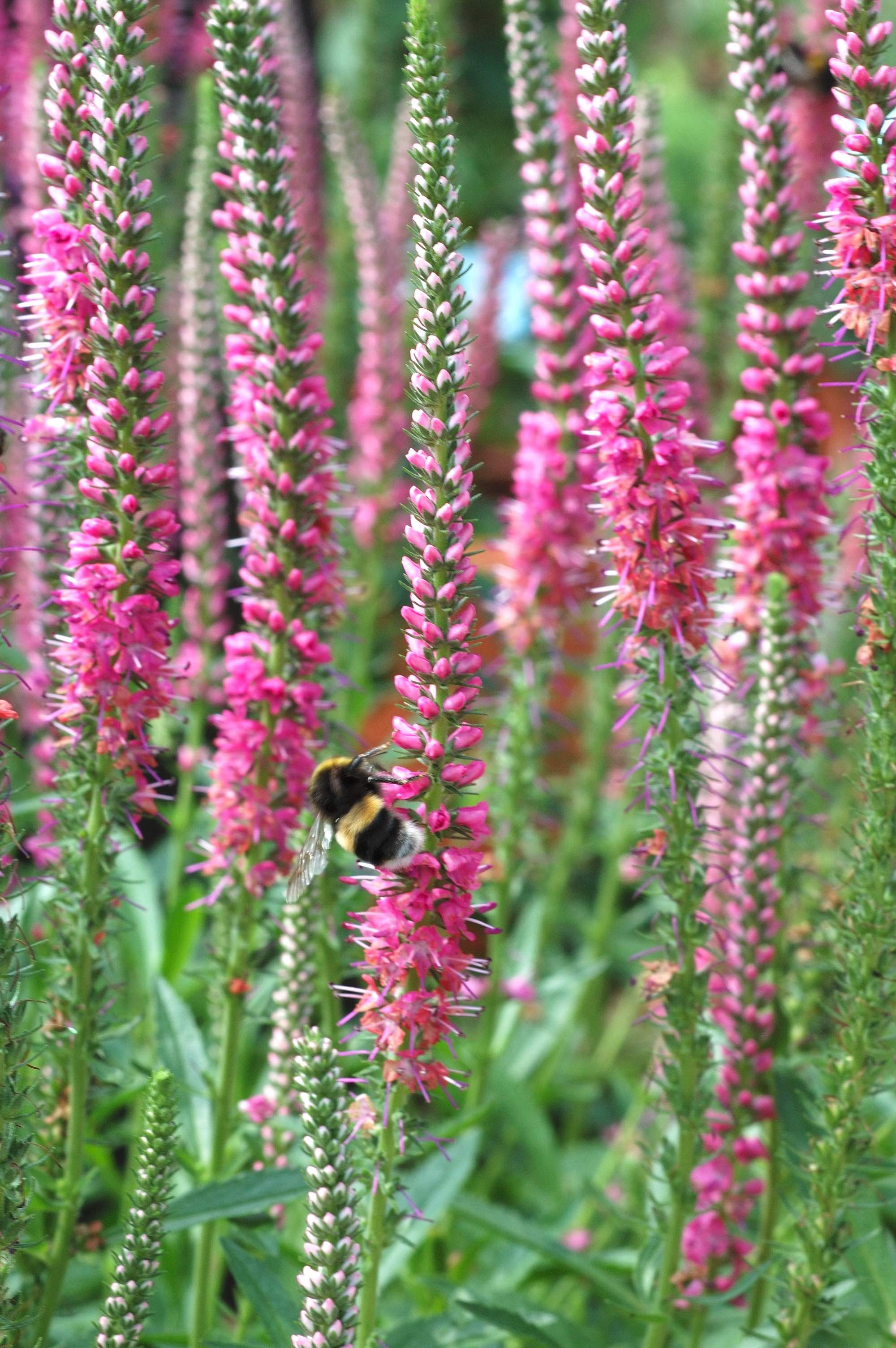
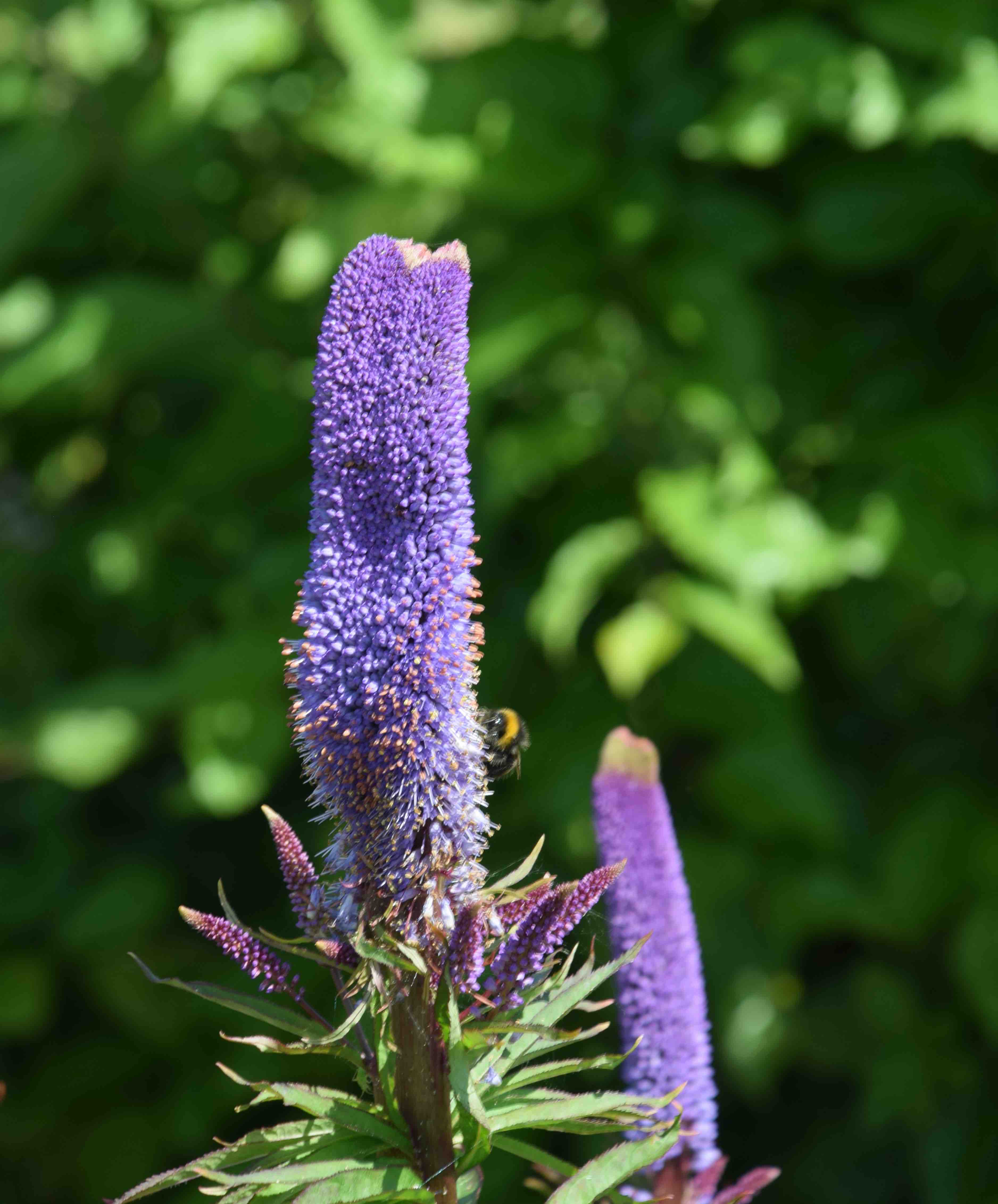
And then there are the veronicastrums. Elegant, tall, structural and long-flowering, they are usually self-supporting and absolute bee magnets.
Tomorrow: The bedding plants
 The Biking Gardener
Peloric foxglove are weirder than the split foxglove, although not quite as unappealing.