Plantaginaceae 2: Veronica and penstemons
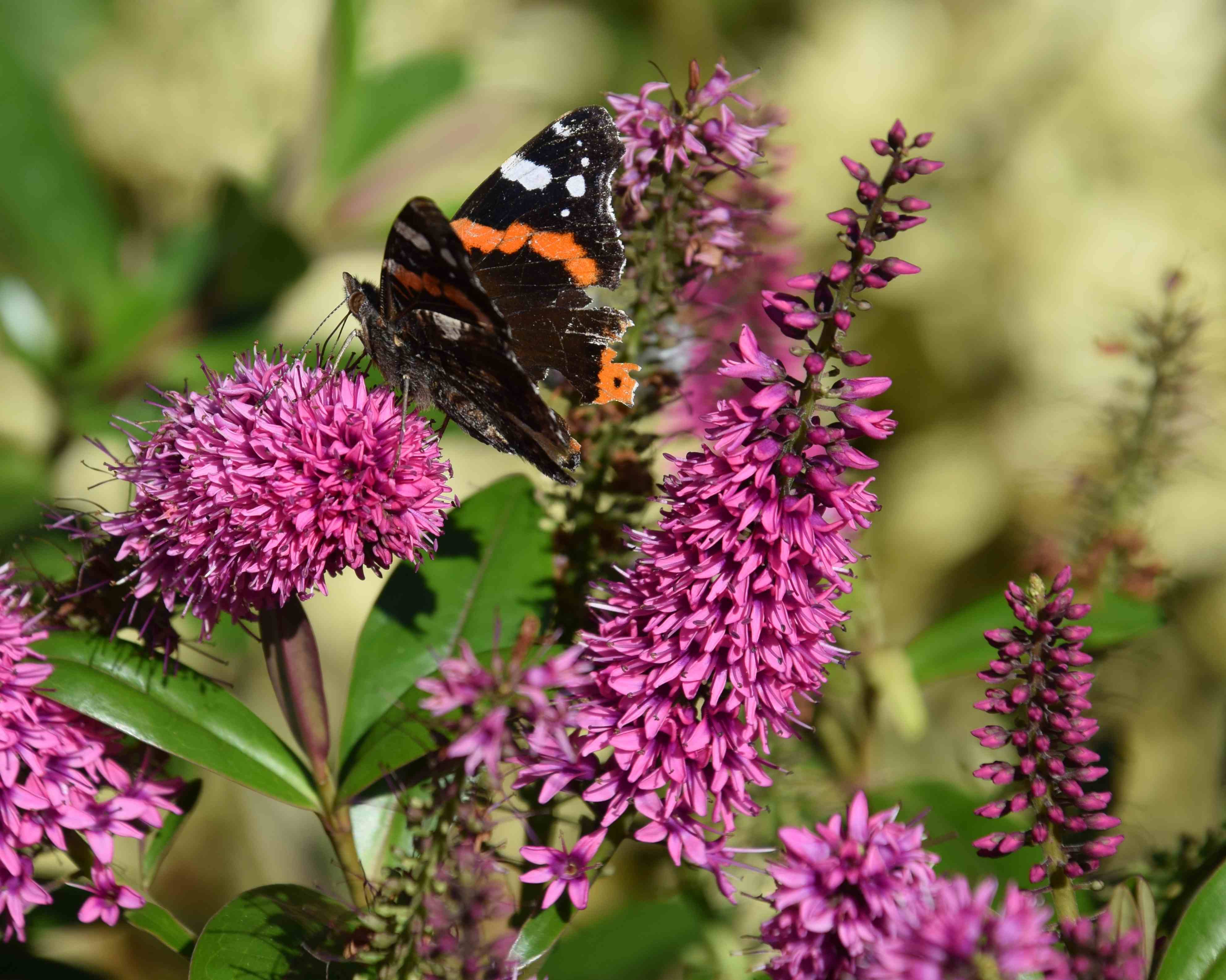
Hebes or shrubby veronica
Until they were put back into veronica, these plants were known as hebe and parahebe, the latter having flowers more like the herbaceous veronicas, with flowers with obvious veins, often in branched inflorescences. It all made perfect sense. No more. Although not botanically accurate I will call them hebes as a common name for the group but will stick with the accurate names if I mention species.
The 100 or so hebes are mostly from New Zealand with a few in Australia and two in South America. All are evergreen and a specialised group with tiny leaves, often resembling conifers, are called ‘whipcord’ hebes. There is even V. cupressoides.
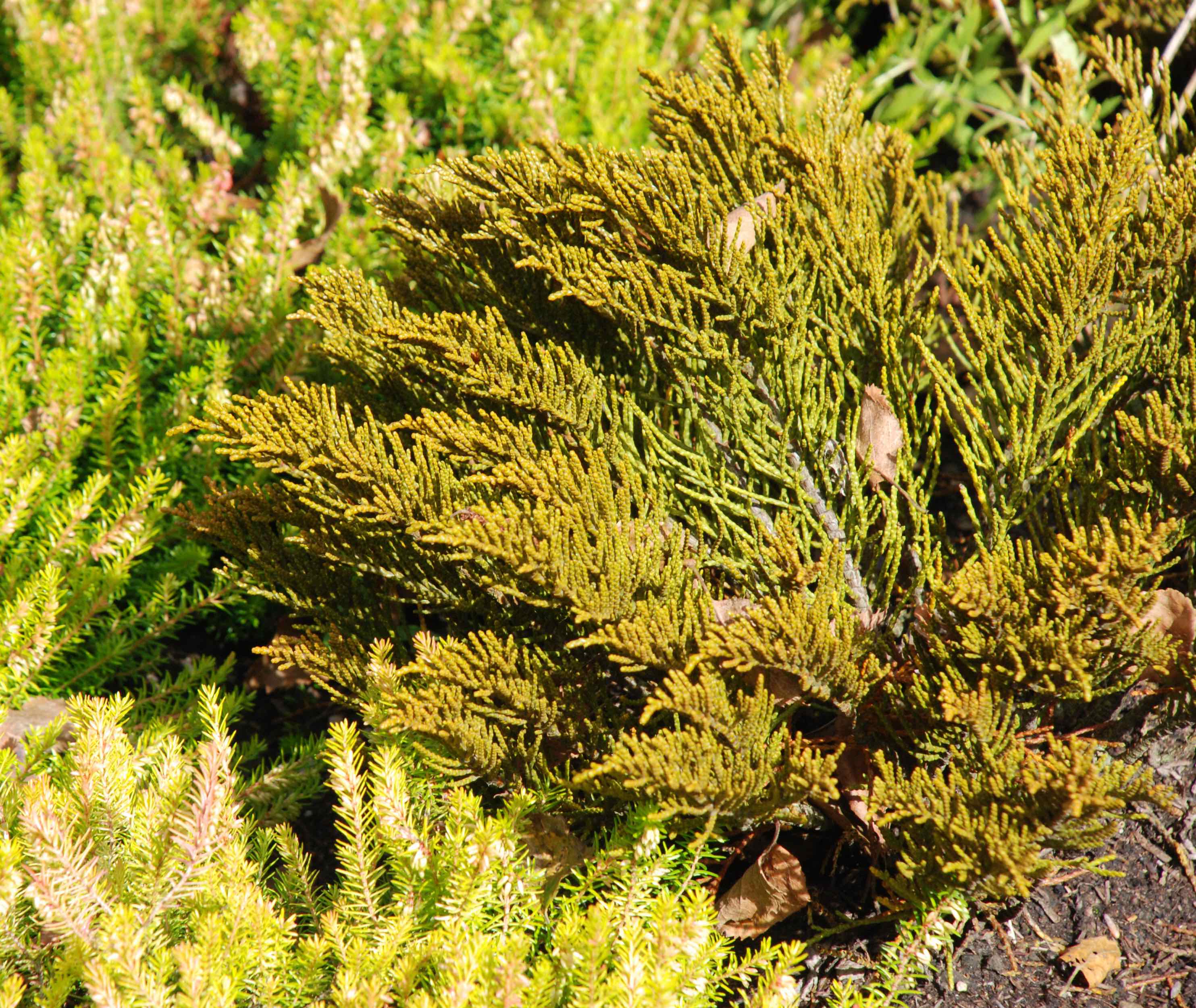
The leaves are opposite, the pairs at right angles to each other. Unusually for shrubs in our gardens, there is no resting bud at the shoot tip for winter. The uppermost leaves enclose the next pair and growth point.
The small flowers are arranged in spikes or racemes in the leaf axils in most of the familiar species. The flowers are usually small and the four petals fused at the base.
There is a marvellous variation in flower colour, especially among the larger leaved kinds which are, unfortunately, the least hardy. Among the smaller kinds the flowers are predominantly white, characteristic of much of the New Zealand flora. Hebes grow in a wide range of habitats and they make good garden plants in this part of the world provided the soil is not too wet and the site not too cold. They generally take chalk and wind in their stride.
They are generally easy to strike from tip cuttings. Old plants, damaged by frost, can generally be cut back hard but regrowth can be erratic and replacing old plants is a good plan.
A recent trend has been to introduce cvs with violently coloured leaves. I am not a fan. One of the most popular old kinds is V. x franciscana ‘Variegata’, sold by the lorry load in autumn for planting in winter pots. The rounded leaves are boldly margined in butter yellow and the flowers are purple. It was a sport of the green form that was first described in 1859, probably in Devon. But it was formally described from a plant in Golden Gate Park in 1943, and so we get the name. It is not the hardiest of hebes but popular by the coast where it is a useful, and pretty, low hedge, coping with sea spray and gales.
The first hebe I knew, and the one that my great aunt grew, was ‘Autumn Glory’. A rather lanky shrub, about 60cm high when mature when it then flops. It can be successfully rejuvenated with a moderate prune. It is very tough and has beautiful dark purple flowers for many months. The parentage of this hybrid is in doubt but it was raised at the Daisy Hill Nursery, Newry in about 1900.
The large-leaved hebes, which have the most spectacular flowers, are generally not very hardy and are killed down to the base in cold winters, sometimes sprouting from below. These include some of my favourites such as ‘La Seduisante’ and ‘Alicia Amhurst’ and all are bred from V. speciosa.
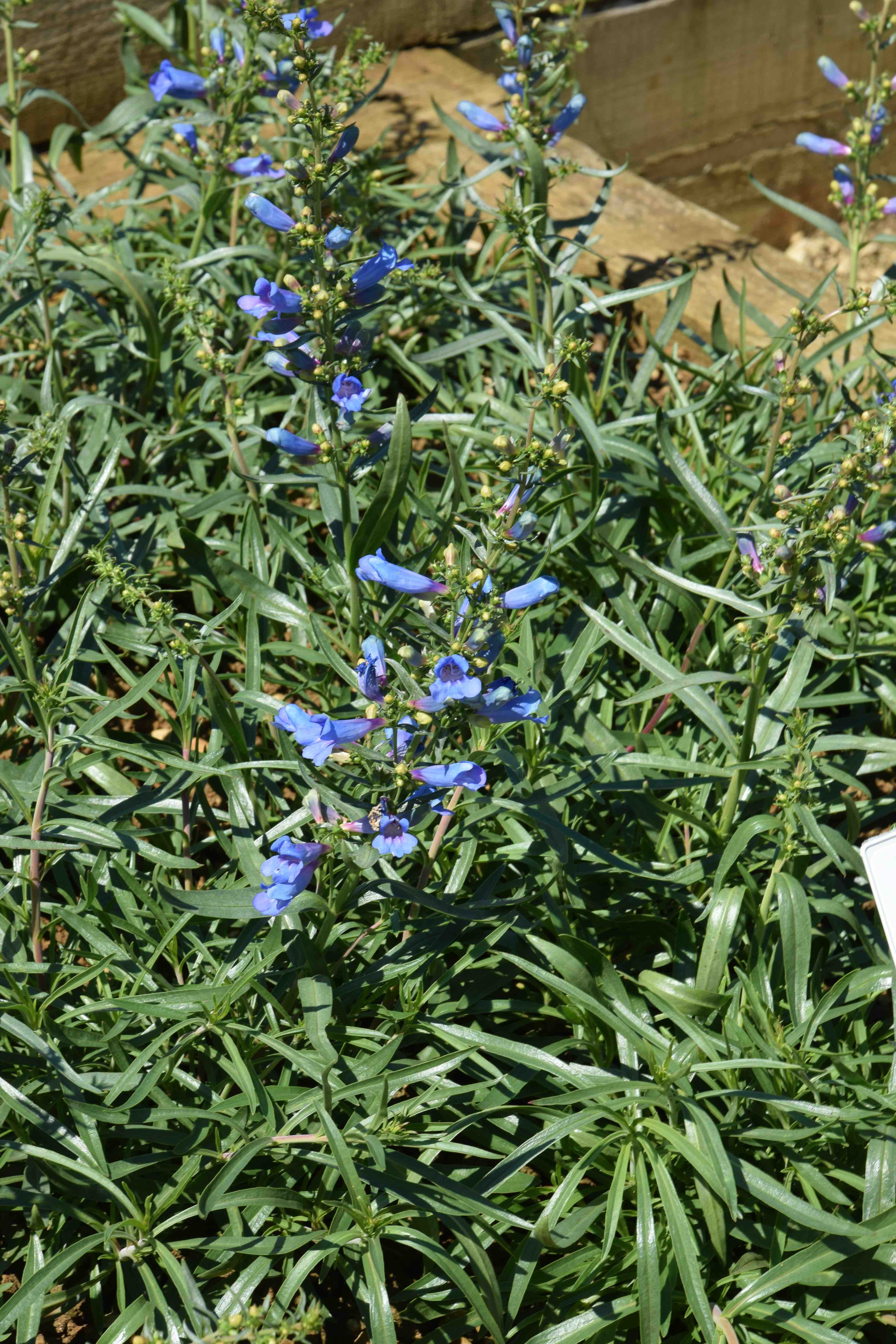
And then there are the penstemons.
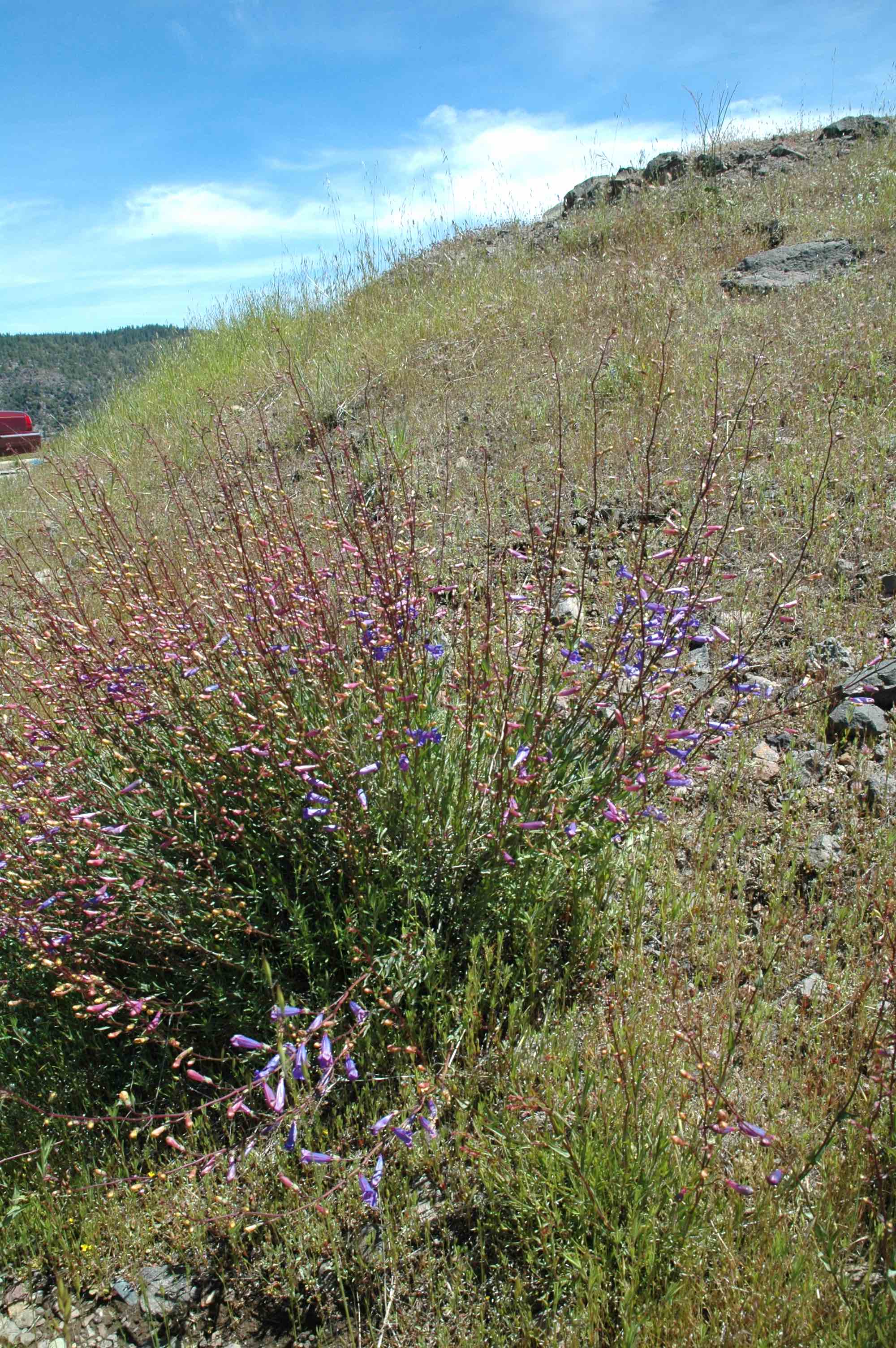
As the name suggests, there are five stamens in the flower but one is sterile so there are only four functional stamens. The sterile stamen is furry, giving the plants the name of beard tongue. Penstemon are woody at the base and have pairs of opposite leaves and terminal clusters of tubular flowers. Those with red flowers, usually narrow in shape, are pollinated by humming birds and filled with nectar, and those with broader trumpets, in pink, mauve or blue, are pollinated by bees. There is a huge range of flower colours but they are rarely fragrant. Of the more than 250 species, all are found in North America, from Alaska to Central America with the greatest range of species (70) found in Utah.
Linnaeus knew them and the first was named Chelone pentstemon in 1753. A century later there were 50 species known to science by which time they had become penstemons.
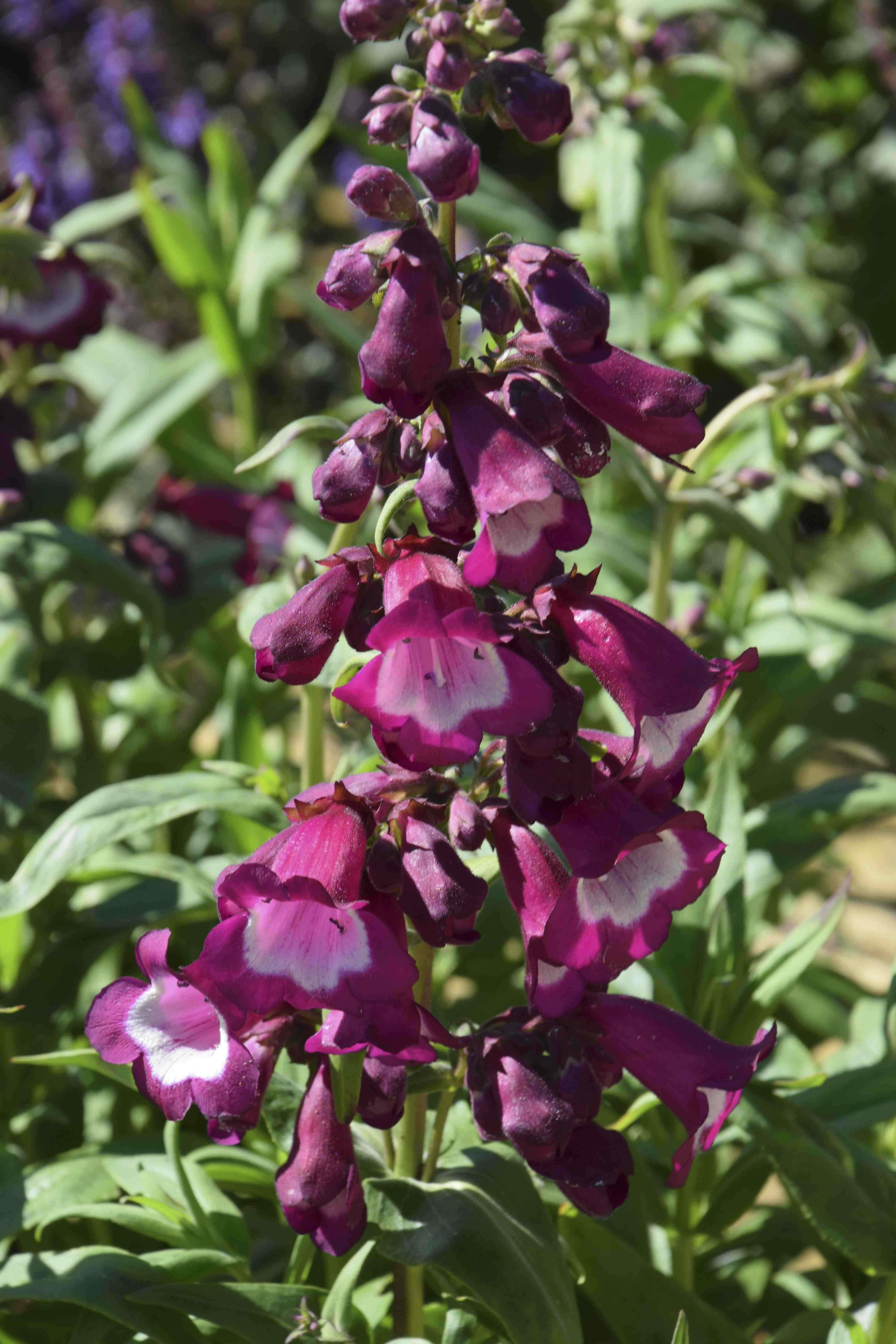
The Victorians loved penstemons and P. cobaea and the Mexican P. hartwegii were used to breed large-flowered hybrids, undoubtedly popular in bedding. By 1861 the RHS had a trial of almost 80 varieties. Intense breeding was done in the UK and in France. Penstemon cobaea, native to the central US, and known as the prairie penstemon, has the largest flowers of all the species, comparable with common foxgloves. It is also a large plant, the hybrids often reaching 1m high. The hybrids are easily grown from seed and they will flower the first year. Among the garden hybrid penstemons, those with the largest flowers and broadest leaves, are usually less hardy than those with narrow leaves. In my climate most are hardy but they do not like winter wet. They are easy to root from summer tip cuttings and these should be taken to replace plants that do not survive winter. Plants tend to be shortlived anyway and as they get woody at the base they lose vigour.
There are too many good and lovely species to mention here but I ought to give P. digitalis ‘Husker Red’ a mention because it may be the tallest species and this plant is grown for the beetroot coloured foliage as much as the white or pearly blue flowers. I confess it does not bring me out in a sweat like some of the others.
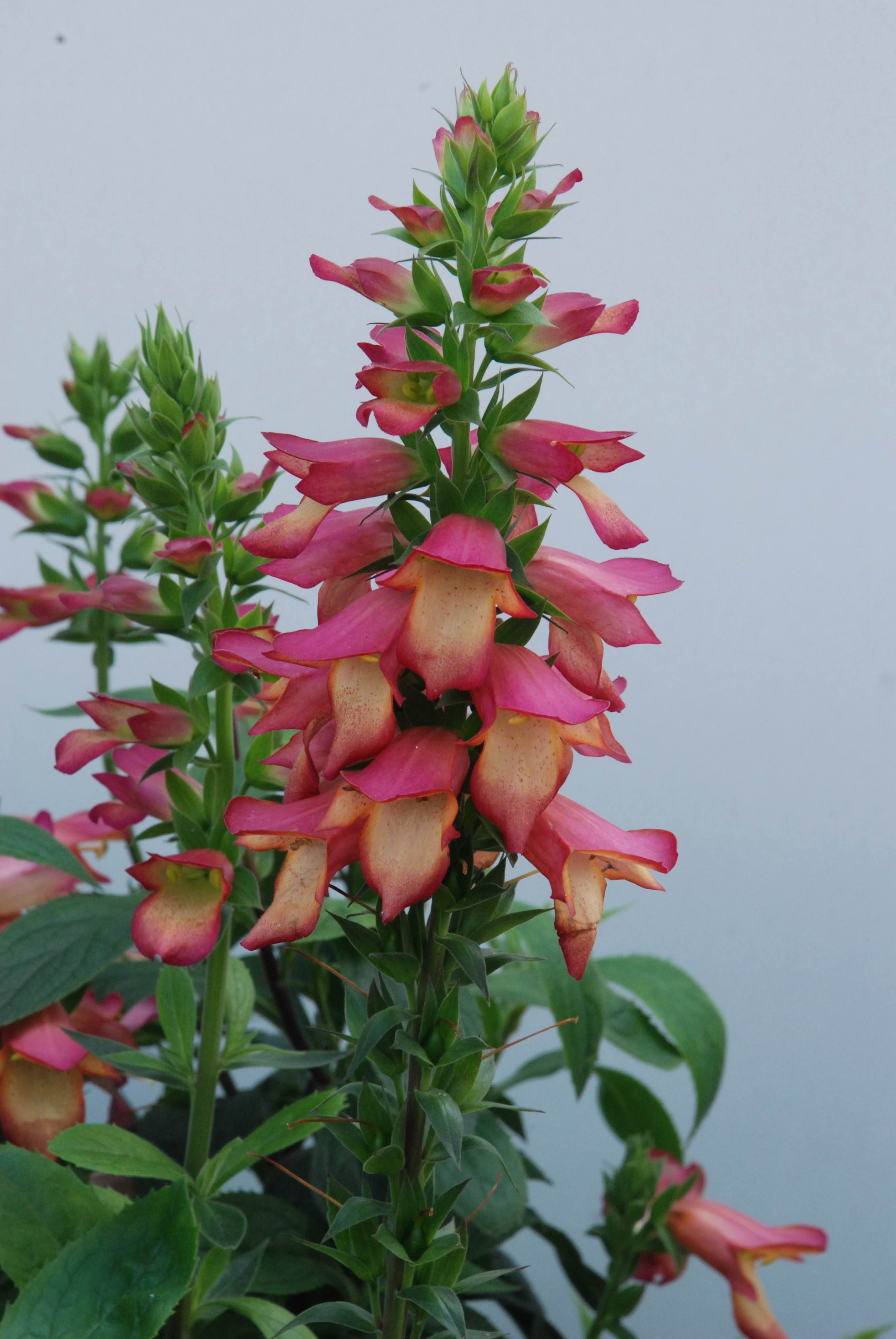
There is one other, obviously shrubby, genus; Isoplexis. Native to the Canary Islands and Maderia, they are small shrubs with flowers like digitalis (foxgloves) but have a larger top lip to the flowers and are thought to be adapted to bird pollination. Some of the four species are grown in gardens but they are of unreliable hardiness. When at Thompson & Morgan, Charles Valin bred an amazing number of new plants but, perhaps, none as remarkable as x Digiplexis valinii, a bigeneric hybrid of Isoplexis and digitalis. ‘Illumination’ was the first to be introduced and now there are many cvs. But now Isoplexis has been lumped in with digitalis so these hybrids are now Digitalis x valinii.
Tomorrow: Foxgloves
 The Biking Gardener
No comments yet.