We are family: Plantaginaceae
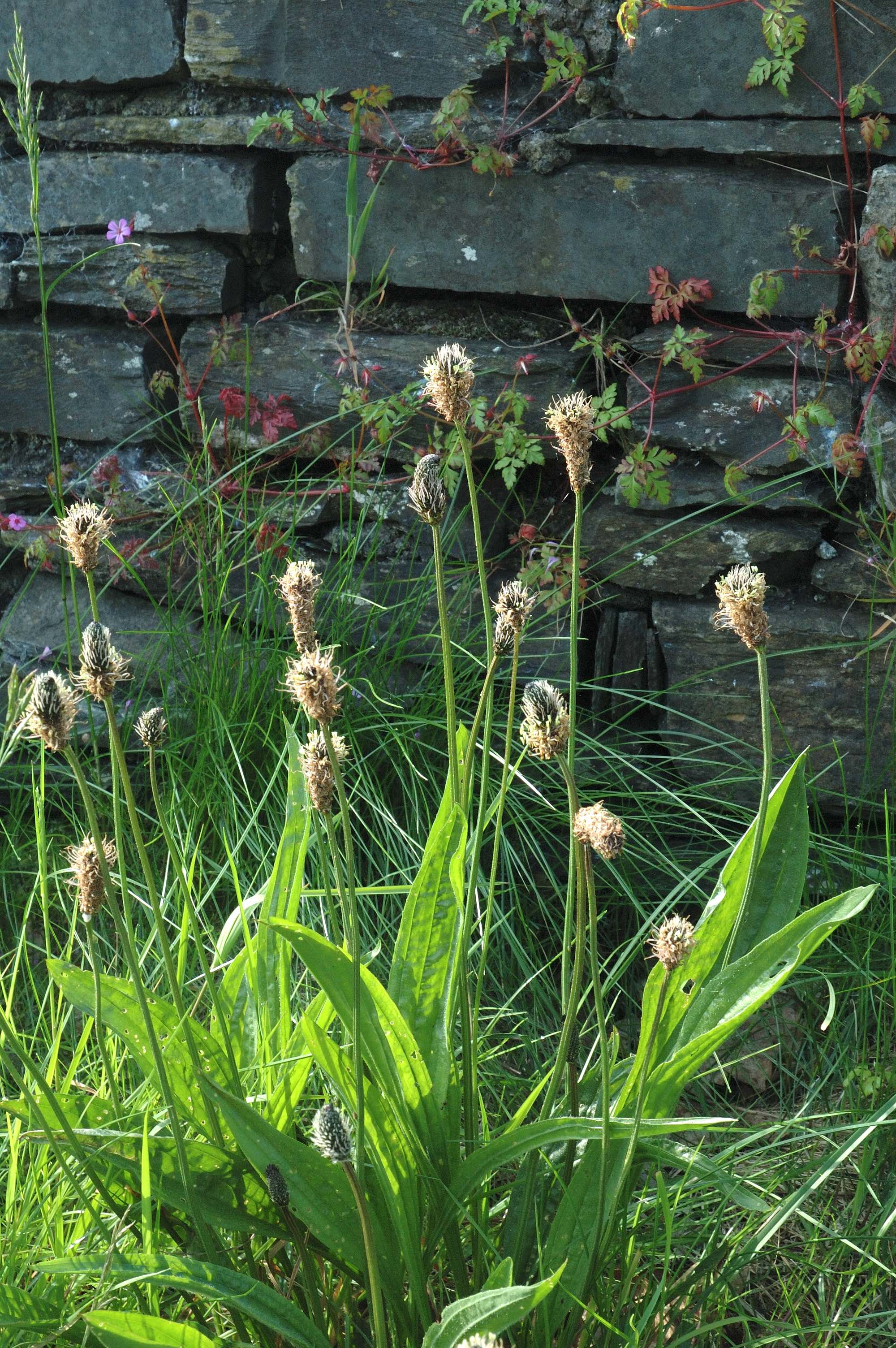
After a few massive plant families I was intending to attempt a smaller one this week. So for no real reason other than it contains a lot of garden plants and will be familiar, I am tackling the Plantaginaceae. It may be a family that is unfamiliar but contains plants you will know.
But immediately there is an issue. Most of the garden plants with which we are familiar; digitalis, ‘bacopa’, erinus, antirrhinum, hebe and linaria, were once all included in the Scrophulariaceae. When I worked in a garden and decided to use engraved labels to identify the plants I dreaded anything in this family because the space allotted to the family on the label was never big enough to fit this euphonic but ridiculously long name!
And, to backtrack, hebes have been moved back to veronica. My great aunt would regularly show off her established veronicas and, of course, I knew they were hebes. If she were still with us it would be her that would be bang up to date. not me.
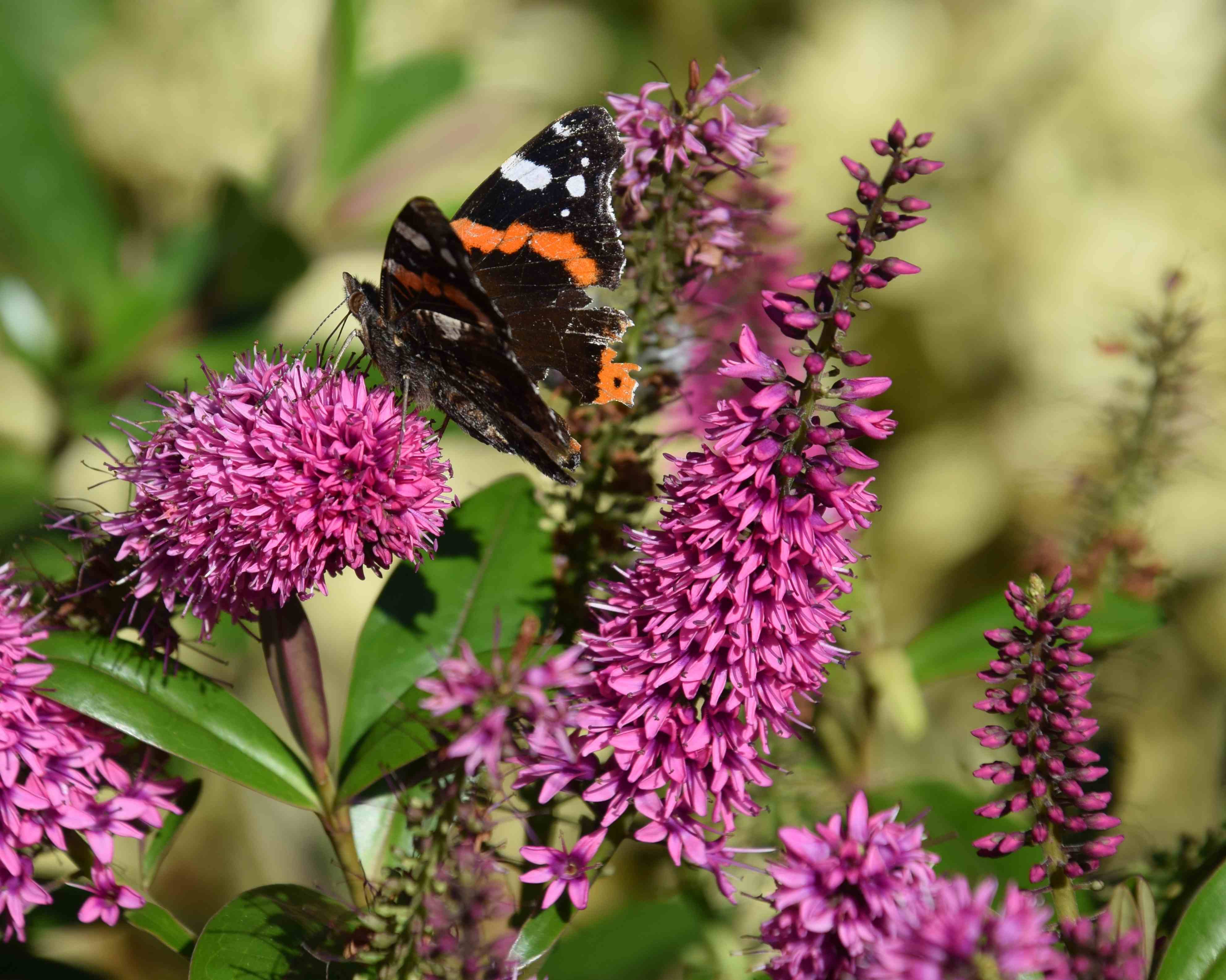
Anyway, genetic research revealed that plantago and other genera fitted within the Scrophulariaceae but, because of the rules, Plantaginaceae took preference over that family name. Another older name was Veronicaceae and some have suggested Antirrhinaceae but for now Plantaginaceae stands. For now!
Going back one step, the type genus of Scrophulariaceae was/is scrophularia. These are not important in gardens but S. nodosa is a common European wild flower with small, liverish, tubular flowers pollinated by wasps. According to the Doctrine of Signatures, by which the medicinal uses of plants were determined by their appearance, it was used to cure scrofula, a bacterial infection of the neck because of the throat-shaped blossom. Scrofula was also called ‘the King’s evil’ because it was believed that it could be cured by being touched by a monarch!
Overall there are about 100 genera and almost 2000 species in the family. Almost a quarter of these are veronica. Revisions have removed the hemi-parasitic genera such as Rhinanthus, orobanches and castilleja (Indian paintbrushes) and placed them in Orobanchaceae and the foxglove tree (Paulownia) has been given its own family. Torenia and rehmannia have also been hived off.
In general, and there is a lot of variation, they are herbaceous or annual or biennial but the hebes (which I will use as a common name since they are distinct from the herbaceous veronicas from a garden point of view) and most penstemons, which make up a lot of what gardeners will grow, are at least partly shrubby. The leaves are usually alternate although again, veronicas and penstemons are widely grown exceptions with paired leaves. The flowers have four (or five) petals, always fused, at least at the base, and often forming a tube with five lobes. There are four stamens and the seed capsule has two parts and splits to release many small seeds – though it opens at the top in antirrhinum. There is a wide range of colours in the flowers.
From a horticultural point of view the most important genera are:
Angelonia
Antirrhinum
Chaenostoma cordatum
Digitalis (and Isoplexis)
Linaria
Penstemon
Veronica
Veronicastrum
Others that are also frequently cultivated include:
Asarina and Maurandya
Campylanthus
Chaenorhinum
Chelone
Collinsia
Cymbalaria
Erinus
Jamesbrittenia
Ourisia
Plantago
Rhodochiton
Russelia
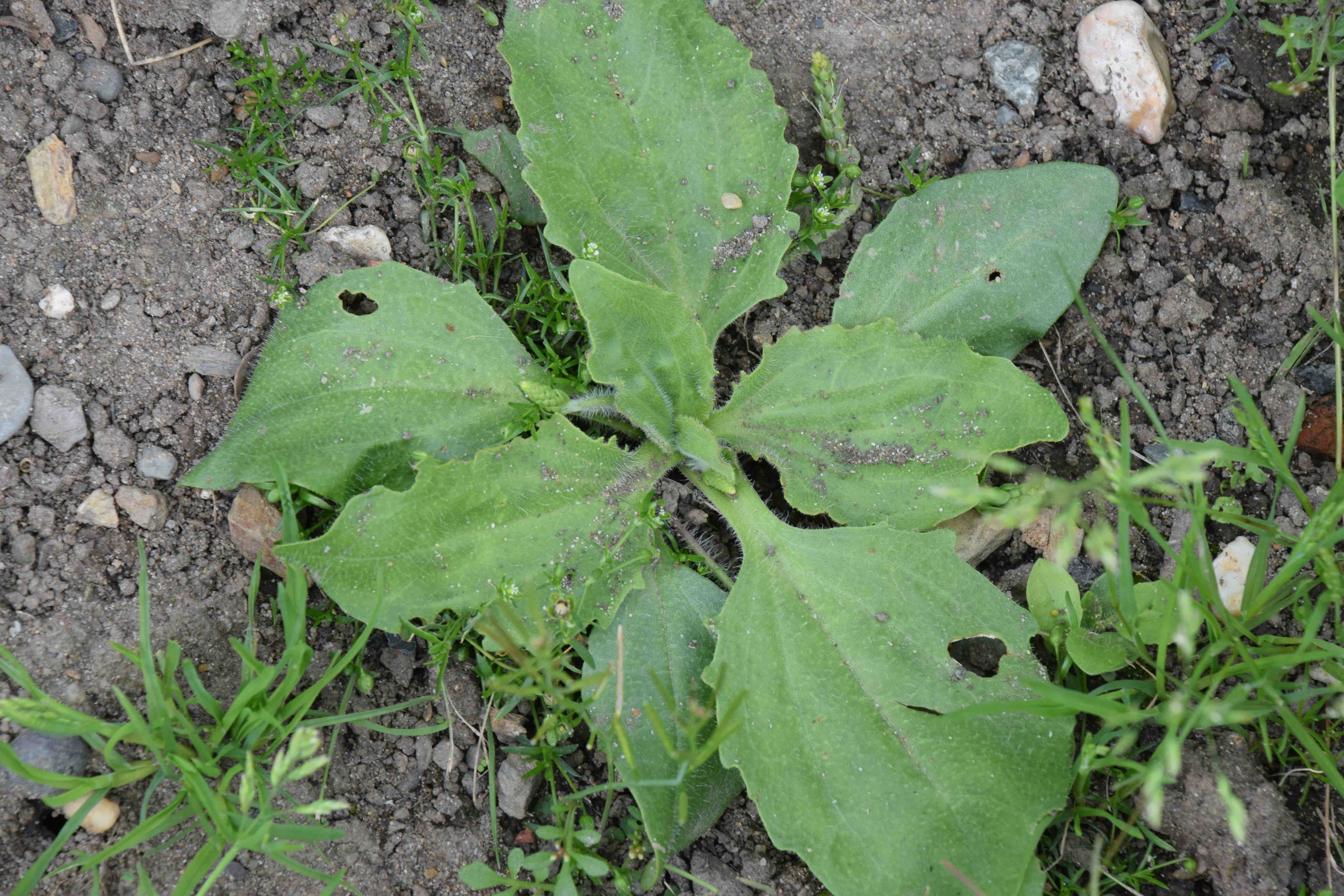
Since plantago is the type genus it would be wrong not to mention it at all even it is not the beautiful group of plants. For most gardeners plantago (or plantain) means one thing – lawn weeds. Most plantains (but not all) form rosettes of foliage with a growing point at soil level and so the broad-leaved, greater plantain (Plantago major) is a serious lawn weed. Like other plantains, the spikes of small, wind-pollinated flowers have little beauty. The other common species here is P. lanceolata which has narrow foliage and a more upright habit. As a child I would bend the flower stems and ‘fire’ the immature flower heads but, try as I might, I can’t get the knack now and can’t remember how I did it. Perhaps I was just easy to please.
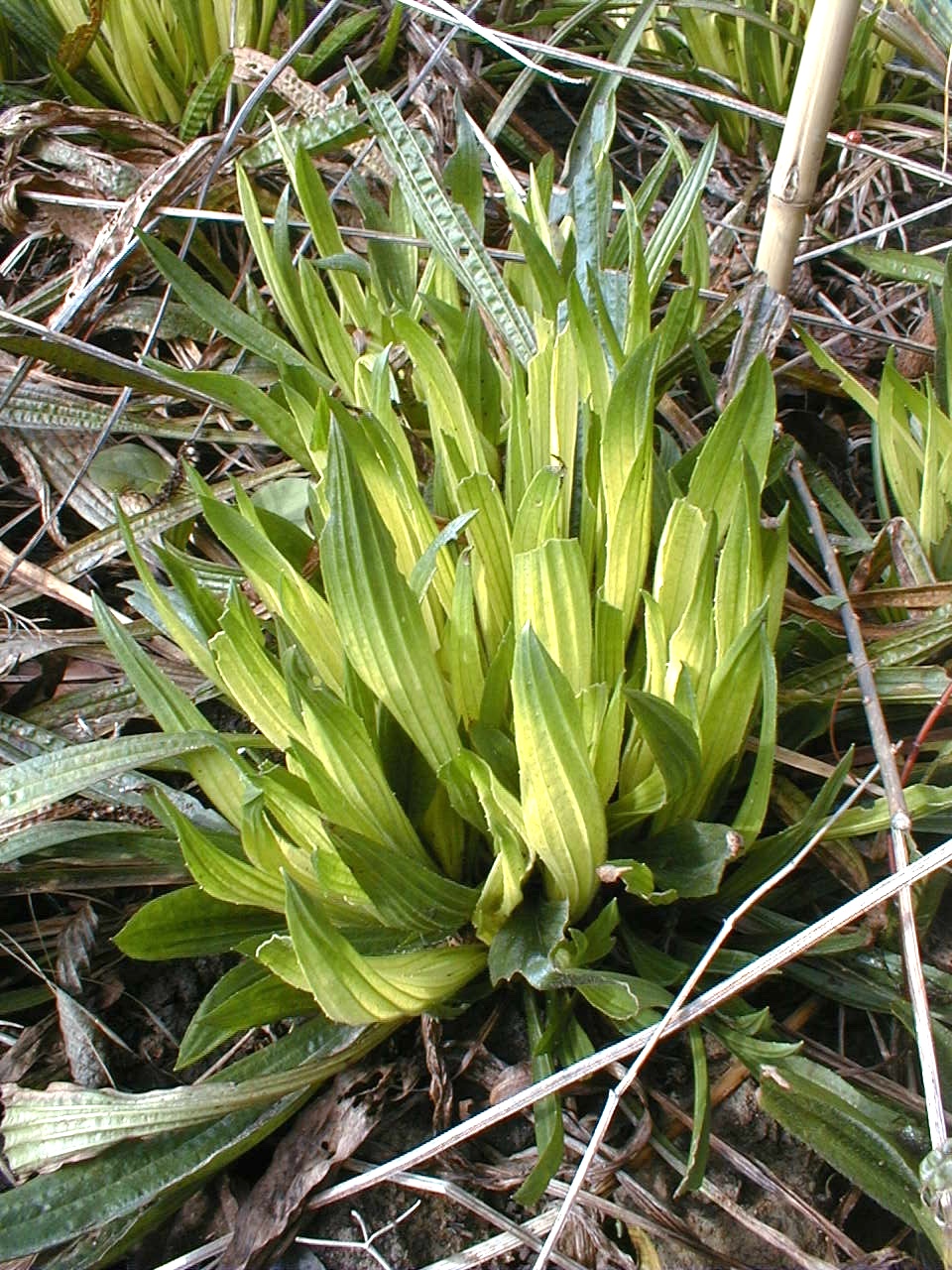
Years ago I grew ‘Golden Spears’ from seed which has bright yellow spring foliage. Potentially an awful weed, it was a welcome sight in spring, spread over a larger area by seed for a few years and, as the area grew darker as shrubs expanded, died out.
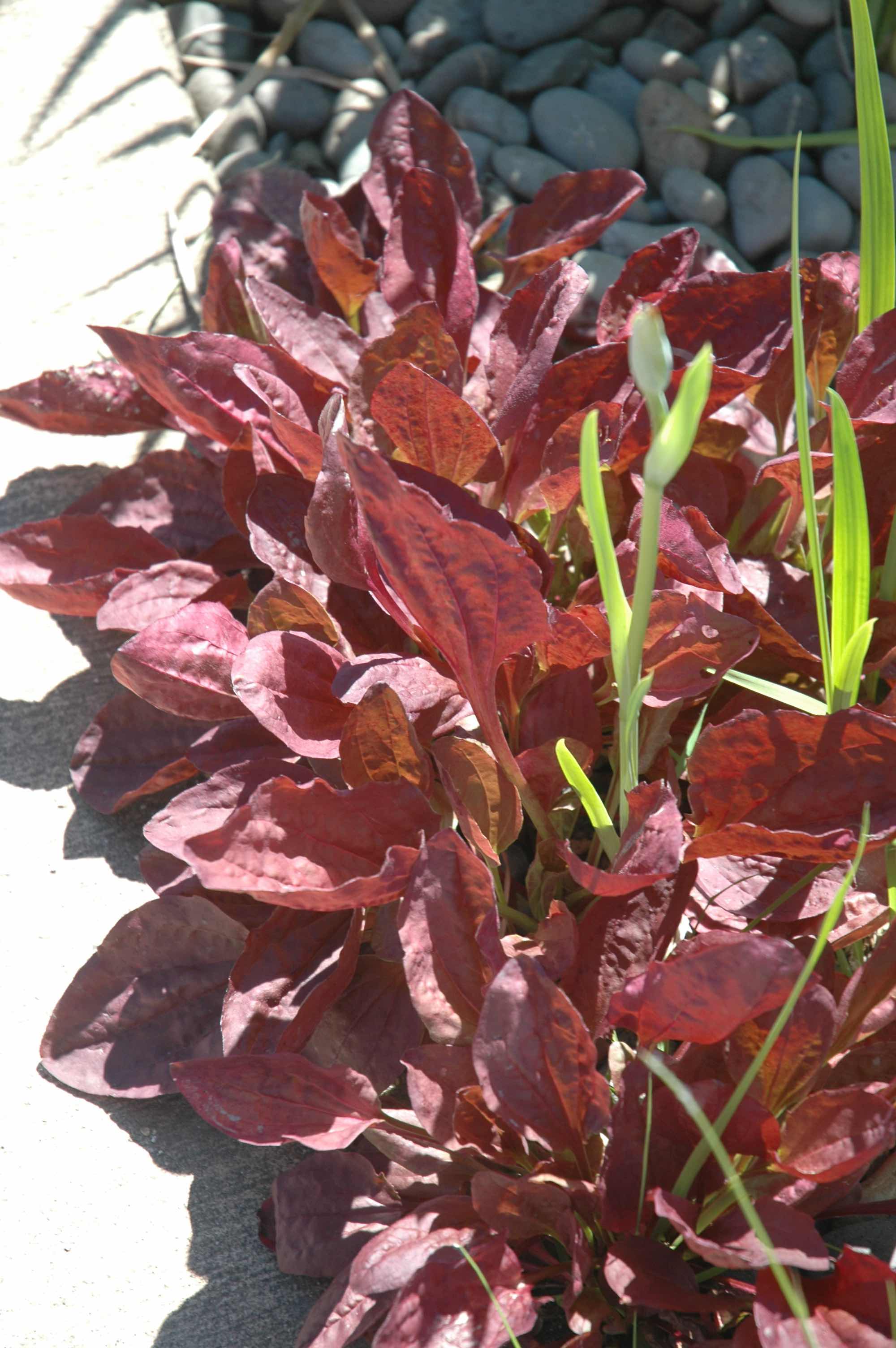
There are also ornamental forms of Plantago major. The most obvious of these are those with purple leaves. Despite the plain species being an awful lawn weed and very at home here in my heavy soil, when I grew the purple a few years ago, from seed, and planted it extensively in my wild flower bed, it died out. It is probably just as well because if it has spread into the lawn it would have been very obvious with flat, purple rosettes. In the border it is a curiosity but often suffers from powdery mildew which spoils the effect. There is a weak-growing splattered variegated form that is hardly worth the effort and a ‘rosulate’ form where each flower is accompanied by a small leaf so the flowerheads look like pine cones. This is more like the sort of thing I enjoy but it doesn’t add much to a garden apart from interest.
As a student at Kew I had to care for pots of the Spanish Plantago nivalis, a beauty with rosettes covered in white wool, watering carefully in winter to avoid getting the foliage wet.
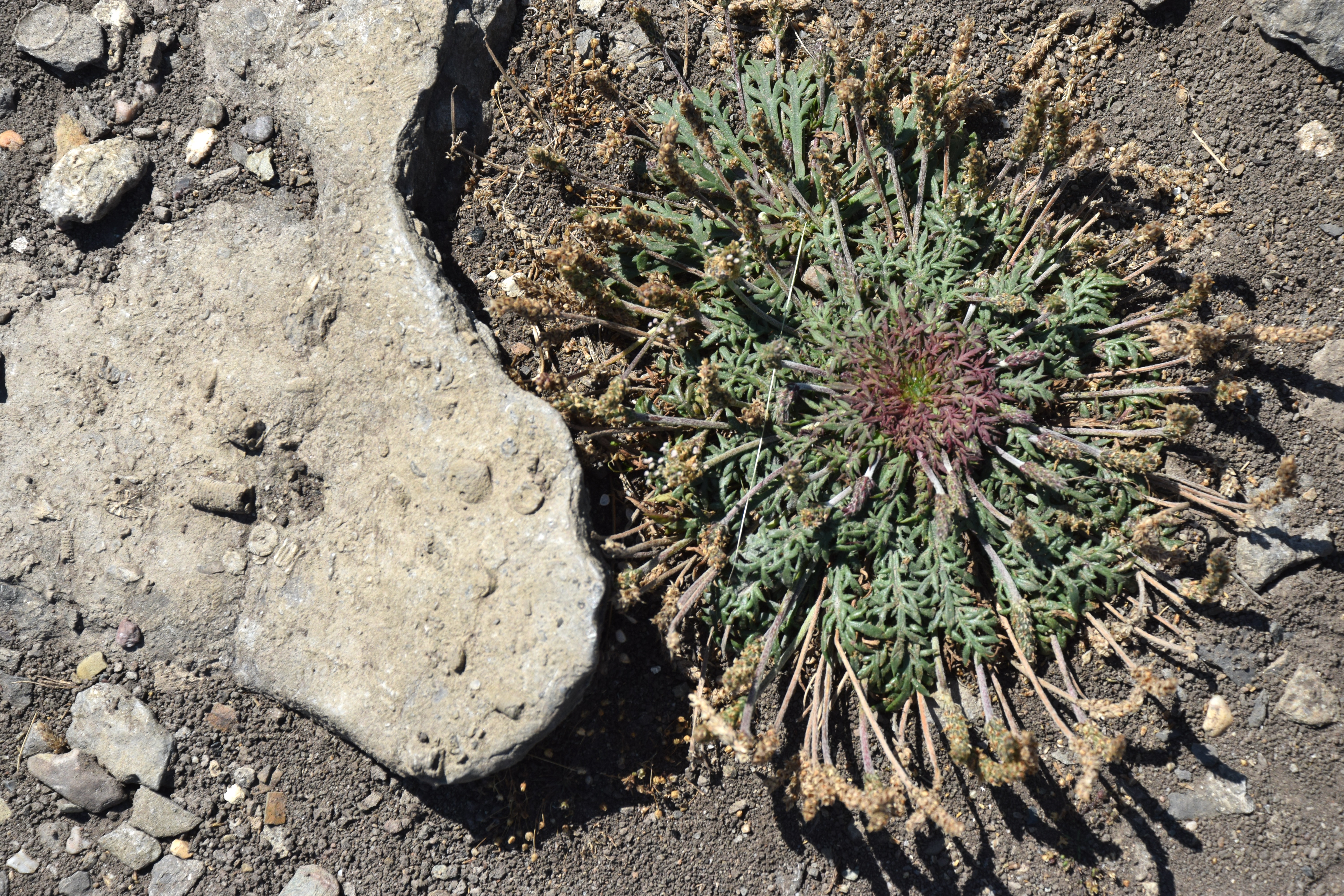
All plantains are edible, if not delicious, and P. coronopus, buck’s horn plantain, with deeply divided leaves, and P maritima (sea plantain or goose tongue), are both foraged or sometimes cultivated as a leaf vegetable.
Tomorrow – the shrubby ones
 The Biking Gardener
These plant family posts are an education!
Thank you
This one may not be as weird as the others, but it certainly is confusing.
It sure is