Brassicas 4
The flowers
The simple flower structure of the brassicas means they have not had a huge impact on our flower gardens, with a few notable exceptions. None have the individual impact of lilies or peonies.
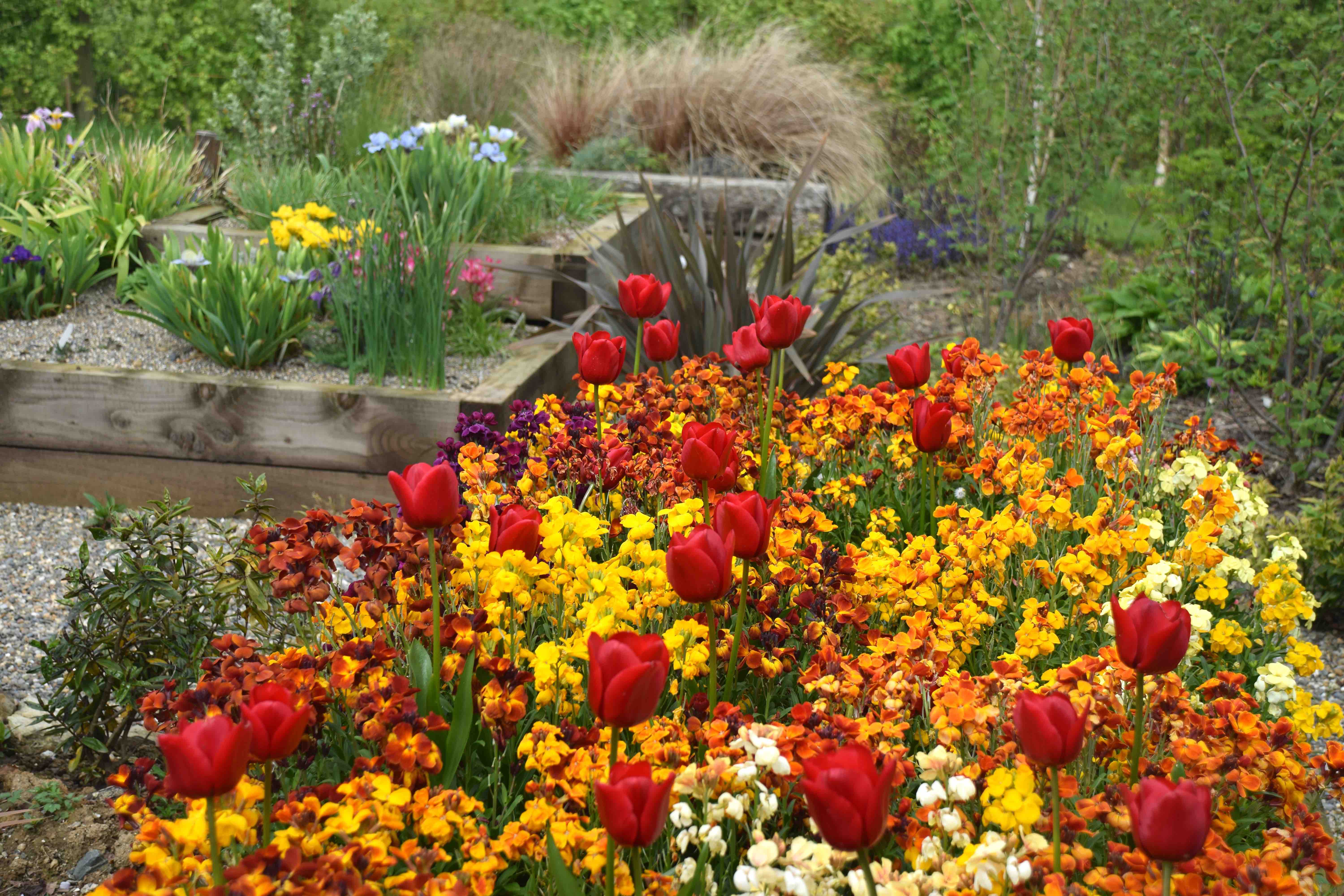
The most important of flowering brassicas is the humble wallflower (Cheiranthus cherii now Erysimum cheiri).
It is native to Greece but is widespread throughout Europe. The name wallflower is an allusion to how it self-seeds in old walls and ruins where it flourishes in the dry conditions. Although usually treated as a biennial, if it grows in ‘lean’ conditions the plants can live for many years. Two double-flowered forms, grown as perennials and small shrubs, are sometimes grown: the golden yellow ‘Harpur Crewe’ and the dark red ‘Bloody Warrior’.
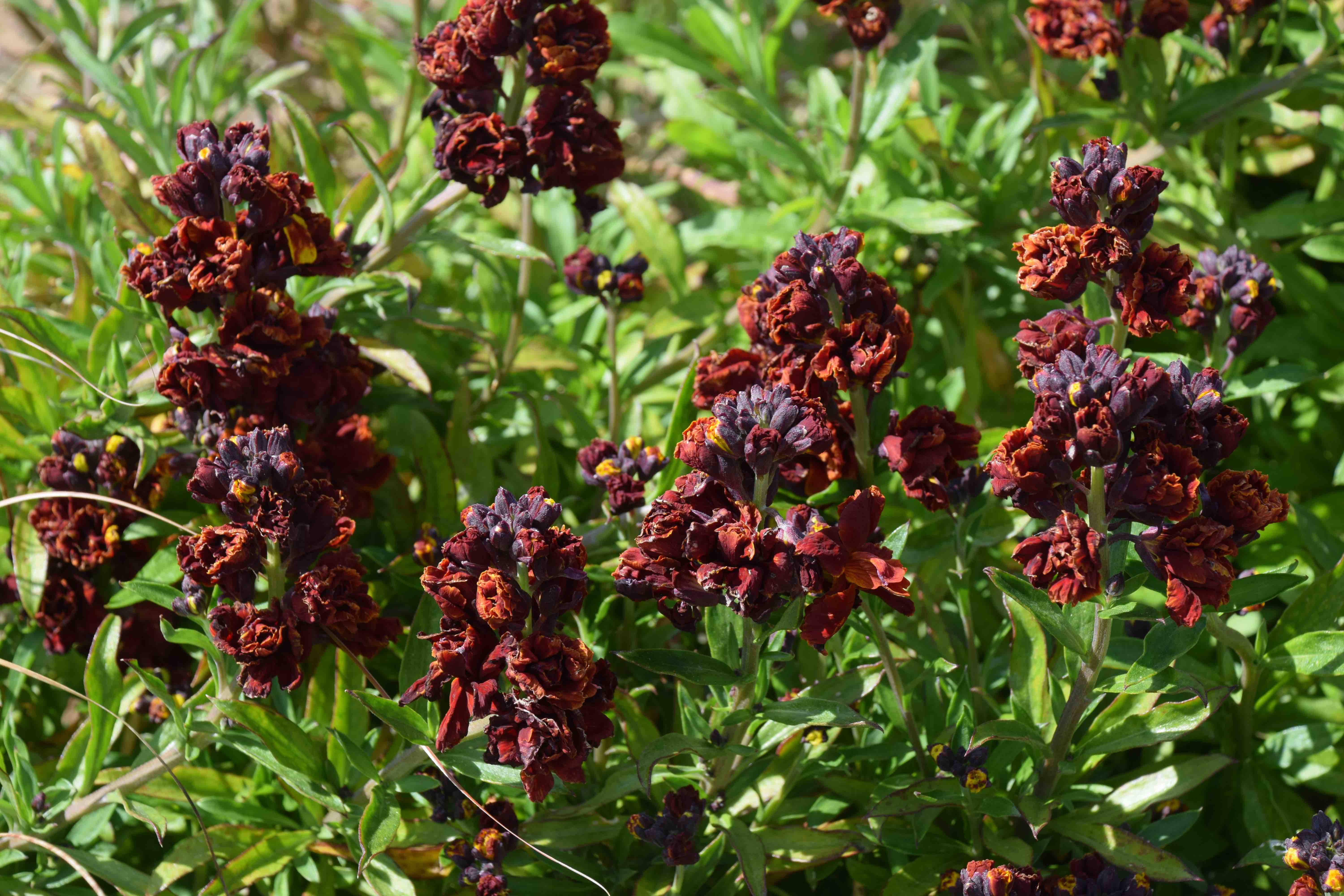
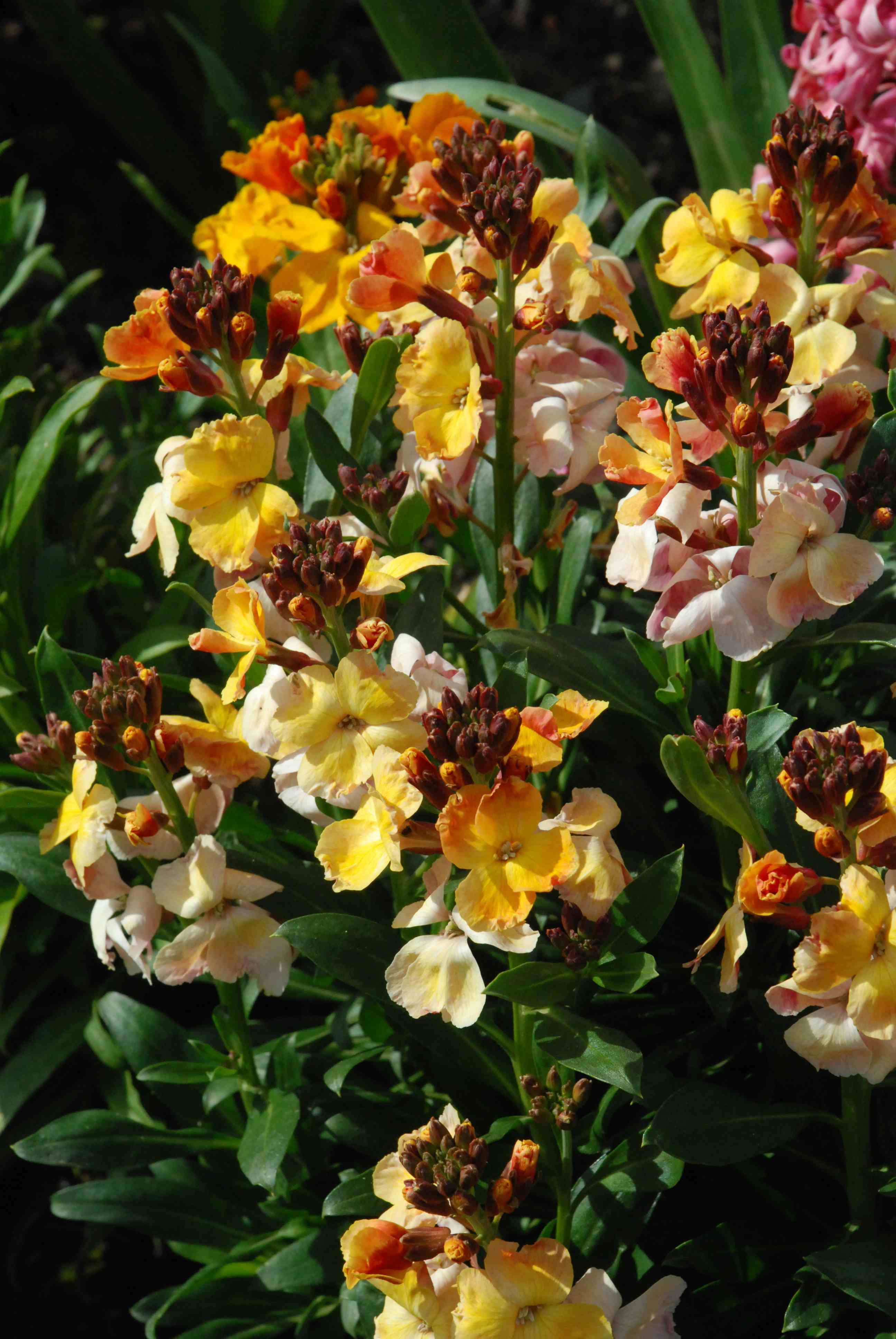
A reason why wallflowers have fallen from favour as spring bedding is their short flowering season but modern breeding has given us hybrids that flower erratically through winter, not a huge advantage in my opinion. I like the older kinds that save their energy for April when they burst into bloom and fill the air with perfume.
Another development has been the ‘perennial’ wallflowers, possibly derived from E. linifolium which provides the purple shades. The most common is ‘Bowles Mauve’ which is a short-lived bush in flower for most of the year. Although named after the famous gardener, he did not grow it. In recent years a swathe of new cvs have been introduced, many with larger flowers and with perfume, which ‘Bowles Mauve’ lacks. They are great plants for nurseries and garden centres, now able to sell as wallflowers for €10 each all year round instead of €5 a bunch of ten in autumn. Unwitting customers are probably unaware that after two seasons these will be reduced to a twiggy mess unless regularly propagated. But they have their virtues as long as you also know their limits.
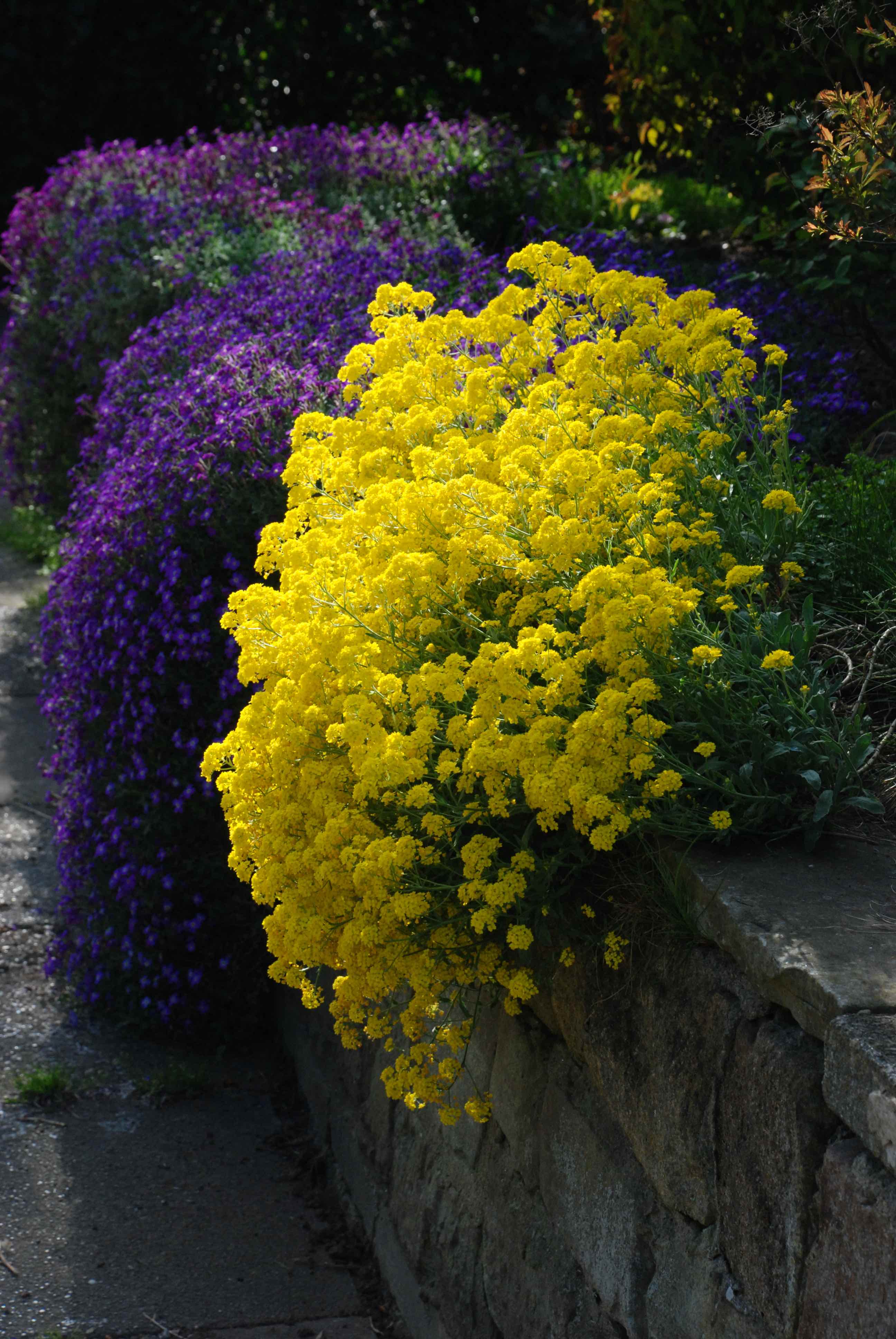
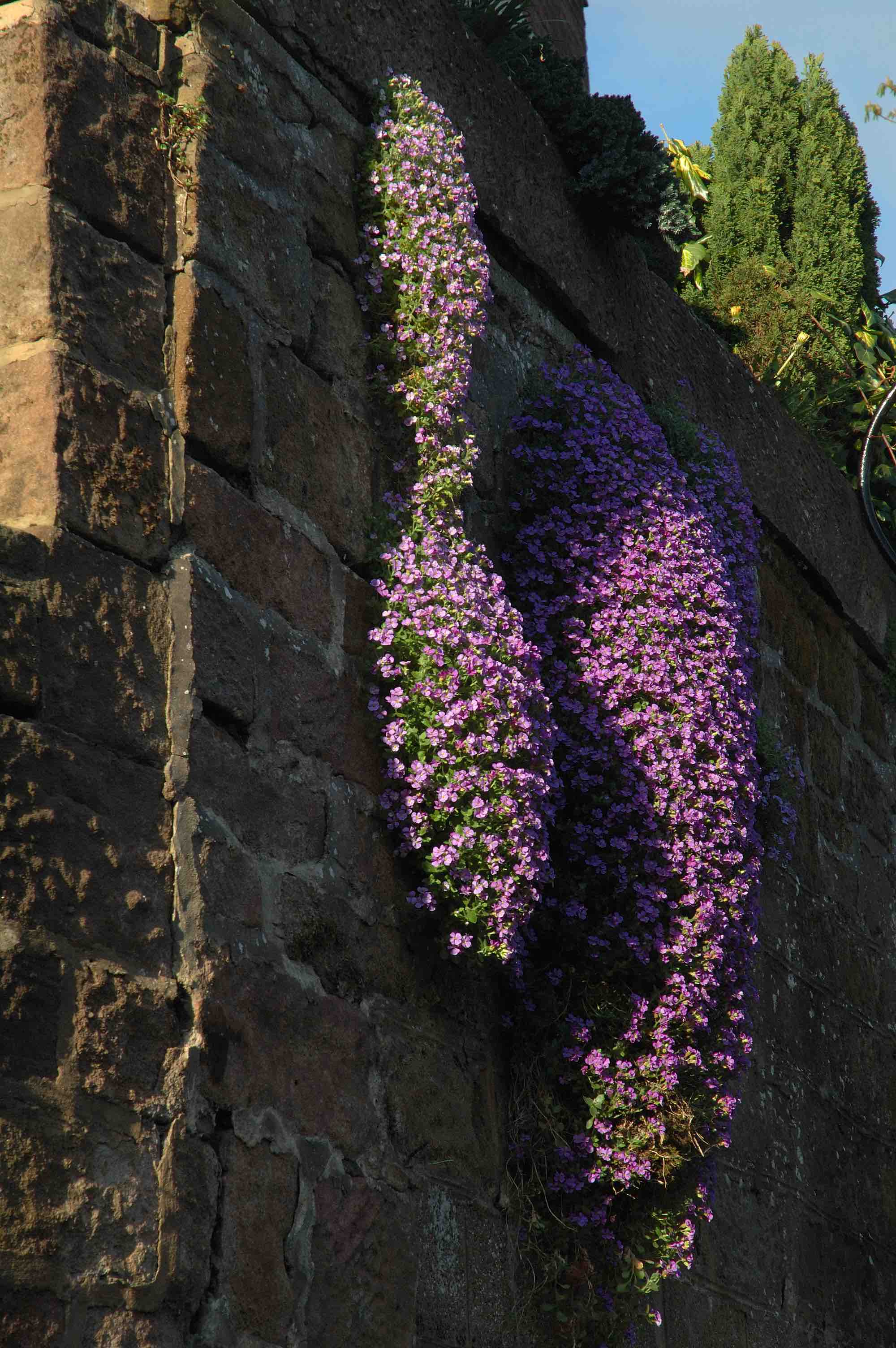
Rock gardens (and rockeries studded with gnomes) would be much poorer without the colourful contribution from mauve, wine and blue aubrieta (note not aubretia because it is named after Claude Aubriet), white or pink arabis and Aurinia saxatilis (commonly called alyssum).
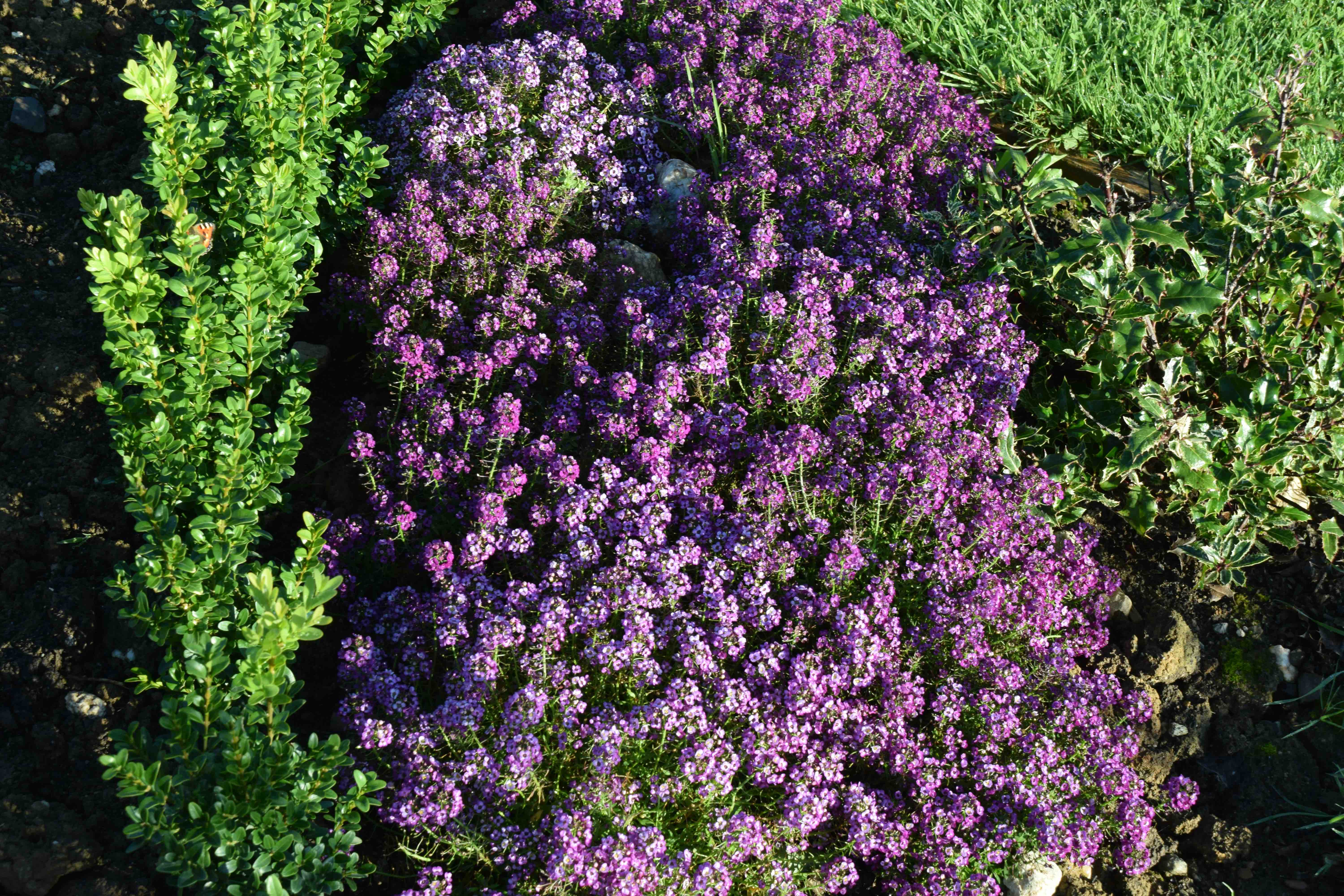
In summer the honey-scented lobularia (again more often called alyssum) forms dense carpets of tiny white flowers or, if you are imaginative, pastel mauve and purple. A fast-growing annual, it is not popular these days but is worth growing every now and then and may self seed.
Another annual that is worth trying at least once is the South African heliophila. It is a slender plant with no great beauty but the showy, small flowers, scattered over the plants are intense, cobalt blue.
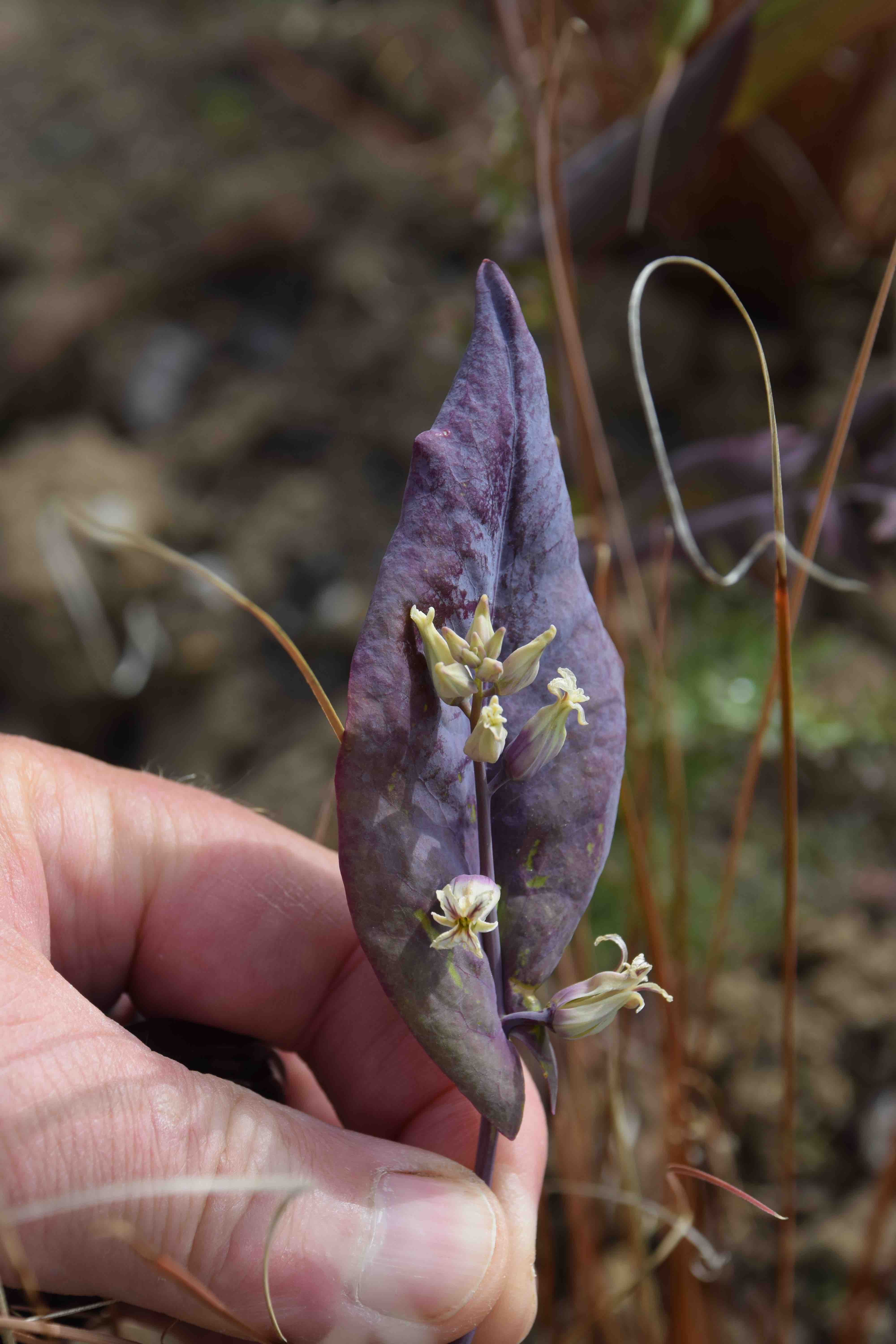
Although barely worth a place in most gardens, I have a soft spot (as well as a sunny spot) for streptanthus, a Californian annual that I really like. It begins as a rosette of finely pinnate leaves but then sends up a flowering stem bedecked with purple bracts that contrast with the creamy urn-shaped blooms, the most visually interesting of any brassica I have so far encountered.
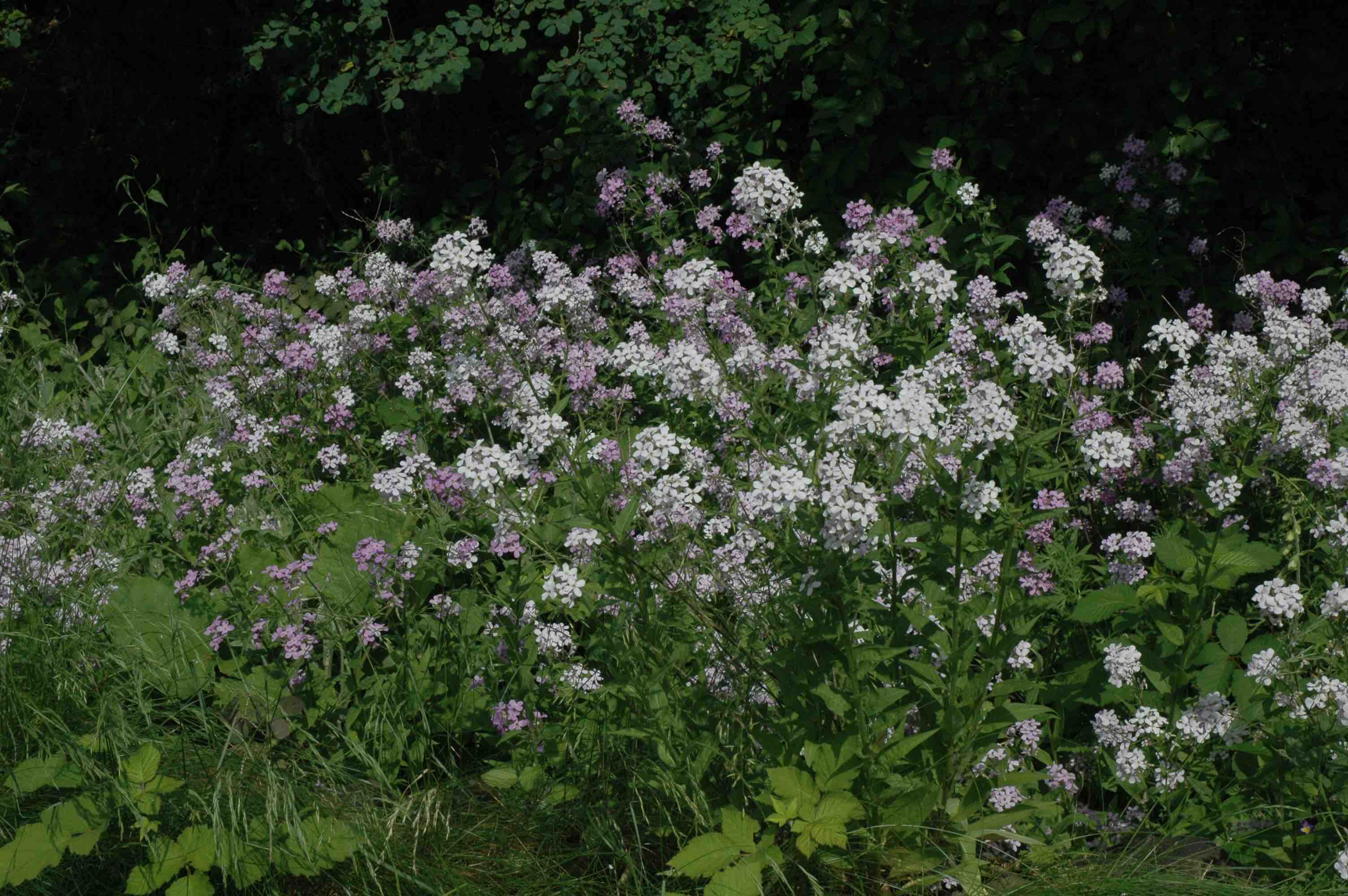
Among the biennials, perhaps hesperis or sweet rocket is the most popular. The masses of flowers, in white, purple and mauve, are powerfully scented at night. It starts as a pretty boring rosette of leaves but erupts into tall stems. It can be perennial but tends to get woody and lose vigour, and what little beaty it had, after three years. There are double-flowered forms that must be propagated by cuttings. They are rare and not for the casual gardener.
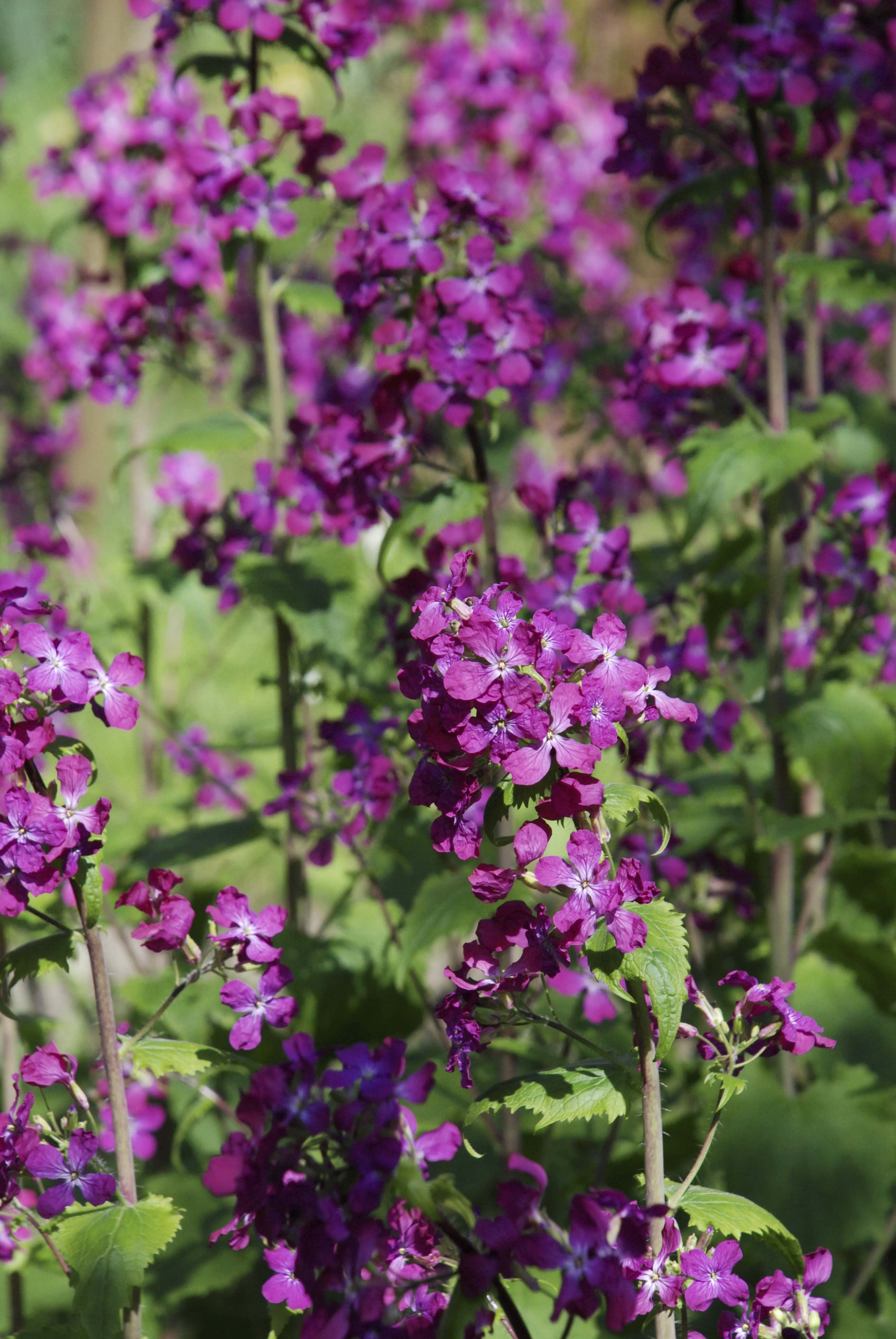
Honesty is a biennial although the botanical name (Lunaria annua) is rather confusing. At least lunaria alludes to the silvery moonlike septa that remain after the seeds have been shed from the unusually round siliqua. The flowers are typically mauve though there are many forms including those with variegated leaves. Unfortunately it suffers from powdery mildew and also white blister fungus that can affect related crop plants. Lunaria rediviva is a perennial and the flowers are sweetly fragrant but the seed pods are less distinctive. It is a nice thing.
And then there are the stocks (Matthiola incana). Loved for their sweet fragrance, this is one of those examples where the double flowers are more beautiful than the singles. They are annuals (ten week stocks) or biennials that may bloom the first year.
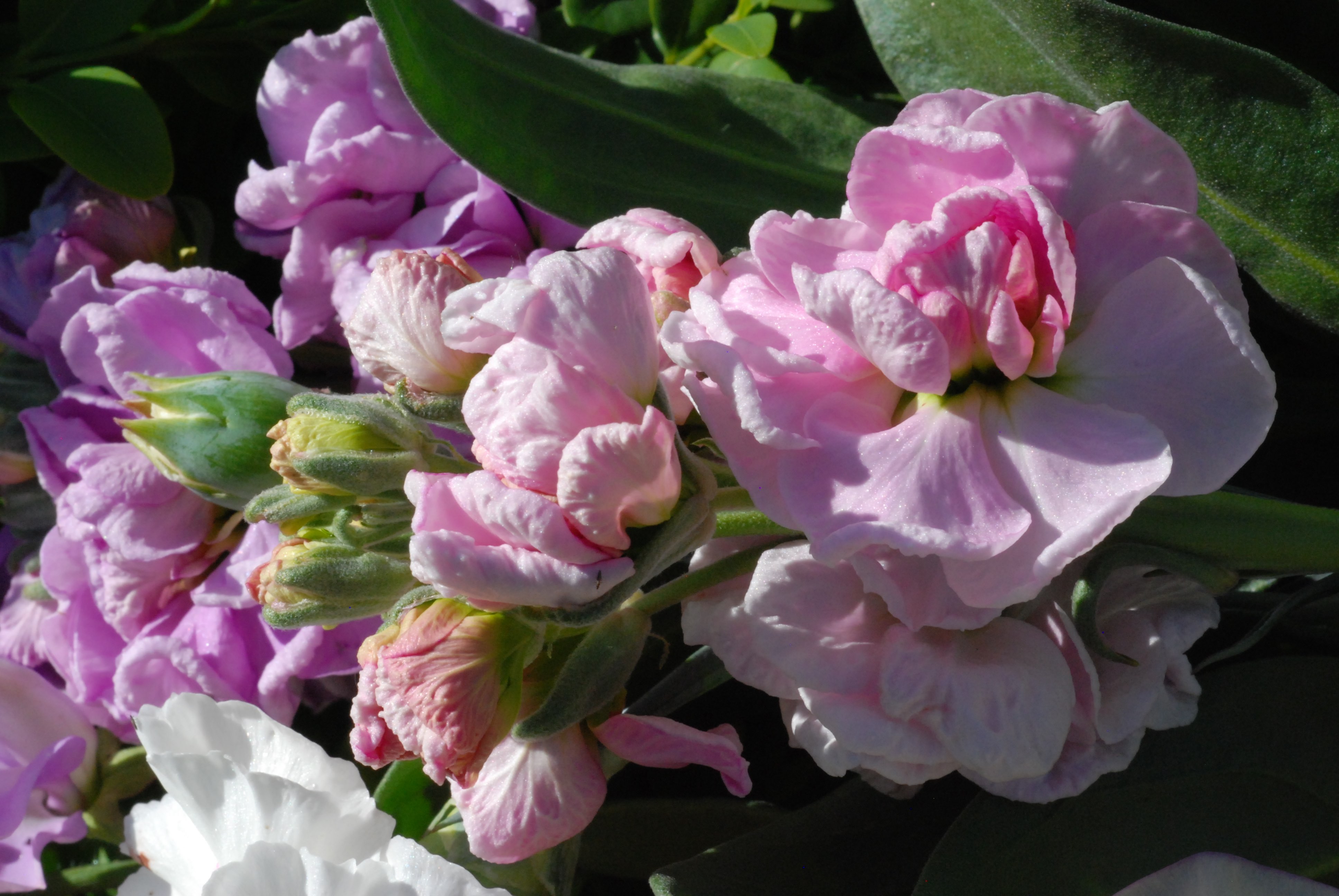
Double-flowered stocks cannot set seed so when grown from seeds, produced from at least one parent with single flowers, only from a third to about two thirds of the seeds will produce plants with double flowers. ‘Selectable’ stocks allow the single plants to be discarded at the seedling stage because, when chilled, the single-flowered plants are darker green than the doubles. Modern kinds have a higher proportion of doubles. The perfume of stocks is delicious but they are hard work. The wild, single white stock is a short-lived perennial for a sunny, well-drained spot and refreshingly ‘wild’ and a nice thing to have. Like most of the domesticated ‘brassicas’ stocks prefer a soil rich in calcium.
A few perennials are grown in gardens. Pink-flowered dentaria and various cardamines are pretty but not common garden plants. Crambe cordifolia gets a lot of attention when in bloom. The massive, woody rootstocks producing handsome, bold, dark green leaves and then a mist of tiny white, honey-scented flowers 1.5m high and wide. Growth is fast and dramatic and fun. But the hangover is brutal.
As flowering ends and the leaves die off, you are left with a big gap in the border and the odour of rotting cabbage. The native seakale (Crambe maritima) is a more attractive plant with grey, thick foliage and a much neater habit but is less tolerant of captivity. Like many of the domesticated brassicas, it is most at home by the sea. The foliage is inedible unless ‘forced’ to produce white, etiolated growth. It is sometimes grown as a spring crop in beds of well-drained soil, mulched with seaweed.
 The Biking Gardener
A helpful review of this plant family, reminding me that they are related.
Thank you. It is reassuring that someone is reading. I appreciate your comments.