Brassicas 3
The spicy ones
Some brassica crops have high levels of ‘mustard oils’ giving them a spicy or even ‘burning’ flavour. This is often stronger if the plants are grown ‘hard’ with less water than optimal and in warm climates. Although these chemicals are the very ones that make the crops so beneficial in our diets we usually want a milder taste and breeders are intentionally creating ‘sweeter’ crops, notably among Brussels sprouts. But sometimes we want a bit of a kick!
Barbarea (land cress) is not often grown but is easy and a good substitute for watercress. The problem I have with it is that it forms a flat rosette of foliage close to the ground so you need to wash the leaves well before eating and, when mature, it runs to seed. But the flowering stems and small yellow flowers are edible. The yellow-spotted variegated kind comes true from seed and is ‘pretty’ in a hideous sort of way.
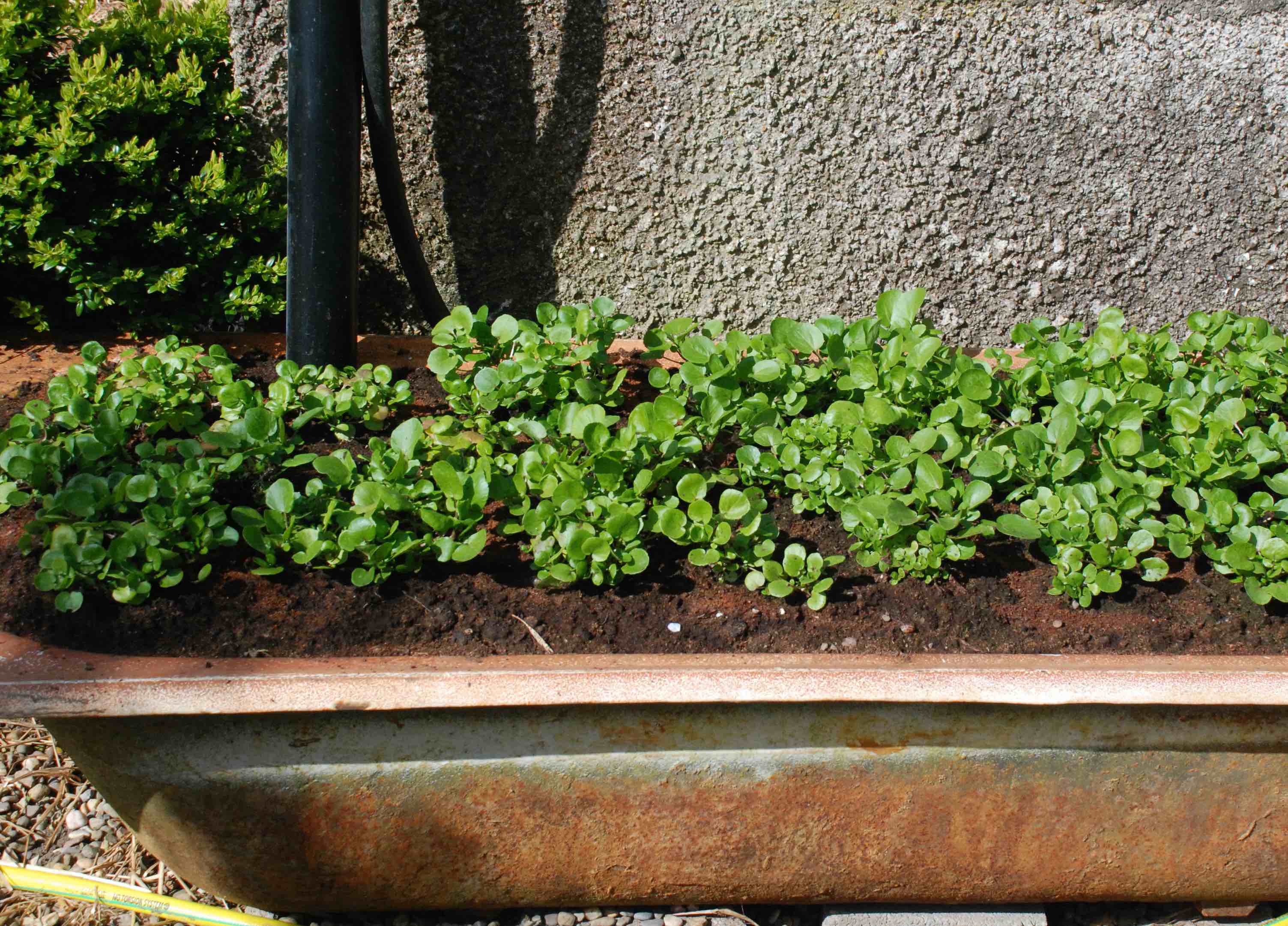
True watercress (Nasturtium officinale) is found wild in chalk streams but it does not need to be grown in running water. You can grow it in pots or in damp soil either from seed or from ‘cuttings’ in a bag of salad leaves.
One of the easiest crops to grow at home is rocket (Eruca sativa). It is an annual that can be grown as a biennial if sown in autumn but runs to flower in hot weather. Sow a little every month for spicy leaves to pep up salads.
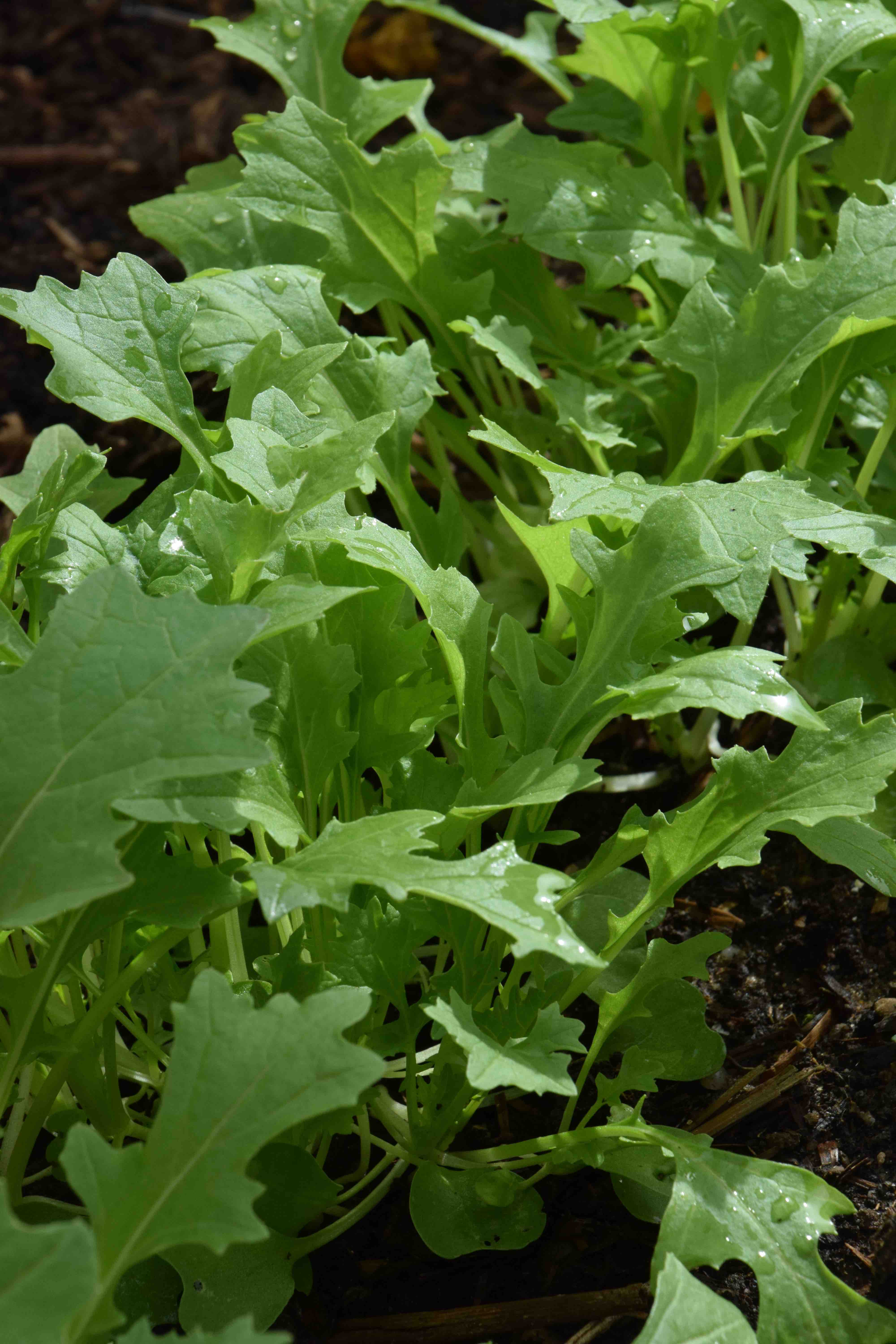
Wasabi (Eutrema japonicum)
Few people grow wasabi but it can be grown if you can find a plant and if you use a lot. It is hardy and needs moist soil or to be grown in water. It is famously like a very strong horseradish, burning the nose more than the mouth. This effect, common in the family, is the origin of the name nasturtium, meaning ‘twisted nose’, the common name for tropaeolum and the botanical name of watercress. The heat from wasabi is water-soluble and so shortlived compared to the heat from oil-soluble capsaicin. A drink of water (or beer) will provide relief while fatty milk or yoghurt is best for chillies.
The same taste is a feature of cress (lepidum). The common weed bittercress (Cardamine hirsuta) is a terrible menace but is perfectly edible when young and tender.
And then there is horseradish (Armoracia rusticana). The thick roots are used to produce horseradish sauce with the same nose-twisting flavour. It is a common roadside weed and often cultivated although it is a deep rooted, inelegant plant. When you dig it up you will leave some deep roots behind and they will sprout and produce new foliage – so you can see that once you have it you – well – have it!
A strange feature is that the young foliage is often deeply laciniated and fernlike, later leaves are large and paddle-shaped. I remember going down ‘the shore’ with my grandparents to dig up roots, bring them home to grate them and store them in jars with vinegar, an eyewatering job. There is a boldly variegated form that has some value as an ornamental although it reverts and can be a pain to maintain. I have grown it and got over it.
If you want to look like something out of Avatar you might like woad (Isatis tinctoria), used by ‘blue-skinned’ Ancient Britons to scare off the invading Romans although it is native to eastern Europe and was more widely used to dye cloth. The dye is made from the leaves but was eventually replaced by ‘indigo’ and then synthetic dyes.
Woad has yellow flowers but they are insignificant compared to the blossoming of Brassica napus (oil seed rape) which creates such amazing displays in our modern, rural landscapes.
Unless you are allergic to mustard, often listed as an allergen on foods, any brassica flowers are edible. I may be wrong but I can’t think of any brassicas that contain poisons. Alyssum (lobularia) flowers are frequently tweezered onto dishes by chefs to add another star to their ratings and ruin an otherwise tasty dessert.
Slimy goo
Brassicas have also given us one of the ‘food gums’ that are added to a vast range of low-fat foods, to give them ‘mouth feel’ and make then palatable when all the yummy fat is removed. Look on lots of foods and you will see xanthan gum listed. Low-fat salad dressings, ice cream, gluten-free bread; everywhere. You may not know that the gum is produced by a bacterium called Xanthomonas campestris which causes black rot in brassicas such a cabbages. The bacteria turn the plants to necrotic slime. You will be pleased to know that to make your fat-free yoghurt the companies do not have to scrape the slime off dead cabbages. For food use it is grown in huge vats, the bacteria killed and strained out and the ‘slimy gunk’ added to your favourite ice cream. I will take full fat every time thank you very much.
Tomorrow – the flowers
 The Biking Gardener
No comments yet.