Orchids 3
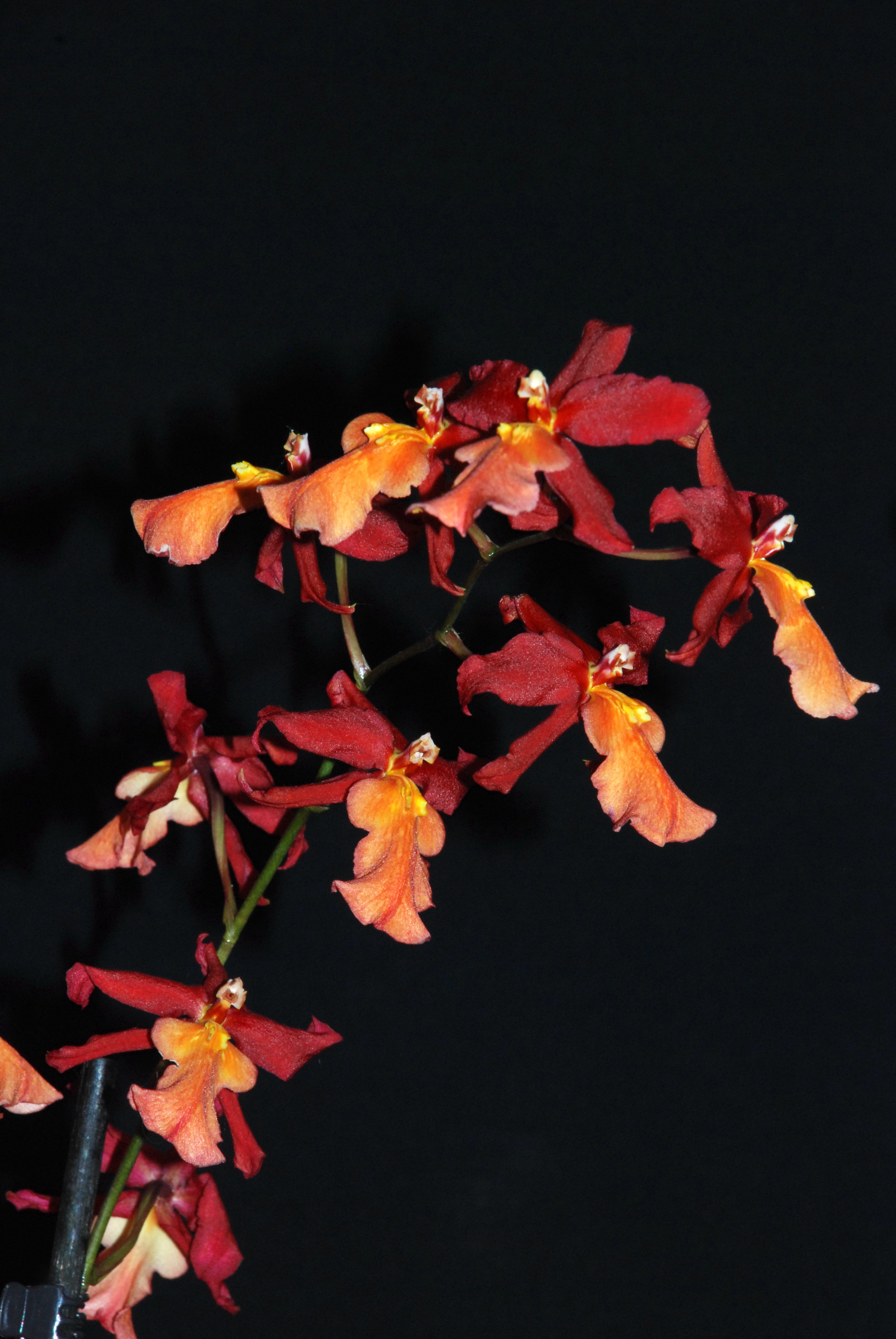
After the talk of sex yesterday we will get back to more practical natters. Away from the wild, orchids are remarkably promiscuous and hybrids have been produced between different genera. This results in very complicated names and a certain ‘cross’ is called a Grex (in common with rhododendrons) and this grex name is used in combination with a cultivar name for a specific seedling.
Houseplants
When I was young, orchids were rare and expensive. I travelled to buy cymbidiums which were the best choice. Most are cool-growing orchids that are ideal for a cool greenhouse. They usually bloom in spring and have stems with many flowers in a wide range of colours. Some, with small, often scented and often brownish and drooping flowers, are almost hardy. The greenhouse kinds must have a seasonal ‘change’ and are apt to become ungainly and not bloom in the constant temperatures of the home. They are commonly available and have long, strappy foliage and the plants spread by growing a new pseudobulb each year. Orchids do not have true bulbs but many have pseudobulbs that store starch. Generally one is produced each year on each shoot.
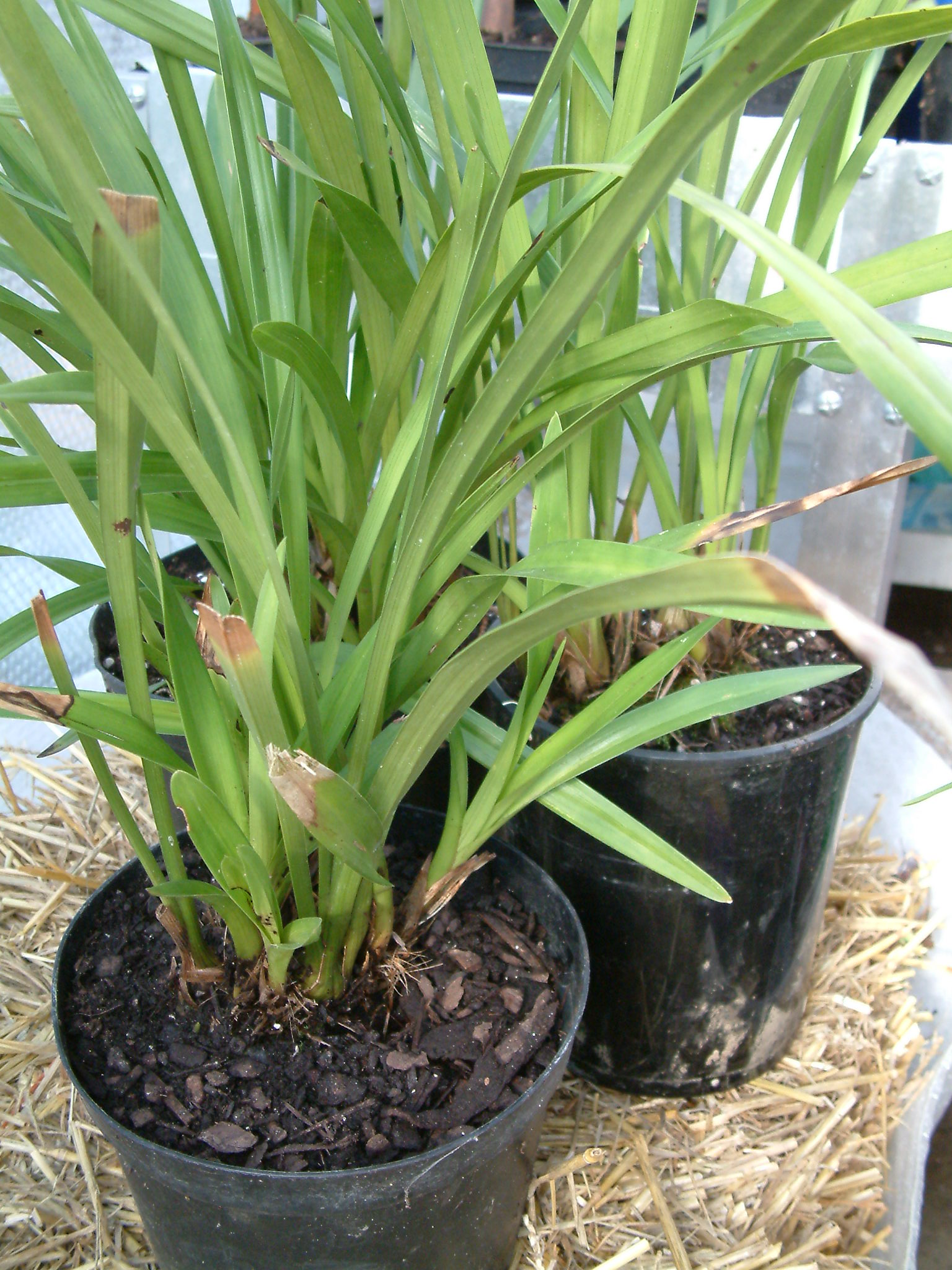
Many other potplant orchids show this growth such as oncidiums, miltonia and miltoniopsis, the pansy orchids.
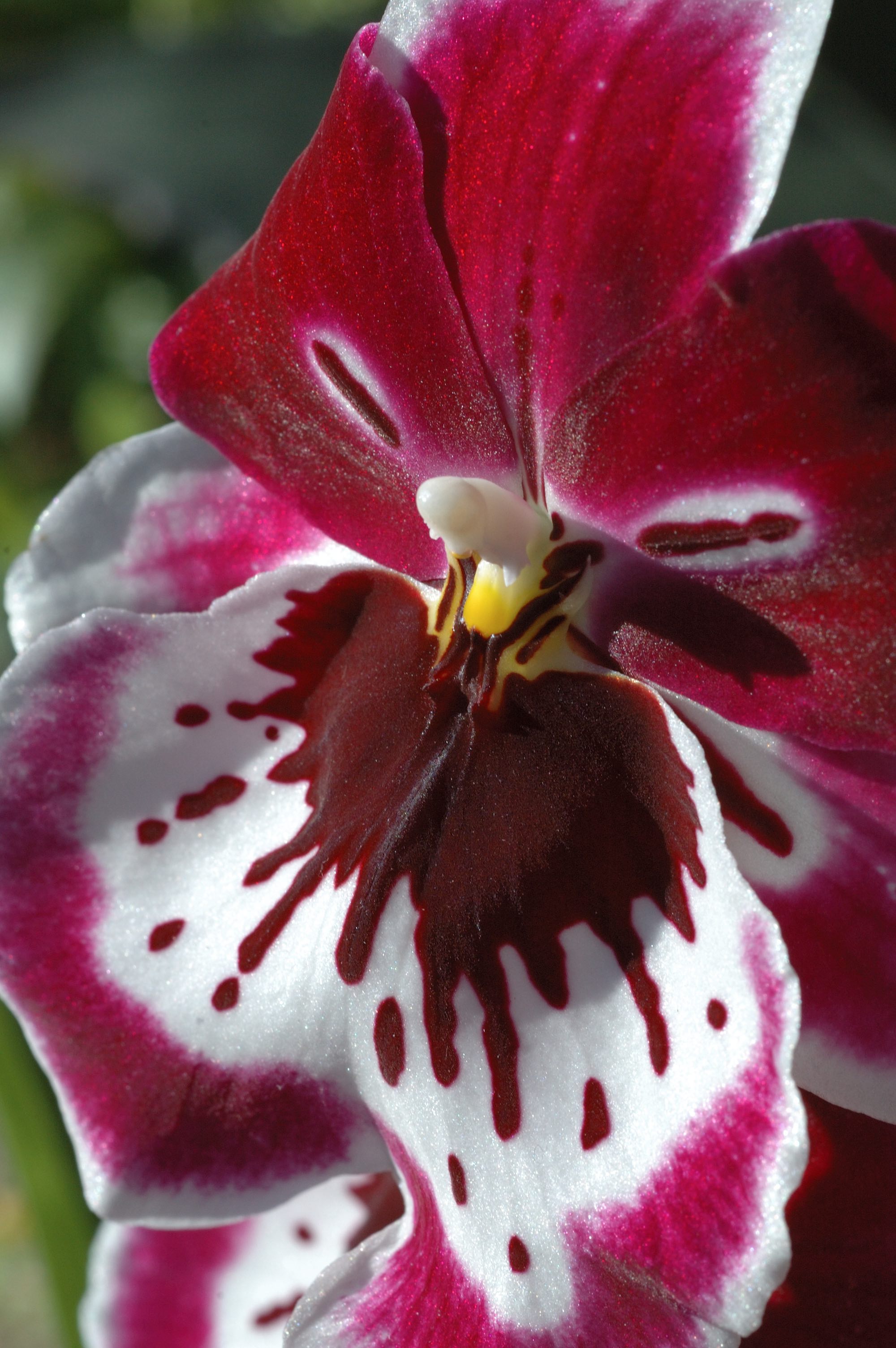
These are often for sale and have large, showy flowers that last a few weeks.
But the phalenopsis (moth orchids) dominate sales. The individual flowers last for many weeks, even months, and the scape (stem) can be in bloom for a year. Secondary scapes are often produced and these prolong the flowering period which is why the scapes should not be cut off when the last bloom drops. Every now and then keikiis are produced – small plantlets – on the scapes. This is also seen on other plants such as Hemerocallis. Sold in clear plastic pots so the green-tipped roots can photosynthesise, moth orchids are resilient and can withstand drought. Watering should mimic natural conditions where they are deluged and then dry out. Standing in water is death. And the wandering roots which are so vital in the wild are an annoyance in pots but they should be tolerated and not removed. They form no pseudobulbs which is a sign that they grow all year round and do not have a dormant season. Good light and a minimum of about 15c are needed.
Other genera and hybrids tolerate cooler conditions and those with swollen pseudobulbs generally need or prefer a resting period, even if gentle. They won’t thank you for being dessicated. The older pseudobulbs will wither as the newer ones absorb nutrients but the fresh ones should not shrivel. Concertina’d leaves are a sign of drought and can be prevented with more regular watering and by misting.
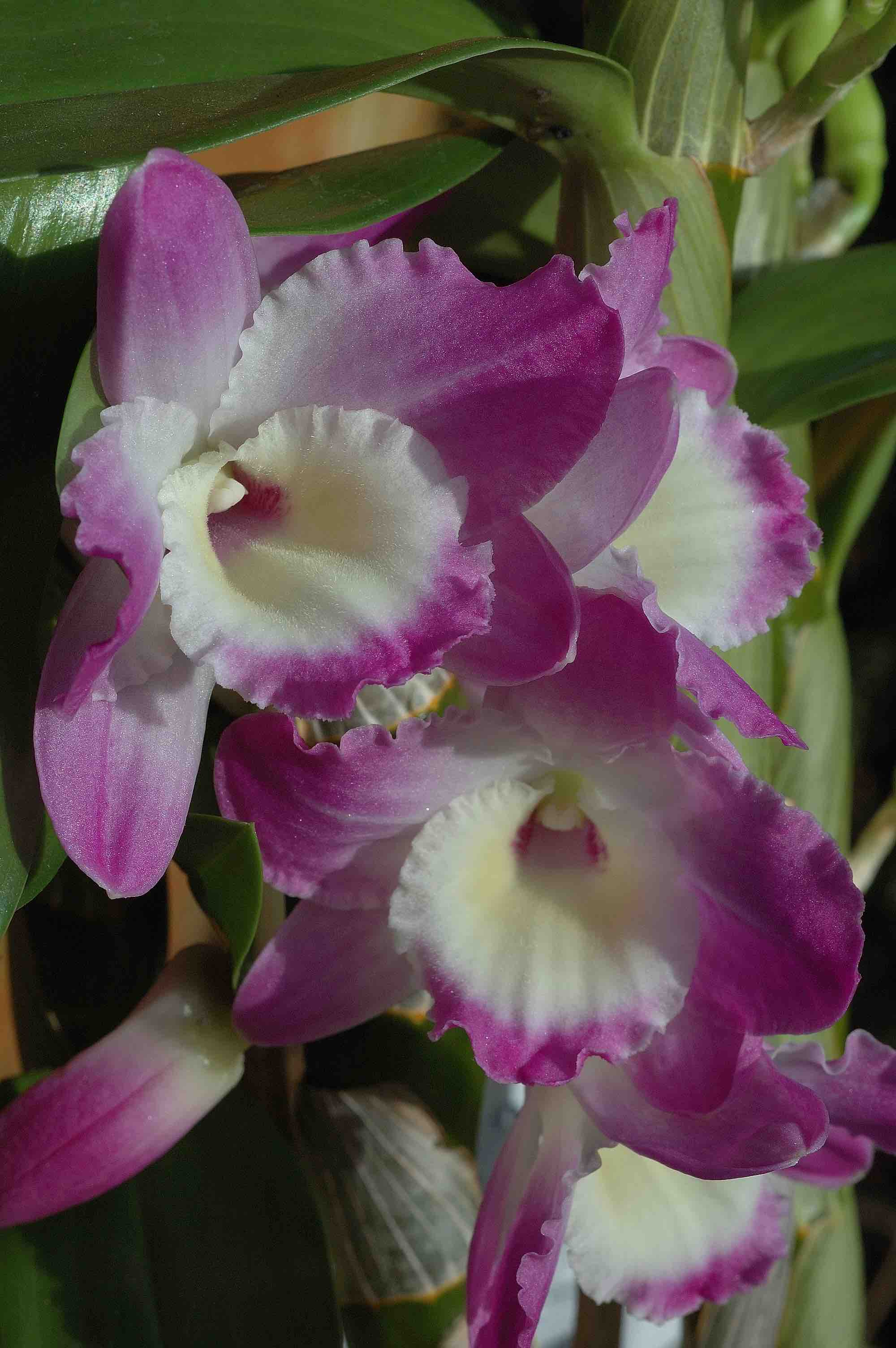
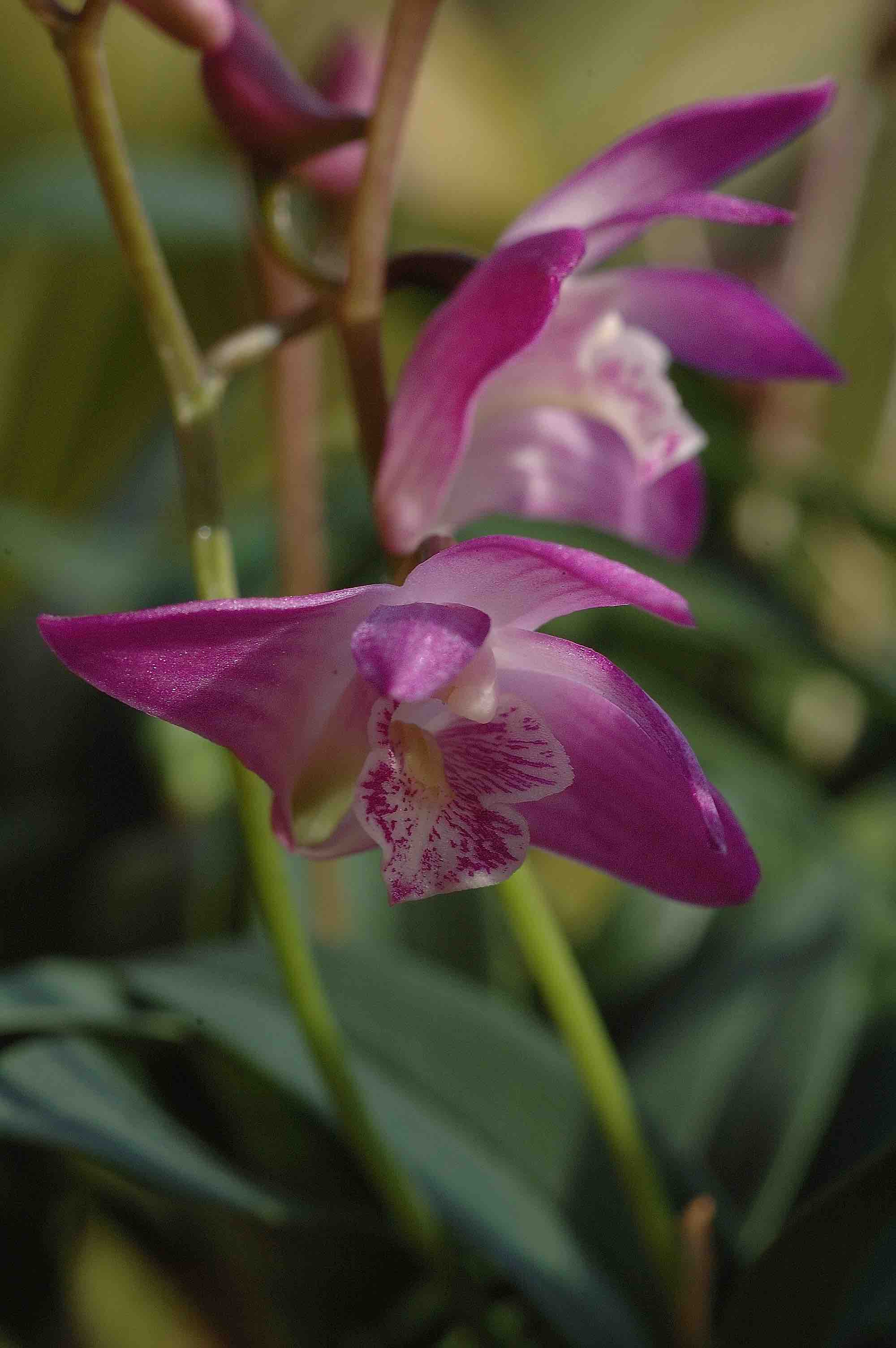
Dendrobiums are a mixed crowd and the most common is D. nobile. This grows as an upright stem set with two rows of leaves. In the second spring flowers are produced along this. These stems can branch in subsequent years but this results in a top-heavy, ungainly plant and it is best to cut them back and allow the new flush of stems to grow from the base. The other commonly seen species is Australian D. kingianum which is a lithophyte, growing on rocks. It is an easy houseplant that produces thin stems of pretty flowers in late spring although it seems to bloom intermittently if given confusing growing conditions.
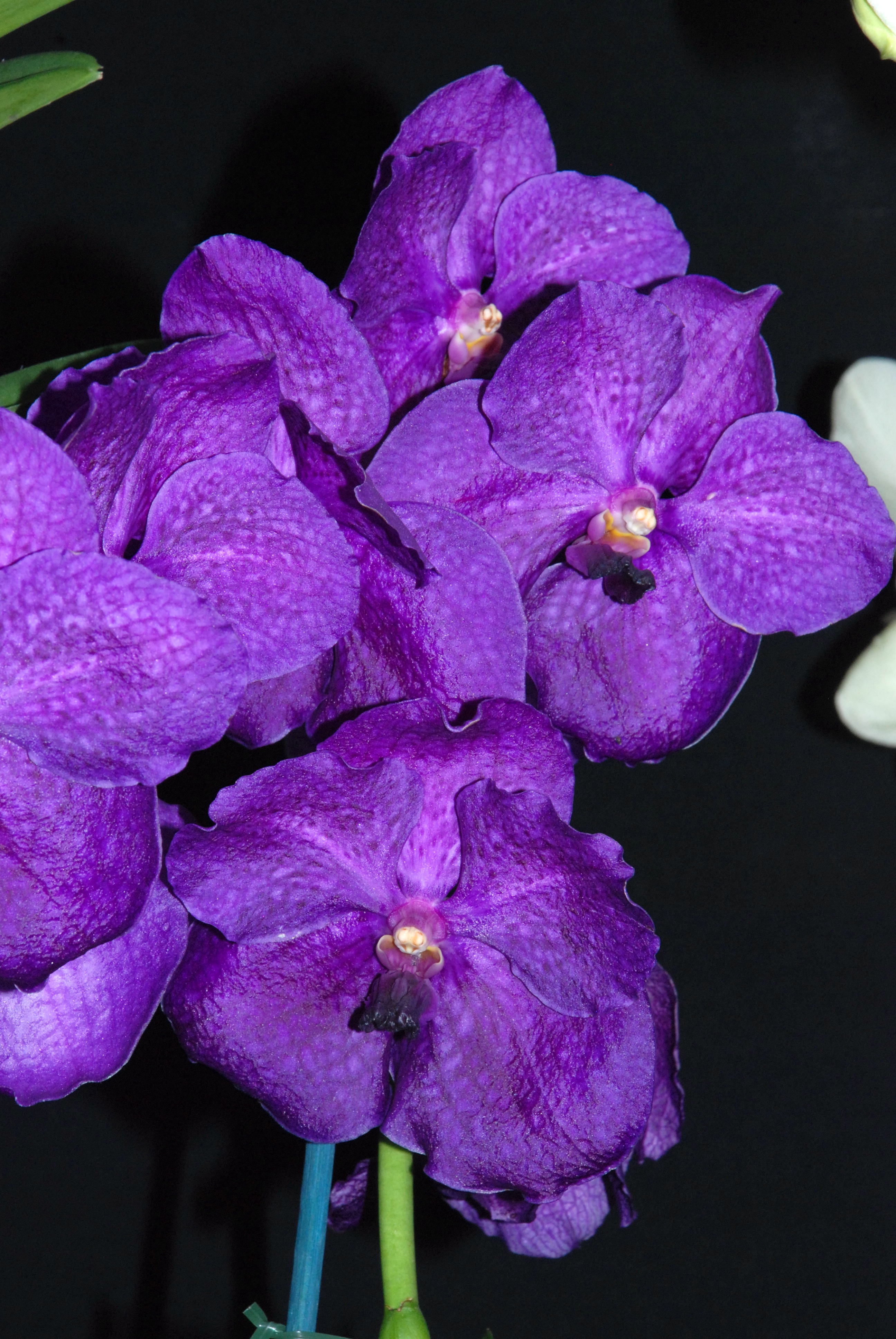
Various vanda hybrids (Ascocenda) are frequently seen for sale, usually in tiny plastics baskets on wires or in large glass vases. They require warmth and frequent misting and are unlikely to do well as houseplants but the flowers, often in surreal shades of blue and purple are enticing and I sometimes succumb. They are usually just a memory two years later.
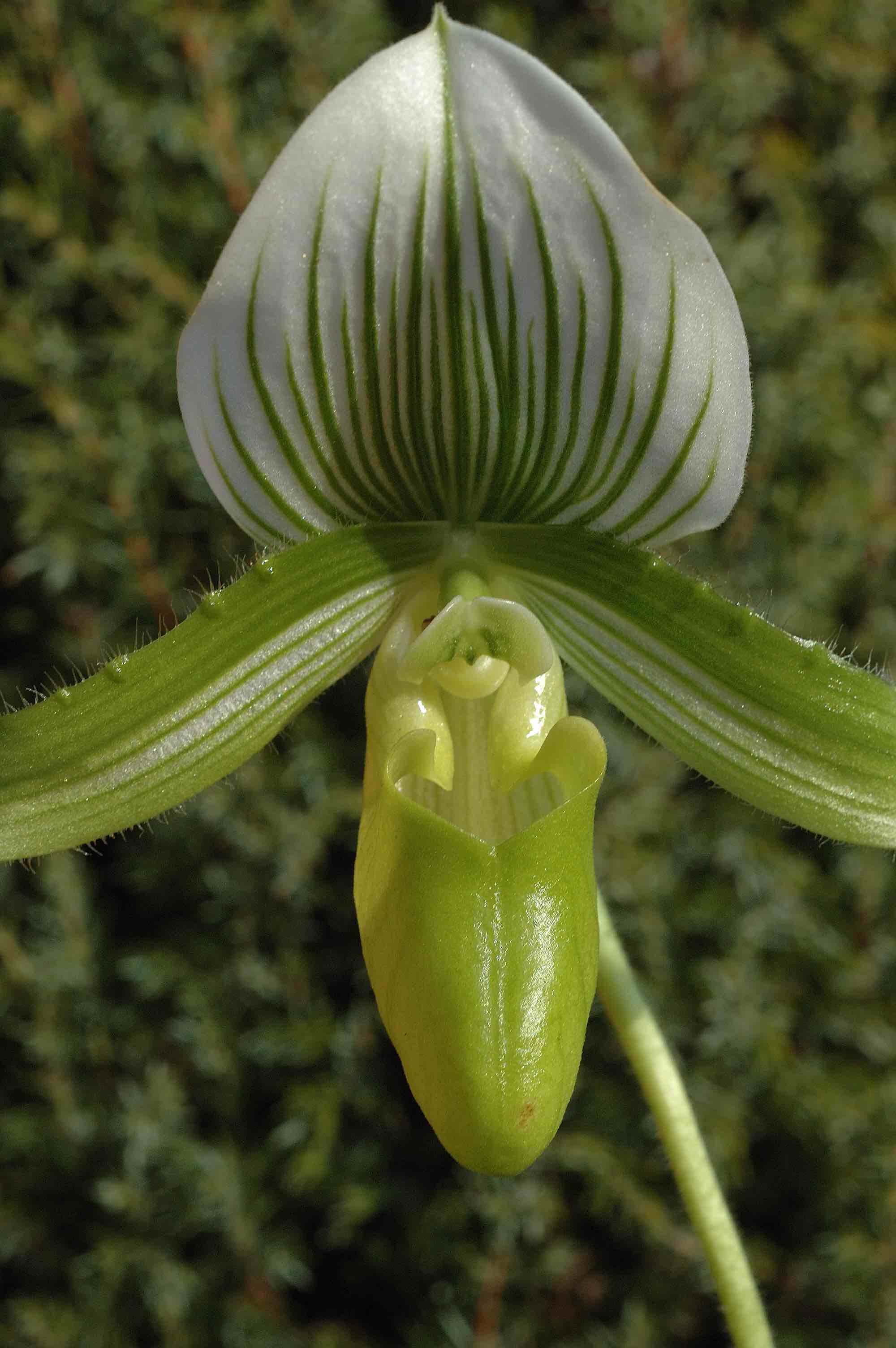
Paphiopedilums are nice houseplants too and often have spotted leaves. They are always neat and their curious flowers last a few weeks. They are, perhaps, a bit too peculiar to be really popular but I have had a few (and eventually killed them) in my time.
Tomorrow I will end with some garden orchids
 The Biking Gardener
No comments yet.