Euphorbias 4
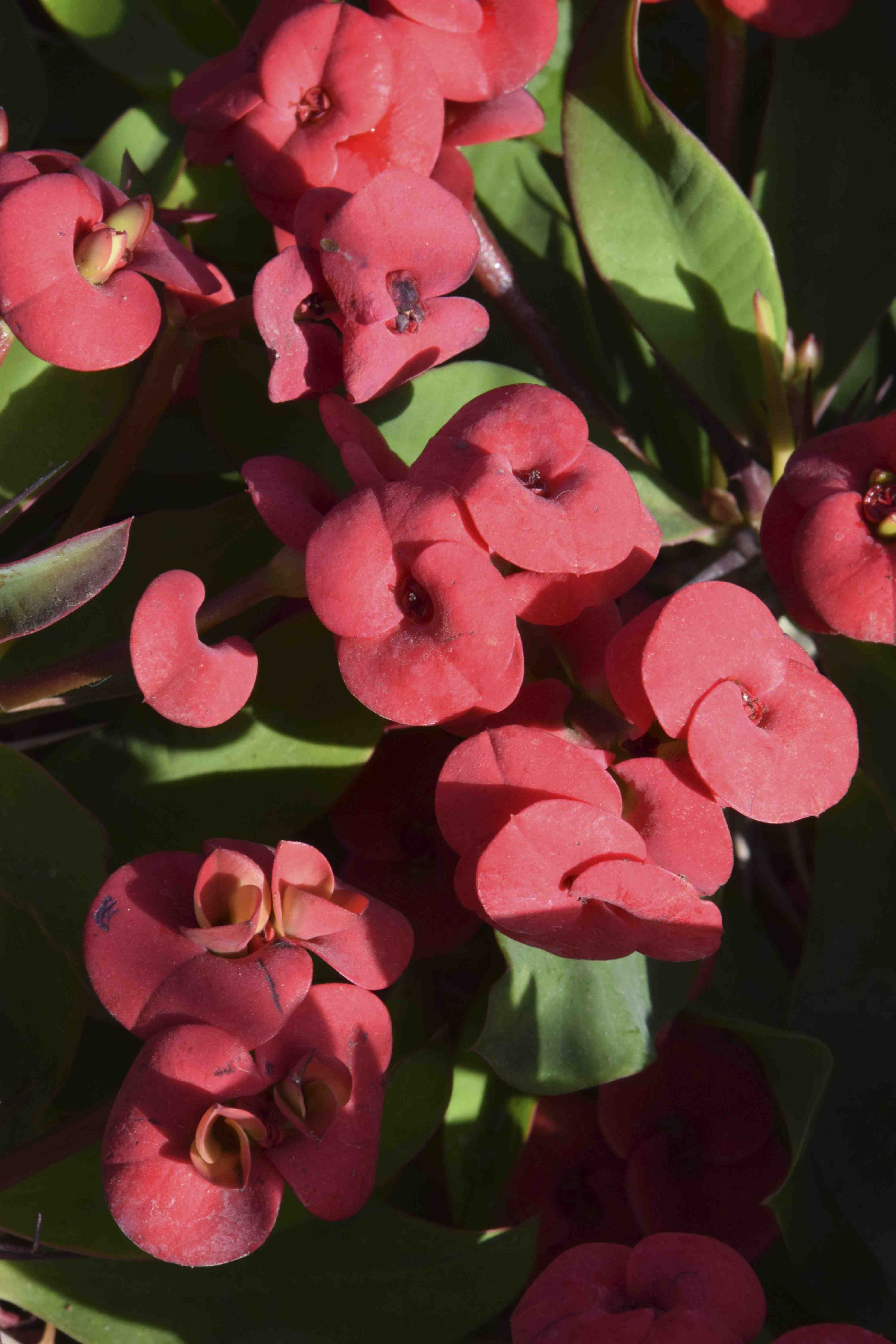
A great many euphorbias are succulent. Euphorbia horrida is much nicer than it sounds and the branching plants have ‘spines’ formed from old flower stems. The spherical E. obesa is interesting and looks more like a burned bao bun than a plant. They are not ideal houseplants because, adapted to drought and fierce light levels they become etiolated in the home.
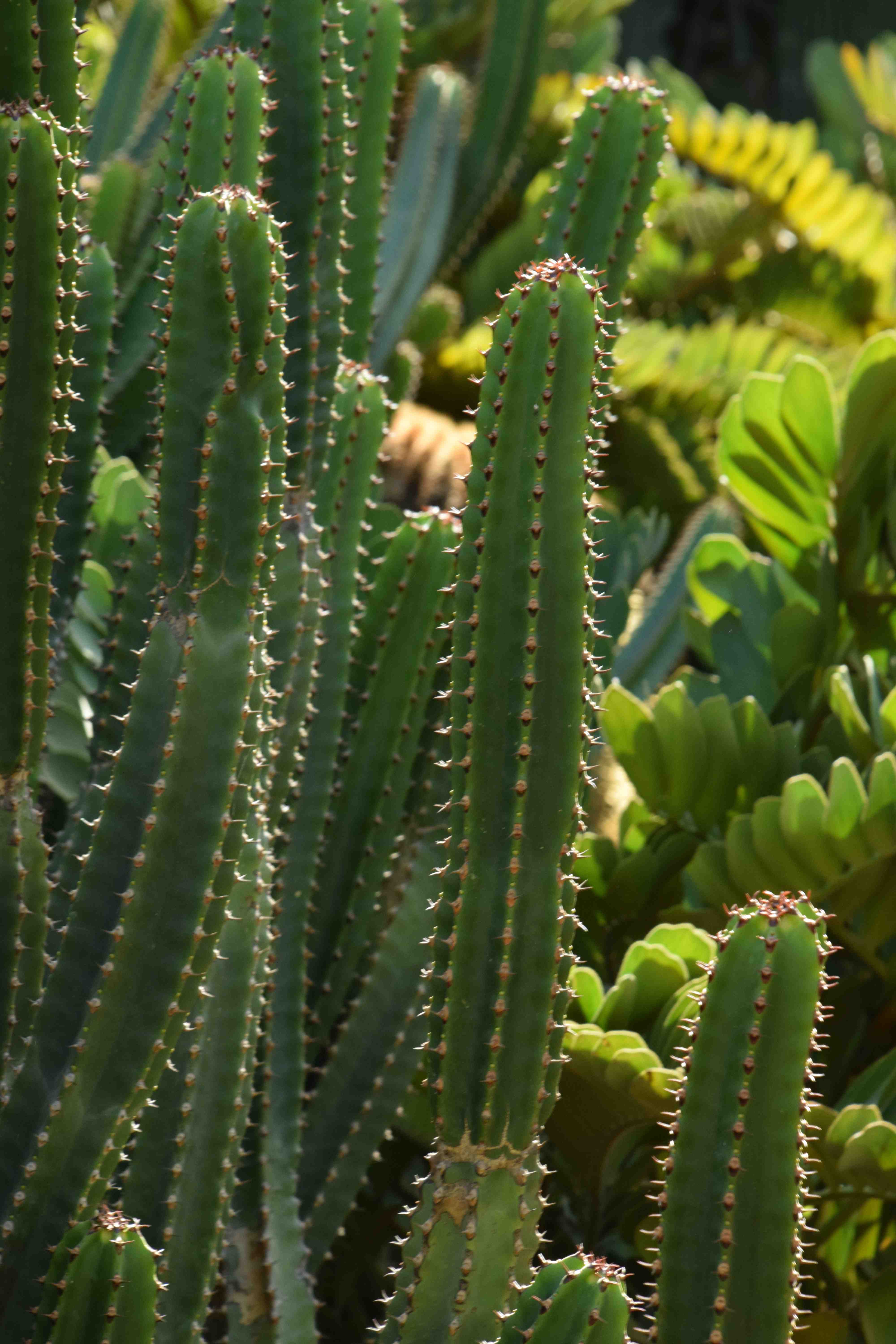
In some species the stipules, which I mentioned before, become spine-like. Combine that with stems that store water and they look like some cacti. But cacti are from the New World, now probably better described as ‘the Western Hemisphere’ to conform to Trump doctrines. The structurally similar succulent euphorbias are generally ‘old world’ or ‘trash’ to follow the same doctrine. It is truly remarkable (and fascinating) that two completely unrelated groups of plants have evolved very similar structures and defensive systems.
Euphorbia canariensis is commonly sold as a houseplant as 60-80cm specimens that resemble the saguaro of the American West in miniature and they are easier to produce.
The Canary Islands are home to many other euphorbias, adapted to the arid conditions, but none are really attractive enough or easy enough to have entered mainstream horticulture.
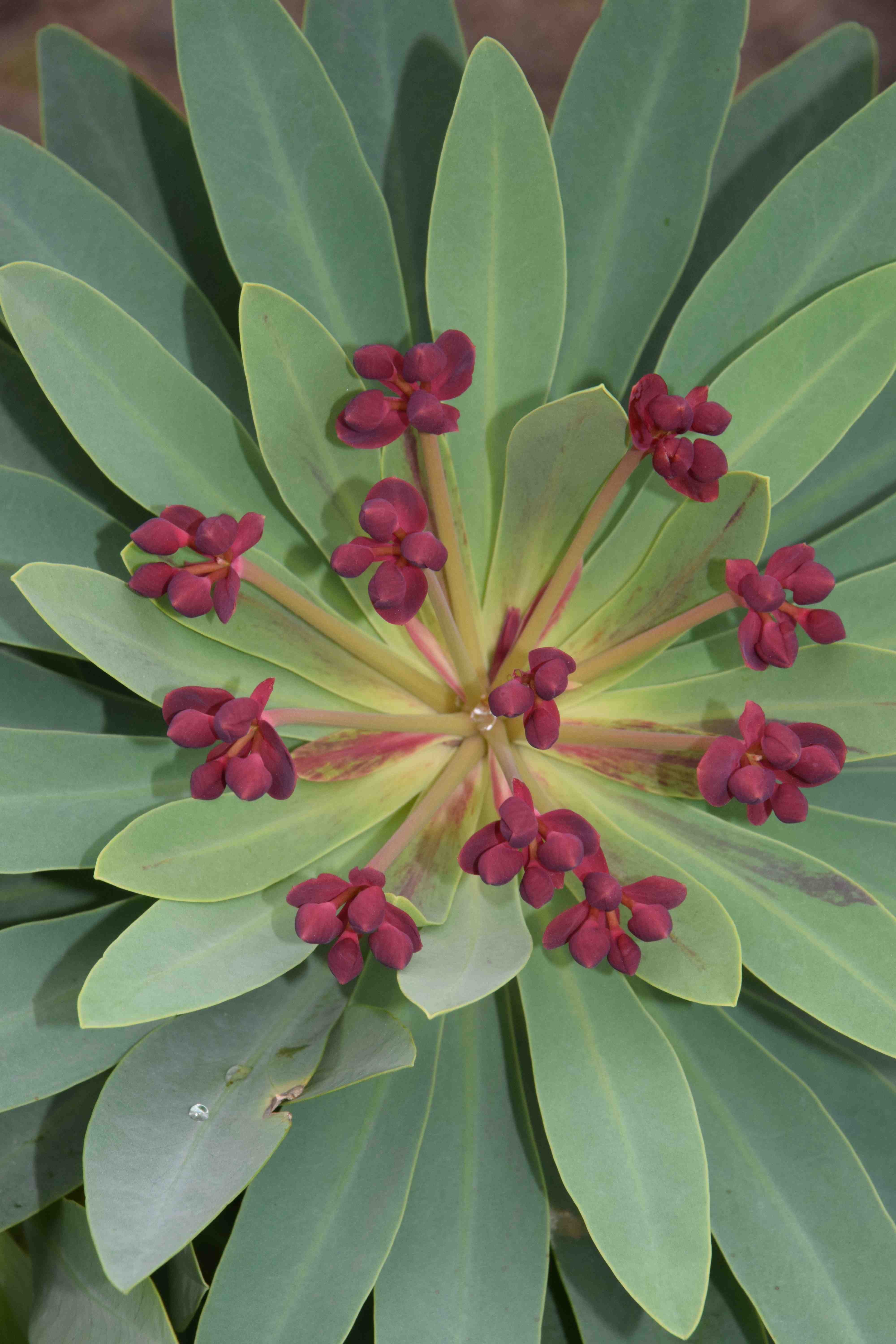
I have two euphorbias that are even less attractive but have proved to be easy plants to keep. They have little to recommend them other than ease of culture.
The most attractive is E. tirucalii. It is often called the pencil cactus or firestick. Native to many parts of Africa it has upright main stems and fugacious (fleeting) leaves and tiny flowers. It is used as a fence and because the latex is extremely toxic it is never grazed. In fact, although it has been used medicinally, the latex is very dangerous, causing severe irritation and even blindness. However, it has been investigated as a source of oil and fuel as well as rubber. I have posted about it before.

And then there is Euphorbia platyclada which goes by the apt moniker of ‘dead plant’. From Madagascar, it is a real oddity but I am curiously fond of it. It is as close as I will get to owning a pug.
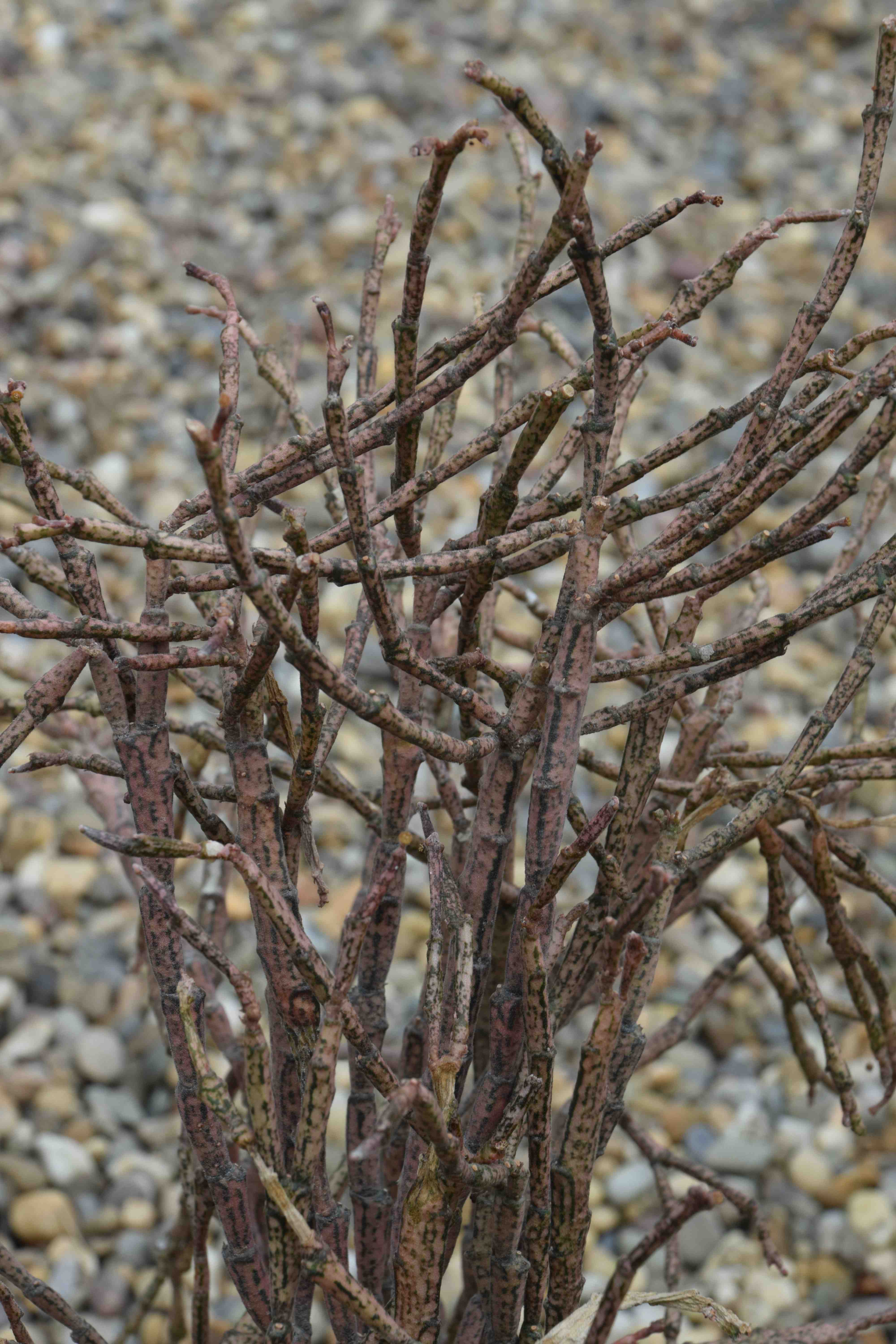
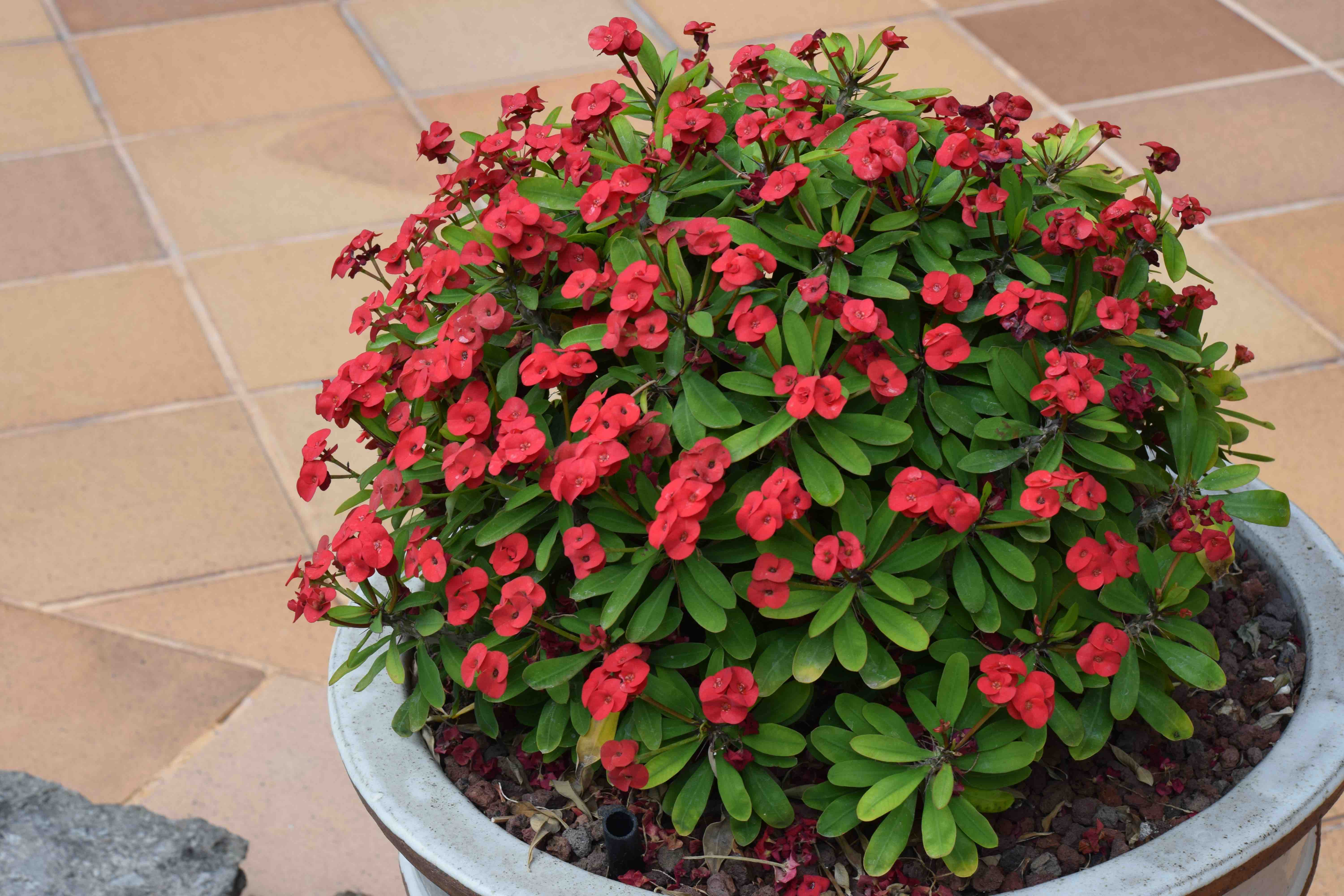
And then there is the other one from Madagascar but this time a bit of a beauty because of the colourful ‘flowers’, or rather the paired floral leaves around each cluster of flowers. Euphorbia milii is commonly called ‘the crown of thorns’ because of the very prickly non-succulent stems. In the forms most close to the wild species it is a much branched plant forming a tangle of stems. I remember it on the windowsill, as a child, where it would always get caught in the net curtains. It withstands drought well although it will then drop most of its leaves. But when watered again it will sprout into life again and start to bloom. A lot of work has been done in breeding, perhaps in Thailand, to produce what may be tetraploid forms that are much more stout and with much larger flowers. I admire them for their large blooms but they seem rather inelegant and to have lost most of the charm of the original. The sap is only mildly irritant to humans but is more dangerous to some animals including cats and dogs and horses but I think the prickles would prevent any nibbling.
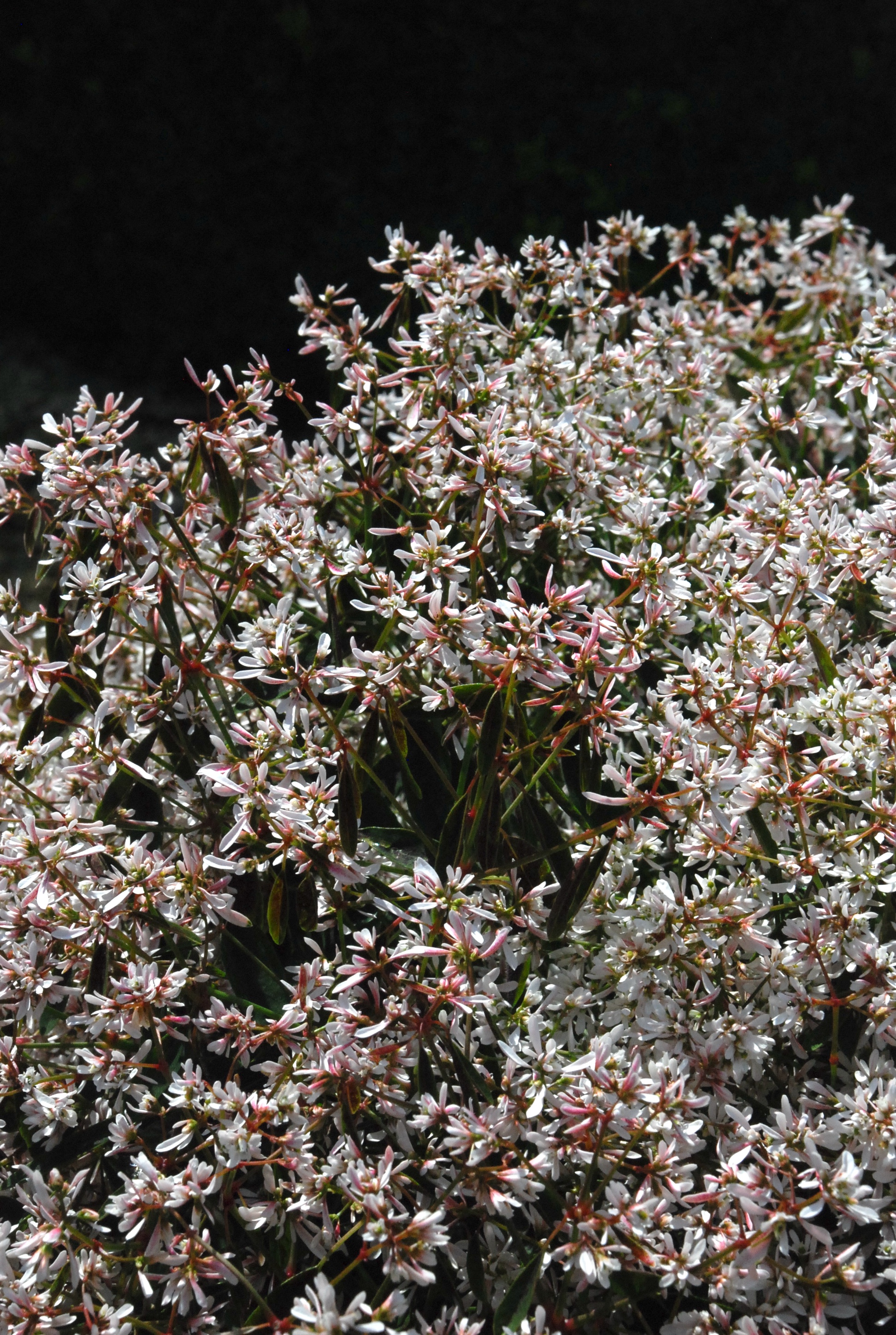
Before I leave this amazing group of plants I need to mention a plant that is a strange one and I am not quite sure what species it really is. It may be Euphorbia hypericifolia although it does not match images of that species and is probably E. graminea. It has recently become quite a popular patio plant for summer bedding although it is obviously perennial in milder climates than this. It makes a small, finely branched shrub with lots of diffuse white bracts. It seems to bloom for ever and, if it gets too large it can be hard pruned and will spring up from the base. Although perennial it can be grown from seed, blooming the first year. In recent years pink forms have been introduced. It is a useful plant with no great character but useful as tender ground cover or as a filler in pots. Needing no deadheading and having nonstop blooms it is not without merit.
What next? Check back in a few days for the second largest plant family.
 The Biking Gardener
This has been an interesting series on euphorbias. I have a few in my garden but did not realize how many others there are.
Thank you. That gives me encouragement for the next one!