Euphorbias 3
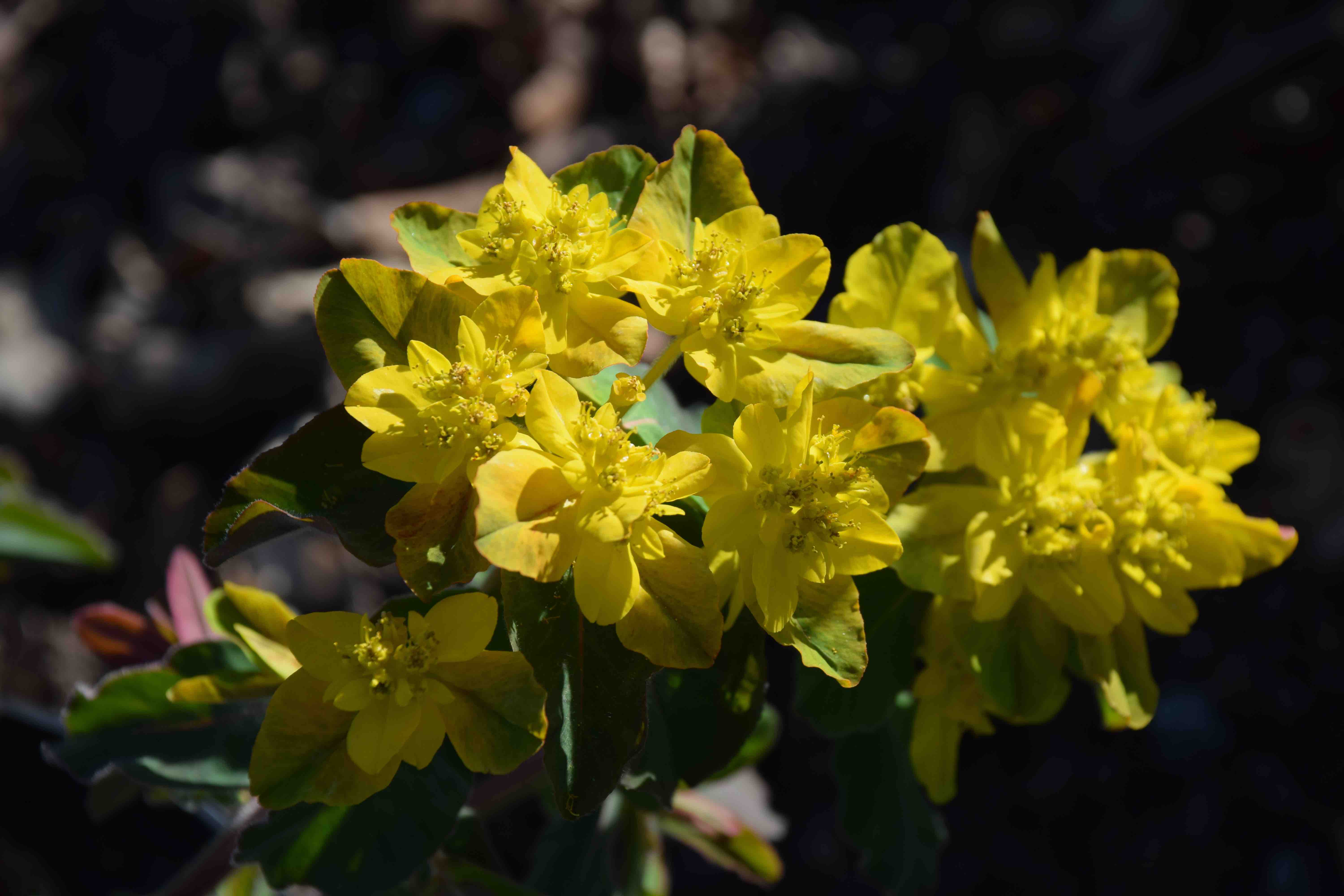
And so we come to some herbaceous species.
Most flower in late spring and early summer and most are not difficult to please. With one notable exception, and it breaks a few other rules too, they have lemon/lime ‘flowers’ that bring a bright freshness to the garden. Their height at flowering time varies from just 20cm to more than a metre but most get slightly taller as they mature, once flowers have begun to open. It is easy to be creative with their citrus zing. It works perfectly with big purple alliums that bloom in May/June and late-flowering tulips in pink and purple or orange and red. The flowers also spark against purple foliage. The possibilities are endless.
If I had to choose just one it would be Euphorbia epithymoides (formerly E. polychroma). It forms a dense dome and the flowers show colour almost as soon as it starts into spring growth, expanding with each week, the colour gradually diminishing as the size grows. It gives yellow daffodils and tulips a-run-for-their-money. Sadly, my first and only attempt to establish it here was not a success. Unusually, for me, I bought a large plant and popped it in in spring. It grew but looked very unhappy and by midsummer was dead. This was a bit of a shock since I have had it thrive elsewhere and considered it easy. I believe the problem was (largely) with the way the plant was produced. Too many plants are grown in ‘peat alternative’ wholly organic compost and they are ‘overpotted’, I believe to charge a higher price. So when planted, in my heavy soil, the mass of organic compost acts like a sump and the roots rotted. It is the same as when you plant a shrub in a pocket of compost – the roots just rot. The garden was then in an early stage and I could have dug over the bed more thoroughly perhaps. I will try again.
There are some lovely variants on the basic species and ‘Lacy’ and ‘First Blush’ are variegated and tinged with pink as growth starts. Whether you want pink and lemon yellow is up to you. In the past I would have spat out expletives but as I get older I am slightly more tolerant of dolly mixture colours.
Larger in all parts is Euphorbia palustris, a super plant with pale green foliage and showy flowers. It grows from a woody rootstock and the thick, sturdy stems carry large, spreading heads of flowers. Few of these herbaceous euphorbias really need staking and this is pretty sturdy. But it is a bit like the person who is bound to sit next to me on my Ryanair flight that hogs both armrests. It spreads much wider than its ‘footprint’ would suggest.
I also have E. donii which is very similar and It also has some pretty nice autumn colouring.
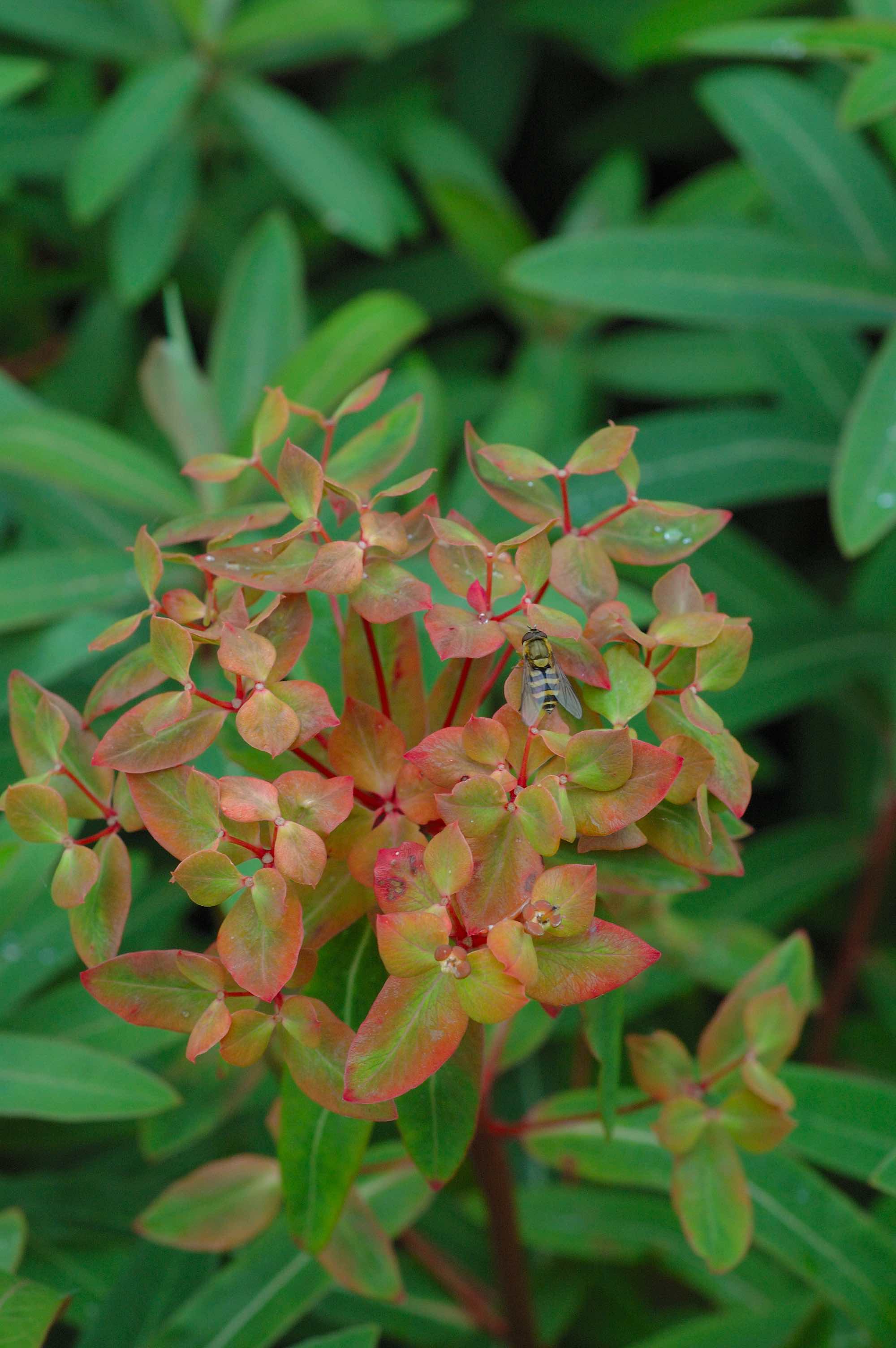
And so we come to two species that are not quite so perfect. Euphorbia griffithii is a plant that everyone wants when they see it. The sturdy stems are often flushed with purple and the floral leaves can be fiery shades of orange and red, a welcome variation from the usual shades. It grows to about 1m high. Unfortunately like Dion, it is a wanderer. Once established it sends up stems around the border, sometimes where you want them, at other times not. It is, like most plants with similar proclivities, more problematic in light soils and better behaved in heavy soils.
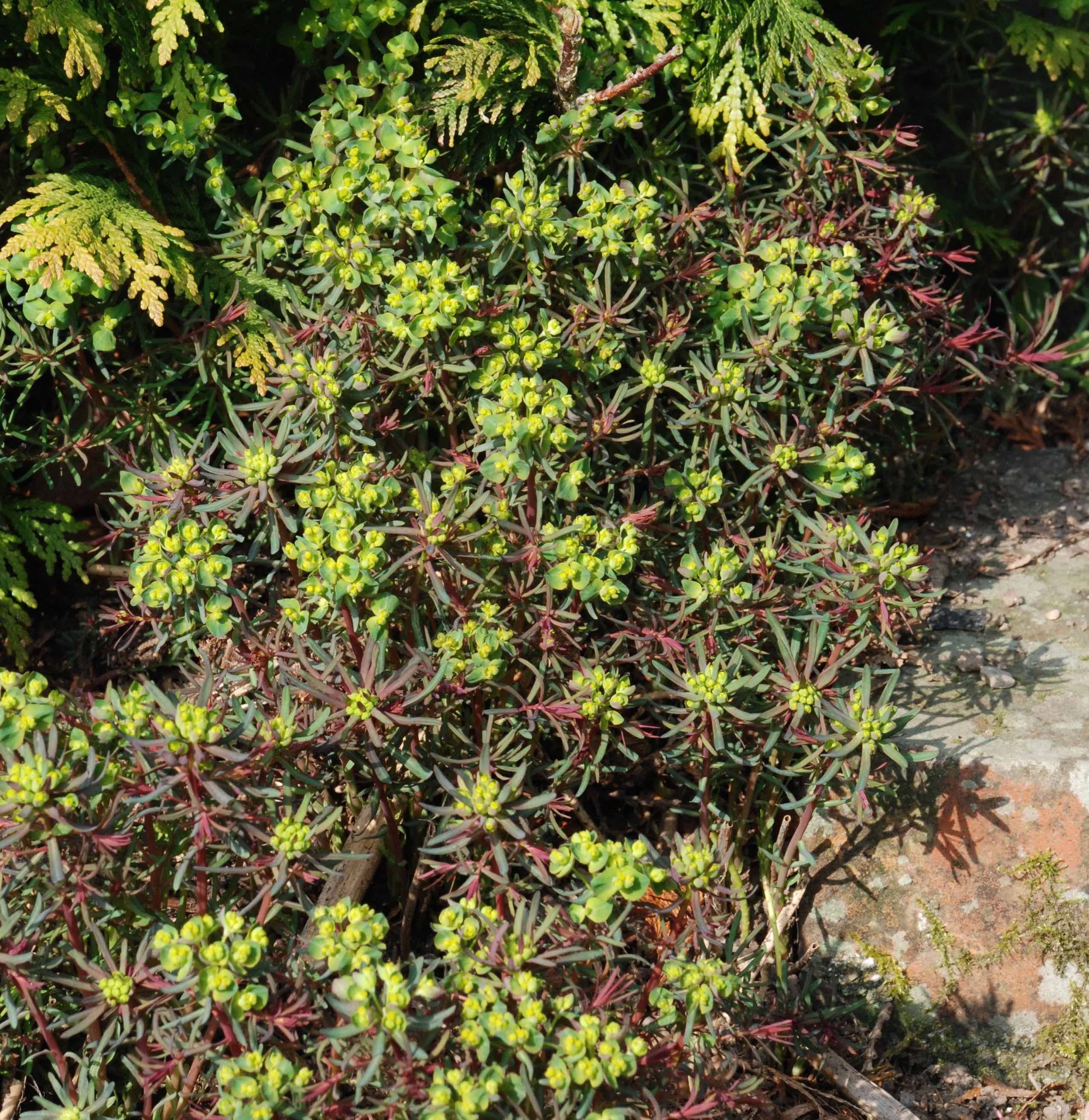
The dainty-looking Euphorbia cyparissias is often an impulse buy when seen in garden centres with fine foliage and delightful lime green flowers. Even better are the variants with purple foliage such as ‘Fens Ruby’ and ‘Orange Man’. It only grows to about 20cm high but, where it is suited, it has an indefinite spread. Despite appearances it is not something to introduce to the rock garden! Please! But it is useful where it is contained by a path edge. It is not always a thug and, to my surprise, gradually died out in a former garden in good, light soil where it was swamped by vinca. Despite my warnings I will add it to this garden when I see it for sale.

Of course, the elephant in the room, or the euphorbia, which I have not mentioned so far is the best known euphorbia of all, Euphorbia pulcherrima, the poinsettia. It is still too close to Christmas to write much about it, having had to do so endlessly for working purposes but I will briefly mention a few other ‘houseplant’ euphorbias in the next post.
 The Biking Gardener
No comments yet.