The last of Madeira
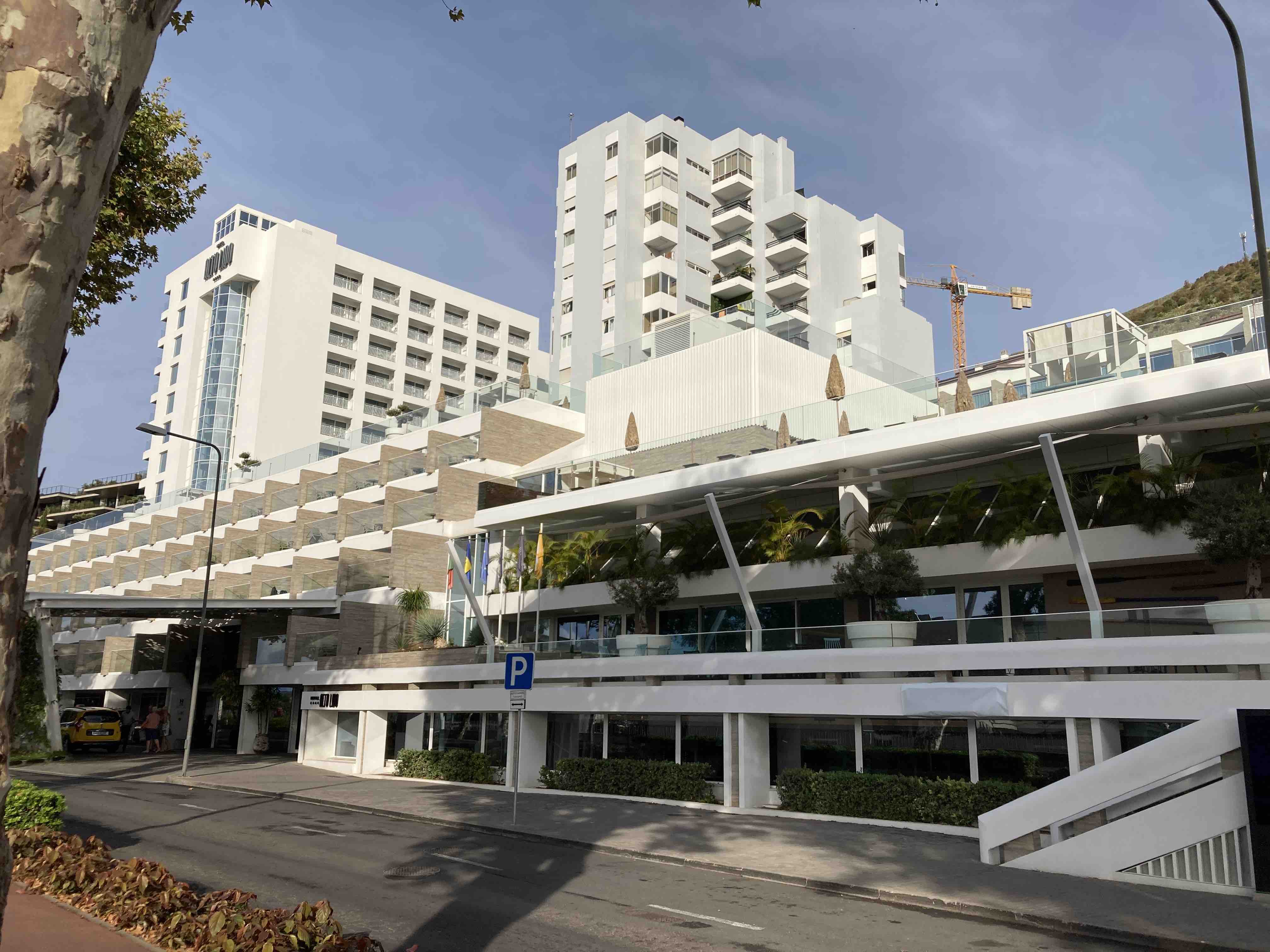
Holiday photos are all very well but no one really wants to see too many of them. But the garden is wet and dull and Madeira was generally sunny. I have shown photos of some gardens to justify some posts but I will end with some general photos of parts of the island. I have wanted to visit Madeira for ages – most gardeners do – and we finally made it and stayed in an old hotel by the harbour where the cruise ships dock. It was also next to Ronaldo’s home and a very short walk from his hotel and museum. The hotel was perfectly sited for visiting old Funchal which was the best part. To the west, beyond the old Reid’s Palace is the Lido area which is packed with large hotels and accomodation and looks like any other tourist area else in the world.
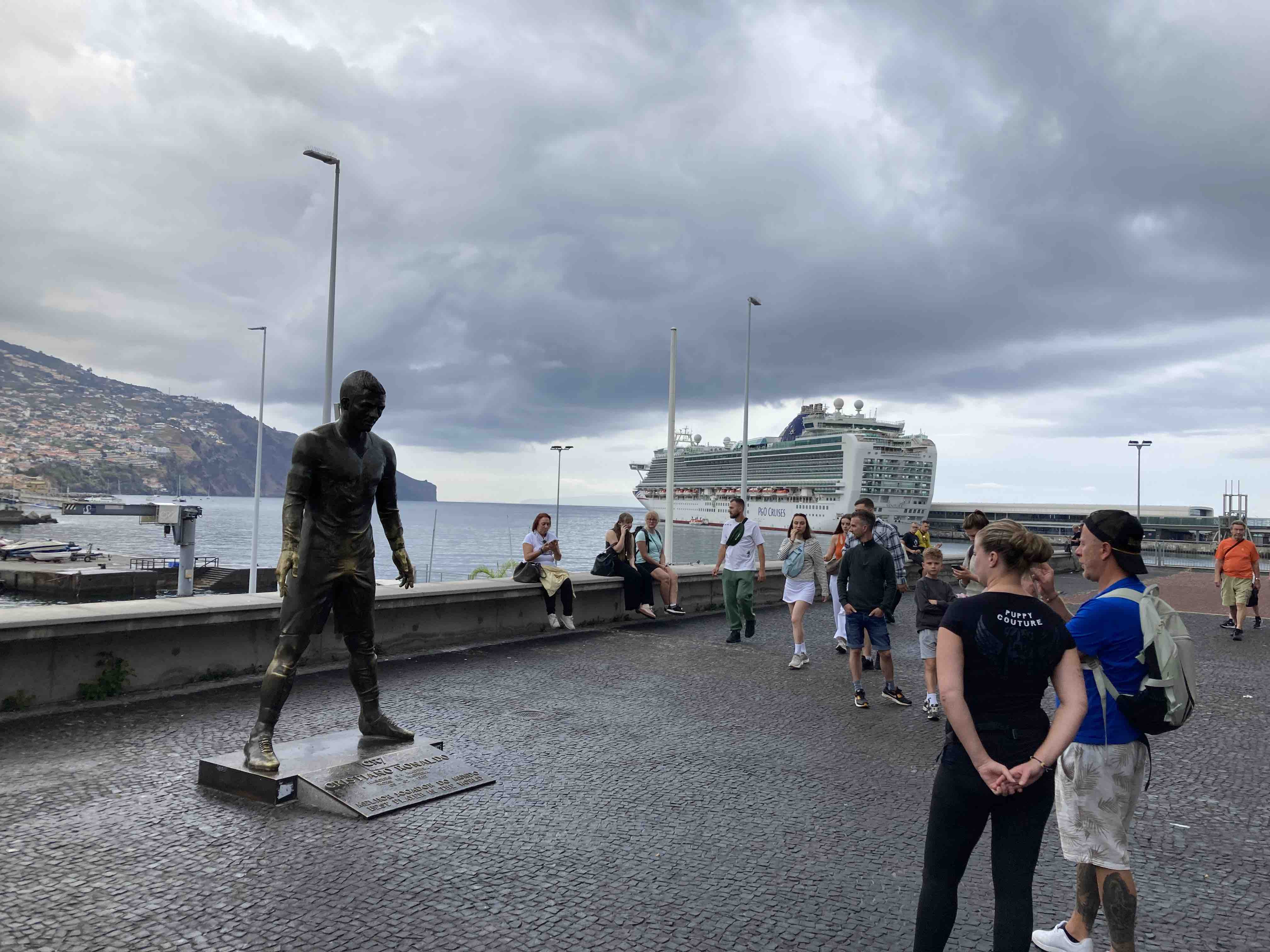
People flock to the Ronaldo museum and to take photos next to a rather odd statue which looks as though he has had his ‘walker’ stolen.
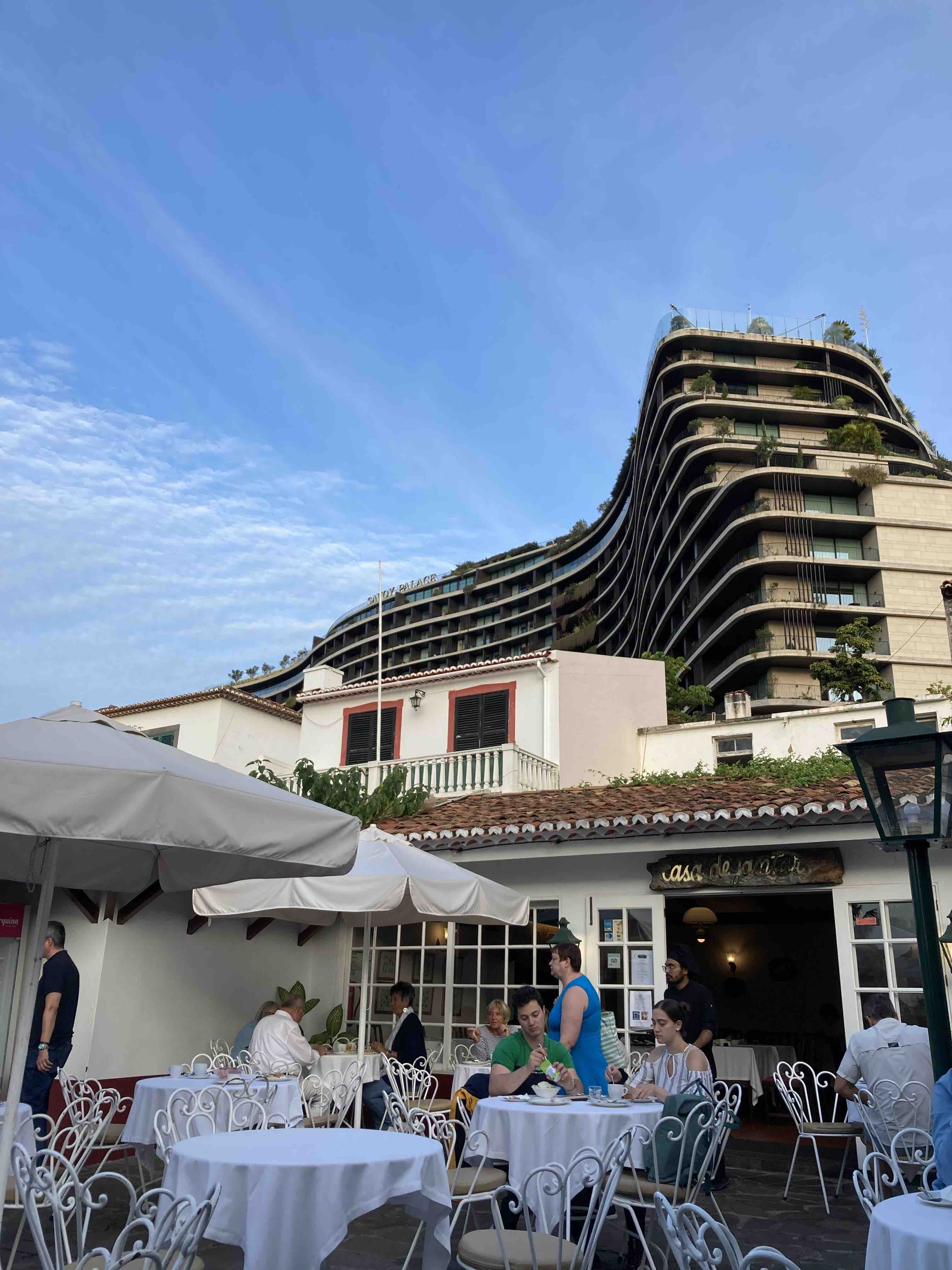
Although our hotel was low-rise and old and quite charming it was in the shadow (well not quite since it was to the south) of the Savoy Palace, a monstrous behemoth. Breakfast outdoors at 8am was a novelty in October and I was amused by other guests’ reaction to the pigeons (there were only a few).
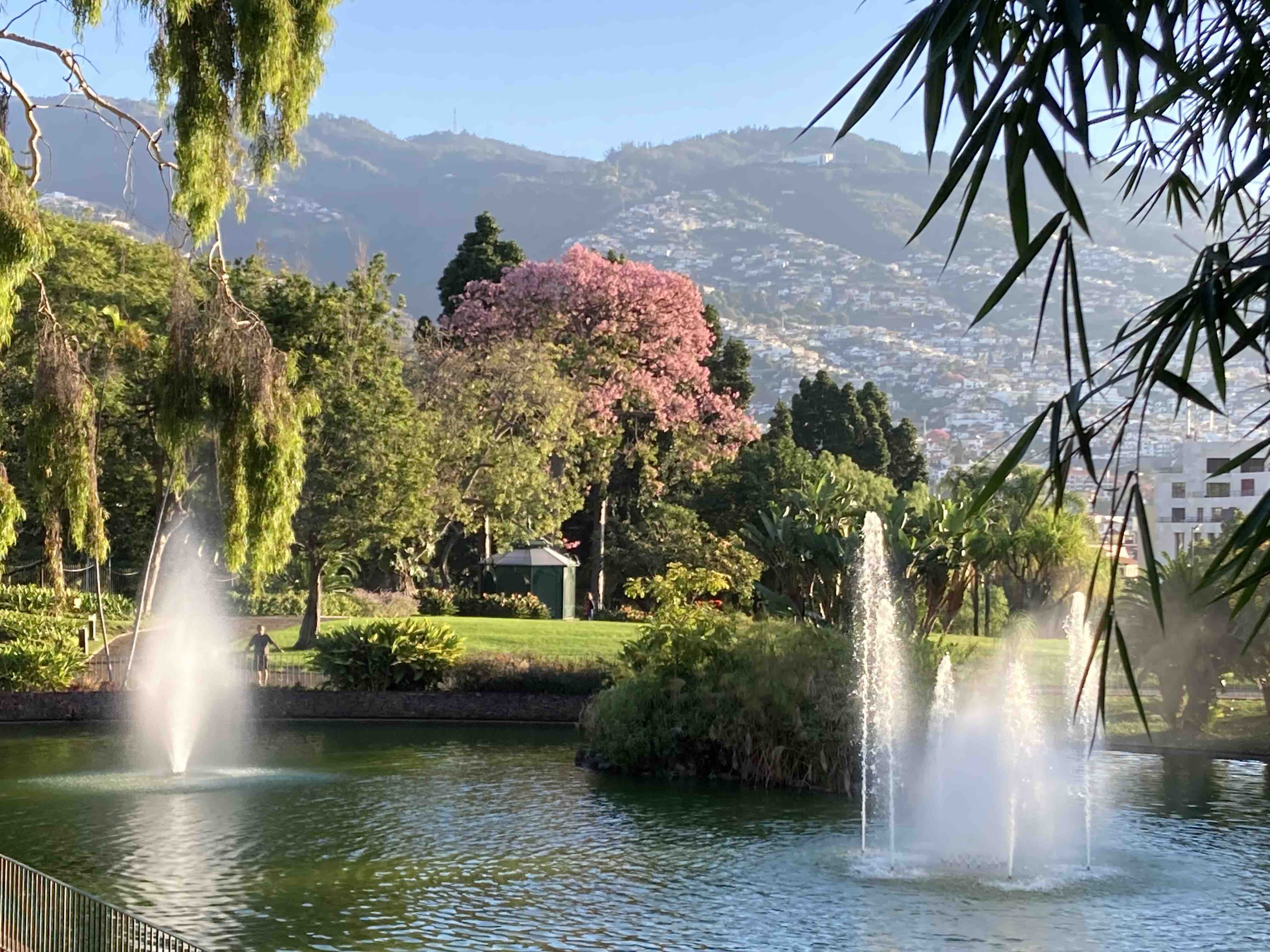
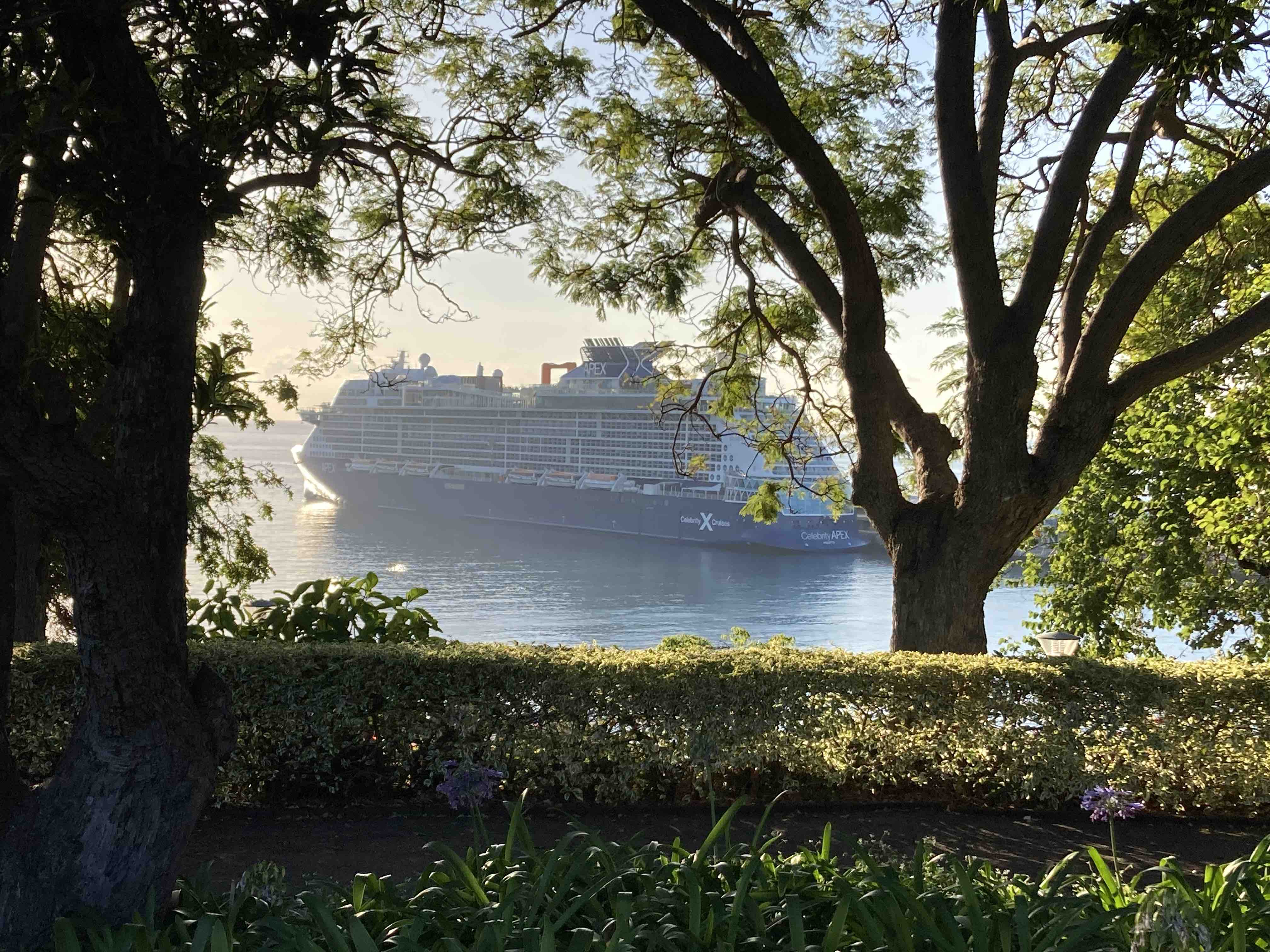
Funchal is packed with interest and with parks. Our nearest, and one we walked through every day to get to town, was the Parque de Santa Catarina. Like all the parks it was very well maintained and beautifully laid out.
It overlooked the harbour
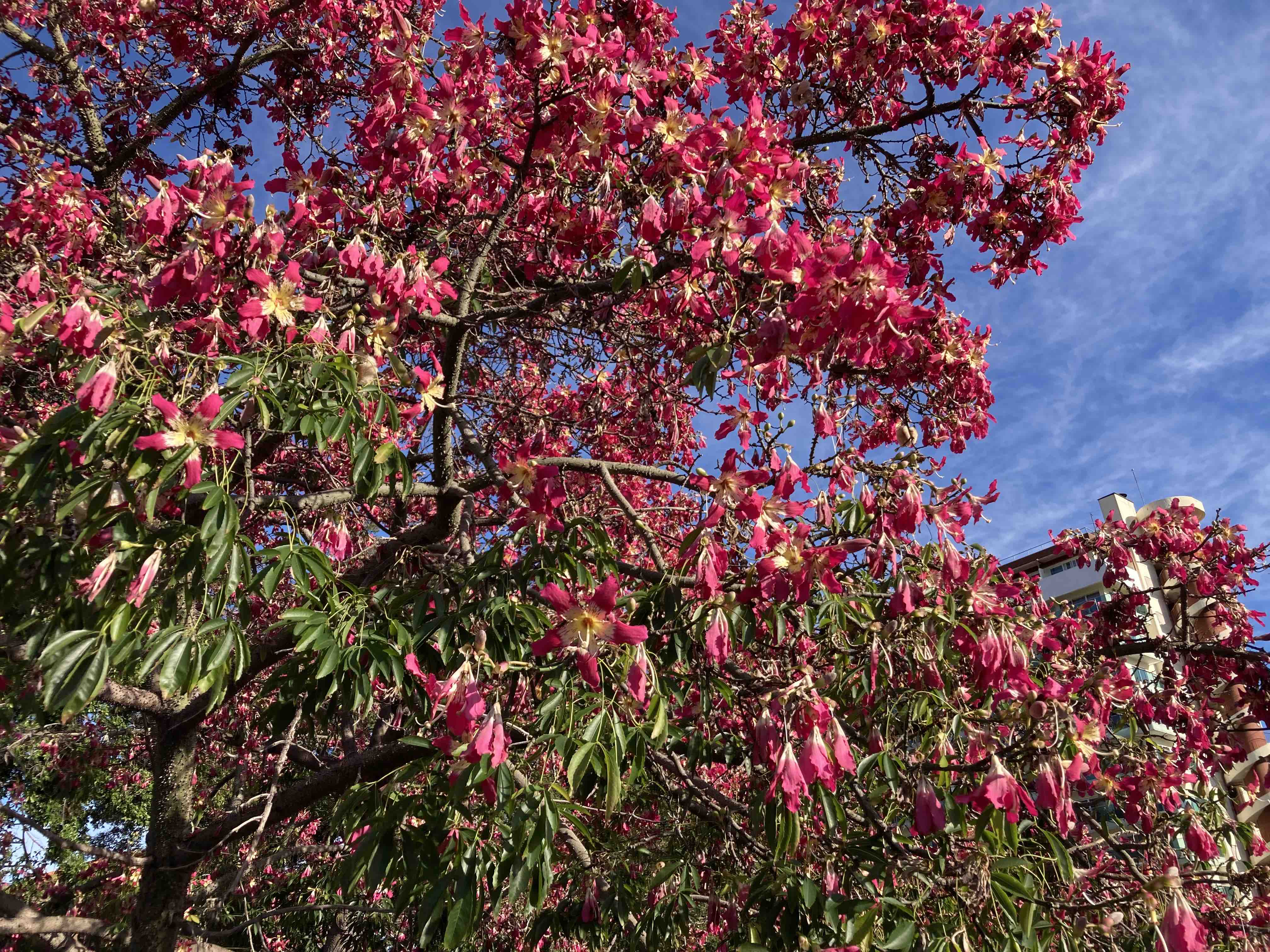
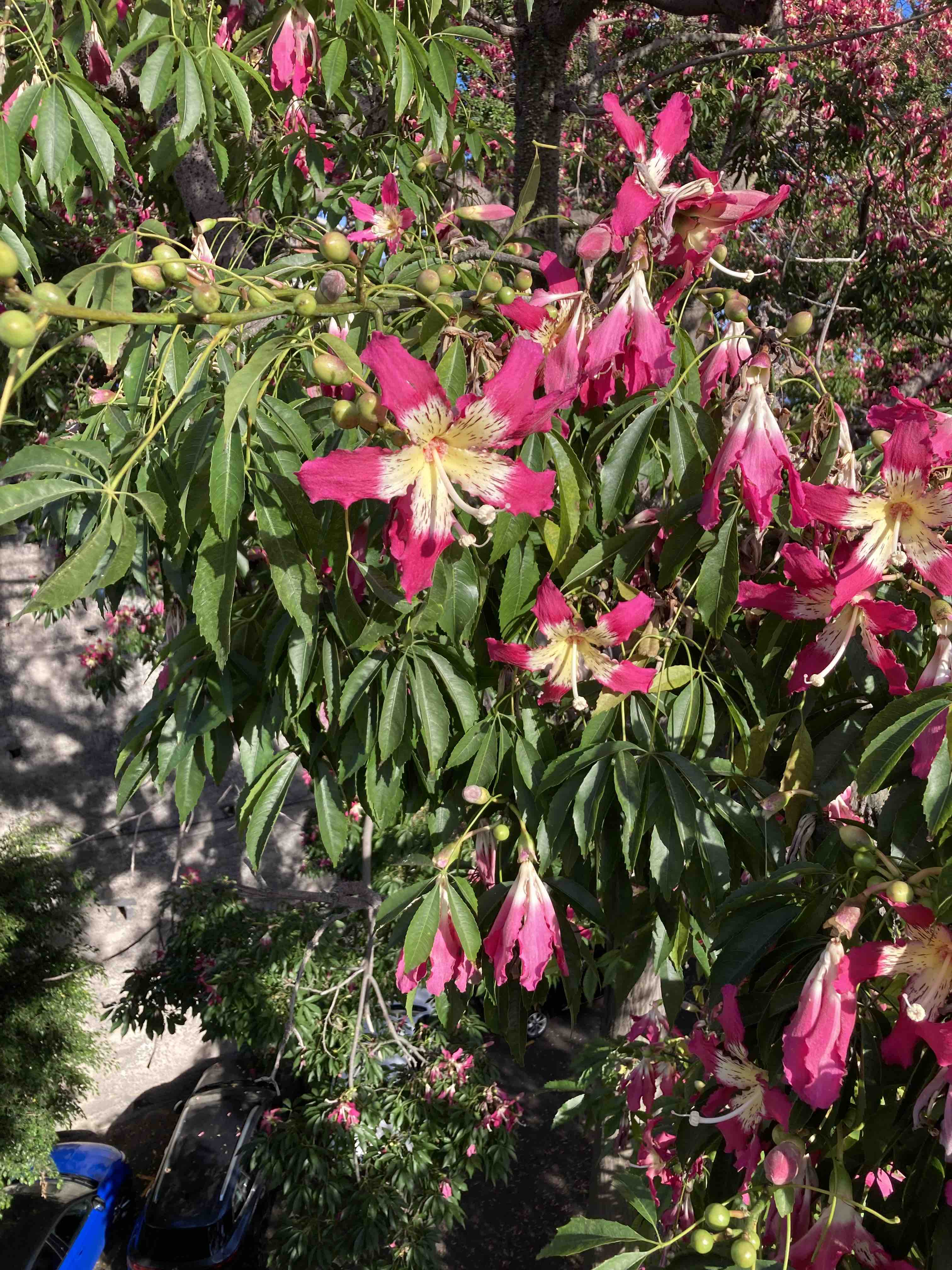
All over the island, at lower altitudes, the landscape was dominated by Ceiba (Chorisia) speciosa, a relative of the kapok tree. It is odd that every guide we talked to mentioned the tree and that no one seemed to know what kapok was. I guess it is all polyester these days but I remember buying kapok to stuff toys in my youth. It is distantly related to cotton but a very different plant, native to South America and distinctive for the spined young trunk and swollen bole. But it is the flowers that make it so wonderful, even when they drop and litter the paving.
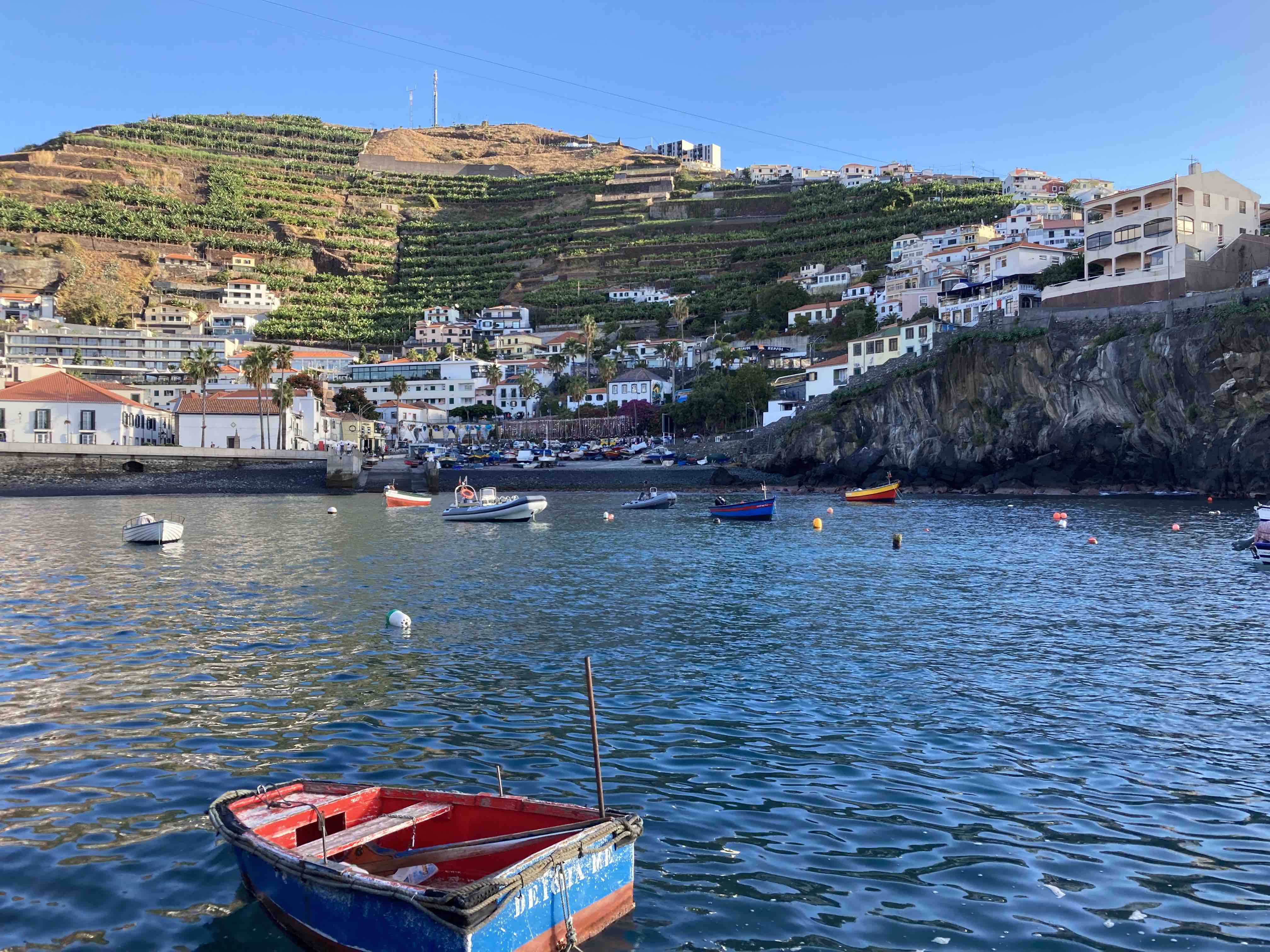
We explored much of the island and to the west is Camara de Lobos which was a popular haunt of early tourists including Winston Churchill. A hotel there bears his name and is a major draw. I have deliberately not shown the statue of him painting even though I did manage to get a photo of it without people lounging all over it. I have to say that I have never before been so annoyed by people taking ‘selfies’ and photos to put on social media. People were completely unaware of other people or their own safety. We were actually told by a guide not to walk off cliffs at one point. It, along with the the general attitude of the natives that tourists were a major inconvenience, and the aggressive asking for tips, that slightly spoiled the holiday. I always tip and do not need to be reminded. At one establishment I was expected to tip €10 for a €40 meal – in other words I was not going to get change from a fifty, and I insisted that I wanted change and that I would choose how much to tip. It was a mediocre meal with mediocre service and I don’t tip that much for mediocrity. It did not help that it was the first night, we had just checked in to the hotel and we had just had to pay tourist tax plus €300 extra for a room upgrade we had not asked for. So I was feeling mugged already.
Madeira was, I thought, expensive, but not everywhere. Get away from the tourist areas and things are more reasonable and we found a great, tiny cafe where a coffee (espresso) and warm, fresh pastel de nata was €1.50, I almost fainted! And I tipped like I was a prince! And we went back.
One of the most wonderful surprises was at the north west tip of the island. Porto Moniz is best known for the semi-natural swimming areas and it was beautiful. At the base of a huge cliff it is a bit of a tourist trap but was gorgeous.
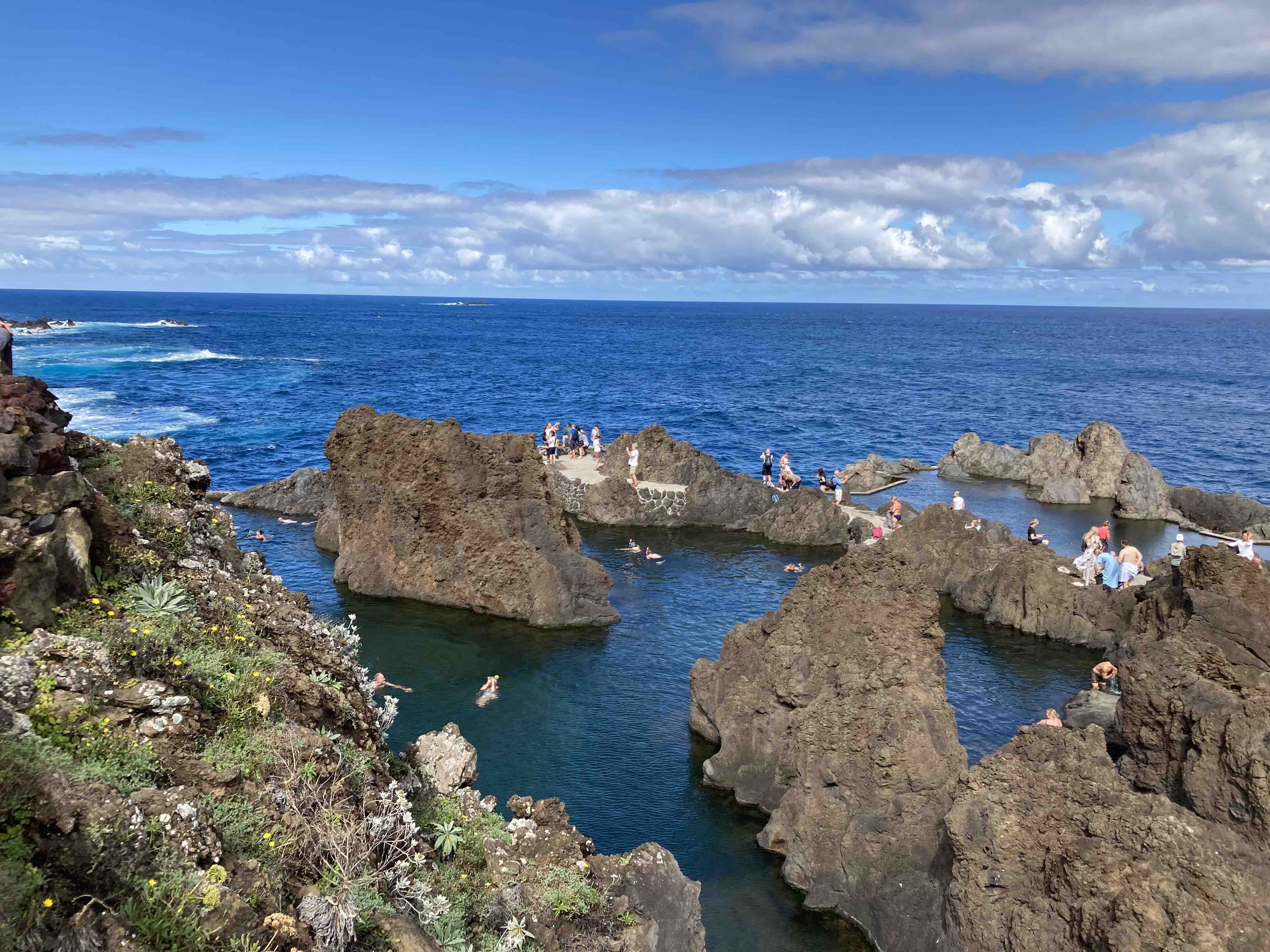
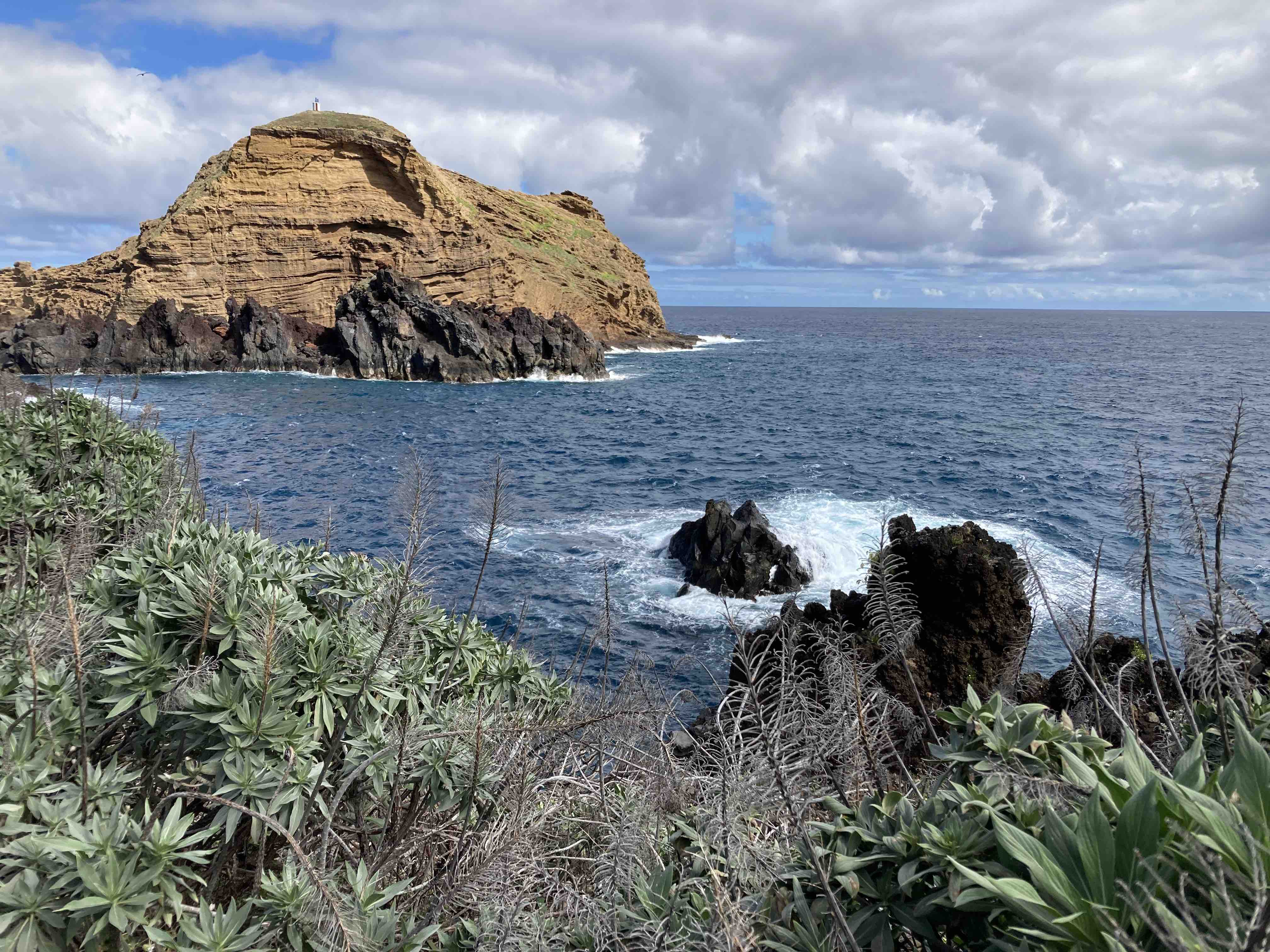
And nearby we saw Echium candidum, pride of Madeira. It was not in bloom. I have a plant in a pot but it does grow outside, as part of a hedge, in Wexford harbour. I was also pleased to see Scilla madeirensis, which I grow in the greenhouse.
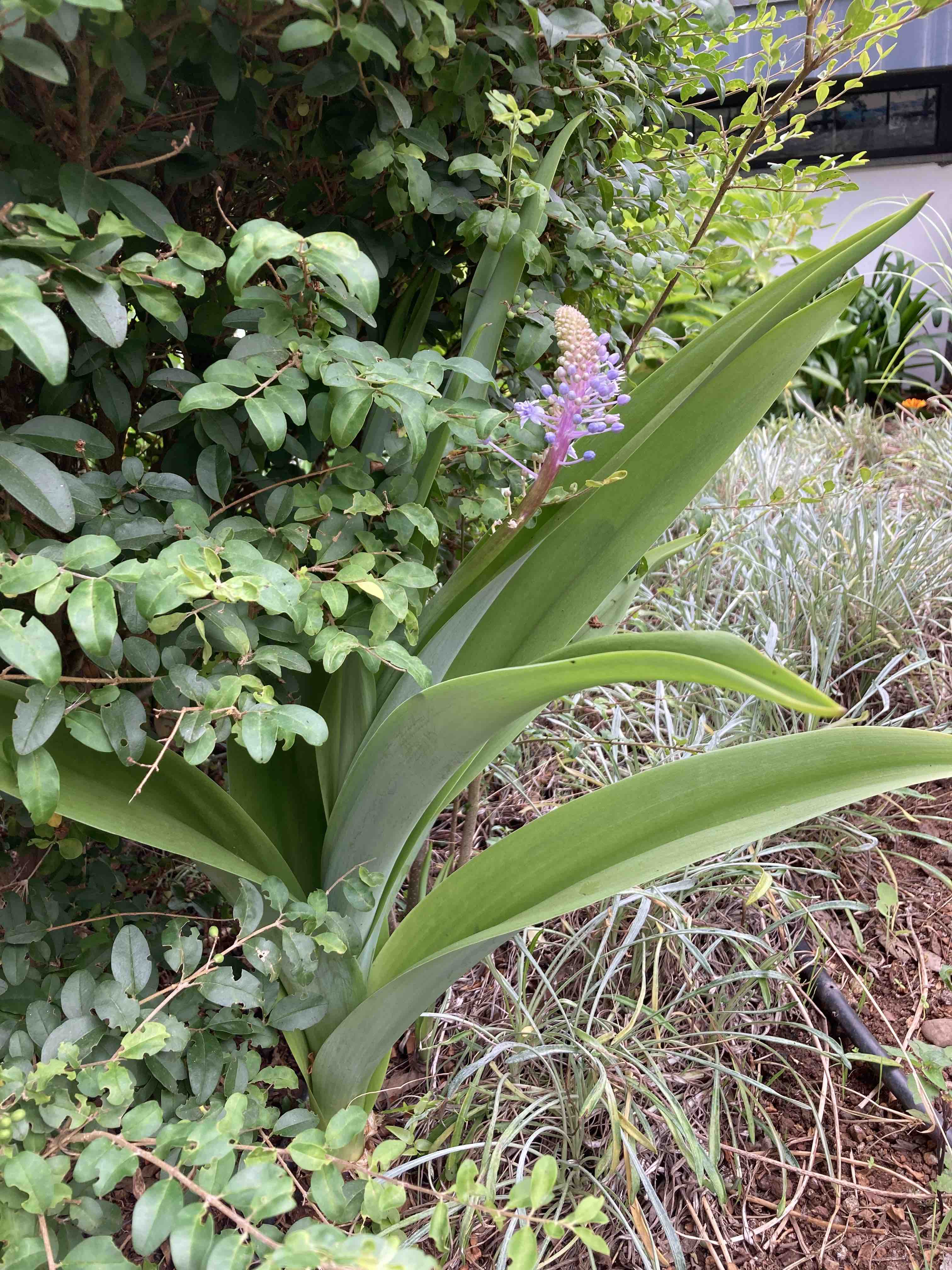
In the north of the island is the town of Santana which is a tourist trap featuring some reconstructed traditional houses. I was eager to escape.

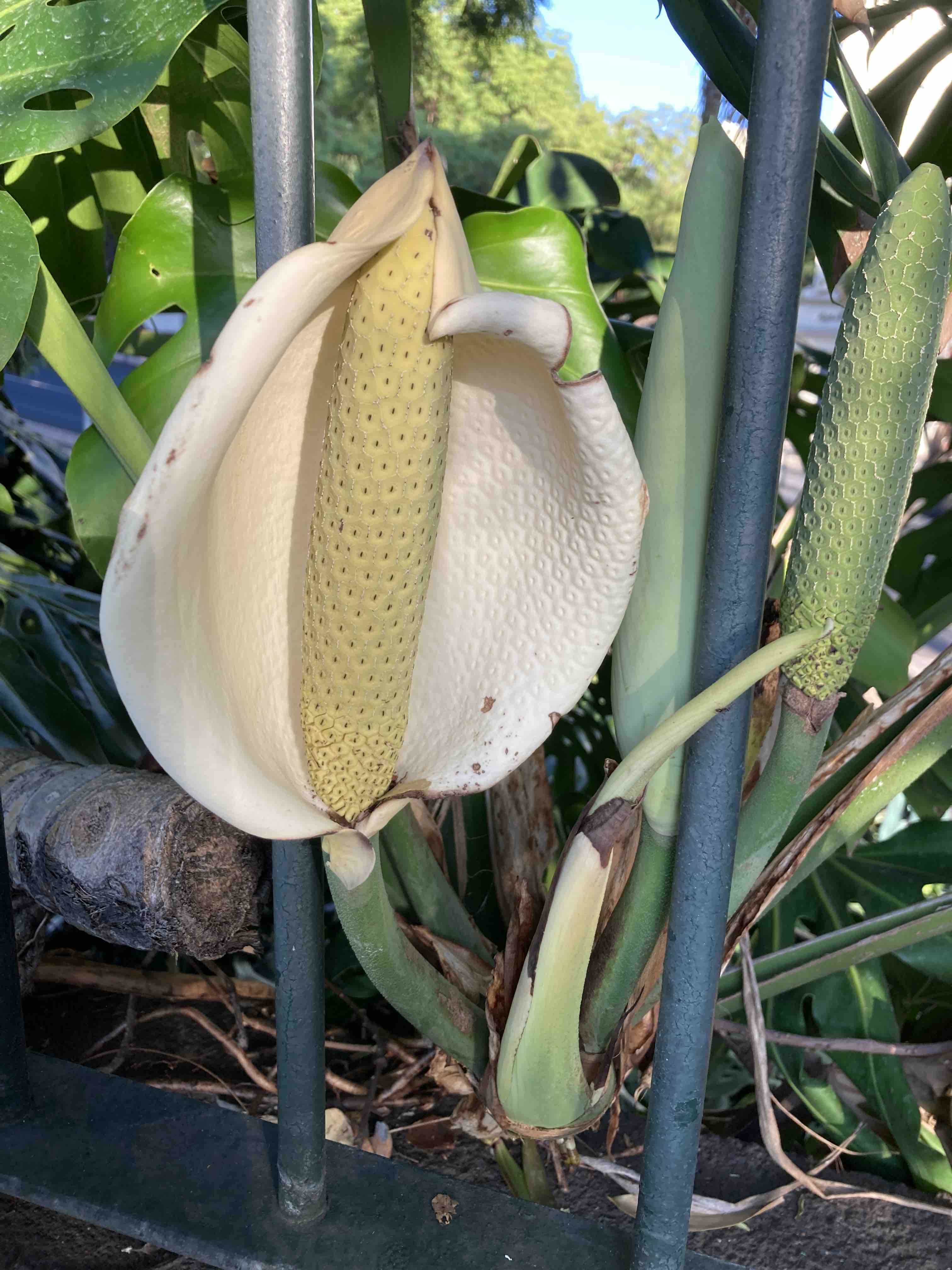
And, talking of tourist traps, the fruit market in Funchal is generally regarded as selling the most expensive fruit in the world to tourists and the big seller is the fruit of monstera. Monstera grows everywhere and it was great to see the ‘flowers’ and developing fruit.
 The Biking Gardener
A wonderful holiday…except for the tips!