More for the bees
‘The lovely flowers embarrass me,
They make me regret I am not a bee.’
Emily Dickinson
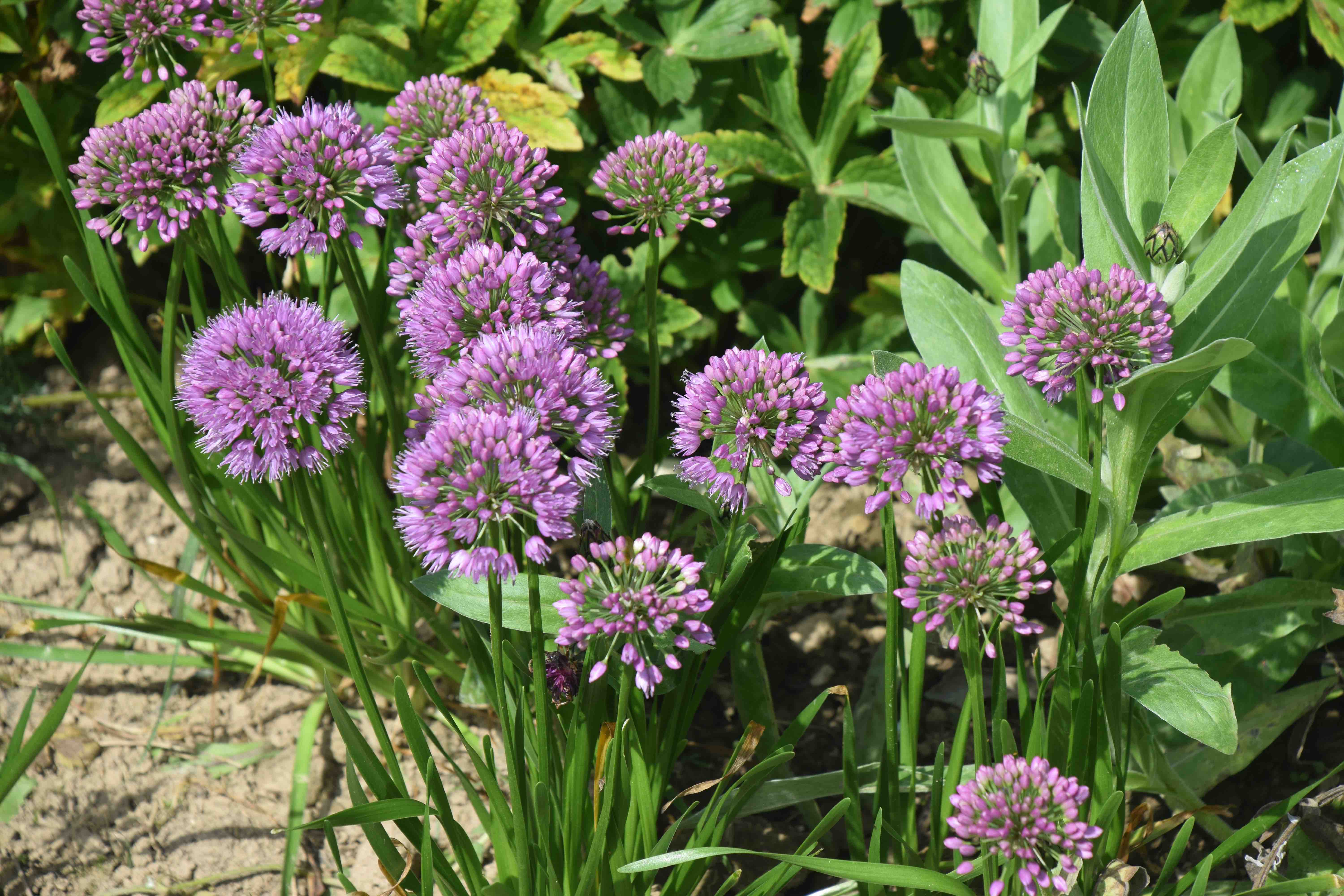
The theme this week is bees, or so it seems to be.
One of their favourite plants at the moment is allium ‘Millenium’. You can guess why it is so named, despite the wrong spelling, and it was named Plant of the Year in 2018 (in the USA) which propelled it into the spotlight. It was bred by onion-fanatic Mark McDonough in Massachusetts, who has created masses of amazing alliums, and is possibly derived from Allium nutans.
It is probably unusual for most people who know alliums as the big, round, purple things in May because it is not a summer-dormant bulb but a rhizomatous, or at least clump-forming, plant that has slightly swollen leaf bases. Although this may initially seem strange, just think of chives for a quick comparison. But unlike chives, this has flat leaves (rather like ‘garlic chives’), rather than hollow, tubular leaves, and has similar, round heads of mauve pink flowers. But it blooms much later in the year.
‘Millenium’ has been widely lauded as a garden plant since its introduction. It is a neat, clump-forming plant and the onion scent should prevent it being munched by rabbits and deer. It certainly has not been attacked by molluscs this year either.
The flowers are attractive and the leaves discrete. It is usually stated to grow to 45cm high but my plant has never exceeded 30cm and is presently about 20cm. The flowers are pretty both in bud and in bloom and it remains attractive for well over a month. The flowers, like most ‘purple’ alliums are very popular with bees and, if we had many at the moment, with butterflies.
One of its stated merits is that it is sterile and does not set seed. However, this is not quite true and I have had seedlings appear in previous years. Stupidly I did not look after them and I weeded them out as they were near the lawn edge. I will keep any more that appear and will actively collect any seeds that form this year. My clump was a bit crowded this spring so I lifted and divided it in April and replanted ten divisions that have grown perfectly and are blooming as though nothing happened.
Of course, popularity and fame has led to many copycats and improvements which I have yet to try. Some seem fancifully named regarding flower colour but I am sure all are worth space.
As a choice for the front of a border it is very satisfactory. It blooms best in full sun and survives in well-drained soil though I think it also has use as a container plants. I have not tried it as a cut flower yet but it is supposed to last in water.
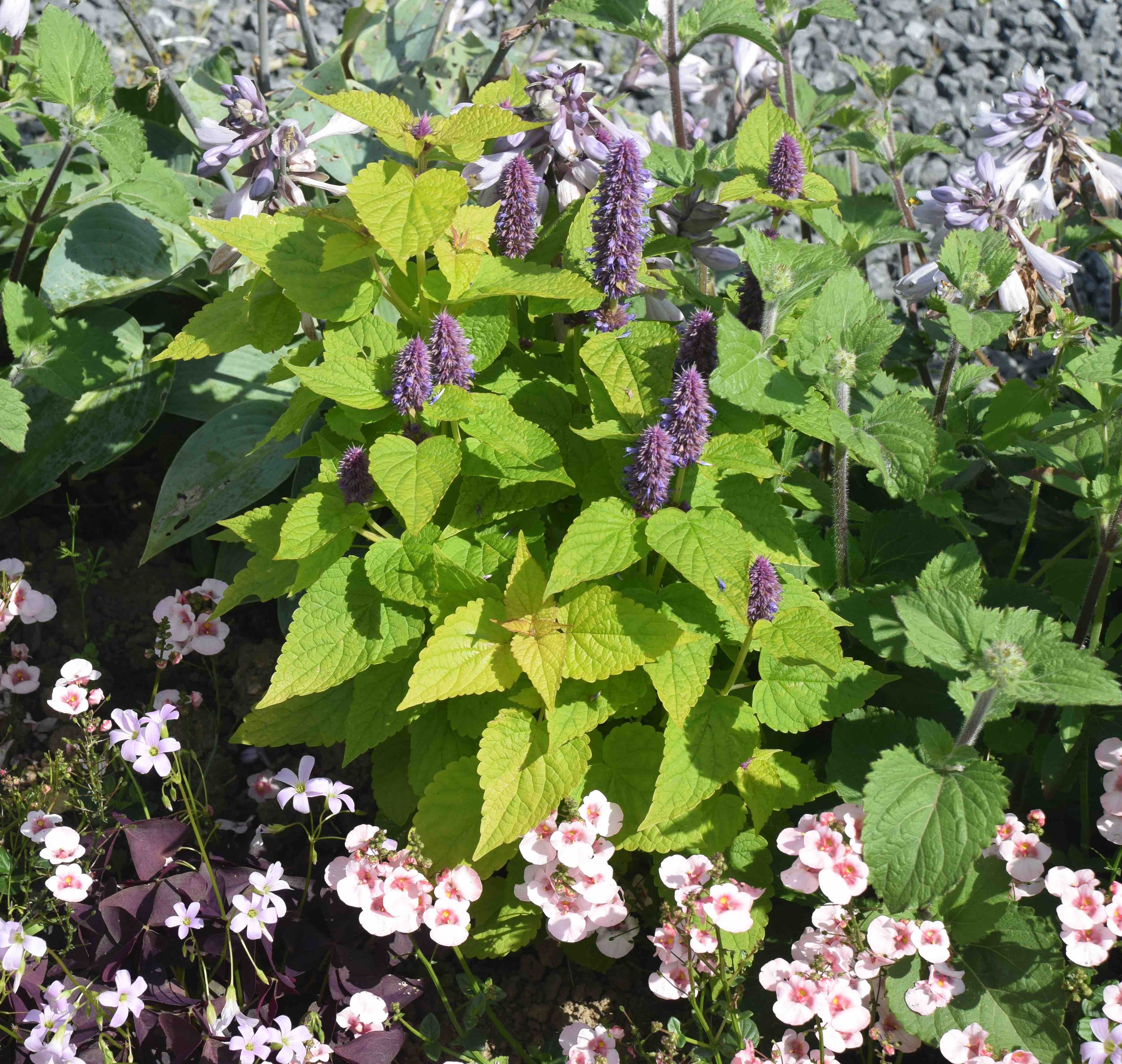
The bees are also enjoying the agastaches. I grew three kinds from seed this spring but things got off to a bad start. The mice in the greenhouse were curiously attracted to the seeds as soon as they were sown and then the snails crawled past the hostas to eat many of the few remaining seedlings. So my plans for great swathes of agastaches were dashed.
Even so, I managed to plant a few dozen ‘Golden Jubilee’. This is a wonderful plant, probably from A. foeniculum, that was spotted by Ray Brown at his Plant World Seeds garden in Devon.
It received an ‘All America Award’ and was possibly important in stimulating interest in these plants which are now available in a bewildering array of kinds.
Agastache are sometimes called giant hyssops and are mint-relatives native largely to North America. They are short-lived perennials, often with a woody base, that will usually bloom the first year. The heads of tubular flowers are, in the red and orange species, popular with humming birds because of the long, tubular flowers while the blue-flowered species have dense heads of smaller blooms that attract bees – that is purely a personal observation. All have square stems and aromatic foliage that provides a wide range of scents.
They all like full sun and some require quite arid conditions, especially the yellow and orange kinds that tend to have narrow, grey foliage and delicate habit.
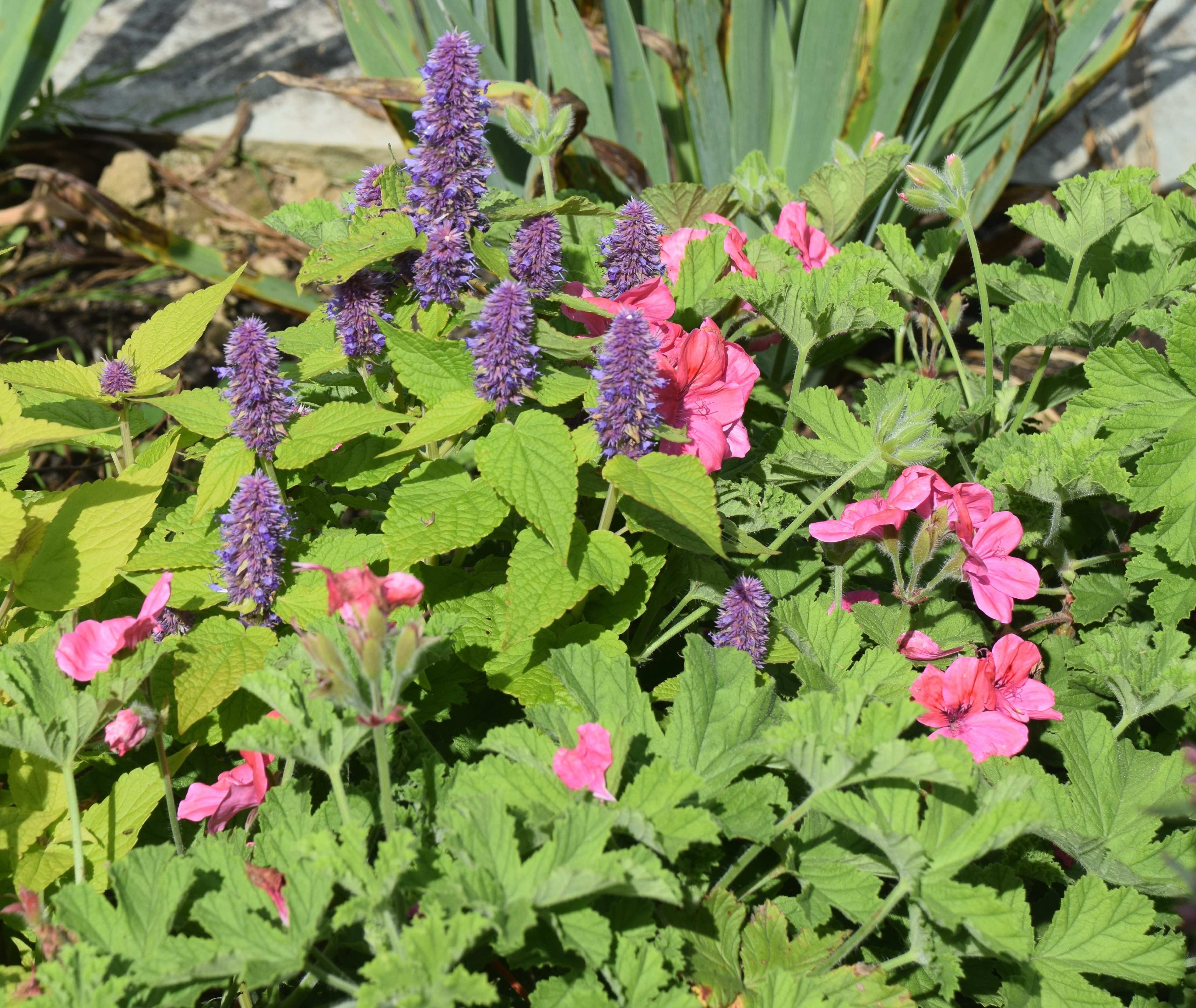
‘Golden Jubilee’ is a very different plant and is quite tough. It thrives in good soil and can grow to 60cm or so, the bushy plants well clothed with large, rough, rather nettle-like leaves. They are soft yellowy lime, tinged with bronze when young, varying according to sun and soil moisture. Each stem terminates in a dense head with small, tubular blue flowers opening over many weeks. I find the foliage colour very useful and it ‘goes’ with the pink dianthus in the pics and the searing colour of pelargonium ‘Clorinda’ as well as purple oxalis and blue hostas.
All bees seem to appreciate them and bumblebees in particular seem to find them easy picking. The flowers are positioned just above the foliage and the bees seem to casually wander over the leaves from inflorescence to inflorescence.
It is a good filler plant for borders and good enough for patio pots, making a bright, if rather subtle, display and food for bees for many months.
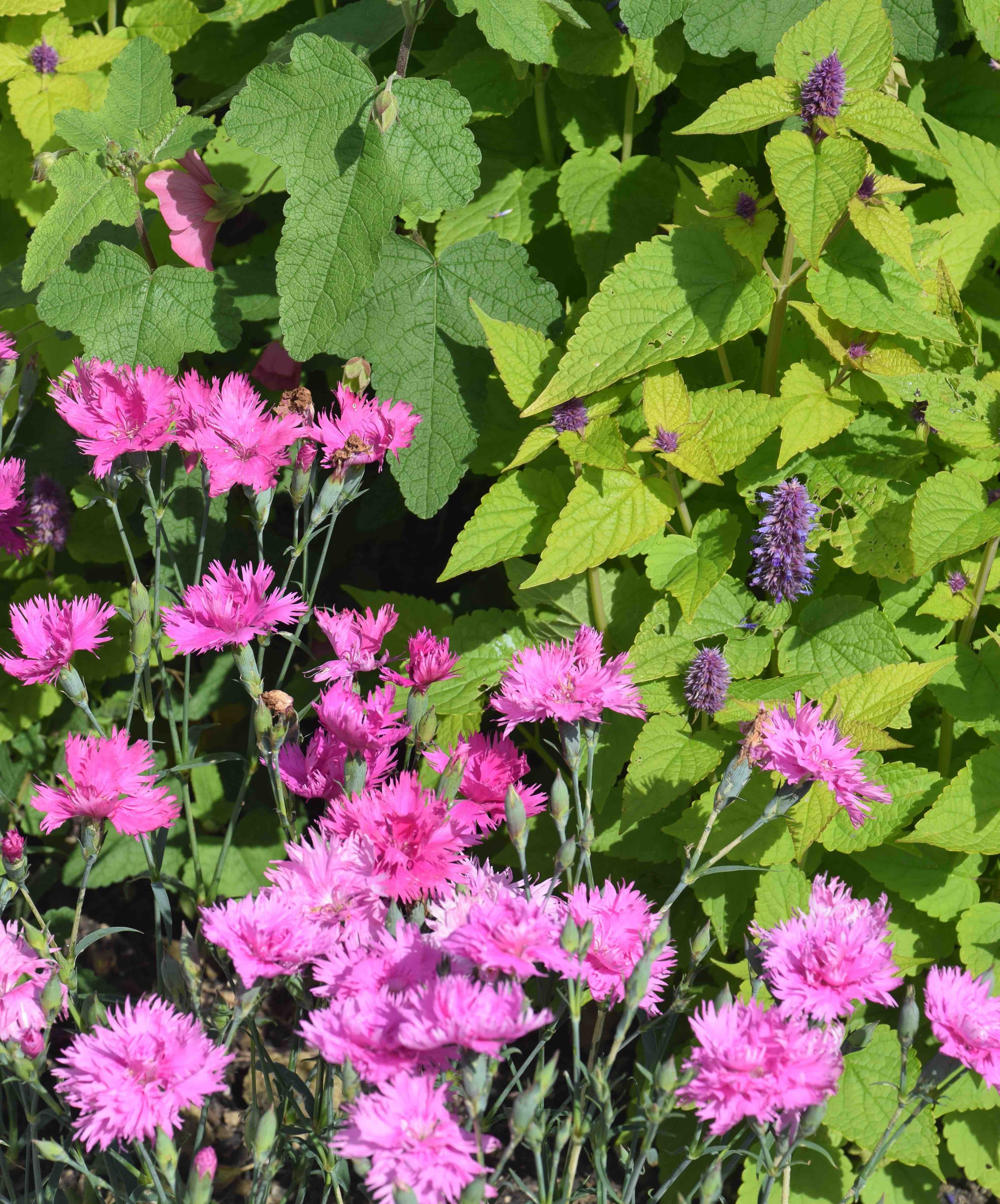
Plants should survive a mild winter but it is easy to raise from seed, all things being equal.
I realise that none of these photos show any bees! It was early morning and a bit chilly. I promise they were out for a late breakfast soon after.
 The Biking Gardener
No comments yet.