Keep it Simple Sunday: compost
What is the best compost for pots? A simple question I am asked many times but that has a very complex answer. If you want the quick answer scroll down now. Otherwise read on!
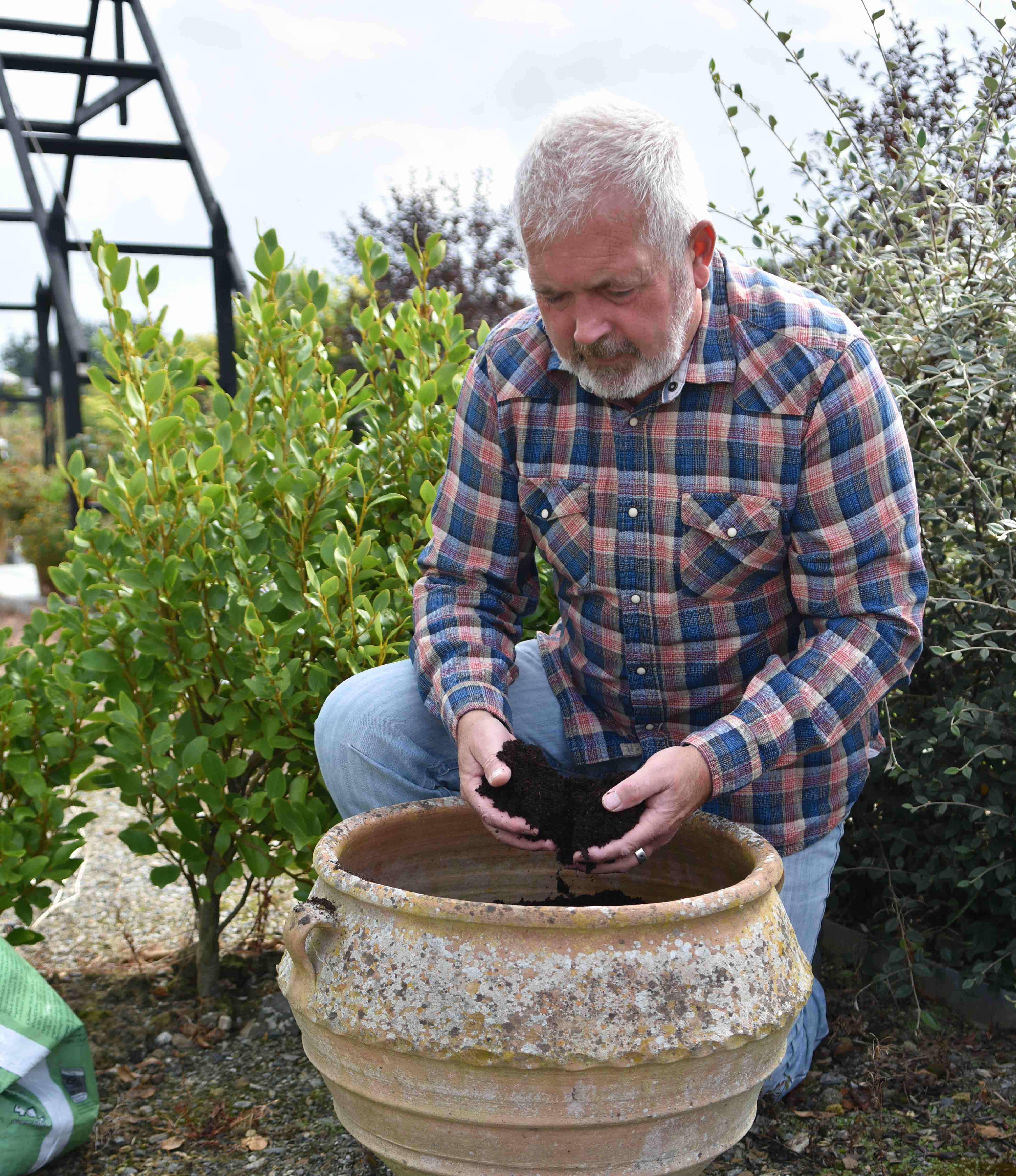
Compost is what we use to fill our pots. Buying compost is necessary to grow plants in containers, whether that is pots and trays to sow seeds, grow young plants, grow plants in the greenhouse or plant pots and veg on the patio. If you read old gardening books you will find countless, confusing recipes that include strange ingredients including well-rotted loam or turf, leafmould, brick dust, gypsum, peat, mole hills and more. It was to standardise these countless recipes that John Innes composts were developed and introduced in 1938.
The basic formula is 7 parts by volume loam, 3 parts peat and two parts coarse sand. To this is added hoof and horn, superphosphate, sulphate of potash (John Innes base) and ground chalk. The amount of fertiliser increases with the ‘number’ and No 1 has lowest nutrient levels to suit young plants and No 3 has the most and is for mature plants. To comply with current ‘needs’ the peat is sometimes substituted with coir or alternatives.
The problem with John Innes compost is that ‘loam’ varies in quality; after all it is basically turf stripped off a field, and composted before being shredded and sterilised. From bags I have bought recently the ‘loam’ is more likely ‘topsoil’, deficient in organic matter, and pretty awful stuff at that. So there is variability in John Innes composts.
To counter this, peat-based composts then became popular. They were lightweight, sterile and free from weeds. Peat has virtually no nutrients so feeding is easily controlled. It is free of weed seeds (apart from birch, willow and heathers) and is uniform in structure. There was the complication of moss peat, the best, brown, fibrous and acidic, and sedge peat, finer in structure, black, granular and often alkaline. I remember unloading lorries packed with bags and bales of moss peat from Bord na Mona in my youth; backbreaking work that lasted a day.
We can’t use peat any more so bags of compost are either John Innes or multipurpose compost.
Multipurpose compost used to be basically peat and is suitable for most plants. But it is not ideal for everything.
The problem with multipurpose composts, including peat, is that they are almost completely organic matter. As organic matter is exposed to air and moisture, bacteria and fungi feed on the organic matter and ‘digest’ it. This is the natural process; it happens in the compost heap (more of that in a minute). In a pot, as the compost is ‘digested’ the compost particles get smaller, as do the air spaces, and the compost level drops in the pot. This means that it holds less water, so plants need watering more often in summer, and what compost remains will drain less well in winter when plants can be waterlogged.
Modern multipurpose compost usually contains little or no peat. Some contains coir, a waste product of coconut production. I don’t like it and I question the green credentials of a product that is shipped huge distances.
I think the days of a ‘one fix’ are over and we will have to get used to variable composts. Most now contain composted green waste and wood in various forms. The problem with many of these is that they contain material that is partially composted and the bacteria that continue the process need nitrogen to live.
And so we come to garden compost.
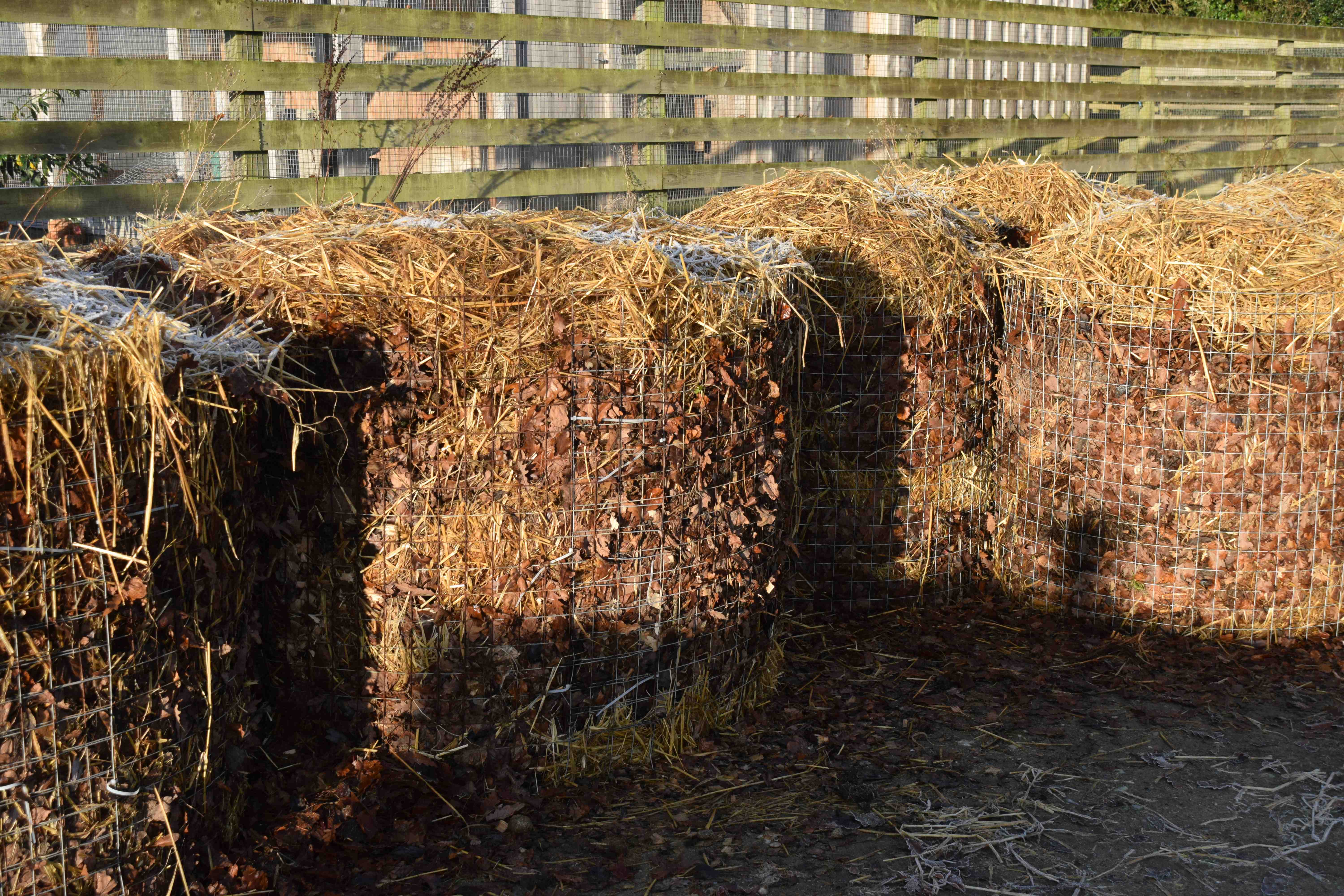
Garden compost is the stuff that most of us make in a compost heap. To make garden compost you need some sort of container that will keep the heap together and to mix a variety of materials. Basically there needs to be a mix of ‘green’, wet material that provides moisture and nitrogen to feed the bacteria and ‘brown’ dry material that will form the basic bulk of the compost.
To thrive, the bacteria need oxygen, moisture and nitrogen and carbohydrates to break down to provide energy. The bacteria function in a similar way to us. We ‘burn’ carbohydrates in oxygen, to produce energy and heat, releasing carbon dioxide and water vapour. It is the opposite of photosynthesis where plants ‘capture’ solar energy and combine carbon dioxide and water into ‘carbs’. Sugars are the simplest carbohydrates and these are converted by plants into starch and then lignins (wood) and fats and oils all of which are denser in energy and thus stored more efficiently – which is why, weight for weight, fats are more ‘calorific’ than sugar.
If you dump a pile of grass cuttings, it will decompose but, being wet and soft, the material will make a black sludge because there will be no air in the heap to allow the aerobic bacteria to thrive. It will be cold and smelly. In contrast, if you leave a pile of woody shreddings or dry stems like straw, it won’t get hot or decompose well either because it may be too dry and there will be no nitrogen to ‘feed’ the bacteria. That is why strawy manure, makes a great product, combining ‘woody’ straw to keep the compost ‘open’ and lots of nutrients from the manure. Leafmould decomposes slowly because it is woody with low nitrogen levels but if mixed with grass cuttings it speeds up considerably.
I don’t recommend using garden compost in pots, partly because few of us actually ‘make’ compost. We tend to fill a compost bin as material becomes available and hope for good results. Home-made, garden compost has variable structure and nutrients, may contain weeds and weed seeds if it did not ‘get up to heat’ and may contain worms and other creatures we don’t want in our pots. So buy bags of potting compost for your pots.
And here comes the rub. Apart from the cost, just how sustainable is this? I end up with empty bags and I am never sure if these are recyclable. Shipping compost around the country or world is not green, even if it is non-peat and organic.
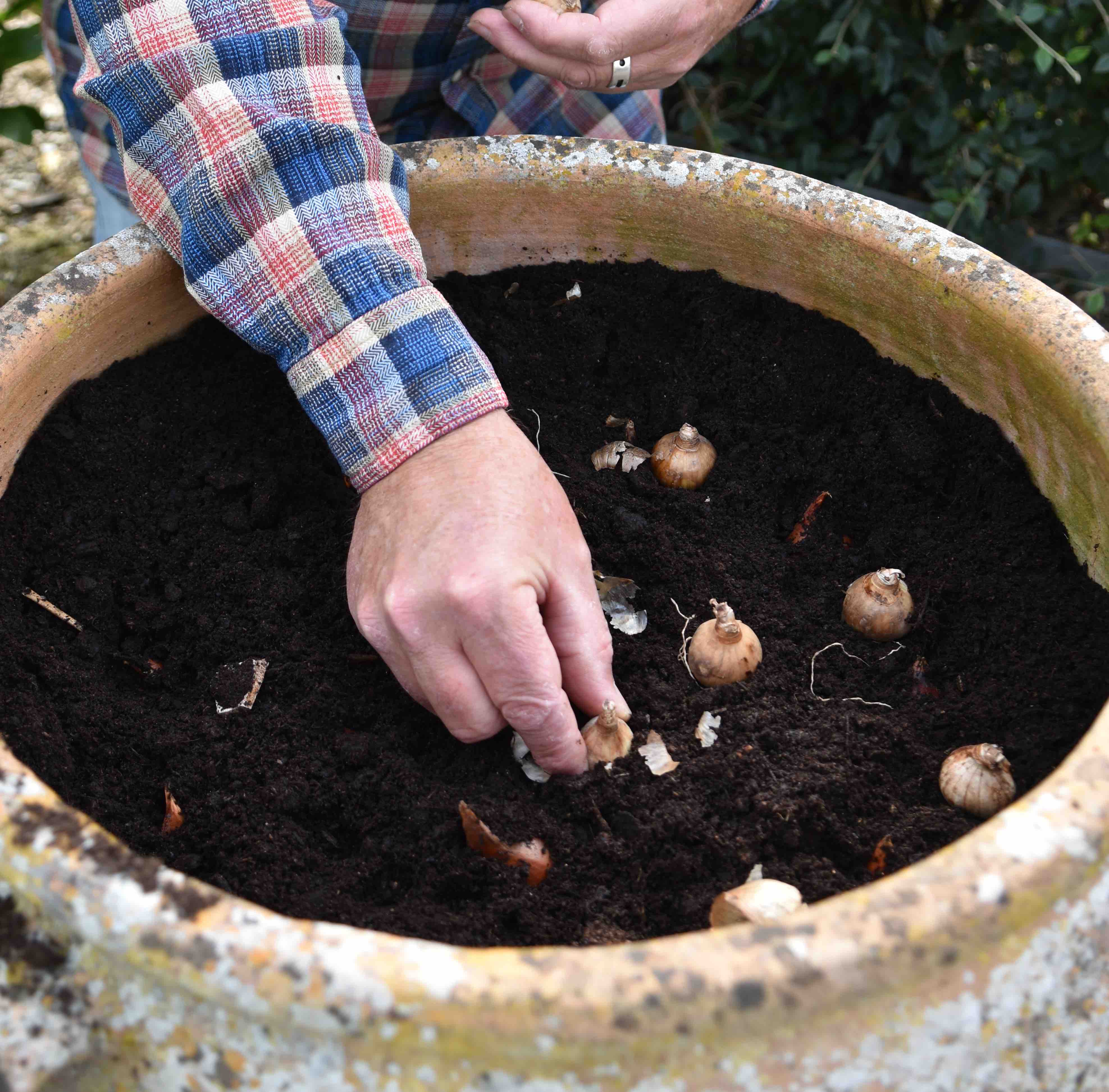
The greenest thing would be not to bother. Just let the weeds grow. But, on the other hand, gardening has less impact than other hobbies and pastimes. We can grow our own food, and plant for wildlife too. I refuse to feel too guilty about growing plants. And if I am going to invest time and money to do so I want them to grow as well as possible. If you are unfortunate enough to watch daytime TV you can see for yourself that growing courgettes in toilet roll tubes filled with dust and cat hair is not the way to go, no matter how cheap it is. I exaggerate of course but I do get frustrated at some of the nonsense proffered as advice.
So, back to those bags of multipurpose compost. Every manufacturer seems to have their own special blend and these seem to ‘improve’ every year. However, in my experience, a lot are pretty awful. Many have large lumps of wood in them and high levels of wood (lignin) ‘use’ nitrogen as the bacteria break it down in the pot. Some, purportedly suitable for seed sowing have lumps so big that the only seeds you could sow in them would be coconuts! I frequently find that seedlings start to grow and then ‘stall’ as they run out of nutrients, especially nitrogen. When it comes to liquid plant food, most people use tomato fertiliser or other ‘high potash’ fertilisers. To compensate for low nutrient levels in these novel composts it is better to use fertilisers high in nitrogen and I regularly use ‘lawn fertiliser’ to give the seedlings a boost. It is vital to use simple lawn fertiliser and NOT one containing mosskiller or weedkiller.
If you find a compost you get on with then stick with it.
So, returning to the simple question I started with.
Multipurpose compost will decompose in the pot, can be difficult to rewet when dry and has limited nutrients. But it is fine for short-term plants and for raising young plants. It is not suitable for shrubs and perennials in pots because it will decompose and ‘shrink’. If seasonal (temporary) plants are in pots, you can revitalise the old compost by adding controlled-release fertiliser and top up with some fresh. After 18-24 months you will need to replace the compost and the old compost can be added to the garden, dug in or as a mulch.
John Innes compost is more stable, the loam has a buffering effect on, and retains more, nutrients and is best for perennial plants. Because the loam in it can vary it is less good for seed sowing. The loam should be sterilised so should be weed free but I don’t trust the producers!
You can buy multipurpose ‘with added John Innes’ and this should be great stuff but the last batch I bought is just full of gravel, as though they added ‘loam’ which was actually swept up by the side of the road! You can mix John Innes and multipurpose yourself, and I usually do, about one part JI to two parts multipurpose. I use this for my favourite (or most favoured) plants I pots.
These are generalisations, of course, and you will undoubtedly have had great results doing very different things. But these are the principles. When you follow these and get good results and gain experience you can tweak things. But start with facts and then make your own decisions.
 The Biking Gardener
Certainly, almost all purchased composts these days are pretty miserable and quite poor in the pot. I make garden compost – with high temperatures in the heaps – but only use it as a garden mulch or an addition when planting. I think it may be as good as much of the purchased compost available.
I agree that homemade compost is possibly as good, and probably better, than some stuff in bags. I know that you make proper compost compost and your stuff is probably fine for pots. I remember going out to get leaf mould as a child to make compost for pots. We would sterilise it with steam. It is why I have a sad fondness for woodlice! After all, buying bags of compost is a comparatively new idea. But then so is filling patios with pots of petunias. You are a skilled gardener and know what you are doing. I go against my rules and put some good material from the compost heap at the bottom of my patio pots sometimes but for novices I think it is best to stick with bagged stuff because I should recognise what has gone wrong when it does.
thank you for a most comprehensive take on composts and pots. The history was very interesting too. The quality of multipurpose varies considerably and so too some seed composts since the (necessary) peat replacement practices. Relieved to know that I mostly follow this advice anyway – the only exception being I do put young perennials or shrubs in multipurpose when I know I’ll be potting them regularly on until mature enough for JI#3. For years I kept Acers in JI #2 as it was lighter and they thrived with a regular one third top removal and replacement. Now I have a garden they are planted in the ground.
Thank you. I do pot seedling perennials in multipurpose too because they will be repotted frequently so I do the same as you. I rarely use anything out of the bag and have bags of John Innes and vermiculite to add according to what surprises I get when I open the bags of multipurpose! topdressing with fresh compost is a good way to keep shrubs in pots happy and I am glad your acers did so well and are now released into the wild!
Certainly extremely comprehensive. I thought of forwarding to a few young friends ( by comparison with me) who I’ve been helping and advising with their gardens over the past few years. However I thought better of it as I think it might be too comprehensive and confuse them!
Thank you. But I think I may have failed if you think the post is to confusing. It was supposed to clarify and not confuse. I hope you don’t get too soaked with all this rain. I began putting in pipes to drain the beds yesterday but won’t be doing it today!
No, you haven’t failed at all. I understand it and find it informative. However, for someone who hasn’t a clue it might all be too complicated. Perhaps I have too little confidence in my protégé’s gardening intelligence!