Trouble in paradise
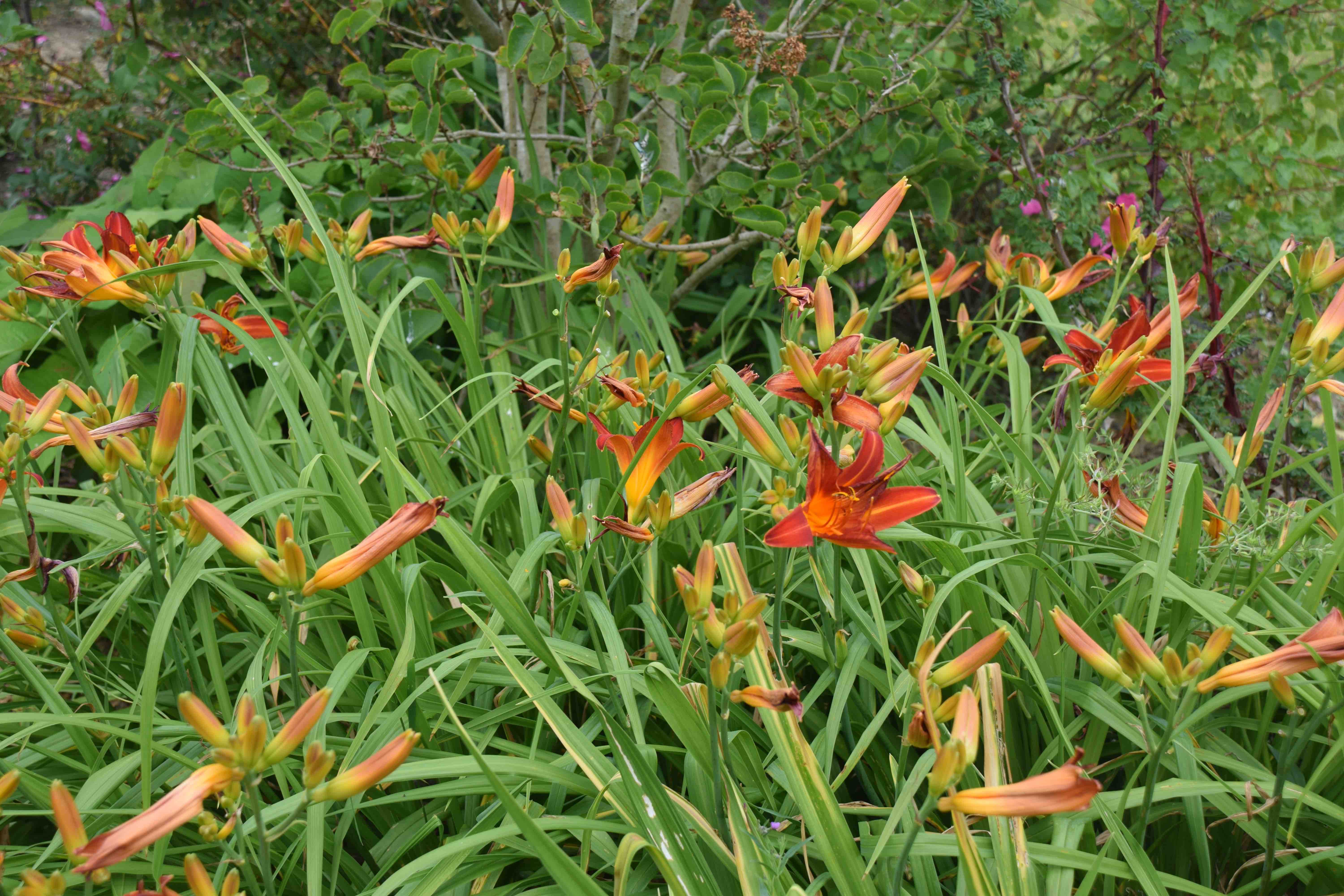
OK, I know it is a stretch to call this garden paradise, but it is coming along and a week ago the sun was still almost a novelty and, although watering was becoming a chore, things were looking quite good.
But a week is a long time in the garden as well as in politics. Yesterday a wander round the garden, trying to see where the cat was hiding, revealed a problem to add to the others that have become obvious over the past week. And it is a biggie! So this post is necessarily a bit negative. At least you can’t accuse me of showing off!
Since I started this garden I have planted as wide a range of plants as possible. But I have a fondness for certain plants and they have dominated the plant list a bit. I have more than an average number of hostas, quite a lot of iris and a nice collection of daylilies. I did have a decent number of lilies too but they are so easily ruined by lily beetle that I wonder if they are worth the effort, especially when they eventually succumb to virus anyway. I still like lilies but they are more worry than I am happy to invest.
I like daylilies (hemerocallis) a lot. They are easy to grow, their is a wide variety of sizes, shapes and colour, and they tolerate my heavy soil. The only possible problem is a nasty pest, that probably came from Asia where the species are native, called hemerocallis gall midge (Contarinia quinquenotata).
This was first found in the UK in 1989 and is now well established there.
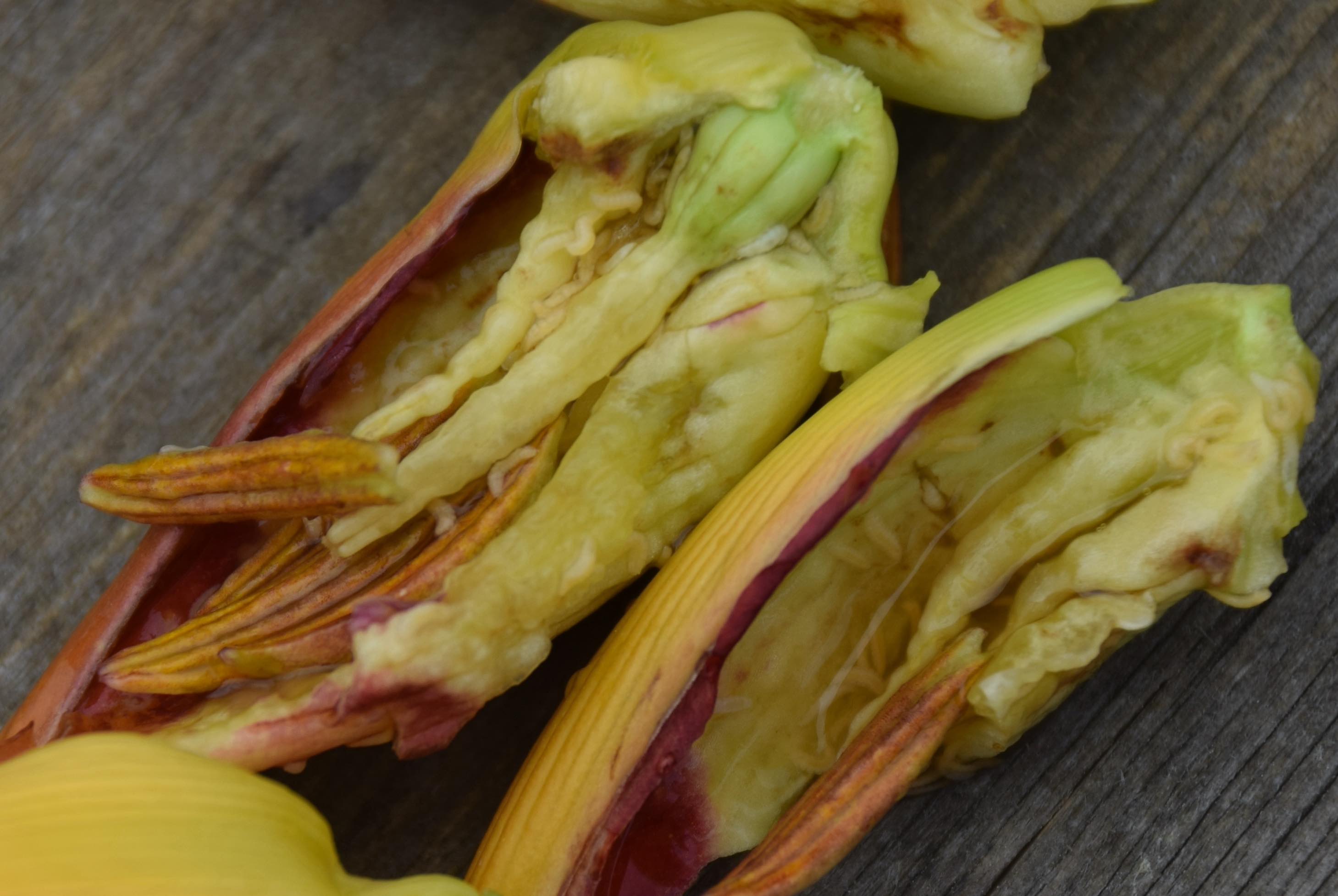
A brief science bit: the adults emerge from pupae in the soil in May and lay eggs in the developing flower buds. These hatch into tiny pale, grubs, a few mm long, that feed within the buds. The buds swell and become distorted and produce ‘water’ that fills the buds. And when they have finished feeding the grubs drop to the soil and pupate. There is one generation a year. And they tend to affect early-flowering varieties more than later ones.
So, when buying daylilies you never want to buy any in bud that have fat, swollen buds and it is a risk to buy any in winter in pots because there may be pupae in the compost. That is why I bought all my daylilies bareroot, in winter. I have not bought any potted daylilies because I am terrified of having this pest.
So it was with a real sense of dread that I looked at my big clump of ‘Crimson Pirate’ (a common and not especially fancy plant) and saw some distorted buds.
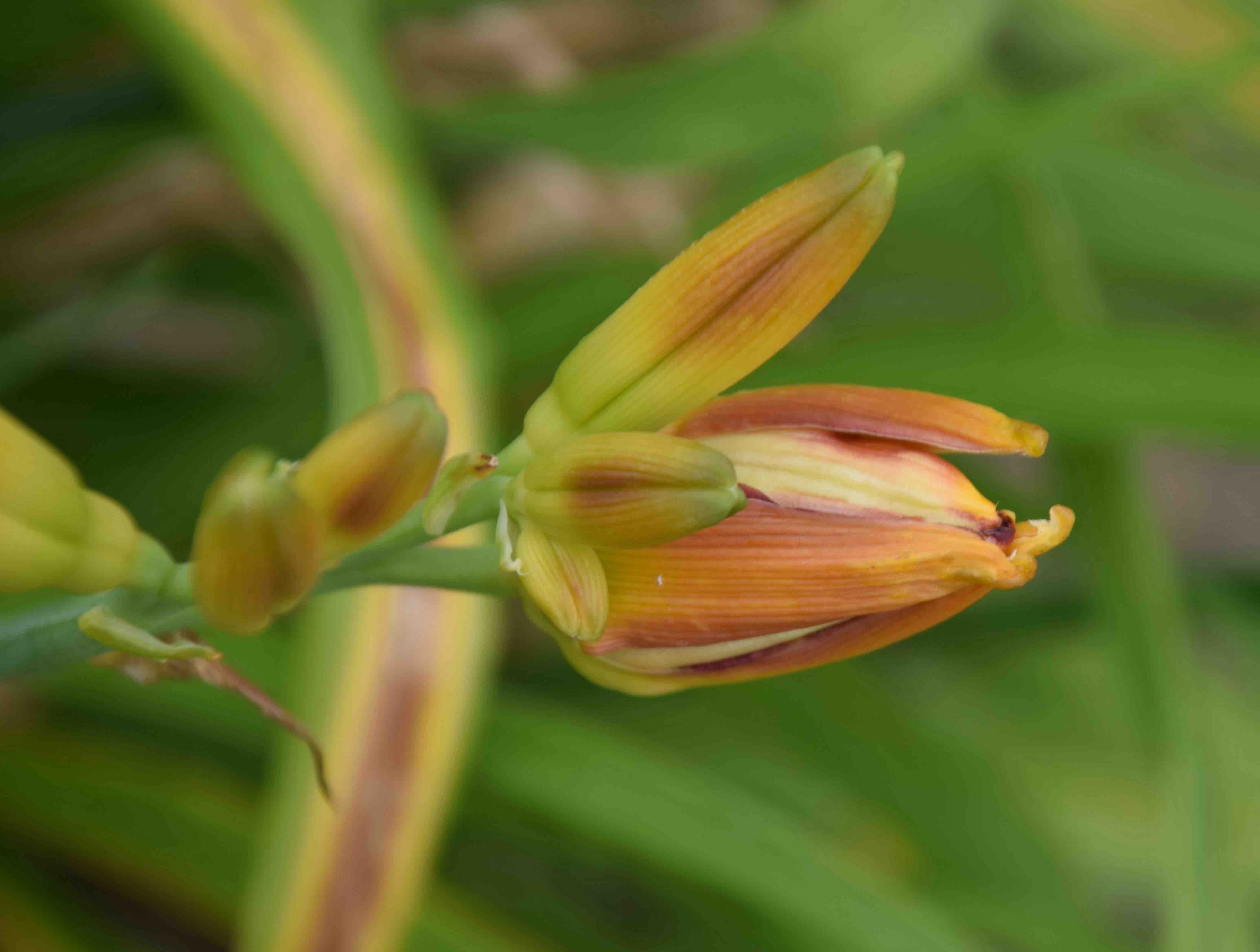
I swear I did not notice them on Thursday when I actually dallied by the clump and actually pulled off a few of the old flowers.
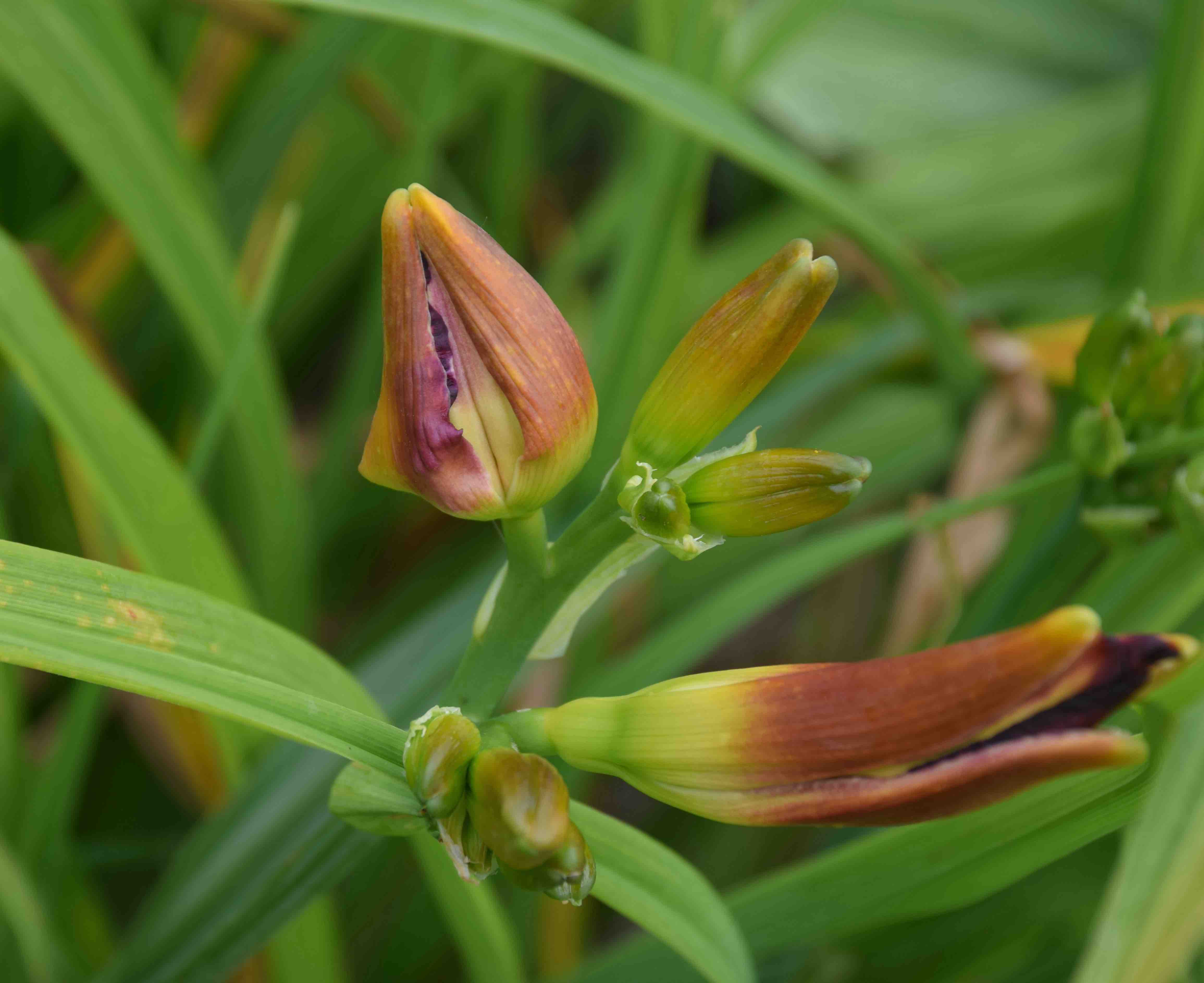
You can see a normal bud below and an infected bud above.
I apologise for the poor images but you can see the distortion and tiny grubs below.

A quick check round the garden and I have found affected buds on several plants.
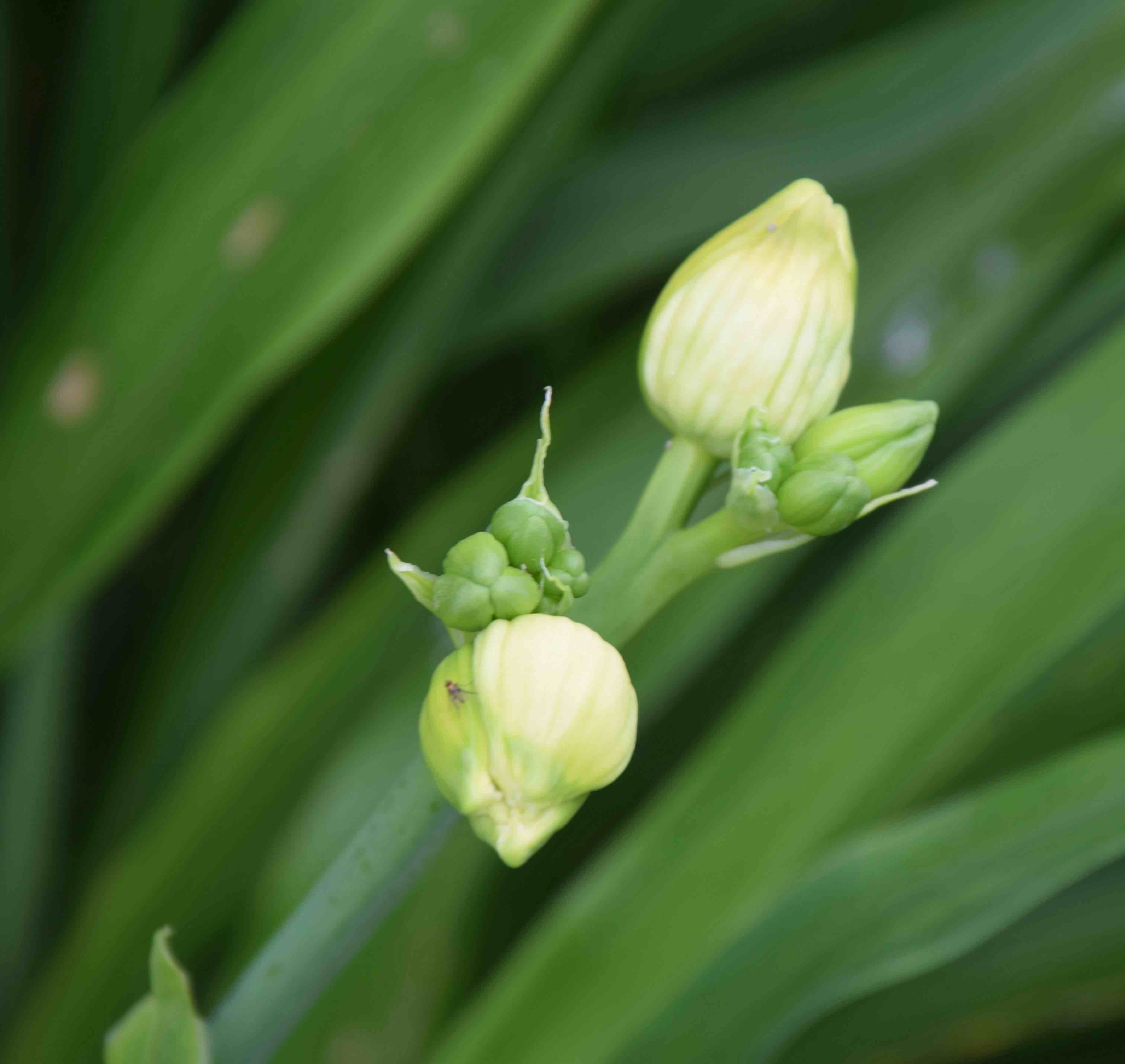
What mystifies me is where these have come from. I am surrounded by fields. The tiny midges must be able to fly a long way.
It may be relevant that the past three weeks the High Pressure system has produced strong winds from the east. The pest is established in Wales and it is possible that the midges have traveled on the wind from there. Or perhaps the pest is already present in Ireland. I would be glad to know.
There is no chemical cure and all affected buds MUST be picked off and destroyed as soon as they are seen. The midge does not affect the growth of the plant.
That was not the end of my woes:
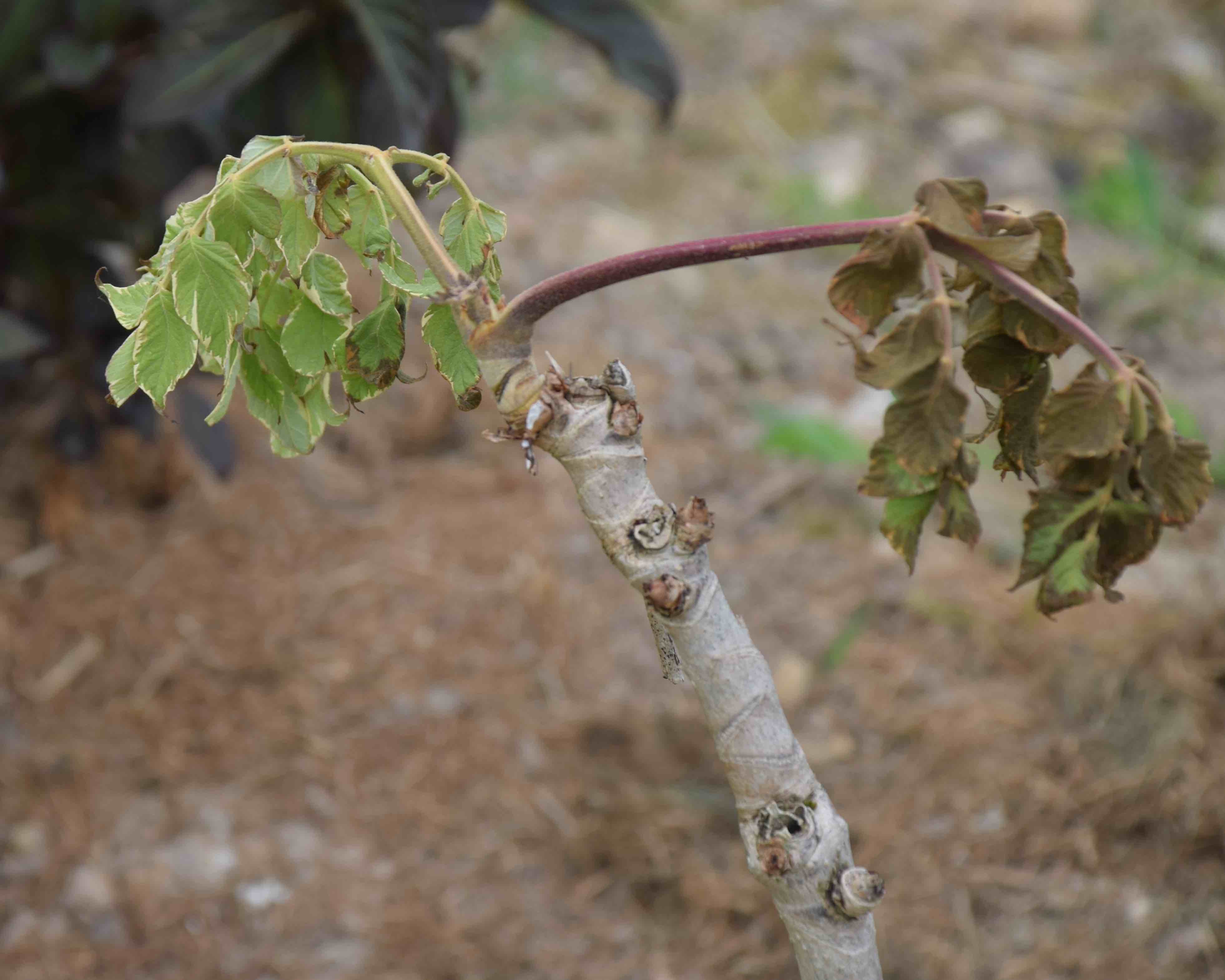
My (expensive) variegated aralia, a plant I have always wanted, and that has been slowly establishing for two years, is very unhappy. It may be drought or may be root damage caused by winter wet. I am sure that I will be able to do an autopsy in a few weeks. And yes I have been watering.
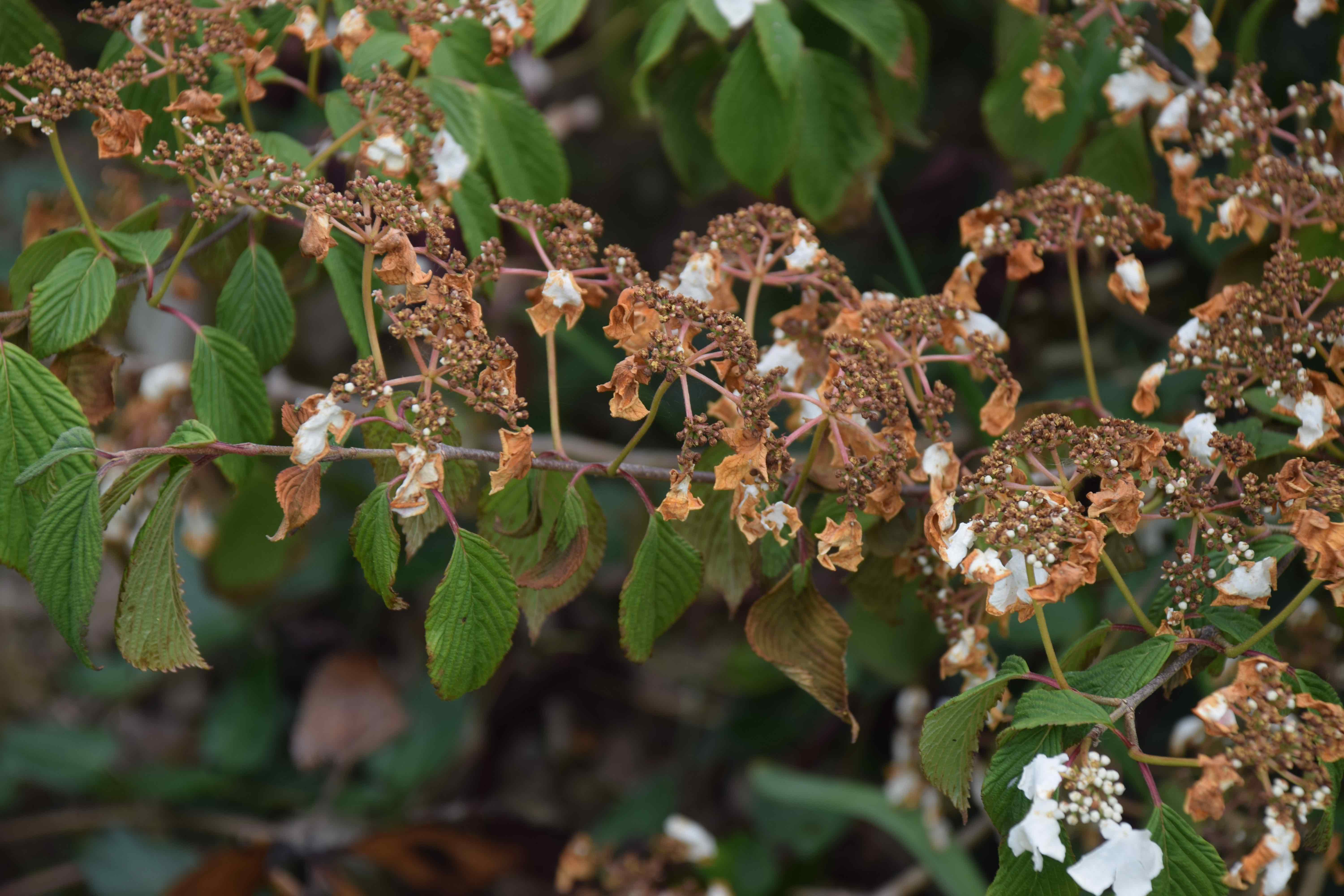
Drought has cut short the display on the Viburnums. They will recover but it is a shame.
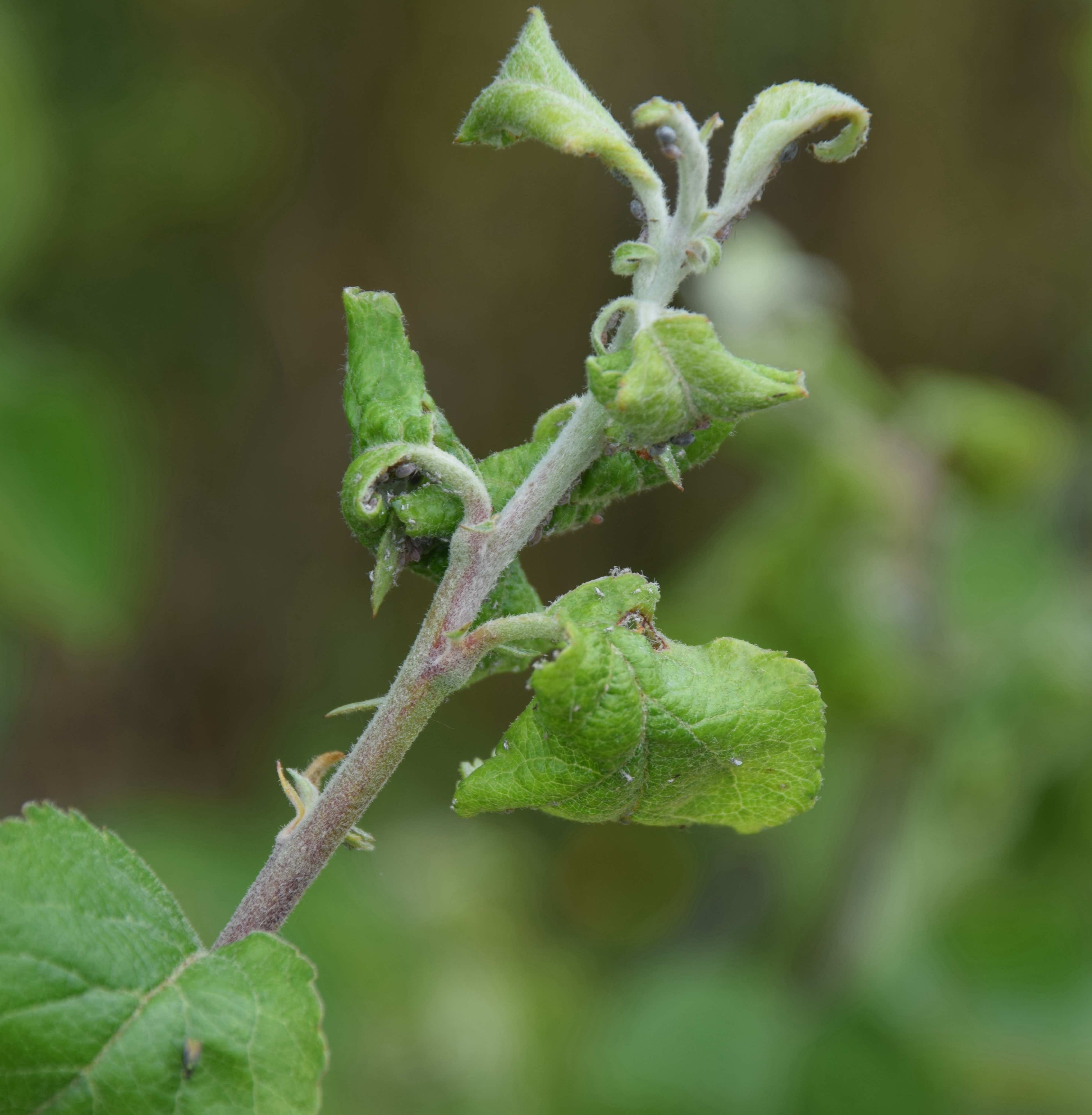
And on the apples the hot dry weather has been just what the aphids wanted. The shoots on many are infested with aphids. I was intrigued to see bumblebees visiting the curled leaves and looked up why and they are feeding on the sticky honeydew. Apparently they sometimes do this to feed on easy sugar. These nasty-looking shoots will be cut off in a few months when I summer prune to I can live with this, though I am not exactly delighted.
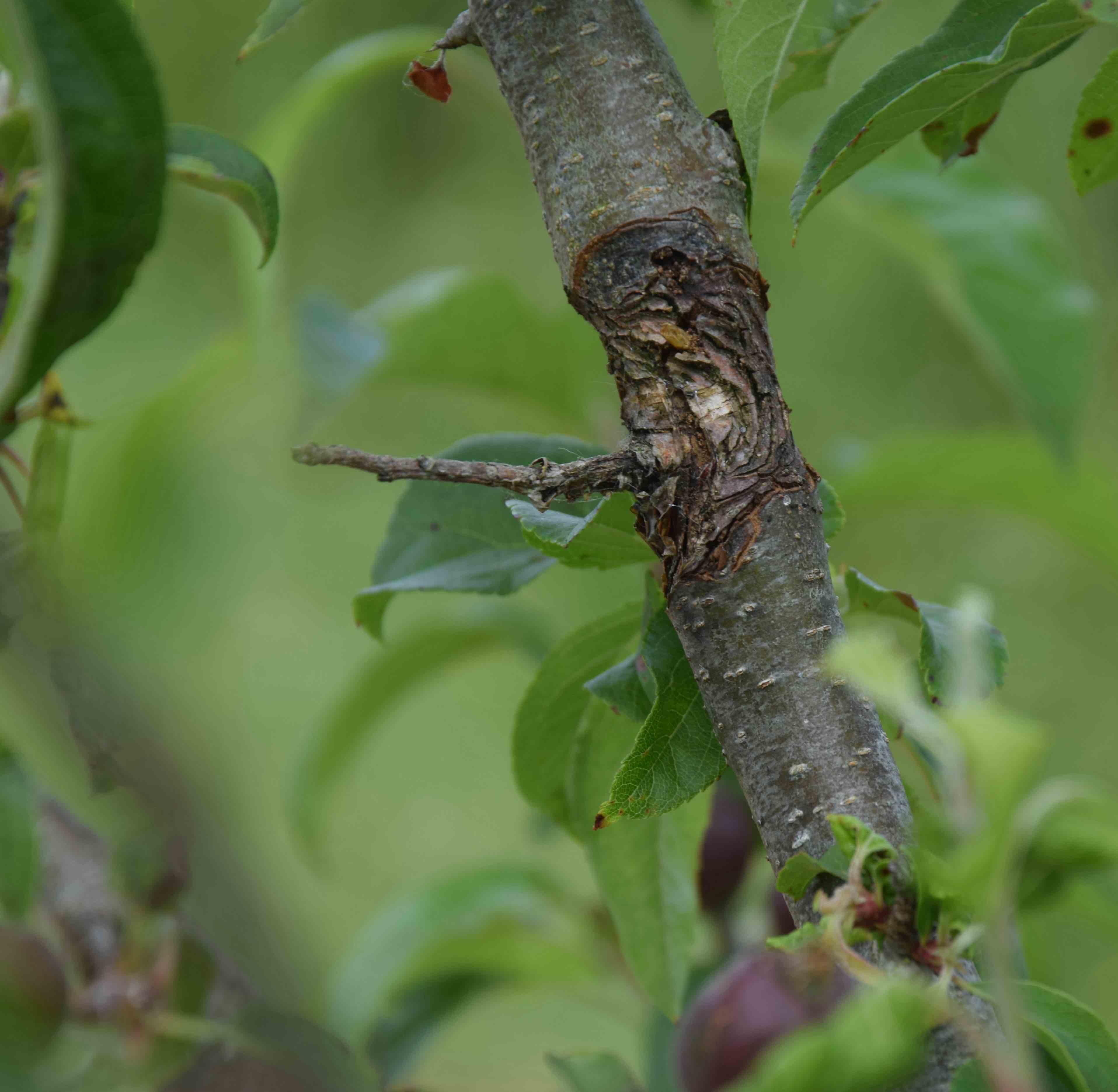
What I can’t live with is canker. I don’t know if it was the wet spring but canker on the apples has been really bad. It can start on a spur or a wound and can kill small shoots.

Where it gets really serious is when it affects a bigger branch. It can start when a small twig dies and then it can spread round the stem. When it completes the job the whole branch will die. I went over the trees the other day and cut off lots of stems, yet yesterday I still found one more big branch that will have to be removed.
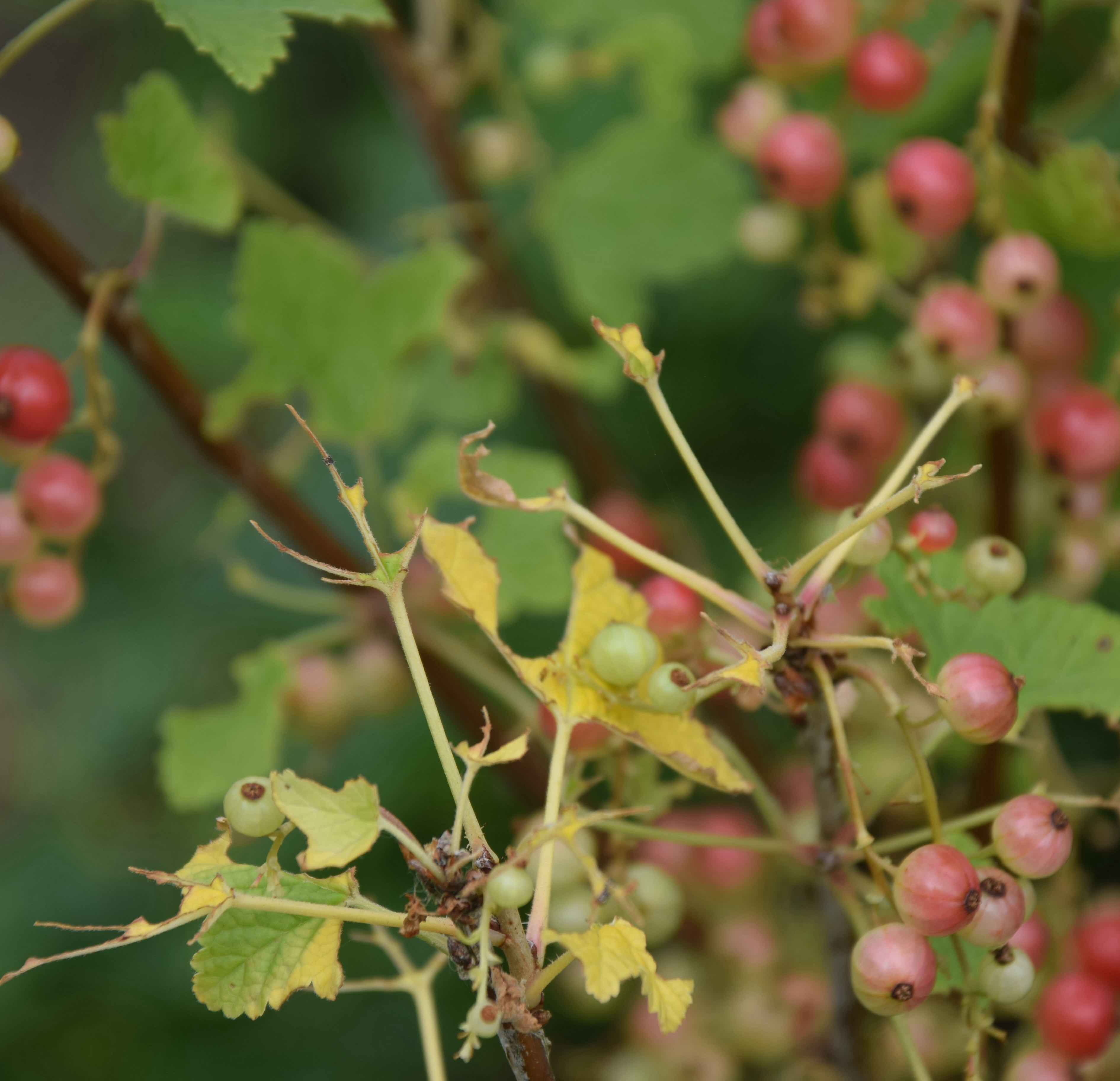
And, of course, there is the gooseberry sawfly, that spread from the gooseberries to the currants. I am afraid I lost my temper and sprayed them.
 The Biking Gardener
I am all for sharing my garden with Nature, but not when it comes with damage and destruction. I tend to get mad about that too…
Jeepers, it’s a list of woes this morning. If there is any consulation in company I can tell you we are into our third season with Daylily gall midge; we lost a variegated aralia – yes, an expensive one – many years ago and didn’t replace it; the plum tree here is infested with greenfly and we have a pear tree with canker! I can add that it hasn’t rained enough for our needs and we are worn out from the hot weather.
Thank you for commenting – I hoped you would to tell me if I am the first to have gall midge. I am slightly relieved I am not the first but sad that it is obviously here to stay now. Like you, I am sitting here hoping it will rain – it is getting really desperate now.
The earlier-flowering daylilies are more affected than those which flower later in the season so a change to later-flowering cultivars may make life more pleasant.
It is amazing that so much survives within the wild beyond refined gardens. (Of course, wild species are more resilient than most modern cultivars.)
I have been living with the day lily gall mite here in Hampshire, for years, pulling off the affected buds and disposing of them to no avail, It’s a shame but I still get good displays of flowers. I too have been known to resort to a quick spray of irritation!
Hi Geoff
Thank you for all the information, otherwise I never would have known about the gall midge on the day lilies. I checked all of mine & on one clump (only, thank goodness) found 8 swollen buds & destroyed them. I also live in a rural area, south Kilkenny, mainly surrounded by farmland.
Regards Anne
I am sorry to hear you have gall midge but I am glad the information was useful. I have heard from others that it is about down here and I am slightly glad that I am not the only one but I wish none of us had it!