No flies on me … but
… lots on my manure!
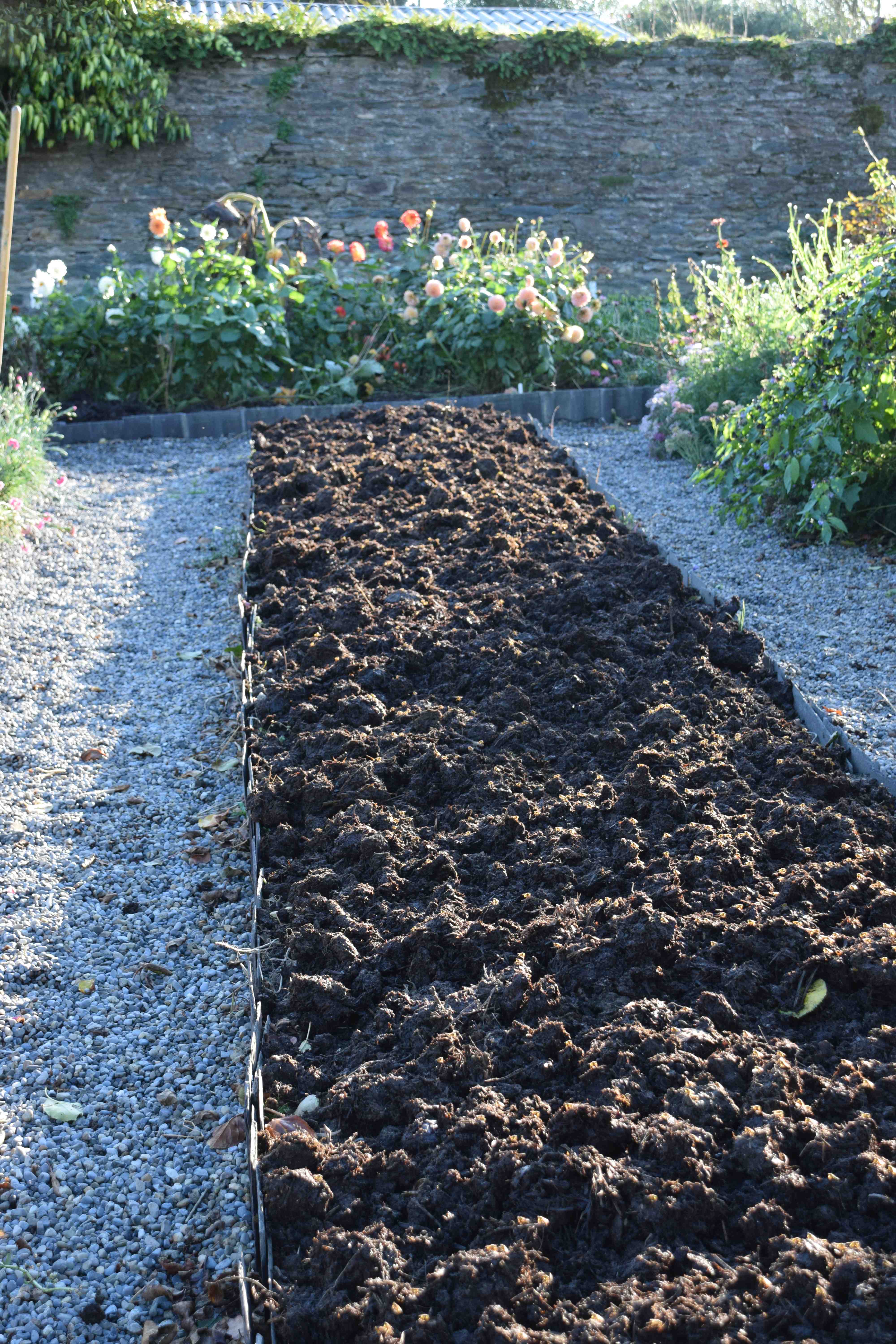
Today I prepared for next year’s sweet peas. I finally sowed the seeds, later than I would have liked* and I mulched the bed, which had been stripped of the old plants and canes a few weeks ago, with some well-rotted manure.
The manure has been stacked all summer and it is the batch that scorched the tomato plants in spring. It was bought as mushroom compost but it was pretty strong, smelly stuff and it still is though the top layer was full of worms, which is a good sign. The lower levels, obviously wet and pretty airless, have no worms and smell a lot! Anyway, I donned my wellies and started moving it to spread over the bed and I was halfway through and I was amazed to see that dung flies had found it and by the time I had covered the plot there were literally thousands of them on the bed.
Dung flies are those golden brown flies you usually see crawling over cow pats.

The common dung fly, Scathophaga stercoraria, is a carnivorous fly but the males and females meet up on dung to mate and lay eggs. The eggs are laid in the dung and the female are apparently not only fussy about their mates, choosing only the biggest males, but they take care to lay their eggs just below the surface, avoiding the highest and lowest points so the eggs neither dry out or get drowned. The eggs hatch and the larvae eat manure until they are large enough to pupate. In warm climates there can be six generations a year but there are usually three or four in the UK and Ireland. They dislike very high temperatures and are seen most often in spring and autumn. As the adults hatch they fly off looking for a mate and the adults eat other, small, flies and small insects although they also like some dung as a side order. But the females must eat other insects to get enough protein to form eggs.
What amazes me is that I have not seen any of these flies in the garden before and there were none in the manure pile, as far as I was aware. But within an hour there were thousands crawling all over the spread manure. Where did they come from?
* I had another disaster this month, with the seeds. They were stored where I thought they would be dry and cool but it turns out they got wet and although seeds in foil packs could be saved, the sweet peas could not. So I had to order more and I have to say that Roger Parsons ( http://www.rpsweetpeas.co.uk ) did a great job and the seeds were here within a week. He has a great range too. So the seeds were sown today, one seed per cell, and are now in the cold greenhouse.
 The Biking Gardener
A very interesting blog. Thanks.
Thank you – it was a very strange event!