Panicum ‘Frosted Explosion’
I mentioned in the nemesia post about species plants being given varietal names and I think this plant may be a case in point because I am not sure how ‘Frosted Explosion’ differs from the usual Panicum elegans. But whatever the case, this is a fabulous plant that any flower arranger (or anyone that likes to cut flowers for the house) should grow.
Is it just me but Panicum ‘Frosted Explosion’ sounds not so much like a plant but the plot by a Bond villain to bring world chaos by setting off a bomb in the Antarctic!
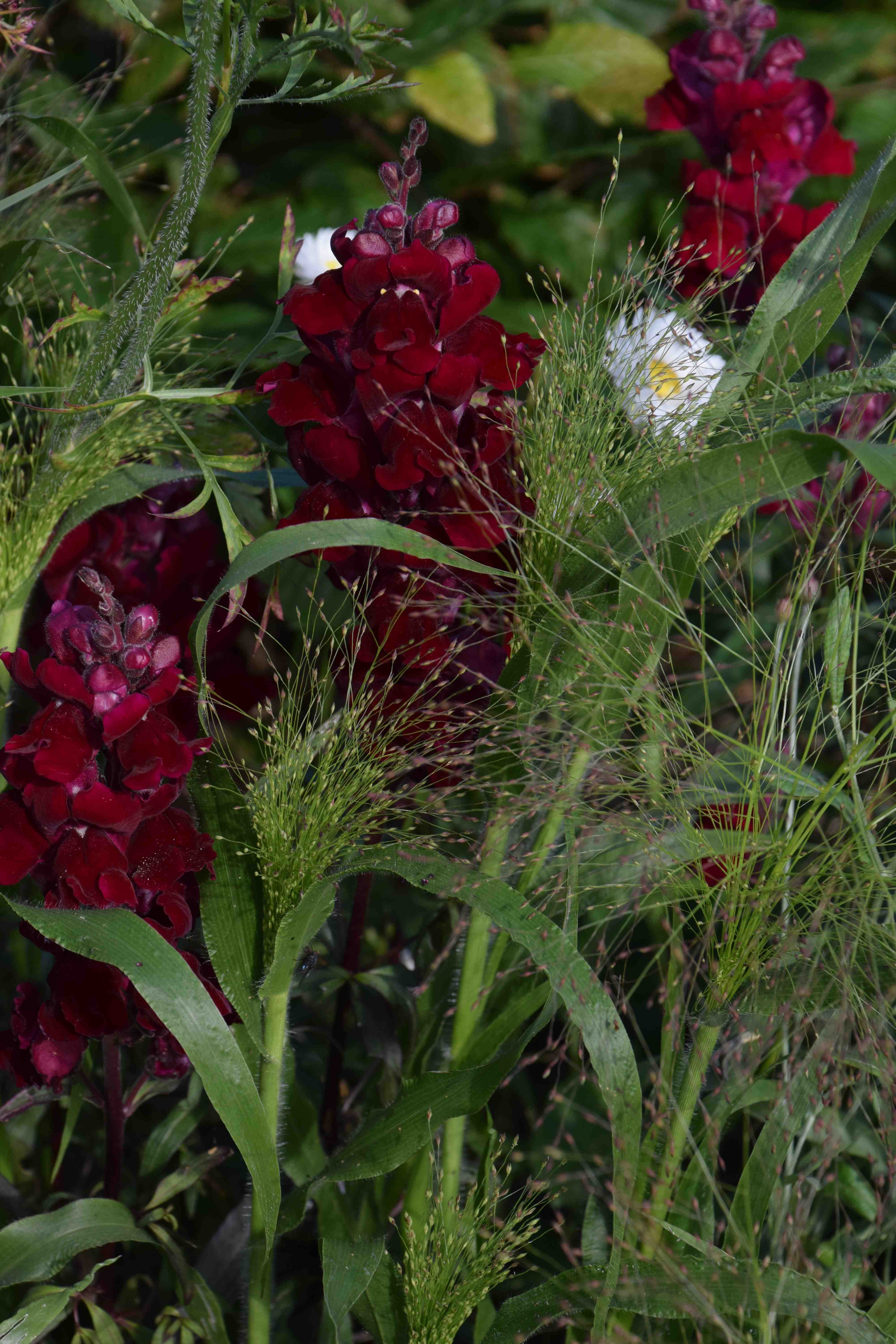
Panicum elegans is a beautiful grass that is apparently perennial in mild (frost-free?) parts of the USA where it is native but is most definitely an annual in the UK and, I suspect here in Ireland. In the past I have found that it selfseeds – but never enough! When young, the plants are unremarkable, with rather broad green leaves. I find that the seedlings grow painfully slowly when in cell trays and I will have to try them in a better-drained mix or with some loam because they definitely seem to struggle in standard multipurpose mixes. Grasses are heavy feeders so maybe I should feed them more. The seedlings seem to wobble on the compost and are attached to the compost only by painfully thin roots. So I took great care when planting them out in May. Fortunately, once planted out the plants seem much happier and they grow strongly, tillering and putting up many stems. Now, with summer in full swing, the fascinating flower heads are being produced.
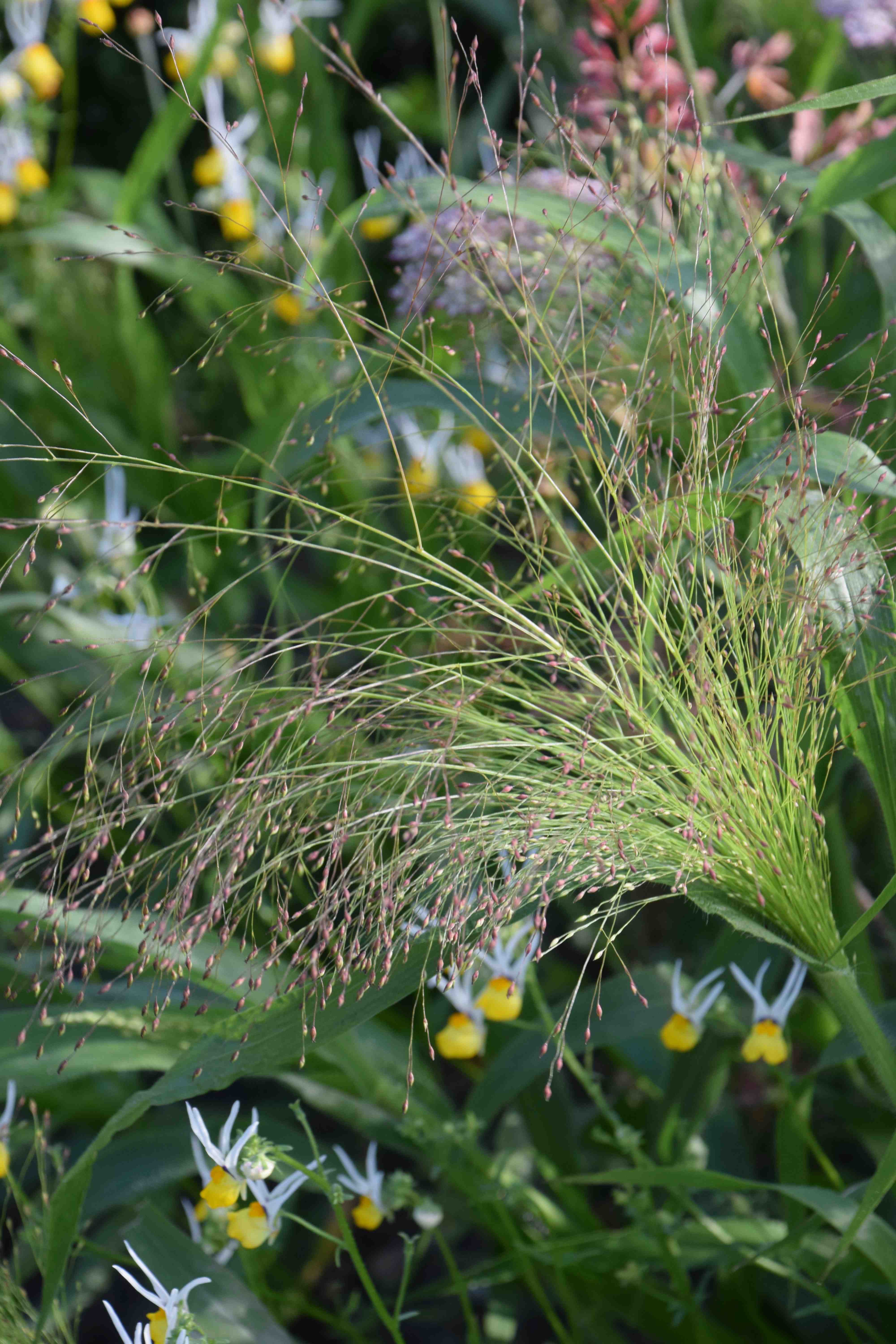
Each stem produces a wand of tiny flowers that are tightly cone-shaped at first but then open up into a ‘sparkler’. Nor only do these look good in the garden but they are great for cutting and mixing with flowers such as sweet peas – or anything! The stems are rather brittle and easy to snap off. The whole plant is about 40cm but because the stems branch you will not be able to pick a stem that long unless you sacrifice a few of the future flower stems.
The yield of stems per plant ranges from 12-40 according to sites I have looked at but I would say 20 is a good average, depending on how long you cut them. And although some sites give the height a up to 80cm I think that half this is much more like the average. Anyway, so far, in my first attempt to grow this in Ireland it is about 30cm high so far and getting bigger and wider by the day.
Geoff’s rating 9/10
Garden rating 9/10
Update 2023
A lot has happened since I first wrote this. I see this may now be Agrostis nebulosa and is thus native to Spain – I am not sure which is correct. I have planted it in my new garden and it self seeds fairly well. I have lots of volunteer seedlings this year growing among the bedding plants. Because this is a bed that is dug every winter I am slightly surprised that so many seedlings appear. They are very useful for the cut flower bunches. It is definitely a useful and beautiful plant.
 The Biking Gardener
You should be on commission! As a lover of grasses, as well as a recent convert to cutting flowers for the house, I’ve added this to my list too! Boy, I’m going to be busy next year! P.s. Like the marks out of 10 – really helpful!
Well I think you should try this one 🙂 Glad the rating helps.
Oh no…another for my wish list …. 🙂
LOL
Very nice! I haven’t seen this variety in garden centers yet.
It is an annual and the stems are very brittle so I am not sure it is very suited to selling as plants in garden centres so it may be something you have to grow from seed
I have successfully grown Panicum Frosted Explosion this year from bought seed, but I want to take my own seed this Autumn. Please advise how and when I do this. All the seeds grew but there were only 8 in the packet!! I gave 2 away and planted 3 each in 2 large pots with Aeonium Zwartzkop and Erigeron Karvanskius (?sp) and am delighted with the results so far, but have high expectations as summer progresses!
Love this plant! Where can I buy the plants or a minimal amount or seeds? Thanks inadvance. Jane
Hello. Yes it is a lovely plant. It is commonly available in the UK. Mr Fothergills seeds sell it as do Special Plants – http://www.specialplants.net