Pure joy: forget-me-nots
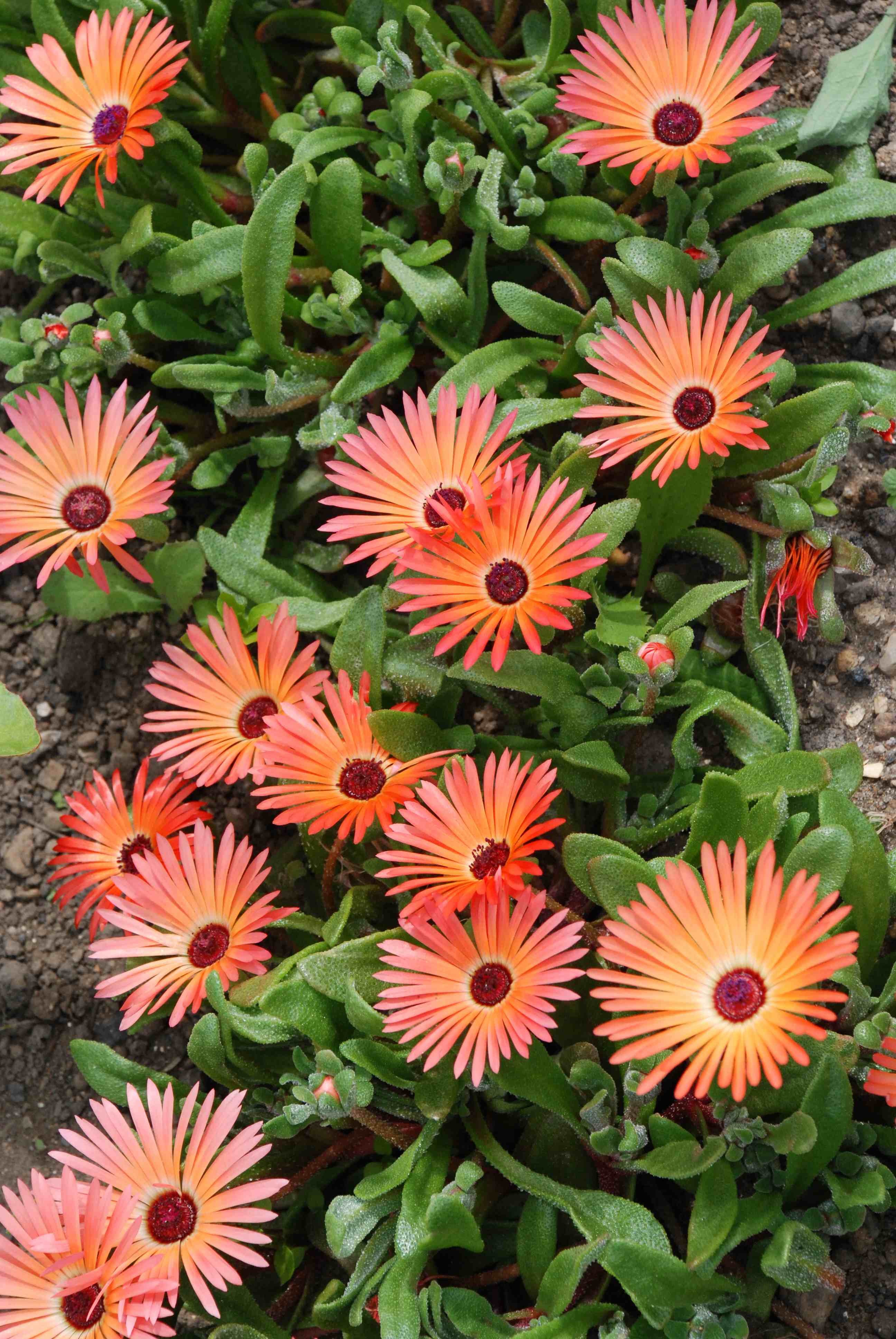
As I get older, and hopefully, more experienced as a person and as a gardener, it is easy to forget the simple things that made me happy as a child. Sometimes I stumble upon these and I stop and smile. With plants I suddenly remember how lovely they were and how much they meant to me then before I had heard of cultivars and Imperial peonies and remontant iris. Last year I grew Dorotheanthus bellidiformis for the first time in decades. It was among the three plants I first grew from seed as a child though then it was called Mesembryanthemum criniflorum or, as I knew it, Livingstone daisies. Those succulent leaves, looking as though they were sprinkled with granulated sugar, and the bright, shining flowers made me gawp in wonder then and filled me with joy again last year.
Early May was a time of wonder then too, with so many flowers opening day by day. Aquilegias rewarded close scrutiny to see the five doves sat neatly in a ring (have a look yourself) and the bright stout stems of peonies were busting with promise, but the three plants that fascinated me most were lily-of-the-valley, London pride (Saxigraga x urbium) and forget-me-not. All three were delicate plants but never needed any care, respectively spreading slowly, forming a weed-smothering mat and seeding just where they wanted. The combination of fragrance, white, pale pink and blue flowers was perfect and the three of them lived happily together in a long term relationship.
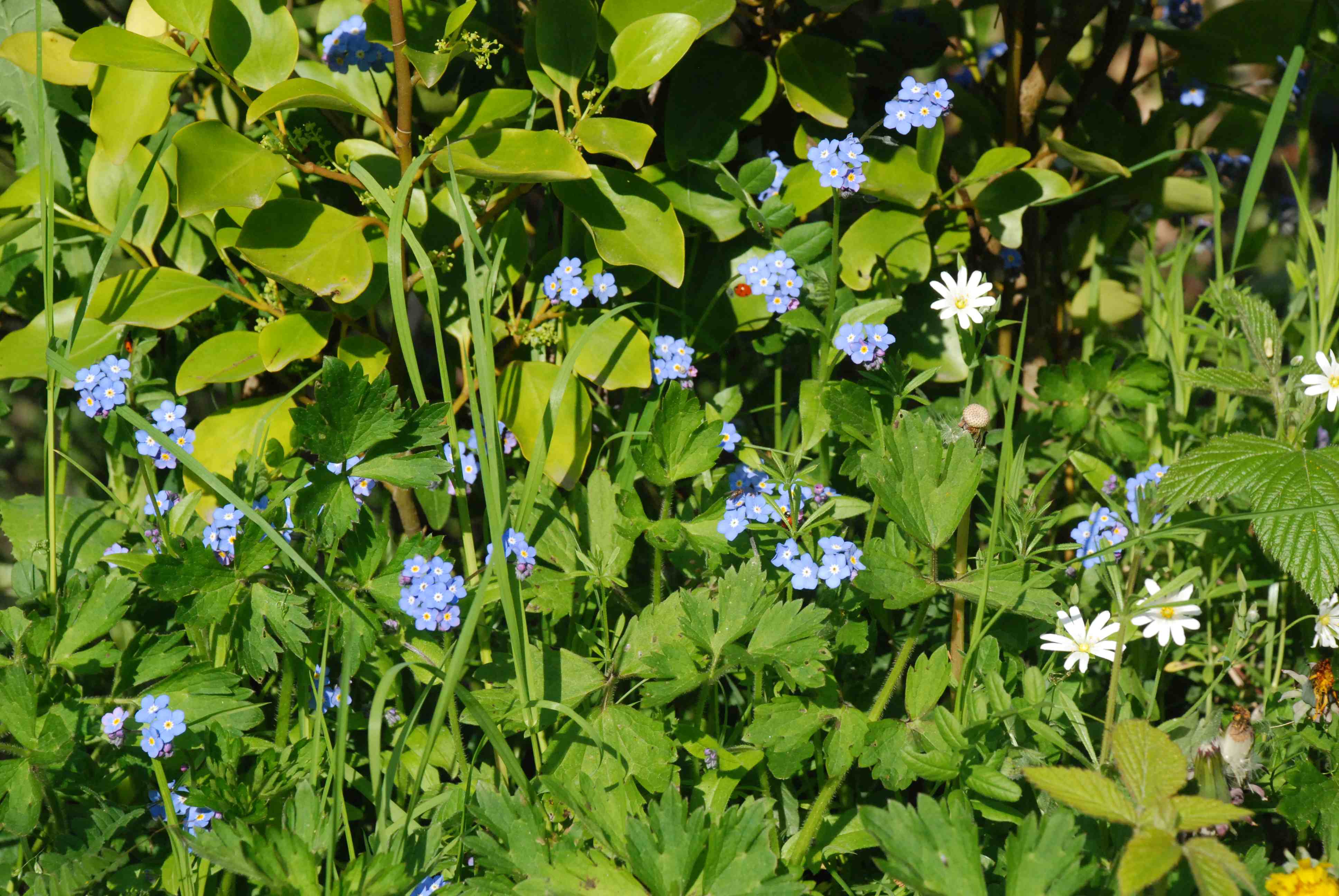
So last week when on my exploratory drive around north Wexford it was a delight to see wild forget-me-nots (or naturalised at least) blooming beside a griselinia hedge amidst buttercup foliage and interspersed with stellaria blooms.
 Wild forms tend to possess that magic trick common among Boraginaceae of being able to change colour and they often open pink and age to blue but cultivated forms often have this bred out of them so the blue is undiluted, unless you buy seeds of pink or white forget-me-nots of course. Last year I sowed the seeds in late July and planted out the small plants in October and for five months the plants looked small, weak and not that promising. But then April sun kissed them and they exploded, as so many biennials do, and have become a clouds of blue blossom, here planted under an old apple tree – a perfect spot for them.

Myosotis are named after their leaves which, someone thought, looked like mouse ears (myos + otis) but we tend to ignore their leaves, at least until they get mildew, as they inevitably do if the soil gets close to drying out when the plants are getting past their best. Forget-me-nots usually self seed and it is best to pull them up when they are getting scruffy and before they seed like crazy, unless you want millions of plants next year. I will pull the plants up and toss them in wooded areas in the garden so they can run free because, although I have them domesticated in the walled garden they are a plant that deserves a little freedom. Over time, dwarf and richly coloured strains will revert to looser, paler plants as each generation adjusts to the wild and I have to say that I prefer this to the overly dwarf forms sometimes sold. Whether you see choose to look at your in prim rows, interspersed with pink tulips or among wildflowers as nature would prefer, forget-me-nots are a simple pleasure.
 The Biking Gardener
that was lovely all those things malcs dad had in his garden sad its now a building site.