What? No humming birds – Christmas cacti
Sometimes a ‘thing’ means more than its face value. You look at it, or smell it or hear it and it is not so much the object itself that is important but what it means to you. It is often smells that have this special meaning. The biting scent of nasturtiums take me back to my childhood while the fumes of a paraffin heater returns me to my paternal grandparents house, especially at Christmas, accompanied by an open fire of washed-up pine from the beach spitting sparks onto the carpet, giving a heady mix of burned wool and soot. Is this this where art starts, creating something that is more than just its component parts?
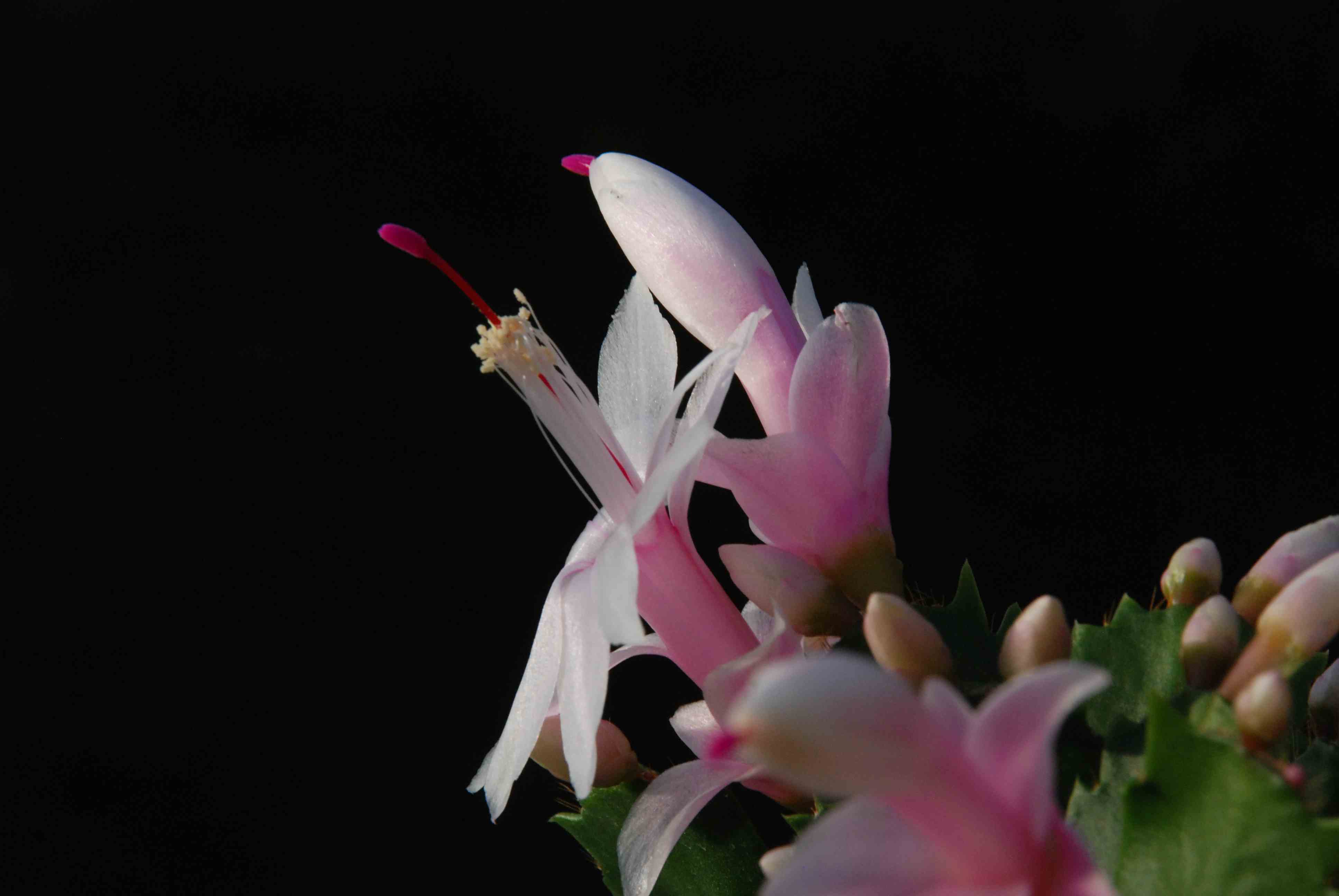
This is one of the reasons that plants are so special to me; they are not just green objects with colourful flowers, each has a memory or suggests something about its origin. This is where knowing the native habitat or its relationship with other plants helps conjure visions. So while the Christmas cactus is just a festive pot plant for some I can’t look at the flowers without imagining the plants clinging to branches, trunks and fallen boughs, deep in the jungle, strewn with large, fallen leaves from the canopy of tropical trees above. But most importantly I imagine humming birds hovering in front of the flowers, probing each for nectar, each body turning and twisting to access each flower as its wings blur. Each flower visited either deposits pollen on the top of the bird’s head or brushes pollen against the receptive stigma, according to the age of the flower, setting in motion the next stage when the plant will be covered in angular red fruits.
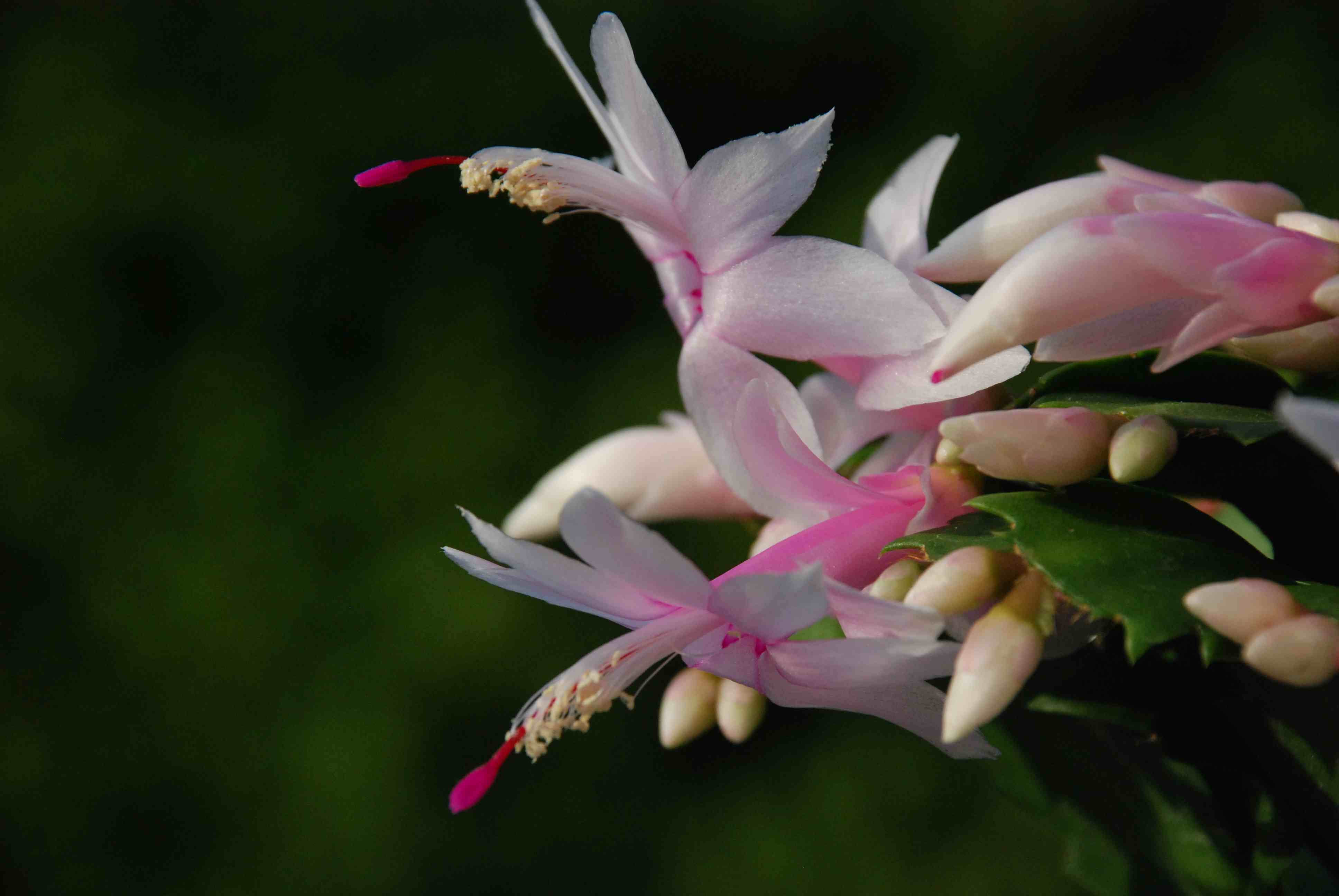
I wish I could say I had seen this for myself – but I have not. But knowing about the habitat and the shape of the flower are the clues that set my imagination in motion. It’s a wonderful vision in my mind as I gaze at this most underrated plant.
Most of us have or have had a Christmas cactus and the good old, bright pink is a wonderful thing. Plants were grown in the downstairs loo and sometimes put outside for summer, in a shady place. Fed with tomato fertilizer or cold tea, they slowly assumed gargantuan proportions. Pieces inevitably broke off and these were stuffed into pots, rooted and given away. As a result Christmas cacti were not great sellers in shops and nurseries. It’s a bit like spider plants – why grow them for sale when everyone has one or knows someone who is desperate to give one away! The most commonly available plants are those that don’t live long – they need replacing.
But there is a good reason to buy a Christmas cactus these days; there are so many wonderful colours. So buy one and start a collection. They are easy to care for, last for years and are beautiful in bloom, even if humming birds don’t visit.

Tips for caring for your plant
Buy when the buds are at least 5mm long – when they are smaller they may drop off after being moved.
Water frequently but never let the plant stand in water.
In winter a temperature of above 10c is necessary. Above that try and keep the pant cool to help the flowers last.
A bright spot, out of direct sun is best.
After flowering give your plant a rest. Do not water for 6 weeks. If the stems shrivel a lot, because your house is warm, give a little, just enough to prevent severe shriveling. If the plant turns slightly pink that is OK – its just a sign of stress.
Then soak the plant and repot it into a pot that is about 5cm wider. Shallow pots are best. Use a coarse compost with no loam – a cactus or orchid compost is best.
The next six months are important to ensure a good display in winter so water well and when growth starts feed every week or fortnight with a high-potash fertilizer. You can put the plant outside when all danger of frost has passed.
In late summer, bring the plant back inside and stop feeding. Make sure you do not bring any snails or slugs back in with it.
Like chrysanthemums and poinsettias, Christmas cacti bloom when the days are short and nights are long so, to stimulate flower bud production you plant must be kept away from artificial light at night. An unused room, on the windowsill is usually perfect. Buds will then start to form but make sure you do not move the plant when the buds are tiny or they will twist towards the light and drop off. Once they are 5mm long you can move your plant.
If your plant gets artificial light it will still bloom but usually not in time for Christmas. My plants in the house often flower in early spring but those kept in my unlit (heated) greenhouse bloom for early December.
 The Biking Gardener
malc just bought us a Christmas cacti so found this very helpful thank you