New Plants – Cabbage Cabice
Cabbage ‘Cabice’

‘Cabice’ cabbages ready to harvest in late September
Cabbages may not evoke much passion but they are essential in the kitchen garden. While we may not cook them very creatively in most cases – I admit that I usually boil them – they are pretty tasty, can be added to most meals, are good for you and, if you are clever, you can have them almost all year round – either a big advantage or a blow, depending on your point of view.
There are dozens of cabbages available to home gardeners and there is nothing wrong with any of them but I was interested to trial a new cabbage that is part of the Johnson’s range for 2014 called ‘Cabice’ F1.
They say
Johnsons describe it as a super-sweet variety with round heads about 2kg in size with a unique flavour, especially suitable for salads.
For sowing from Feb-April and harvesting May to October.
I say
The young plants in 12-cell trays were rather late going in the ground and some had rooted through the drainage holes into the gravel below, while others had not, so the plants were of two distinct sizes when planted out in late July. The bigger plants obviously suffered root damage in the process so they needed thorough watering several times a week in the dry conditions in August until established. They were planted (about 60cm apart) in an area that had just been cleared of peas and broad beans. The bean roots were left in the ground in the hope that these would provide some necessary nitrogen. The ground was previously enriched with spent mushroom compost for the beans. After planting, once they were growing strongly, they were given a boost with pelleted chicken manure.
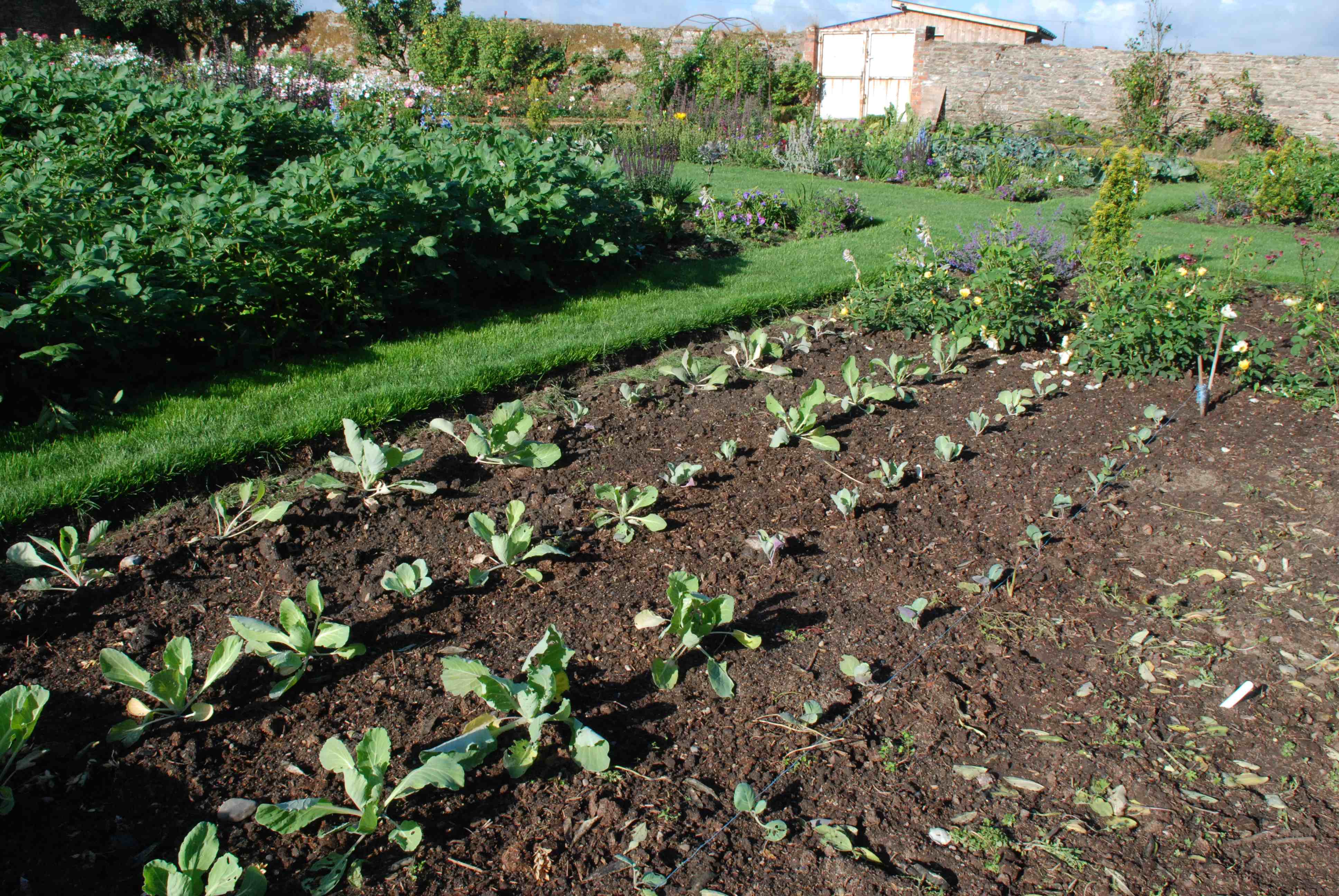
The plants were of two sizes when planted out, because some seedlings had rooted through the base of their cell trays
The cabbages grew strongly and by late September had produced nice heads ready for cutting. These were mostly of about 1kg size so smaller than stated but a better size really unless you have a big family or like your fridge full of half-used veg.
A few features worth mentioning:
…The plants are very compact, with short stems and small, outer, guard leaves. This suggests they would be very good for small gardens, raised beds and even pots. However, being so ‘low-slung’ I did find a good (or bad) number of slugs and even worms in them when I cut them in wet weather.
…They seem easy to grow, even though they had rather bad treatment in the early stages.
…Every one made a good head, of very consistent size.
…Although I would not say they had a ‘unique’ taste, they were certainly very delicious and everyone that tried them said they tasted really good.
Worth growing?
If you want a neat, compact, easy cabbage that is better to eat than your average cabbage ‘Cabice’ is one to grow.
Verdict 10/10
Available from Johnsons £3.05 for 30 seeds
‘Rubeny’ F1 was another success this year with huge ‘guard’ leaves. The big, pointed heads were dense, delicious and stood well although some split and cracked as they waited to be harvested. It needs a big plot and 60cm spacing was a bit close for them. I took one to the local flower show and won a second in the giant cabbage class with one a metre across.
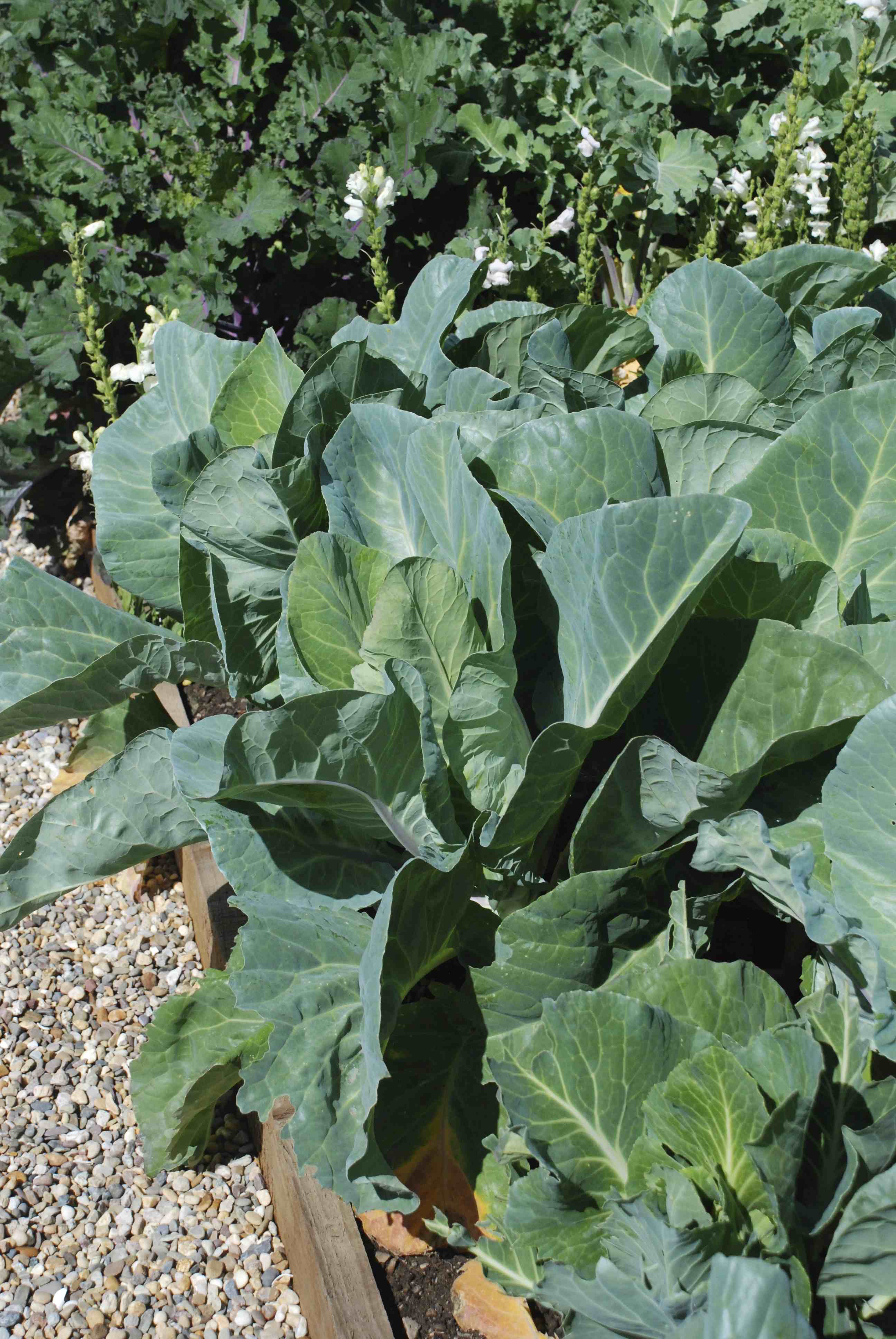
‘Rubeny’ was a large, pointed cabbage, seen here in July
£1.99 for 55 seeds from Suttons http://www.suttons.co.uk
Problems
I had no problems with either of these cabbages but cabbages are not the easiest thing to grow; they are prone to a long list of specific problems. These include caterpillars, whitefly, mealy aphid, rootfly and pigeons among the pests and white blister and clubroot among the diseases.
This year mealy aphids and caterpillars were a problem but they were kept under control, though not eliminated, by squashing them as soon as they were seen.
More sneaky was clubroot. This is a soil disease that is almost impossible to eliminate once you have it and can be spread from one area of the garden to another on the soil of transplanted seedlings (why I always grow cabbages in cell trays rather than in a seedbed) and even by walking from an infected plot to another (moving soil on your shoes). The garden is an old walled garden and I was not sure what problems there would be but when I saw some cabbages looking stunted, with yellowish and pink leaves and half the size of others I was suspicious.
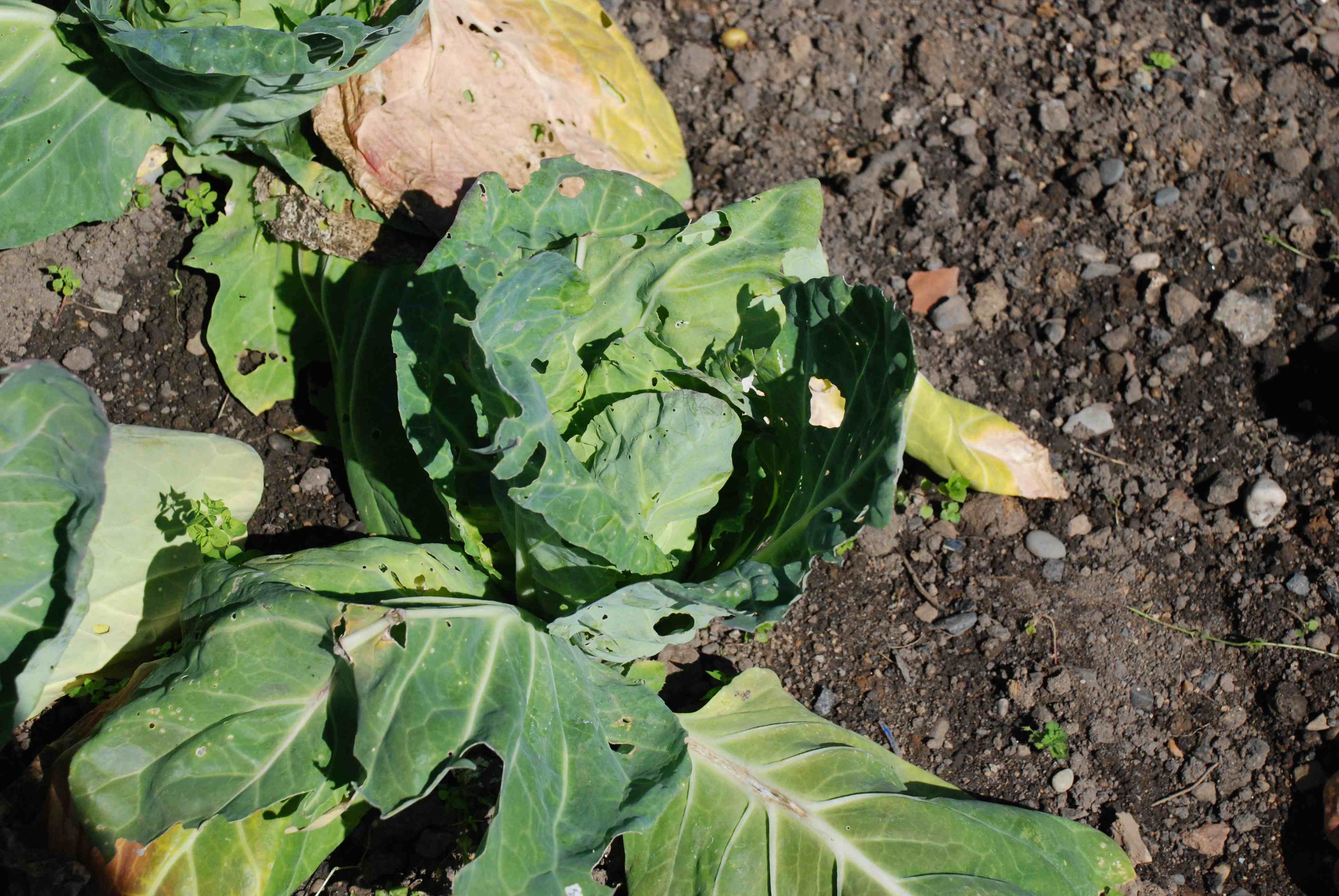
I pulled up a plant and the characteristic thickened roots were there in all their unpleasant glory. I had clubroot.

There are some resistant varieties, such as ‘Kilaxy’ but I will simply grow cabbages in a different area next year.
If you want to know more about growing cabbages just ask.
 The Biking Gardener
No comments yet.