Job for the week – Mushroom compost
FULL STEAM AHEAD
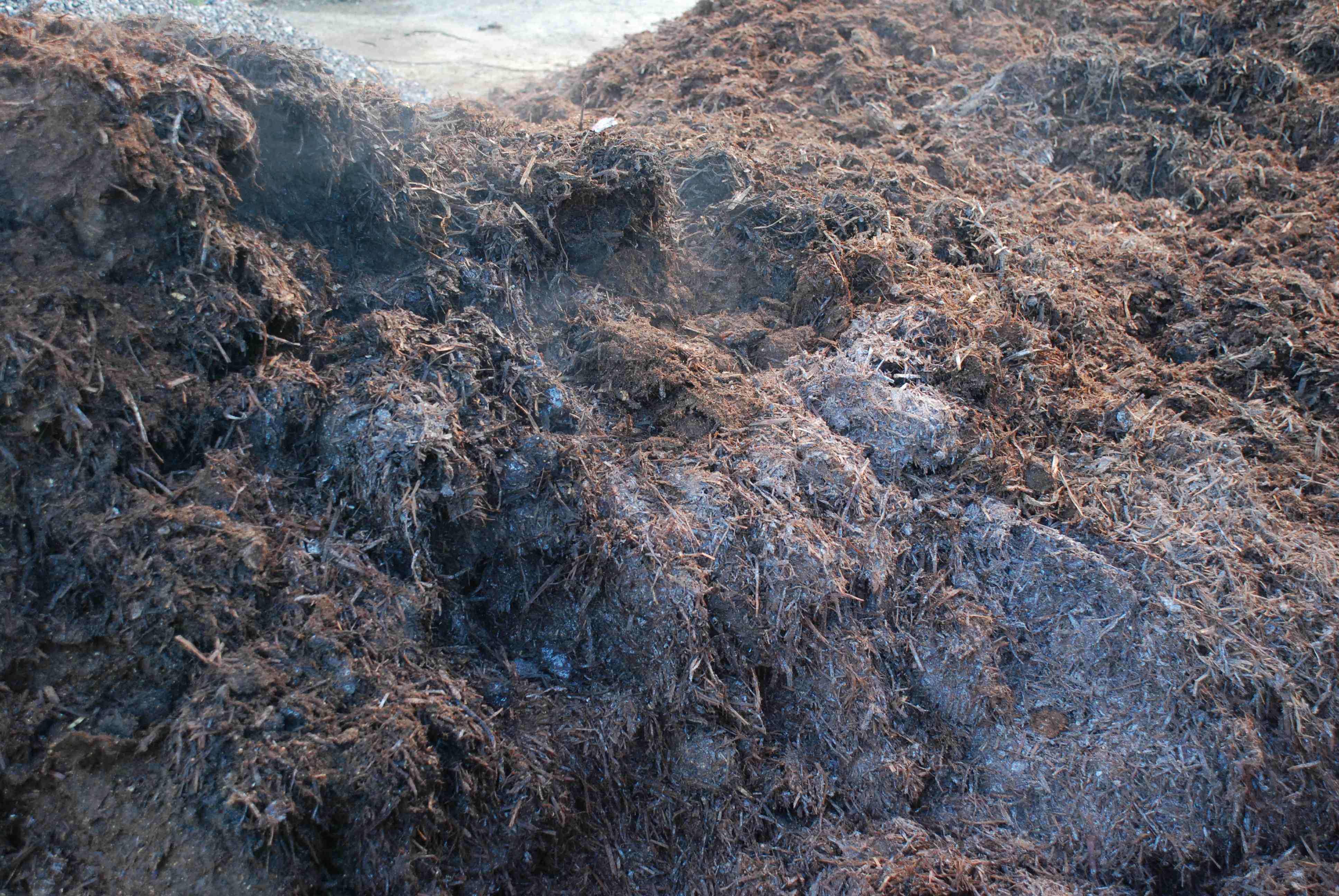
Spent mushroom compost is a great soil conditioner
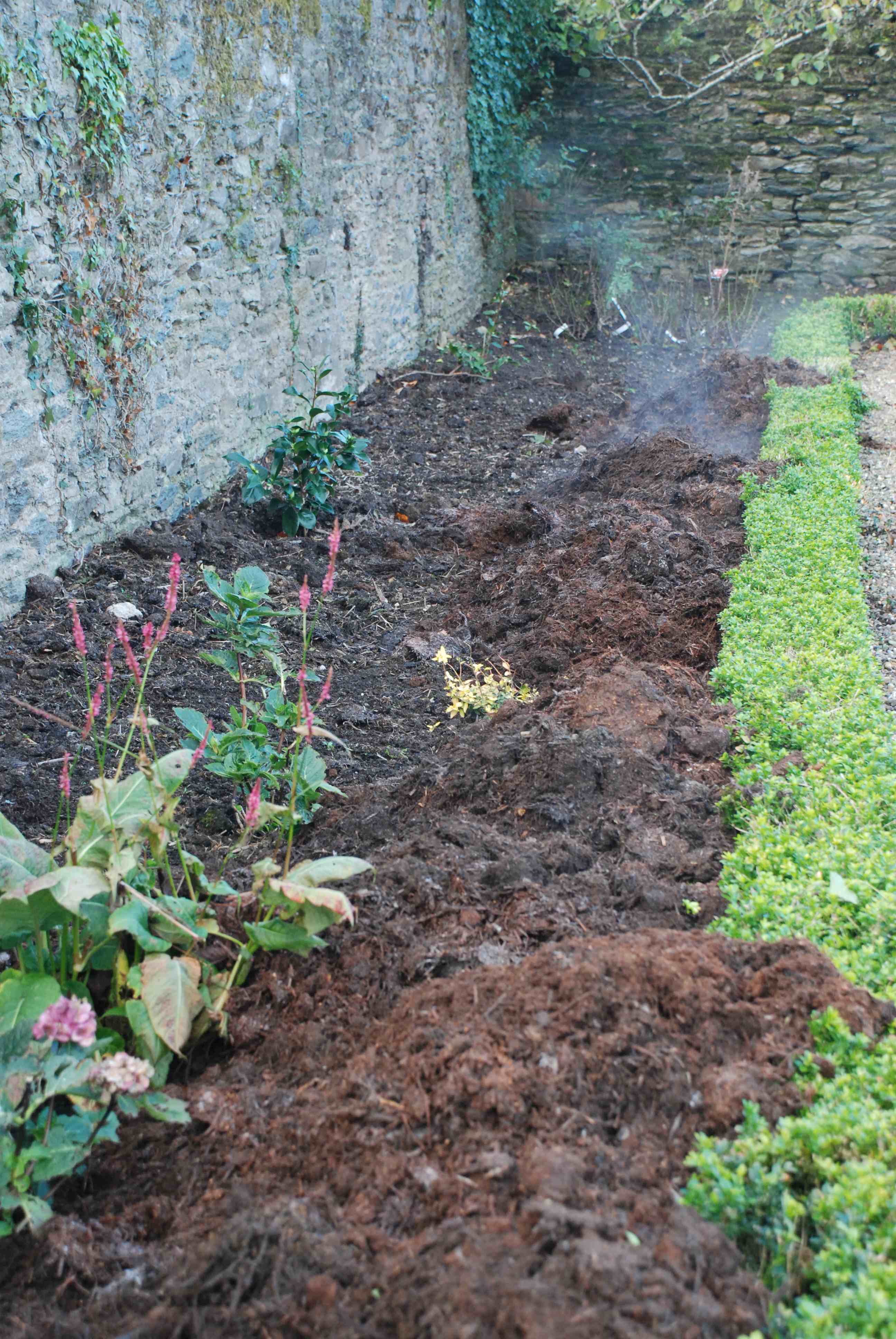
The bedding is removed, most of the veg has gone and it is time to get the garden ready for spring. I like to tidy in the autumn, not because I hate wildlife but because it is easier to get the soil ready for planting and sowing now than in February and I have a lot of bulbs planted and it is best to get that mulch on, for the worms to take down, before the bulb foliage appears. So this week its time to spread spent mushroom compost. Not a glamorous job but it needs doing and it’s a great way to keep warm on a cold morning.
Great for clay
The soil here is heavy clay, variously known as marl or, locally, macamore. It needs organic matter and in spring I mixed a lot of coarse sand and mushroom compost in the soil. A layer 8cm deep was dug or rotavated in. The change in the soil structure was dramatic but you can’t do this just once! You need to keep adding organic matter so I am adding lots more as a mulch.
In another area I spread a layer of manure about 15cm deep in spring on cleared soil. By autumn this had broken down and moved into the soil so it was just a few cm deep!
Because spent mushroom compost is free from weeds it makes a great mulch, adding nutrients, organic matter and smothering annual weeds.
What’s in it?
Spent mushroom compost has lots of good qualities. It is a bulky organic soil conditioner that will help to drain heavy soils and improve the water-holding capacity of sandy soils. It is relatively light and pleasant to handle and is attractive to look at as a mulch. It contains a wide spectrum of nutrients including nitrogen, phosphorus and potassium and trace elements too. The nitrogen is slightly ‘locked up’ in the organic matter so it is not too high in nitrogen (initially but releases it slowly) so is suitable for plants that you don’t want to push into massive leafy growth and I used it on my tomatoes this year to good effect. It is high in phosphorus which, to be honest most soils don’t need more of, but that doesn’t stop people flinging bonemeal around like it is magic fairy dust!
It does not contain as much ‘plant food’ as horse manure but that is because it has already carried a crop. On the plus side it is sufficiently ‘weak’ that it will not harm anything. And after all it is a soil conditioner not a fertilizer!
Spent mushroom compost also contains some lime. This should worry growers of lime-hating plants (such as rhododendrons and camellias) but local farmers use it on potatoes and if it were that high in lime it might mean them getting scabby spuds – they wouldn’t risk that so I feel this concern may be overstated. In any case I have been using it round camellias so we will see how we get on. I certainly would not recommend the risk if you have neutral soil but here on acid soil I think the benefit in soil structure outweighs the slight risk of making the soil more alkaline. That gypsum and lime is also a great thing for helping improve clay soils.
Organic worries?
I am not an organic gardener though I follow organic principles. That means I spray as little as possible and never spray edibles. If you are strictly organic you may be troubled by the fact that various chemicals are used in the production of mushrooms to control fungus gnats and other problems. There may be some residual chemicals in the compost but I think these must be negligible – if you are worried about putting the compost on the soil make sure you only eat organic mushrooms.
What is it?
Spent mushroom compost is a waste product. It is the compost that remains after a crop of mushrooms has been grown. The growing of mushrooms is an important industry in Ireland and 70% are exported. They are grown around the country with Co Monaghan the biggest producer but Wexford produces 6% of the crop. Because the mushrooms are grown in dark sheds on concrete they can theoretically be grown anywhere but the raw ingredients of the compost mean that certain areas are better suited. The mushroom compost is made of wheat straw, poultry and/or horse manure and gypsum. After this has started decomposing the compost is usually put into bags and the mushroom spawn (culture) added and when it has spread through the compost, peat and ground limestone is added to encourage the production of mushrooms. The whole process takes about 10 weeks and five production cycles are possible each year.
This means a lot of spent mushroom compost is produced and it is technically a waste product.
 The Biking Gardener
No comments yet.