Unseasonal foxglove
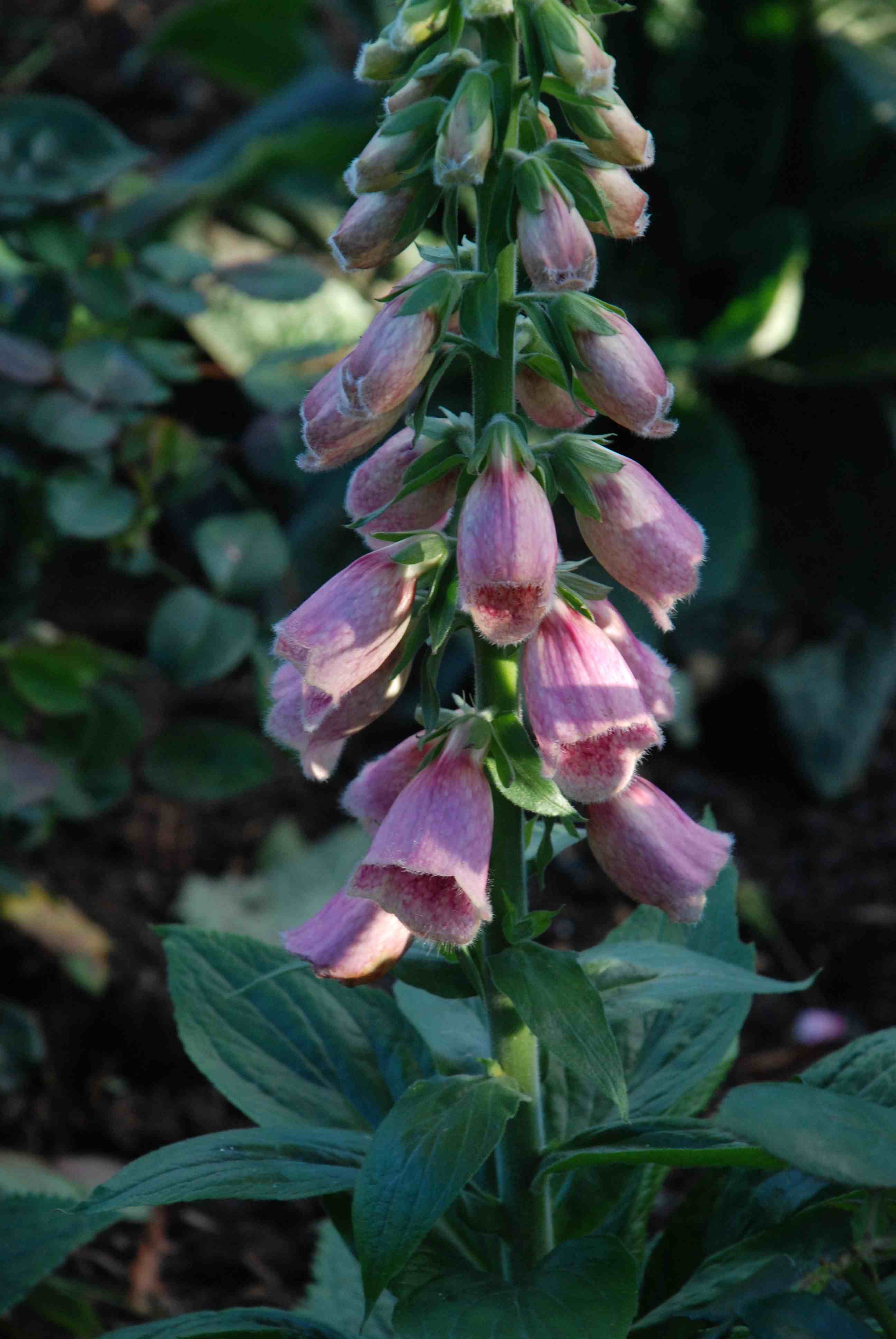
Digitalis x mertonensis
It isn’t just people that do surprising things – plants do too! This spring I grew large batches (well several hundred) of three sorts of foxglove (digitalis): the pure white form of the common foxglove (D. purpurea ‘Alba’), the densely blotched ‘Pam’s Choice’ and the strawberry pink ‘D. x mertonensis, sometimes sold as ‘Summer King’ though I am not sure it is any different from the usual D. x mertonensis. It is not difficult to grow hundreds because packets of the commoner types contain hundreds or thousands of the tiny seeds – it is ore difficult to decide how few to grow – usually based on the number of pots or trays you have free.
The seedlings all grew strongly and, because they were sown in February, were ready to plant out in May and they have all since grown to make lusty plants. Although it is usually thought that they need a winter chilling to promote flowering – they are biennials after all – or short-lived perennials – a few of the pure white plants produced flower stems in summer but several of the ‘mertonensis’ began flowering in October. I was worried as I saw the centre of the plants start to bubble up with small leaves and send up a spike, in case frost stopped them dead. But they have shown themselves to be tougher than I expected and all have opened their beautiful, ‘crushed strawberry’ flowers to perfection on slightly shorter than expected stems, making a gorgeous show of colour among the roses. Even better, each plant has made several crowns so I can expect these plants to bloom, as normal, next summer,
Hybrid foxglove
This is a hybrid between the British native D. purpurea and the yellow D, grandiflora and seems to have qualities of both. Its leaves are dark green and less hairy and grey than D. purpurea although still large and beautifully veined. The flowers have a mix of both colours from the parents. It is supposed to be a tetraploid (meaning it has twice the number of chromosomes that is normal) which usually denotes greater vigour.
Sowing time
Most biennials should be sown in early summer and planted out in late summer where they are to flower. But I sowed these in February so the plants are super-big now and they should be really good next year. The only disadvantage is that you have a big lump of green leaves all summer that doesn’t do much – not pleasant to look at in a small garden. But these were planted either in bare soil in shade or in the new rose garden where these leaves formed decent ground cover.
Tip
Foxglove seeds need light to germinate so do not cover the seeds after sowing. You need to keep them moist as they germinate though so I always cover lightly with Perlite and keep them in a relatively cool temperature in a propagator – about 18c (60f).
 The Biking Gardener
No comments yet.